
Origins and Construction of the J. Frank Dobie House
Located at 702 East 26th Street in Austin, the J. Frank Dobie House was completed in 1925, reflecting the Spanish Revival style popular in the early 20th century. Its stucco exterior, red-tile roof, arched windows, and wrought-iron detailing pay homage to Spanish colonial influences (Texas Historical Commission). Built during a period of growth for both Austin and the University of Texas, the house quickly became a gathering place for intellectuals and creatives. Originally, the property included a generous garden space, often used for literary salons and discussions.
J. Frank Dobie: Life and Legacy
James Frank Dobie (1888–1964) was a Texas native and a pioneering folklorist, author, and educator. After joining the University of Texas faculty in 1914, Dobie dedicated his life to chronicling the stories and traditions of Texas and the Southwest, and his home became a meeting ground for writers, artists, and scholars (Handbook of Texas Online). His most notable works, including Coronado’s Children and The Longhorns, were written within these very walls, and his commitment to academic freedom and social progress left an indelible mark on Texas’s intellectual landscape.
The House as a Cultural Landmark
The J. Frank Dobie House is more than a historic residence; it’s a recognized symbol of Texas’s literary and cultural identity. It was designated a Recorded Texas Historic Landmark in 1967 and added to the National Register of Historic Places in 1991 (National Park Service). Dobie’s home became a central gathering spot for the “Texas Folklore Society” and for literary figures such as Roy Bedichek and Walter Prescott Webb, contributing to the preservation of regional stories (Texas Folklore Society).
Architectural Features and Preservation
The Spanish Revival design of the Dobie House features a two-story stucco structure, red-tile roof, hardwood floors, and original woodwork. Decorative ironwork and arched windows highlight its regional character. After Dobie’s death, the University of Texas acquired the property in 1995. The Michener Center for Writers now occupies the house, maintaining its historical integrity while accommodating contemporary literary activities (Michener Center for Writers).
Visitor Information: Hours, Tickets & Accessibility
- Address 702 East 26th Street, Austin, TX
- Visiting Hours Open Monday–Friday, 9:00 AM to 5:00 PM. Closed on weekends and major holidays.
- Tickets Admission is free. Guided tours require advance registration via the Michener Center for Writers website.
- Guided Tours Weekday tours offer insights into the house’s history and Dobie’s impact. Group tours available by arrangement.
- Accessibility Wheelchair accessible with ramps and accessible restrooms. Contact the Michener Center for additional accommodations.
- Parking Limited street parking; nearby public garages and metered spaces are available.
- Travel Tips Easily accessible from the University of Texas campus by foot, public transportation, or rideshare.
Historical Events and Notable Visitors
The Dobie House hosted significant literary and academic events, serving as a forum for debates on academic freedom, civil rights, and the preservation of Texas culture. Esteemed visitors included folklorists, writers, and public figures, with many pivotal Texas literary movements taking root in its rooms.
Recognition and Continuing Influence
In addition to its historic designations, the Dobie House has been recognized by the Texas State Legislature for its cultural importance (Texas Legislature Online). Its ongoing function as a literary center ensures Dobie’s legacy continues to inspire new generations of writers and scholars (Austin History Center).
Timeline of Key Historical Milestones
- 1925 House constructed.
- 1926–1964 Dobie’s residency, hosting literary gatherings and creating seminal works.
- 1967 Designated a Recorded Texas Historic Landmark.
- 1991 Listed on the National Register of Historic Places.
- 1995 Acquired by UT Austin; becomes home to the Michener Center for Writers.
- 2012 Official recognition by the Texas State Legislature.
The House in the Context of Austin’s Heritage
The Dobie House is a key part of Austin’s network of historic sites, reflecting the city’s evolution as a center of learning, art, and culture. Its proximity to the UT campus makes it accessible to students, scholars, and visitors interested in Texas history and literature (Visit Austin).
Frequently Asked Questions (FAQs)
Q: What are the visiting hours?
A: Monday–Friday, 9:00 AM to 5:00 PM. Closed weekends and holidays.
Q: Is there an admission fee?
A: Admission is free. Guided tours require advance registration.
Q: Is the house wheelchair accessible?
A: Yes, with ramps and accessible restrooms.
Q: Are guided tours available?
A: Weekdays, by advance arrangement through the Michener Center.
Q: Where can I park?
A: Limited street parking; public garages and metered spaces nearby.
Q: Can I host private events?
A: Arrangements possible through the Michener Center for Writers.
Explore More Austin Historical Sites
Discover additional local landmarks, such as the Texas State Capitol, LBJ Presidential Library, and Harry Ransom Center. For more, browse our Austin Historical Sites and Texas Literary Landmarks guides.
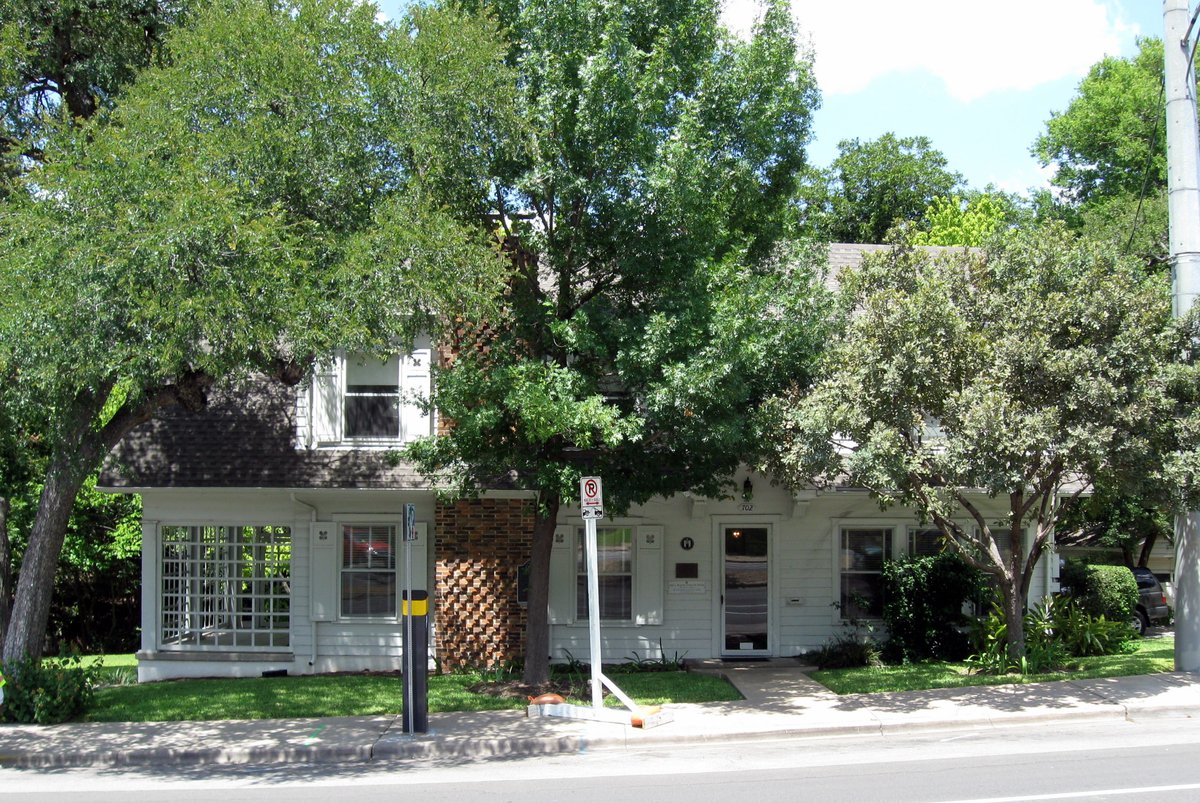
Image: The iconic Spanish Revival exterior of the J. Frank Dobie House.
Image: Preserved 1920s interior with original woodwork.
Special Note: The Dobie-Paisano Ranch House
Beyond the campus, the “Dobie-Paisano Ranch House” is another significant site associated with J. Frank Dobie, located about fourteen miles southwest of Austin. This 254-acre Hill Country ranch, purchased by Dobie in 1959, serves today as a private retreat for the Dobie Paisano Fellowship (TSHA Handbook). Public access is restricted, offered only during special events or through the highly competitive fellowship program (Dobie Paisano Fellowship). For those interested in Dobie’s legacy, the Wittliff Collections at Texas State University provide access to extensive Dobie archives and artifacts.
Tips for Literary Enthusiasts
- Apply for the Dobie Paisano Fellowship Writers and artists can apply for a six-month residency at the ranch.
- Attend Special Events Follow the Michener Center and Texas Institute of Letters for rare event announcements.
- Explore Public Archives Visit the Wittliff Collections in San Marcos for public exhibits on Dobie and Texas literary heritage.
- Respect Privacy The Dobie House and Ranch are working retreats; always observe posted policies.
Summary
The J. Frank Dobie House is a cornerstone of Texas’s literary and architectural heritage. From its Spanish Revival design to its role as a nurturing ground for creative minds, the house offers a unique glimpse into Dobie’s life and the broader narrative of Texan folklore and scholarship. While public access is most easily arranged through campus tours and literary events, the house’s legacy is accessible to all through careful planning and engagement with local literary institutions. For ongoing updates and curated resources, explore the University of Texas Michener Center, Texas Folklore Society, and Austin History Center, and consider downloading the Audiala app for enhanced experiences.