Historical Context and Preservation
Origins and Development
Built by merchant Henry Hirshfeld and his wife Jennie, the complex comprises a cottage constructed in 1873 and a more elaborate mansion completed in 1885, both designed by local architect John Andrewartha (Wikipedia). The site exemplifies the trajectory of Jewish immigrants in Austin, whose business acumen and civic involvement helped shape the city’s commercial and social identity (The Clio).
The Hirshfeld family's story is emblematic of the Jewish community's contributions to Texas, reflecting broader narratives of immigration, entrepreneurship, and cultural integration.
Architectural and Cultural Significance
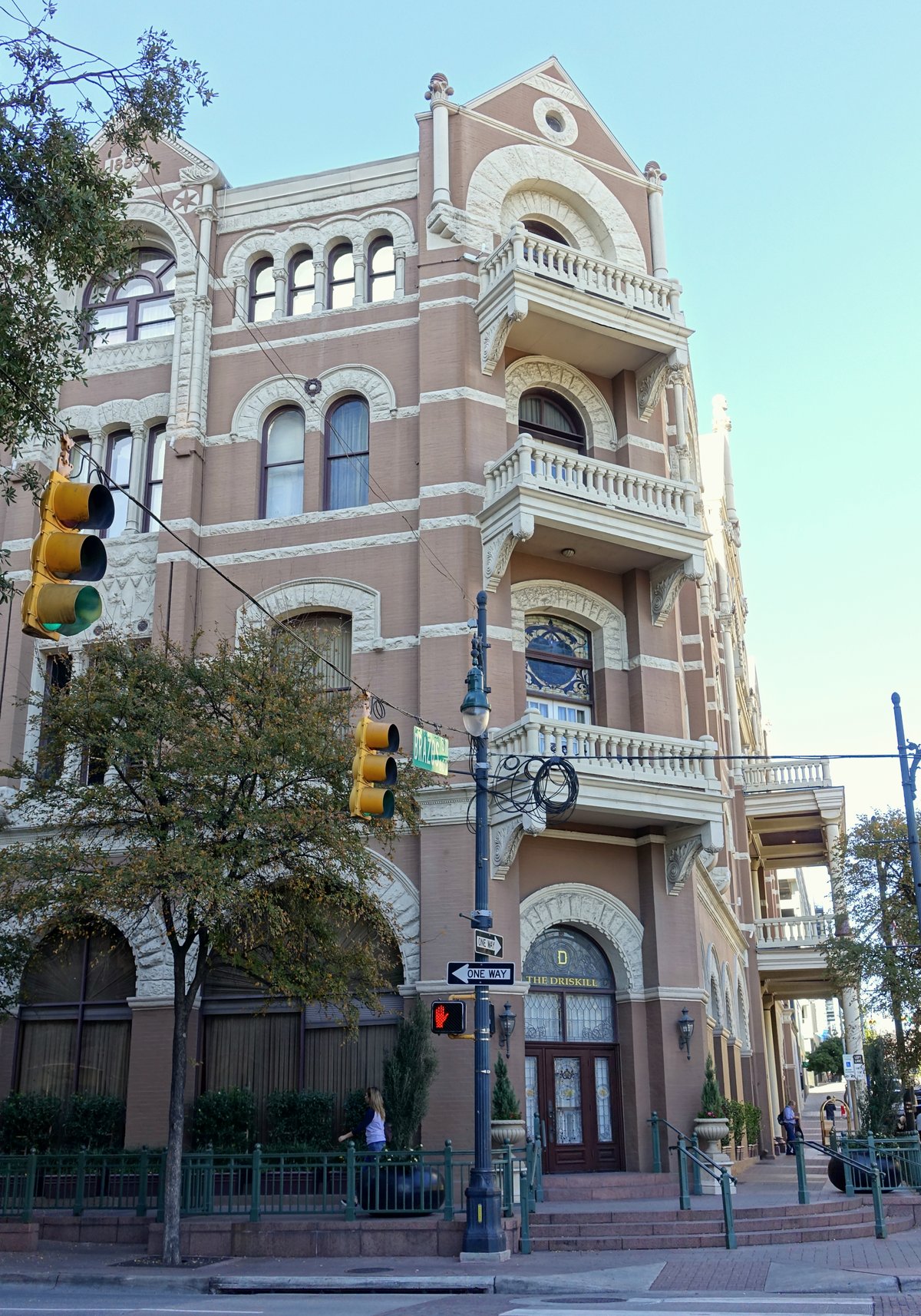
The Hirschfeld Complex is a rare example of Victorian Italianate architecture in Austin. The mansion features ornate brickwork, decorative cornices, and tall windows, while the cottage showcases a more modest vernacular style. Together, these structures illustrate the evolution of Austin’s urban landscape during a period of rapid growth (The Clio).
Culturally, the complex stands as a testament to the city’s diverse heritage. Its preservation highlights the importance of minority narratives, especially Jewish contributions, within Austin’s broader historical and civic tapestry.
Preservation and Community Engagement
The site has been listed on the National Register of Historic Places since 1973 (Wikipedia). Restoration efforts, led by Preservation Austin and supported by city and state agencies, have focused on façade rehabilitation, window and masonry repair, and sensitive adaptation for contemporary use.
Community engagement initiatives include educational partnerships, heritage walking tours, and digital resources that invite locals and visitors alike to learn about Austin’s past. The complex is featured on platforms such as GPSmyCity, making self-guided exploration accessible to all.
Visiting Information
Location and Access
- Address 303 and 305 W. 9th Street, Austin, TX 78701
- Nearby Landmarks Texas State Capitol, Red River Cultural District, Sixth Street, and the Bremond Block Historic District
- Getting There Accessible by Capital Metro bus, MetroRail, bike share, and on foot; metered street parking and public garages are available nearby (Austin Visitor Center)
Visiting Hours & Tickets
- Exterior Access The exterior of the Hirschfeld Complex can be viewed year-round at any time as part of self-guided walking tours.
- Interior Access The buildings currently house the Texas A&M University System’s Office of Governmental Relations and are not open for regular public tours. Interior access is occasionally available during special events or guided tours—check with Austin Visitor Center or Texas A&M for the latest updates.
- Tickets There is no fee to view the exterior. Guided tours and special events may require advance tickets (typically $10–$20); check with official channels for availability and booking.
Guided Tours & Accessibility
- Guided Tours Offered through the Austin Visitor Center and local heritage organizations, tours contextualize the site’s architecture, history, and cultural significance.
- Digital Resources The site is featured in digital walking tours such as GPSmyCity, providing maps and historical background for self-guided visits.
- Accessibility Sidewalks and streets around the complex are wheelchair accessible; however, historic interiors may have limited accessibility due to preservation constraints. Contact the Austin Visitor Center for specific information.
Visitor Facilities & Tips
- Restrooms & Amenities Public restrooms, WiFi, and information are available at the nearby Austin Visitor Center.
- Photography Photography of the exterior is encouraged. Permission is required for interior photography during special events.
- Travel Tips Visit in spring or fall for optimal weather. Combine your visit with nearby attractions such as the Texas State Capitol, Blanton Museum of Art, and the Red River/Six Square Cultural Districts. Use public transit or walk to minimize environmental impact.
The Hirschfeld Complex in Austin’s Heritage Movement
The preservation of the Hirschfeld Complex reflects Austin’s commitment to safeguarding its architectural and multicultural heritage amid ongoing urban growth. Through adaptive reuse, community advocacy, and educational programs, the complex remains a living monument, connecting past and present. Initiatives by organizations like Preservation Austin and municipal agencies ensure the site’s continued relevance and protection.
Frequently Asked Questions (FAQs)
Q: Can I tour the interiors of the Henry Hirshfeld House and Cottage?
A: Regular public interior tours are not available as the buildings are used as offices. Exterior viewing is encouraged, and occasional tours may be offered during special events.
Q: Are there ticket fees for visiting?
A: There is no fee for viewing the exterior. Special events or guided tours may require tickets.
Q: Is the site accessible for visitors with disabilities?
A: The surrounding sidewalks are accessible, but interior access may be limited due to historic features. Contact the Austin Visitor Center for details.
Q: What nearby attractions should I visit?
A: The Texas State Capitol, Blanton Museum of Art, Red River and Six Square Cultural Districts, and the Bremond Block Historic District are all within walking distance.
Q: Can I find virtual tours or digital resources?
A: Yes, self-guided virtual tours and resources are available via GPSmyCity and Preservation Austin.
Plan Your Visit
Enhance your exploration of Austin historical sites by downloading the Audiala app for interactive tours, insider tips, and up-to-date event information. Visit the Austin Visitor Center for brochures, maps, and personalized recommendations. Respect the site’s historic integrity and contribute to sustainable tourism by using public transit and supporting local preservation initiatives.