Plan and listen to Bailetti House with Audiala.
Audio guide in your pocket, itinerary in your browser. Built for the way you actually visit.
Introduction
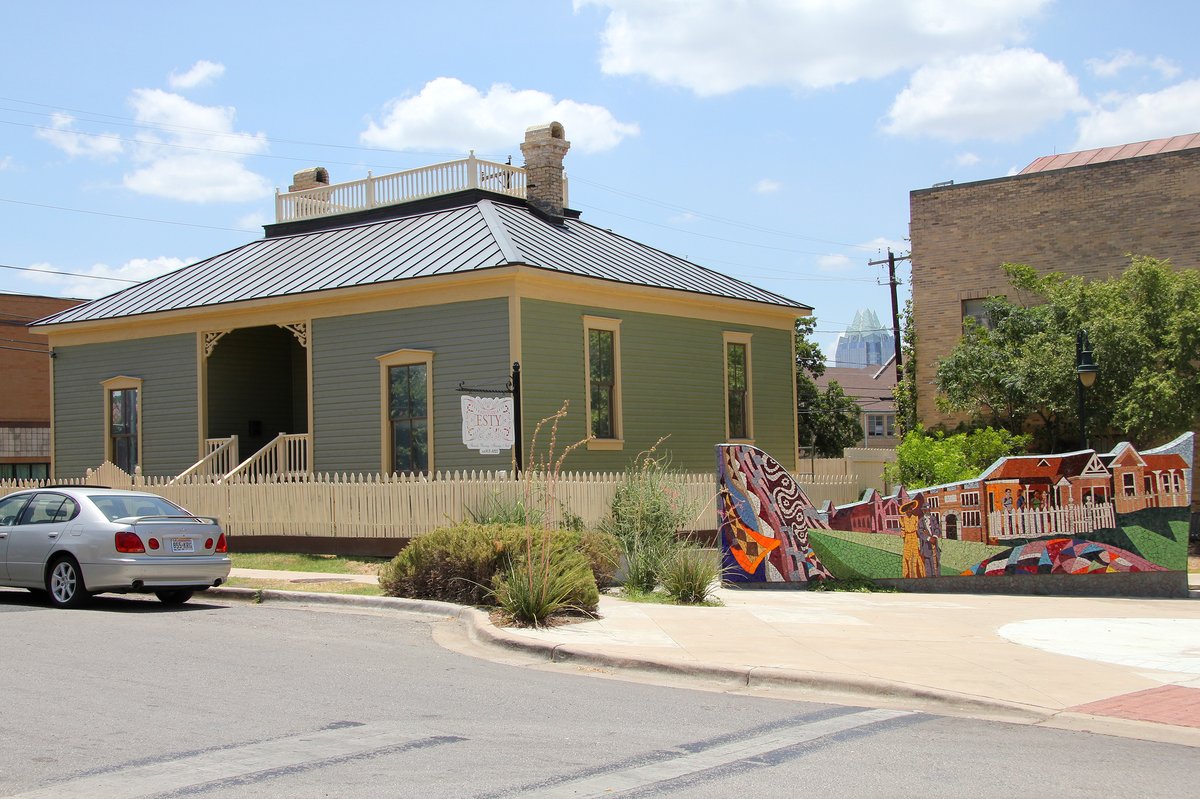
The Bailetti House, located at 1006 Waller Street in East Austin, stands as a unique example of Austin’s late 19th-century architectural and cultural heritage. Recognized on the National Register of Historic Places and documented by the Texas Historical Commission, the house serves as a vital link to Austin’s immigrant roots, urban evolution, and ongoing preservation efforts. While primarily a private residence, the Bailetti House is occasionally accessible during special heritage events and community programs, offering visitors a rare glimpse into Austin’s historic fabric (National Register of Historic Places, Texas Historical Commission).
This comprehensive guide details the Bailetti House’s historical significance, architectural features, visiting information, and its place within Austin’s broader heritage landscape. Whether you’re planning to attend a local preservation event or exploring Austin’s historic neighborhoods, this resource will help you appreciate the enduring legacy of the Bailetti House.

Historical Significance
The Bailetti House was constructed in 1886 by Salvatore Bailetti, an Italian immigrant, during a period of significant urban growth in Austin. Its original design combined commercial and residential functions—a rare surviving example of this typology in East Austin. The property served as both a family home and a grocery/saloon, reflecting the diverse economic and social life of the area’s immigrant communities (National Register of Historic Places).
Subsequent owners, including German immigrant Carl Haehnel and later Eugene “Shorty” Bonner (who operated Shorty’s Bar from 1960 to 1987), further embedded the building in local history as a community gathering place. The Bailetti House was listed on the National Register of Historic Places in 1985, underscoring its architectural and cultural significance.
Architectural Features
While detailed architectural surveys are limited, the Bailetti House is characteristic of late 19th- and early 20th-century Austin styles, blending Victorian, Queen Anne, and Craftsman influences. Notable features include:
- Asymmetrical facades and prominent porches
- Decorative woodwork and spindlework
- Multi-pane windows and transoms
- Original wood siding and period-appropriate paint
Photographs from the Texas Historical Commission’s archives confirm the preservation of these exterior details (Portal to Texas History). The building’s resilience, including reconstruction after a 1900 fire, adds to its historical narrative.
Historical Context and Preservation
The Bailetti House is a key site in Austin’s preservation movement, representing the multicultural history of East Austin—an area historically shaped by waves of immigration as well as segregation and redlining (Austin Historic Preservation Office). Its survival and adaptive reuse demonstrate the city’s commitment to maintaining the character of historic neighborhoods.
Preservation policies enforce design standards to protect the integrity of such properties, ensuring that renovations and urban development respect the historic fabric (Austin Historic Design Standards).
Cultural Importance in Austin
Beyond its architecture, the Bailetti House embodies Austin’s multicultural heritage. East Austin has long served as a hub for immigrant, Black, and Latino communities. The house’s succession of owners and uses—from merchant family residence and grocery to beloved bar—tell the story of changing demographics and urban dynamics (Austin Cultural Heritage, Austin Revitalization Authority).
Its restoration and use as office space for local businesses further highlight how historic properties can remain vibrant contributors to community life.
Visitor Information
Address: 1006 Waller Street, Austin, TX 78702
Visiting Hours: The Bailetti House is not open for regular public tours. The exterior and historical markers can be viewed at any time from the public sidewalk. Interior access may be available during special events or open house tours—check with the Austin Revitalization Authority for current opportunities.
Tickets and Admission: No admission fee to view the exterior; event-based access may have associated costs.
Guided Tours: Guided walking tours of East Austin occasionally include the Bailetti House as a stop. These are typically offered by heritage organizations or during citywide events (Nomadic Matt: Austin Walking Tours). Check local listings for schedules.
Accessibility: The surrounding sidewalks and public areas are wheelchair accessible. The building’s historic structure may limit interior accessibility.
Travel Tips and Nearby Attractions
- Best Time to Visit: Spring and fall offer comfortable weather for walking tours. Major events like Austin Museum Day or Heritage Days may grant special access (Austin Visitor Center).
- Photography: Exterior photography is encouraged, but please respect private property boundaries.
- Parking: Limited street parking is available; public transit and rideshare are recommended.
- Nearby Attractions:
- George Washington Carver Museum
- East Austin murals and music venues
- Rainey Street District
- University of Texas at Austin campus
These sites offer additional windows into Austin’s history and culture.
Role in Community Identity
The Bailetti House anchors a neighborhood that has faced both marginalization and revitalization. Its story mirrors Austin’s broader journey, balancing preservation with growth. The building is a model for how historic sites can foster community pride and continuity amid urban change (Austin Revitalization Authority).
Preservation and Visitor Experience
Visitors can appreciate the Bailetti House’s exterior and context within the historic neighborhood. When participating in tours or events, remember to:
- Respect private property (observe from sidewalks)
- Use online resources for historical context (Austin Historic Property Viewer)
- Join guided tours for in-depth learning (Nomadic Matt: Austin Walking Tours)
Cultural Tourism Contribution
The Bailetti House enriches Austin’s cultural tourism by adding depth to the city’s historic neighborhoods. Its story appeals to visitors interested in architecture, immigrant history, and community resilience (Austin Cultural Heritage, Mount Bonnell: Impact of Tourism). Preservation and adaptive reuse ensure the site remains a living part of the city’s cultural fabric.
Preservation Challenges and Opportunities
Austin’s rapid growth, gentrification, and economic pressures pose challenges for historic preservation. Advocates work to balance development with the retention of neighborhood character. Community engagement, adaptive reuse, and educational programs are key strategies (Austin Historic Preservation Office).
FAQs
Q: What are the Bailetti House visiting hours?
A: The house is not open for regular public tours. The exterior can be viewed at any time; special events may provide interior access.
Q: Is there an entry fee?
A: No fee to view the exterior; event-based tours may have costs.
Q: Are guided tours available?
A: Occasionally, as part of community events or heritage tours. Check with local organizations.
Q: Is the site accessible for people with disabilities?
A: Exterior sidewalks are accessible; interior access is limited.
Q: How can I learn more about Austin’s historic homes?
A: Visit the Austin Historic Preservation Office or Austin Visitor Center for resources.
Visuals and Maps
- High-resolution photos of the Bailetti House exterior are available through the Texas Historical Commission archives (Portal to Texas History).
- Consider mapping your tour of East Austin’s historic districts using the Austin Historic Property Viewer.
Summary and Visitor Information
The Bailetti House exemplifies Austin’s architectural evolution, immigrant heritage, and community resilience. Its well-preserved exterior and layered history offer visitors a unique glimpse into the city’s multicultural legacy. While interior access is limited, planning your visit during special events or guided tours can provide deeper engagement. Explore nearby attractions to enrich your experience, and use resources like the Austin Visitor Center and the Audiala app for the latest updates on events and tours (Texas Historical Commission, Austin Revitalization Authority, Austin Visitor Center).
Listen to the full story in the app
The whole Bailetti House,
told well.
Audio guides for 1,100+ cities across 96 countries. History, stories, and local insight — offline ready.
Verified, and shown.
Researched and written by the Audiala editorial team from historical records, architectural archives, and local expertise.
Researched from Wikidata, Wikipedia & official sources · fact-checked · How we make our guides →