
Early 20th-Century Atlanta and the Rise of Peachtree Street
The Olympia Building’s site at Five Points marks the symbolic heart of downtown Atlanta. By the early 20th century, Peachtree Street emerged as the city’s commercial artery, lined with theaters, retailers, and office buildings that reflected Atlanta’s status as a leading Southern city (Discover Atlanta). By the 1930s, Atlanta’s population growth and economic vitality created a strong demand for modern retail and office spaces, setting the stage for the Olympia Building’s creation.
Concept and Architectural Vision
The Olympia Building was envisioned as a mixed-use commercial hub, maximizing its triangular lot at the city’s most prominent crossroads. Designed by Ivey & Crook, the building reflected a blend of Art Deco and early Modernist styles—characterized by clean lines, geometric motifs, and a sense of verticality. Its “Olympia” name was chosen to convey grandeur and classical inspiration, aligning with naming trends of the era.
Construction and Architectural Features
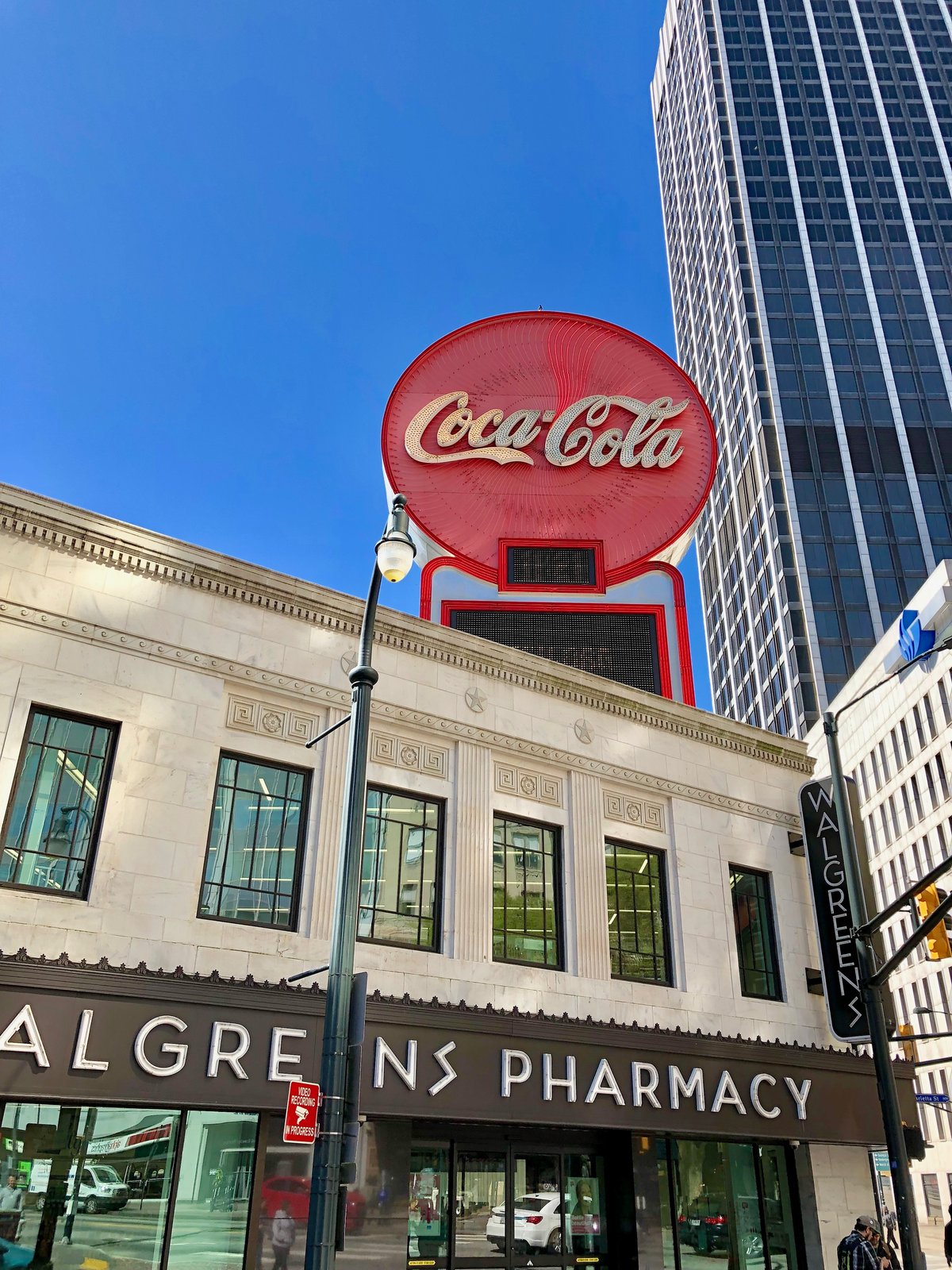
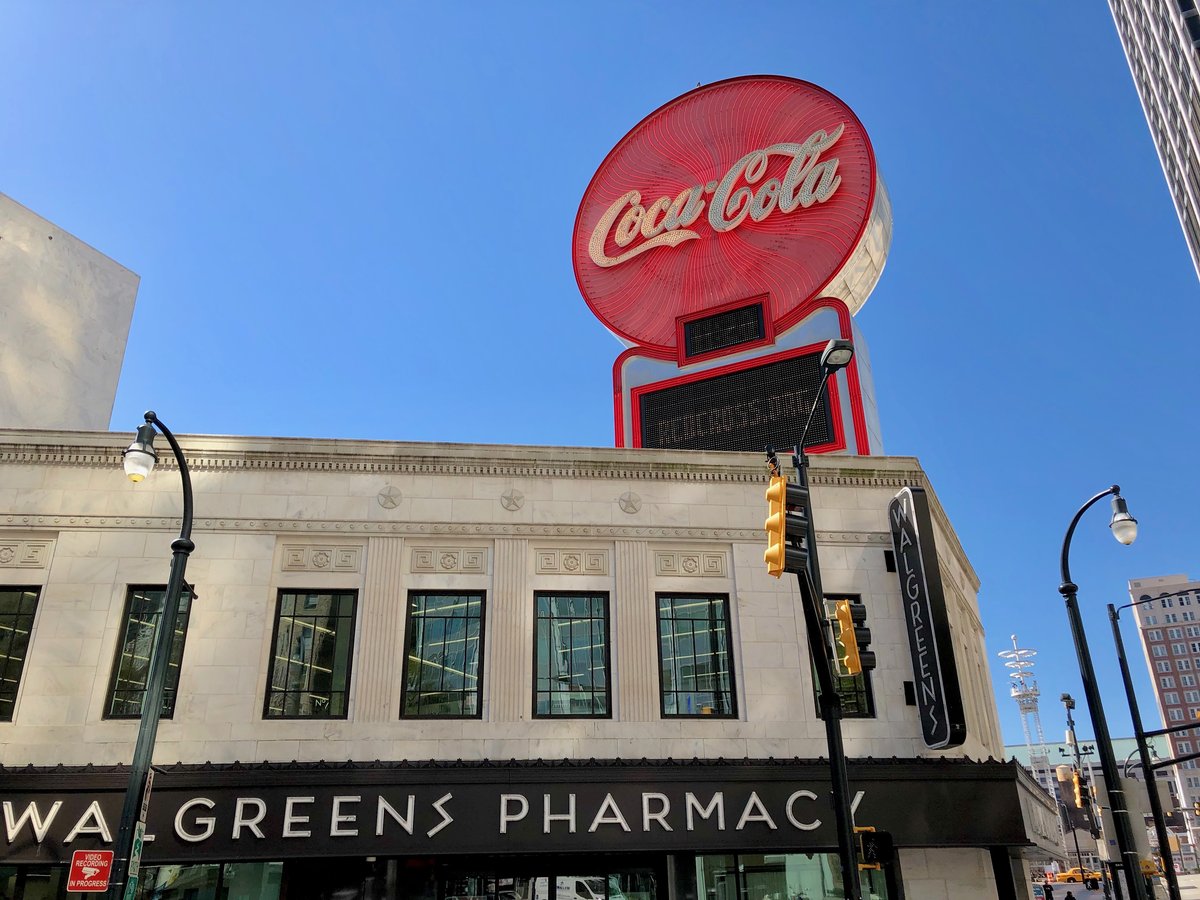
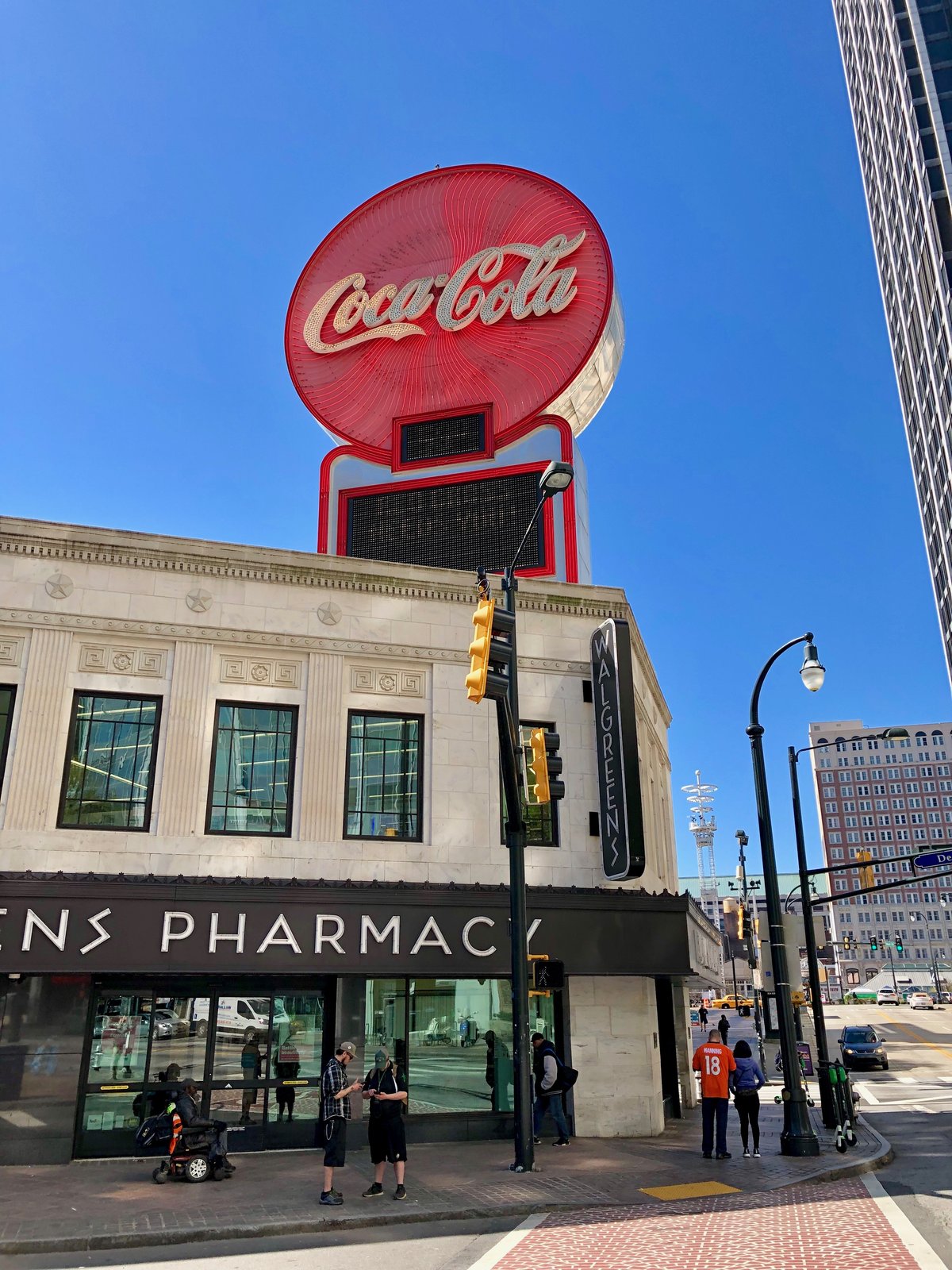
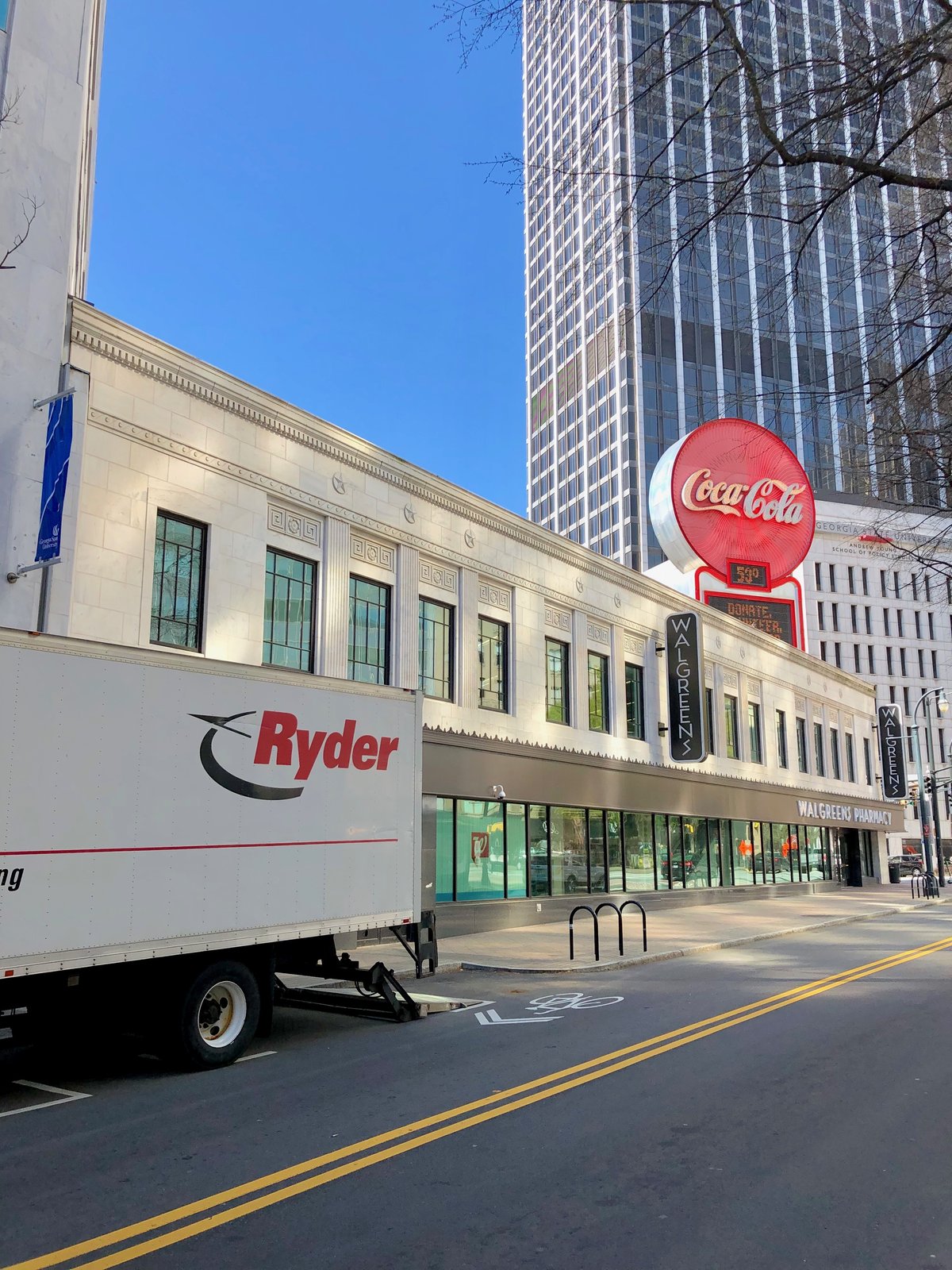
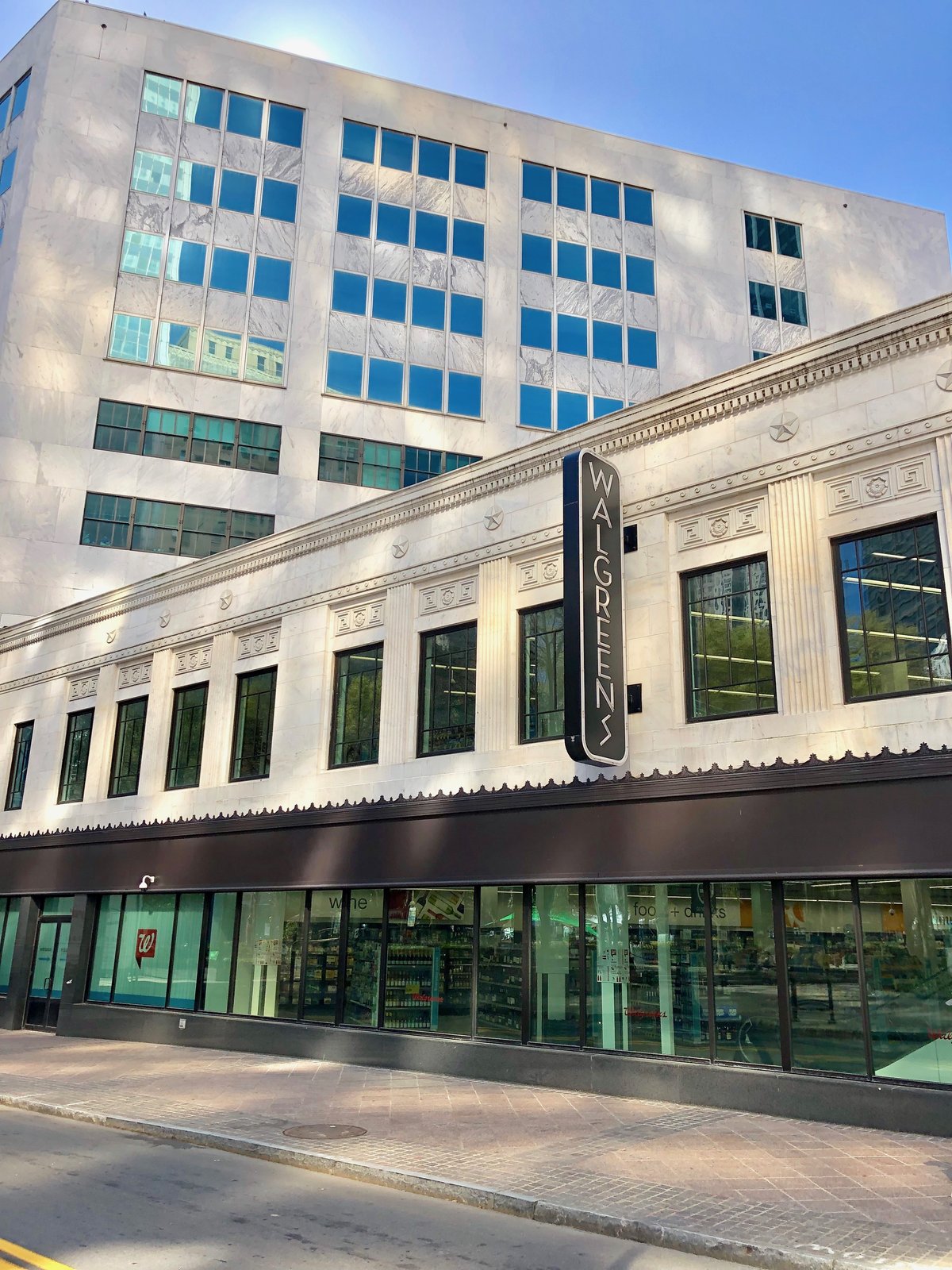
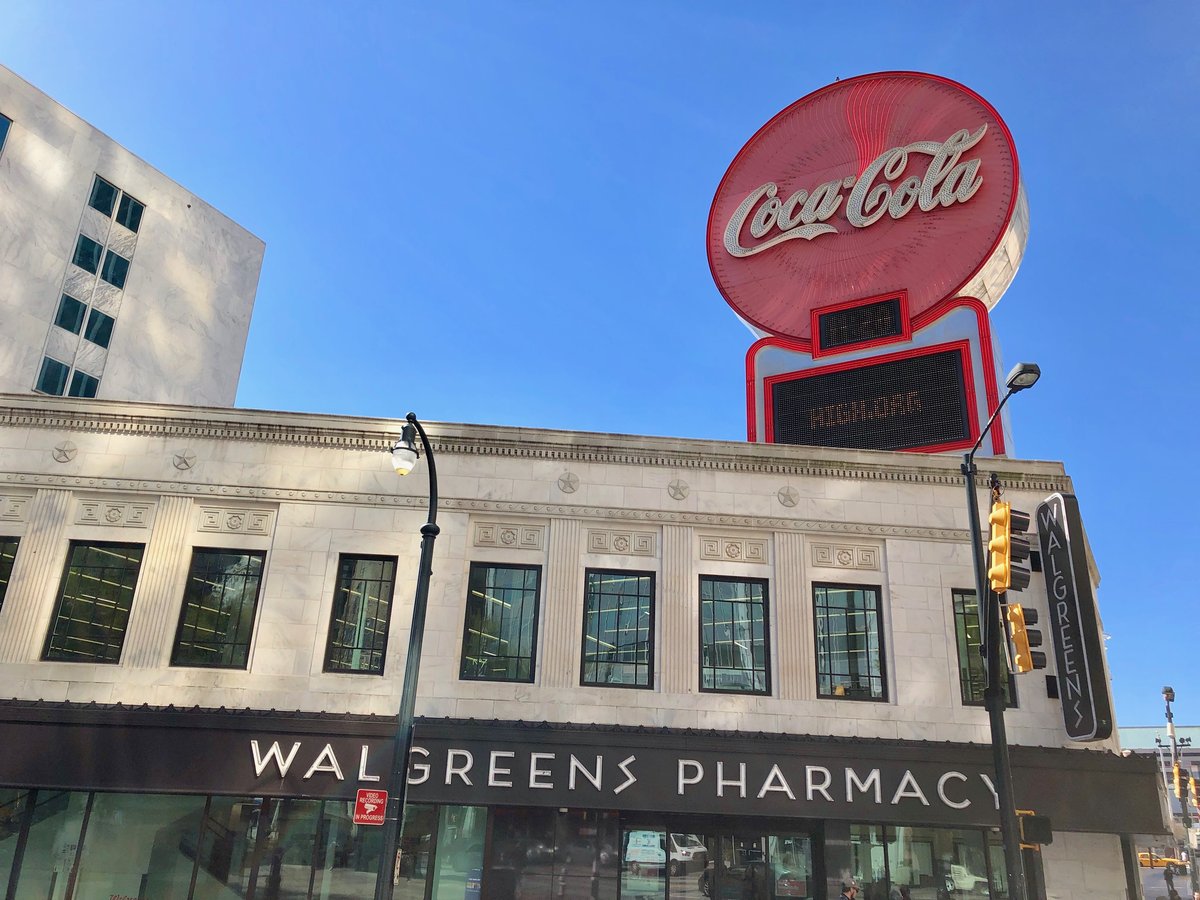
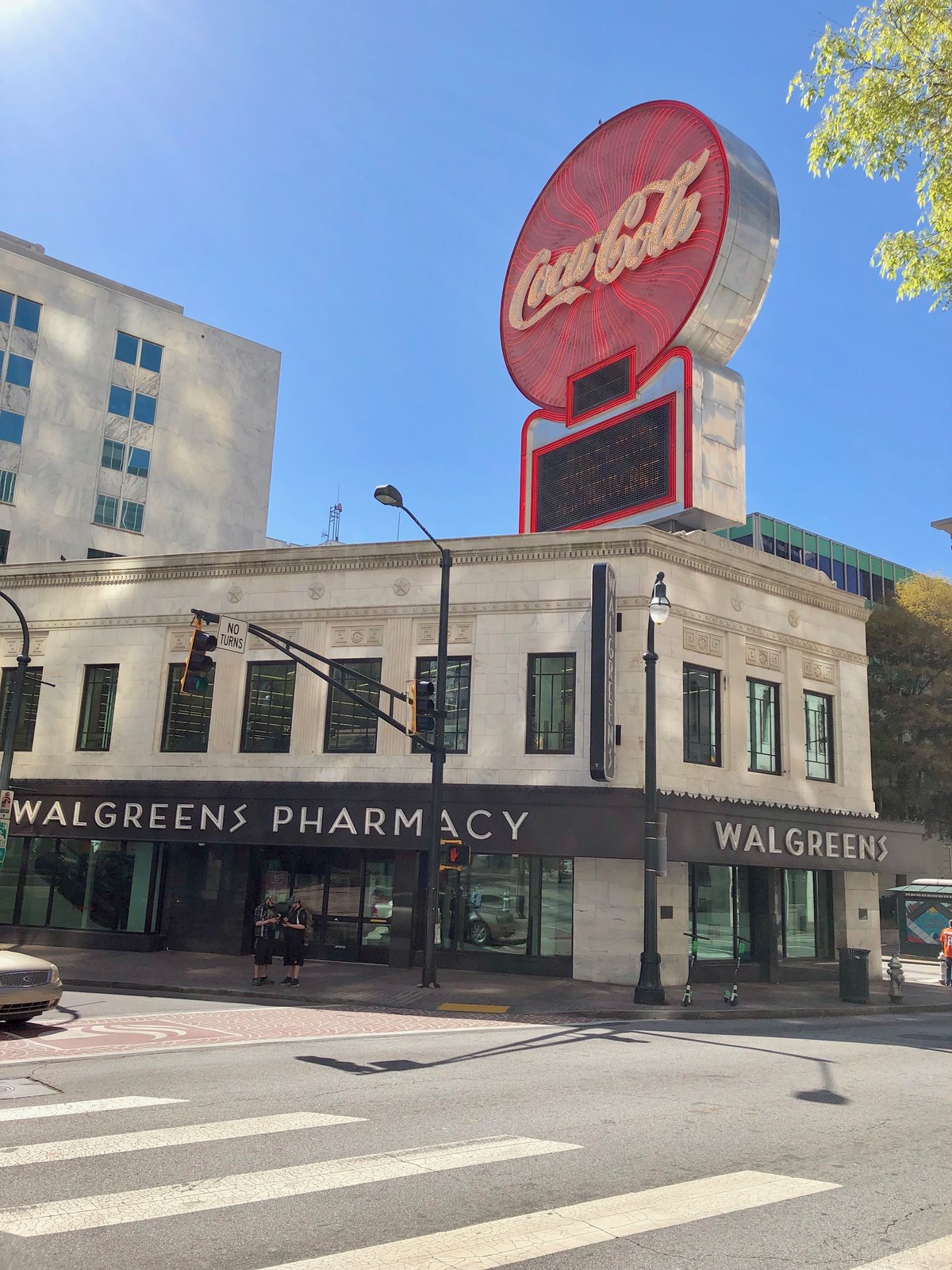
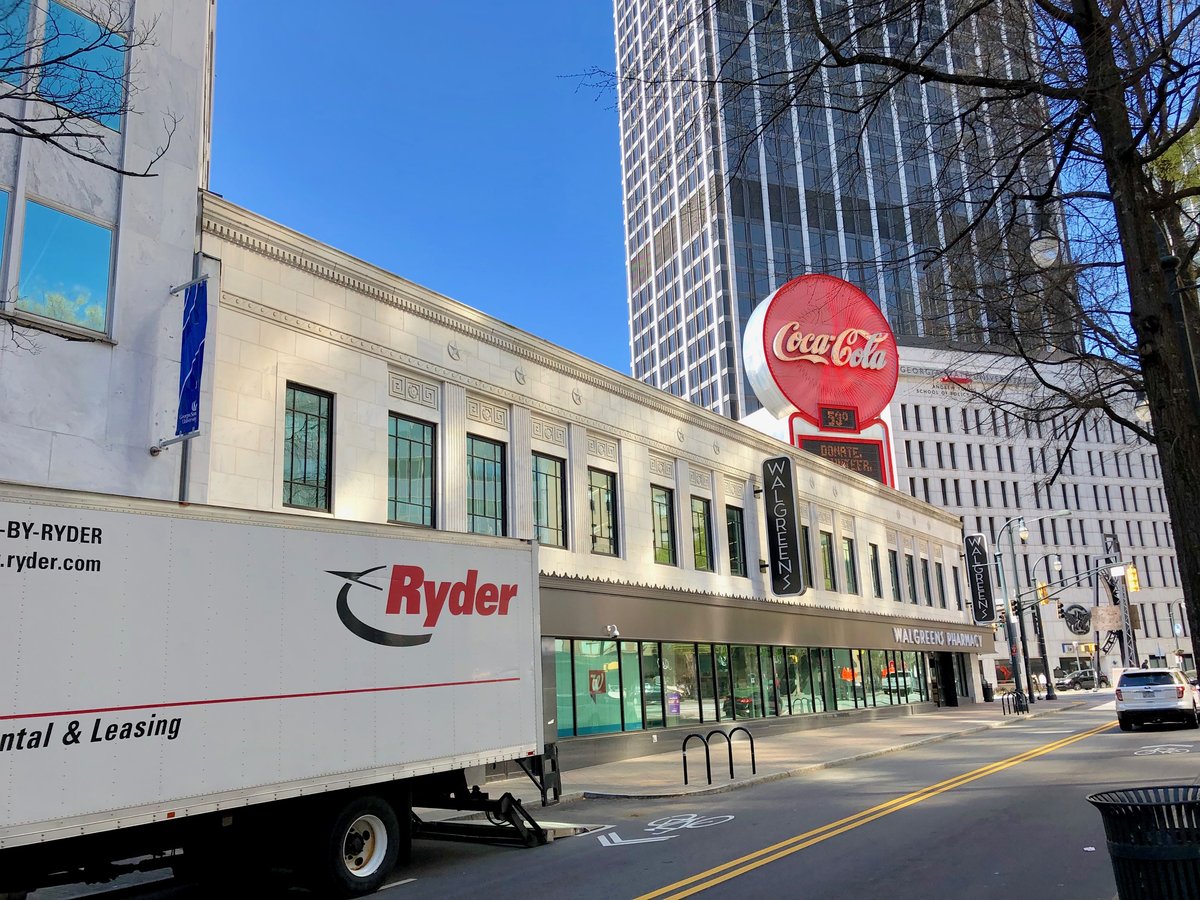
Construction began in 1935 and concluded in 1936, despite the lingering impact of the Great Depression. Utilizing a steel frame, the building offered large, open interiors ideal for retail and office use. The façade features white limestone and brick, with decorative metalwork highlighting entrances and windows. The signature curved front follows the triangle-shaped lot, creating a dramatic anchor at Five Points. Ground-floor retail windows were designed to attract shoppers, while upper stories provided flexible office space (SaportaReport).
Iconic Rooftop Signage
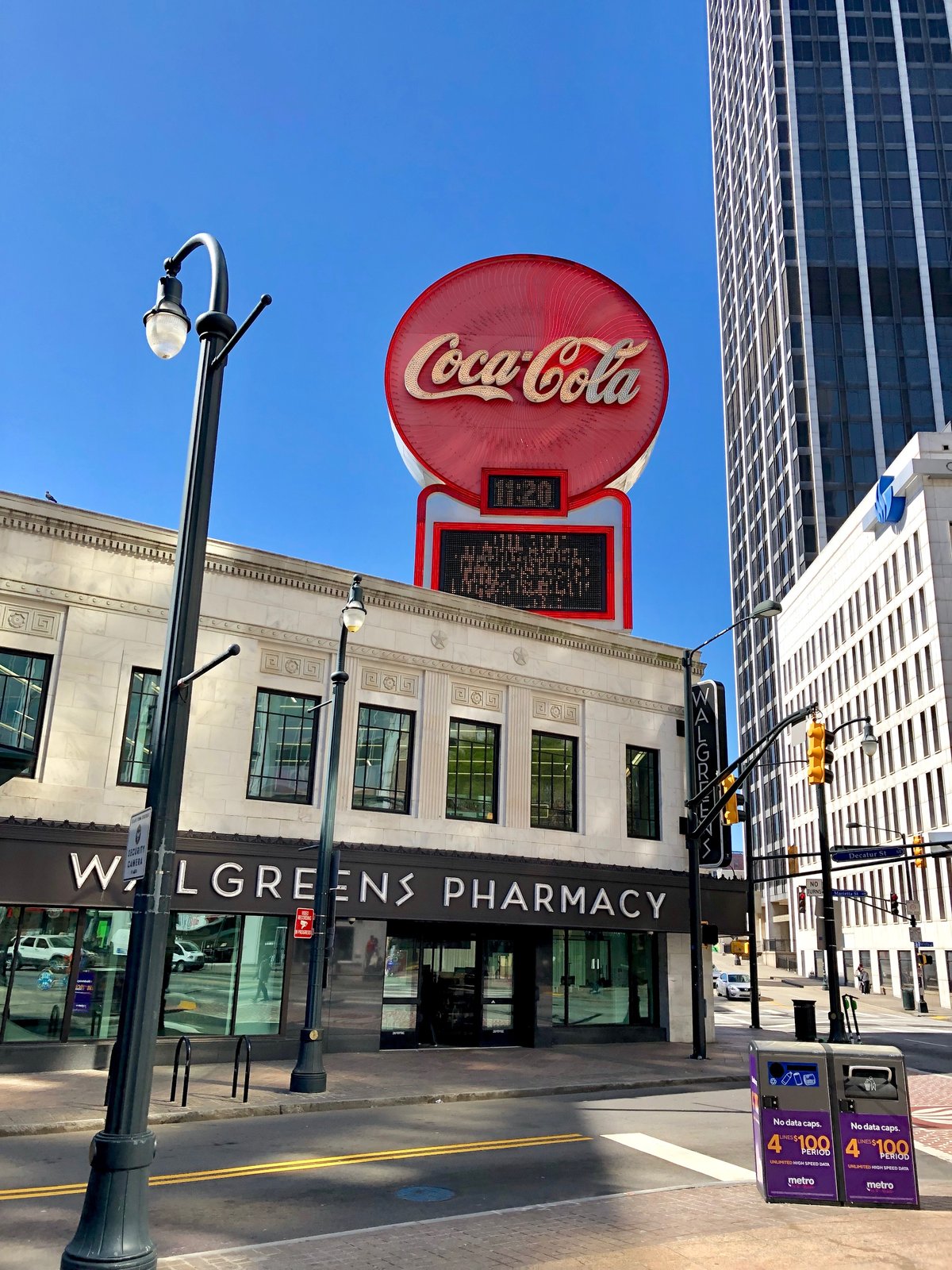
A defining feature is the rooftop Coca-Cola sign, which, though not original, has become a beloved symbol of Atlanta’s identity.
Historical Significance and Tenants
Upon completion, the Olympia Building quickly became a landmark, with its modern design setting a new architectural standard in downtown Atlanta. Early tenants included the Wormser Hat Company and Walgreens, the latter becoming a neighborhood staple for decades. The Walgreens sign and later the Coca-Cola sign contributed to the building’s iconic presence (Discover Atlanta).
Preservation and Restoration
By the late 20th century, the Olympia Building was recognized for its historical and architectural value. Preservation efforts culminated in a major restoration project completed in 2015, which returned the building to its original 1930s appearance while incorporating modern upgrades. Historic details such as marquee bands, ornamental metalwork, and the façade were meticulously restored, guided by archival photographs and original plans. The restoration was widely praised for its sensitivity to the building’s heritage (SaportaReport).
Visiting Information: Hours, Tickets, and Accessibility
- Visiting Hours The Olympia Building is open to the public Monday through Friday, 9:00 AM to 6:00 PM. As a commercial building, access is primarily to the ground-floor retail spaces.
- Tickets and Admission There is no admission fee for general visits.
- Accessibility The building is wheelchair accessible, with ramps and elevators available. Curb cuts and accessible crosswalks at Five Points ensure ease of navigation.
- Photography Exterior and public area photography is permitted; the Coca-Cola sign is especially photogenic at dusk.
Nearby Attractions and Travel Tips
- Woodruff Park A vibrant urban park featuring public art and events (Woodruff Park).
- Flatiron Building Atlanta’s oldest skyscraper, just across Peachtree Street (Atlanta Flatiron Building).
- Underground Atlanta Historic shopping and entertainment district (Underground Atlanta).
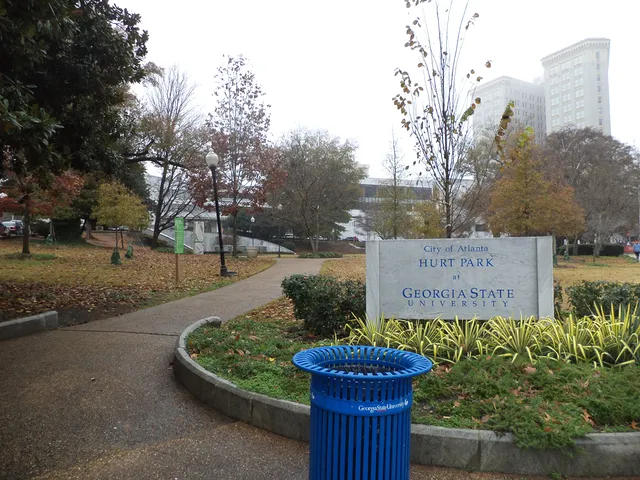
- Georgia State University The adjacent campus adds youthful energy to the area (GSU Campus Map).
- Transit The Five Points MARTA station is directly across the street (MARTA Five Points Station).
Travel Tips:
- Visit during business hours for the best experience.
- For quieter visits and optimal photography lighting, consider mornings or evenings.
- The area is generally safe, but always remain aware of your surroundings, especially at night.
Frequently Asked Questions
Q: What are the Olympia Building visiting hours?
A: Monday to Friday, 9:00 AM to 6:00 PM.
Q: Is there an admission fee?
A: No, general access is free.
Q: Is the building wheelchair accessible?
A: Yes, with ramps and elevators for public areas.
Q: Are guided tours available?
A: Occasionally, local historical walking tours include the Olympia Building. Check with Discover Atlanta.
Q: How do I get there by transit?
A: The Five Points MARTA station is steps away.
Summary and Travel Tips
The Olympia Building is a steadfast symbol of Atlanta’s history and urban vitality. Its Art Deco design, central location at Five Points, and iconic Coca-Cola sign make it a highlight among Atlanta’s historical landmarks. Visitors benefit from free public access, wheelchair-friendly facilities, and proximity to other notable sites. Whether you’re exploring the city’s architectural heritage, participating in a walking tour, or simply passing through downtown, the Olympia Building offers a unique glimpse into Atlanta’s dynamic past and present.
For curated tours and updated tips, download the Audiala app and follow local tourism channels. Stay informed about ongoing preservation efforts and upcoming events to enrich your visit (Discover Atlanta, SaportaReport, Atlanta Downtown Visitor Center).