
The Monument’s Origins and Story
The Gravity Research Foundation Monument is the product of Roger W. Babson’s determination to unravel the mysteries of gravity. Babson, a successful businessman and founder of Babson College, lost his sister to drowning—a tragedy he attributed to the “force of gravity.” Motivated by this personal loss, he established the Gravity Research Foundation (GRF) in 1948, aiming to stimulate research on the nature and potential control of gravity. The foundation became known for its essay contests and the installation of gravity monuments at select universities, with the Emory monument unveiled in 1963.
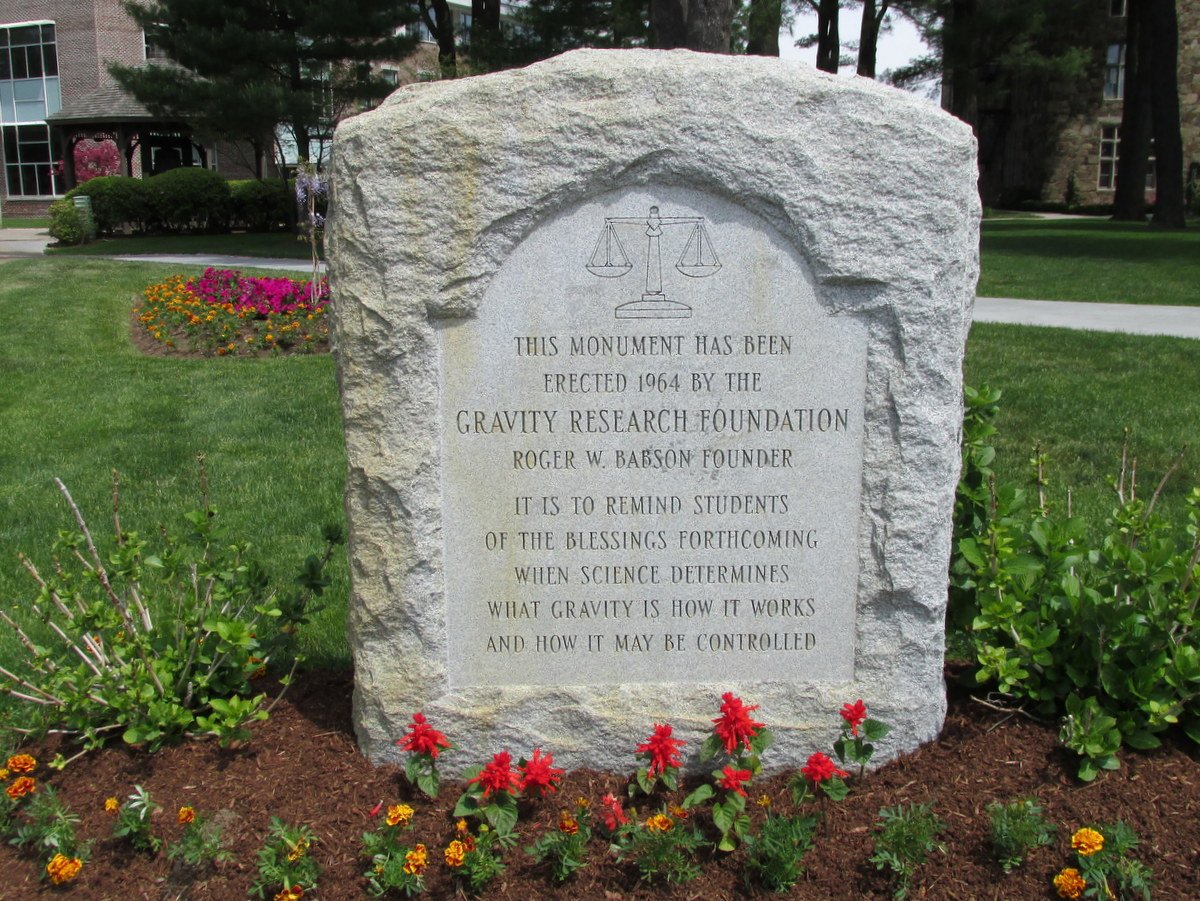
The Emory monument carries a hopeful inscription:
"GRAVITY RESEARCH FOUNDATION
Founded 1948
Dedicated to the study of gravity and its effects
It is to remind students of the blessings forthcoming when science determines what gravity is, how it works, and how it may be controlled."
This understated message encapsulates both the scientific optimism and the idiosyncratic vision that inspired Babson’s legacy.
Location and Accessibility
The monument is situated in a quiet courtyard behind the Math & Science Building at Emory University (400 Dowman Drive, Atlanta, GA 30322), within the Druid Hills neighborhood approximately five miles northeast of downtown (Emory University Visitor Page). The area is shaded, landscaped, and includes benches for reflection.
- Parking Visitor parking is available at nearby lots, such as the Fishburne and Oxford Road decks. Check Emory’s parking information for current rates and regulations.
- Public Transit MARTA bus routes 6 and 36 serve the campus directly.
- Accessibility The monument and courtyard are wheelchair accessible via paved campus pathways. Restrooms can be found in adjacent academic buildings during open hours.
Visiting Hours and Admission
- Hours The monument is outdoors and accessible year-round during Emory’s standard campus hours, typically from 7:00 AM to 10:00 PM.
- Admission Free; no tickets required.
- Guided Tours While there are no tours dedicated solely to the monument, the site is sometimes included in Emory’s general campus tours.
Monument Description and Atmosphere
The monument itself is a pink marble or granite slab, about three feet high, engraved with its dedication. It sits in a peaceful, tree-shaded courtyard behind the Math & Science Building, often accompanied by birds and occasional campus visitors. Benches and a marble seat dedicated to a former physics chair create a contemplative atmosphere.
Photography is welcome, and the serene setting makes for excellent photo opportunities. The area is generally quiet, especially during weekends and university breaks.
Historical and Cultural Significance
The Gravity Research Foundation Monument stands as a quirky symbol of scientific Americana. Roger Babson’s vision, rooted equally in personal loss and scientific curiosity, led to the creation of the Gravity Research Foundation and a series of monuments across the United States. The Emory monument is among the most accessible and well-known, serving as a conversation starter and a testament to mid-century optimism about mastering nature’s forces (Only In Your State; Atlas Obscura).
The monument continues to prompt curiosity and reflection among students, faculty, and visitors, highlighting the unpredictable and often personal motivations behind scientific inquiry.
What to Expect During Your Visit
- Visitor Flow The monument is rarely crowded. Most visitors are students, faculty, or those specifically seeking Atlanta’s offbeat sites.
- Activities Enjoy photography, a quiet moment of reflection, or learn about the monument’s backstory through Emory’s resources.
- Accessibility The site is wheelchair accessible; benches offer seating. Restrooms are available in the Math & Science Building during open hours.
- Amenities Dining options and cafes can be found within the Emory campus and nearby Emory Village.
Practical Tips for Visitors
- Best Times Early morning or late afternoon for soft light and tranquility.
- Weather Atlanta’s humid subtropical climate means spring and fall are most comfortable. Summer can be hot and humid; bring water and sun protection.
- Campus Etiquette Respect the academic environment by keeping noise to a minimum.
Nearby Attractions
Enhance your visit by exploring other attractions in and near Emory University and greater Atlanta:
- Michael C. Carlos Museum Renowned for ancient art collections.
- Lullwater Preserve Scenic walking trails and natural beauty.
- Fernbank Museum of Natural History Dinosaur skeletons and interactive exhibits.
- Emory Village Dining and shopping district steps from campus.
- Atlanta Botanical Garden Stunning gardens and seasonal exhibits (Atlanta Botanical Garden).
- Centennial Olympic Park Urban greenspace with public art (Centennial Olympic Park).
- World of Coca-Cola Interactive beverage museum (World of Coca-Cola).
- Georgia Aquarium One of the world’s largest aquariums (Georgia Aquarium).
- National Center for Civil and Human Rights Civil rights history and exhibits (National Center for Civil and Human Rights).
Unique Visitor Experiences
The monument is often featured in guides to Georgia’s quirkiest roadside attractions (Only In Your State) and is a favorite among science fans, history buffs, and seekers of the unusual. Some visitors leave notes or small tokens (though this isn’t an official tradition). The monument’s story ties into the broader narrative of scientific discovery and the sometimes surprising personal motivations behind research.
Safety and Security
Emory University’s campus is well-patrolled by security, and the monument’s area is well-lit and safe. As with any public space, remain aware of your surroundings and secure your belongings.
Souvenirs and Further Exploration
- Emory University Bookstore Offers university-branded merchandise, books, and souvenirs.
- Online Resources Learn more about Babson, the Gravity Research Foundation, and the monument’s scientific context via Emory’s website and library collections (Emory University).
- More Atlanta Oddities Explore other offbeat sites such as the Tiny Doors ATL installations and the Giant Peanut Monument (Atlas Obscura).
Frequently Asked Questions (FAQ)
What are the visiting hours?
The monument is accessible year-round during campus hours, typically from 7:00 AM to 10:00 PM.
Is there an admission fee or ticket required?
No, the monument is free to visit.
Are guided tours available?
While there are no monument-specific tours, it may be included in general campus tours.
Is the site accessible for people with disabilities?
Yes, the monument and surrounding courtyard are wheelchair accessible.
What is the best time to visit?
Early morning or late afternoon for quieter visits and optimal lighting.