Introduction
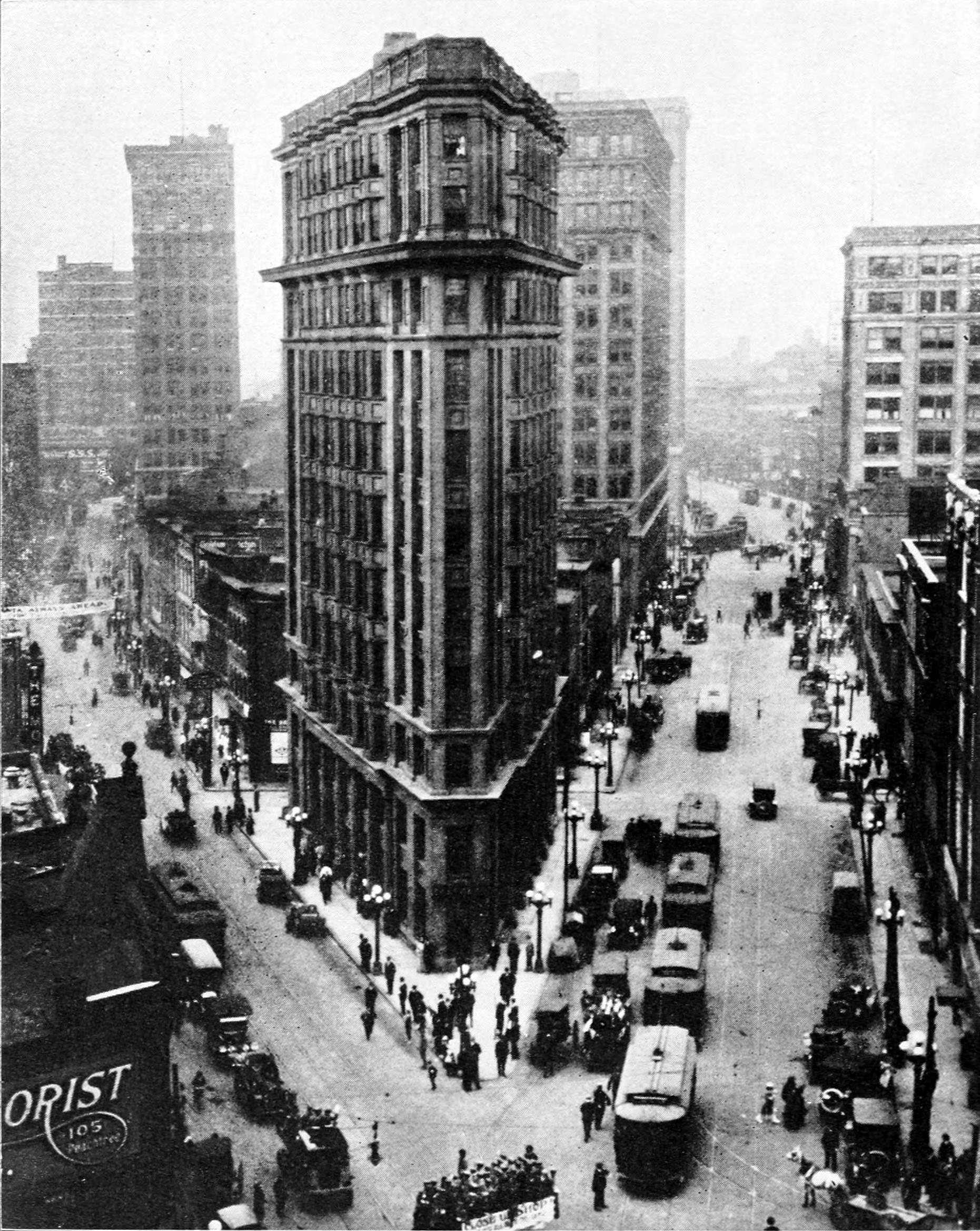
The Flatiron Building in Atlanta, Georgia, is a distinguished architectural and historic landmark that encapsulates the city’s evolution from post-Reconstruction ambitions to a modern urban hub. Completed in 1897 at 84 Peachtree Street NW, it is Atlanta’s oldest surviving skyscraper and a pioneering example of early steel-frame construction in the American South—predating New York’s more famous Flatiron Building by several years. Designed by Bradford Gilbert, a renowned New York architect, the building’s unique triangular footprint maximizes its challenging lot at the intersection of Peachtree and Broad Streets, setting it apart as both a visual anchor and a symbol of Atlanta’s resilience and innovative spirit.
Today, the Flatiron Building is not only a testament to Atlanta’s rich architectural history but also a vibrant part of its downtown community, having been revitalized as FlatironCity—a hub for technology startups and creative enterprises. Its enduring presence is celebrated through its listing on the National Register of Historic Places and its ongoing relevance as both an office space and a cultural landmark.
Origins and Early Development
Originally known as the English-American Building, the Flatiron Building was commissioned by the English-American Loan and Trust Company and completed in 1897 (The Clio). Its construction symbolized Atlanta’s aspirations for growth and modernity during the late 19th century. The triangular plot at the intersection of Peachtree and Broad Streets dictated its distinctive wedge-shaped design, which would later inspire its "Flatiron" nickname.
Architectural Significance
Designed by Bradford Gilbert, who was instrumental in advancing steel-frame construction, the Flatiron Building stands 11 stories tall and features elements of the Chicago School and Neo-Classical architecture (GSU History of Our Streets). The building’s façade is adorned with restrained ornamentation and Roman numerals (MDCCCXCVII) marking its completion year. Its steel skeleton not only allowed for unprecedented height at the time but also facilitated large windows and flexible interior layouts, hallmarks of Chicago School design (city-data.com).
Notable Events and Tenants
Over the decades, the Flatiron Building has housed a wide array of tenants, including financial institutions, insurance companies, and, more recently, technology startups. Its transformation into FlatironCity in the 21st century has made it a focal point for Atlanta’s tech and entrepreneurial communities, further cementing its status as a center for innovation (GSU History of Our Streets).
Role in Atlanta’s Urban Development
The Flatiron Building was Atlanta’s second skyscraper and the oldest still standing, setting a precedent for vertical growth along Peachtree Street (The Clio). Its unique triangular form and central location helped define the character of the Fairlie-Poplar Historic District, contributing to the vibrancy and diversity of downtown Atlanta (GSU History of Our Streets).
Preservation and Contemporary Significance
Listed on the National Register of Historic Places since 1976, the Flatiron Building has been meticulously preserved, maintaining its original exterior while adapting its interior for modern office use. Its survival amid Atlanta’s rapid urban development stands as a testament to the city’s commitment to balancing heritage with progress (city-data.com).
Visiting Information
Visiting Hours and Tickets
- Exterior Viewing: The Flatiron Building’s exterior is accessible at any time for public viewing and photography.
- Interior Access: Access to the lobby and common areas may be possible on weekdays during regular business hours (typically 8:00 AM to 6:00 PM, Monday through Friday), but interior public access is generally limited due to office tenancies.
- Admission: There is no ticket required or entry fee for exterior viewing. Special events and guided tours, when available, may require advance registration.
Accessibility
- Public Transit: The building is easily accessible via MARTA, with Five Points and Peachtree Center stations nearby.
- Entrances: The main entrances are equipped for wheelchair access, and elevators serve upper floors.
- Sidewalks: The surrounding Fairlie-Poplar district features generally accessible sidewalks, though some uneven surfaces may be encountered.
Guided Tours and Events
While the Flatiron Building does not regularly offer public interior tours, it is a highlight of many guided walking tours through the Fairlie-Poplar Historic District (GPSmyCity). Special events, such as Atlanta’s historical festivals, may also include access to the building’s interior or lobby. Check local tourism websites and event calendars for updates.
Nearby Attractions and Travel Tips
Explore these notable sites around the Flatiron Building:
- Centennial Olympic Park: A legacy of the 1996 Olympics, featuring fountains, green spaces, and public art.
- Georgia Aquarium: One of the largest aquariums in the world.
- World of Coca-Cola: Interactive exhibits on the history of the iconic beverage brand.
- Woodruff Park: A nearby green space ideal for relaxing or people-watching.
- Historic Fairlie-Poplar District: Renowned for its array of early 20th-century architecture and vibrant street life.
For additional historical exploration, consider the Atlanta History Center and the Martin Luther King Jr. National Historical Park.
Photography Tips
- Best Angles: Stand at the intersection of Peachtree and Broad Streets for the most dramatic views of the building’s triangular façade.
- Lighting: Early morning or late afternoon offers optimal lighting, highlighting the building’s classical details.
- Details: Capture the Roman numerals on the façade and the building’s unique silhouette against the Atlanta skyline.
Frequently Asked Questions (FAQ)
Q: What are the Flatiron Building Atlanta visiting hours?
A: The exterior is viewable 24/7. Lobby access may be available on weekdays during business hours (typically 8:00 AM to 6:00 PM), but interior public access is limited.
Q: Is there an entry fee or are tickets required?
A: No tickets or entry fee are required for exterior viewing. Special events or tours may require advance registration.
Q: Are guided tours available?
A: The building does not offer regular interior tours, but it is included in many downtown Atlanta walking tours.
Q: Is the Flatiron Building accessible for visitors with disabilities?
A: Yes, the building and surrounding sidewalks are generally accessible. Main entrances have ramps and elevators, though public interior access is limited.
Q: What are nearby attractions to visit?
A: Centennial Olympic Park, Georgia Aquarium, World of Coca-Cola, Woodruff Park, and the broader Fairlie-Poplar Historic District.
Listen to the full story in the app
Your Personal Curator, in Your Pocket.
Audio guides for 1,100+ cities across 96 countries. History, stories, and local insight — offline ready.
Audiala App
Available on iOS & Android
Join 50k+ Curators
Sources
- verified
- verified
- verified
- verified
- verified
- verified
- verified
- verified
- verified
Last reviewed: