location_city
Cities With Distinct Personalities
New York City, Chicago, San Francisco, and Washington D.C. are not variations on one urban theme. Each has its own pace, architecture, transit logic, and appetite.
The United States rewards travelers who think in regions, not slogans: one country, nine climate zones, and cities that feel like separate nations sharing a passport.
 United States
EntryESTA for many visa-waiver travelers; B-2 visa otherwise
UThis United States travel guide starts with one fact: you are not choosing a country so much as a continent-sized set of climates, cuisines, and cities.
The scale changes everything. In one trip, you can eat dollar slices in New York City, stand under Beaux-Arts ceilings in Chicago, then end the week watching Pacific fog roll over San Francisco. The country runs on contrast: Atlantic brick, desert light, Gulf humidity, Rocky Mountain altitude, freeway sprawl, and old main streets that still feel stubbornly local. That range is the reason travelers come, and it is also the trap. A smart United States plan starts with regions, not patriotic abstractions, because October in Santa Fe has nothing in common with August in Washington D.C. or July in New Orleans.
Cities carry the story, but food often tells it faster. Gumbo in New Orleans holds West African, French, Choctaw, and Spanish histories in one bowl. Hot chicken in Nashville began as revenge and became civic identity. Los Angeles turns migration into daily life on a plate, while Detroit, Atlanta, and Portland each prove that American culture is usually strongest where reinvention met economic pressure. You feel that history in the built world too: Gilded Age facades, mission churches, elevated trains, Art Deco lobbies, roadside motels, and national monuments that look permanent until you remember how often the country has rebuilt itself.
First Peoples and Sacred Landscapes, c. 23000 BCE-1600 CE
Morning light catches a line of footprints in what is now White Sands, near present-day Santa Fe's wider southwestern world, and suddenly the oldest American story stops being abstract. Around 23,000 years ago, someone carried a toddler across wet ground, paused, shifted the child from one hip to the other, and kept walking while giant sloths and dire wolves crossed the same mud. Ce que l'on ignore souvent, c'est que the first chapter of the United States is not a tale of conquest at all. It is an errand.
Centuries later, the continent had no single center because it had many. At Poverty Point in present-day Louisiana, between 1700 and 1100 BCE, people raised vast earthworks without kings in crowns or marble palaces; in southern Ohio, Hopewell communities turned ceremony into geometry on a grand scale; at Chaco Canyon, roads ran with a stern, almost royal straightness across the desert; at Cahokia, near modern St. Louis, a city rose whose scale would have startled later Europeans who liked to imagine they had brought urban life with them.
The rooms themselves tell the story. In Pueblo Bonito, the great house of Chaco, archaeologists found traces of cacao in cylinder jars, a detail so small and so devastating that it changes everything: chocolate in the high desert means trade, ritual, status, taste. At Mesa Verde, homes were tucked beneath sandstone overhangs like balconies built for another civilization's weather. And in Cahokia, shell beads, copper, mica, and human sacrifice suggest power that was splendid, theatrical, and sometimes brutal.
Nothing here was empty. That is the point. When English colonists later described a wilderness awaiting history, they were standing in a land already full of law, memory, diplomacy, astronomy, roads, fields, burial mounds, and grief. The next era begins when Europeans arrive and fail, at first, to understand what was already before them.
The woman at White Sands survives without a name, but the widening of her footprints under a child's weight makes her the most intimate figure in the earliest American archive.
At White Sands, some children stepped into giant sloth tracks as if monsters and play belonged to the same afternoon.
Colonies, Empires, and Revolution, 1607-1789
A winter pot simmers in Jamestown in 1609, and there is almost nothing in it. During the Starving Time, 80 to 90 percent of the English settlers died; the grand imperial venture shrank to hunger, mud, disease, and the awful discovery that a colony can perish before it learns how to live. It makes for a less flattering founding scene than the later myths preferred.
The future United States was never only English. Spanish missions and presidios had already reshaped Florida and the Southwest long before Philadelphia printed its declarations, and French ambitions ran down the Mississippi toward New Orleans with priests, traders, soldiers, and a great appetite for maps. Native nations negotiated, resisted, allied, and fought at every turn. Powhatan diplomacy mattered. Haudenosaunee political thought mattered. The colonies were not babies growing toward independence; they were frontier societies entangled in older worlds.
Then the quarrel with Britain turned theatrical. In Boston, tea was thrown into the harbor in 1773 with the flair of a political masque, and in Philadelphia, in the heat of 1776, men argued over phrases that would outlive them. Thomas Jefferson wrote that all men are created equal while slavery endured around him, a contradiction so glaring that the republic would spend centuries trying to explain it away. Better to look at it directly.
What gave the Revolution its force was not only principle but paper: pamphlets, broadsides, letters, constitutions, signatures. Benjamin Franklin, that deliciously worldly republican courtier, knew how to flatter Paris and provoke London in the same week. George Washington understood something just as important: in a republic, refusal can be more majestic than possession, and surrendering power may be the grandest performance of all. That gesture opened the door to the next problem: how to build a nation without agreeing on what it was.
Benjamin Franklin moved through the revolutionary age like a man who had read every room before he entered it, half philosopher, half impresario.
When Franklin arrived in France, his fur cap became a fashion event; the new republic learned early that image could travel faster than armies.
Union, Expansion, and Civil War, 1789-1865
In New Orleans, cotton bales rise on the levee while enslaved people are sold within earshot of the river. That is the young United States in one frame: rich, expanding, inventive, and built on a trade in human beings so visible that only deliberate blindness could miss it. Ce que l'on ignore souvent, c'est que the republic's elegance on paper rested on a daily machinery of violence.
The new federal capital in Washington D.C. staged dignity with columns and ceremony, yet the country's real energy kept spilling westward. The Louisiana Purchase in 1803 doubled the nation's scale with a flourish of diplomacy, though the land was already inhabited, governed, and known by others. Then came removal. In the 1830s, the Indian Removal Act pushed Native nations from their homelands, and the Trail of Tears remains one of the clearest examples of how legal language can march beside cruelty without blushing.
Meanwhile the United States developed a gift for reinvention and self-deception in equal measure. Canals, railroads, newspapers, revival meetings, new fortunes, abolitionist networks, and immigrant neighborhoods made the country louder and more fractured. Harriet Tubman crossed borders in darkness to break slavery's claims one person at a time. Frederick Douglass turned his own life into an argument the nation could not morally answer.
Then came secession, cannon fire, and four years of industrial slaughter. Abraham Lincoln, who could sound almost biblical one day and devastatingly plain the next, tried to hold Union and emancipation together until they became the same cause. When the war ended in 1865, slavery had been destroyed, but not the habits of hierarchy or the appetite for racial terror. That unfinished victory shaped everything that followed, from Reconstruction's brief promise to the hard metallic age of industry.
Harriet Tubman appears in legend as fearless, but the living woman behind the icon suffered seizures from a childhood head injury and kept going anyway.
Douglass and Lincoln met at the White House, where Douglass later noticed something rare for the era: the president received him like a man, not a symbol.
Industry, Empire, and the American Century, 1865-1945
Stand in Chicago in 1893 and the electric lights of the World's Columbian Exposition make modernity look almost innocent. White facades glow, crowds stare, and the republic seems to have dressed itself as an empire without quite admitting it. Yet a few miles away lie stockyards, tenements, machine politics, and labor conflict. Splendor above. Soot below.
This was the age of Carnegie steel, Rockefeller oil, Ellis Island arrivals, Pullman strikes, and newspapers fat with both ambition and lies. New York City rose as a financial capital because money likes concentration and spectacle, while Detroit turned motion into manufacture and the assembly line into a social order. The United States also looked outward with a sharper appetite, taking Puerto Rico, Guam, and the Philippines after the war of 1898 and discovering that anti-colonial language becomes awkward when one acquires colonies.
And yet culture kept outrunning power. In New Orleans, jazz made its unruly entrance from Black neighborhoods, brass bands, church music, ragtime, and the hard education of the street. In Harlem during the 1920s, writers and musicians gave the nation a language for Black modernity that the nation did not deserve but desperately needed. Louis Armstrong changed not just music but timing itself; one trumpet could reorganize a century's nerves.
The crash of 1929 shattered the old swagger. Franklin D. Roosevelt answered with radio, improvisation, and an aristocrat's instinct for making crisis sound personal. Then came World War II, and the United States emerged not merely victorious but transformed into a military, industrial, and cultural power of planetary reach. It had grown enormous. It had also learned that size solves less than it promises.
Franklin D. Roosevelt governed from a wheelchair he worked fiercely to hide, turning physical vulnerability into one of the most formidable performances of political strength in modern history.
At the 1893 Chicago fair, visitors could marvel at new technology and then step into displays that treated living peoples as exhibits, a reminder that progress and prejudice often shared the same ticket.
Rights, Reinvention, and Fractured Power, 1945-Present
A city bus in Montgomery, Alabama, 1955: one woman remains seated. Rosa Parks was not tired in the sentimental way schoolbook versions like to suggest; she was disciplined, politically trained, and fully aware that small acts, in the right setting, can detonate history. That refusal helped launch the modern civil rights movement, and with it came boycotts, sermons, beatings, court cases, federal troops, and cameras that forced the nation to watch itself.
The postwar United States sold suburban comfort, tailfins, television dinners, and the cheerful architecture of consensus. It also hunted dissent, segregated schools, redlined neighborhoods, deported farmworkers, and built a nuclear arsenal capable of ending the world several times over. Martin Luther King Jr. spoke in cadences that sounded scriptural because ordinary prose was too small for the moral emergency. His movement changed the law. It did not, by itself, change the country enough.
Then the map of influence shifted west. In San Francisco, counterculture challenged the tidy certainties of postwar life, while in Los Angeles the screen turned national anxieties into exportable dreams. Later, Silicon Valley made code, capital, and convenience into a new ruling style, promising liberation through devices while measuring every human habit it could monetize. The old republic of pamphlets became a republic of platforms.
The United States today still lives inside arguments it never settled: who belongs, who votes, who profits, who is remembered, who gets policed, who gets mourned, who gets to call disorder freedom. That is not a sign of failure alone. It is also the mark of a country founded in declaration, enlarged by contradiction, and repeatedly remade by people who were supposed to wait their turn and did not.
Rosa Parks was no accidental heroine; she had investigated sexual violence against Black women years before the bus boycott made her globally known.
During the Montgomery bus boycott, carpools ran with military precision for more than a year, turning everyday commuting into a form of civic warfare.
American English begins in the mouth, not the mind. "How are you?" means "I accept your presence," and the correct reply is a bright little coin tossed back at once; linger too long and you have turned a handshake into a confession.
The country has a genius for reducing whole theologies into one word. "Awesome" once belonged to cathedrals and thunderstorms; in the United States it now blesses parking validations, iced coffee, and a package that arrived on time.
Then the dialects begin their delicious mutiny. In New York City, speech can slice salami-thin; in New Orleans, consonants loosen like linen in heat; in Chicago, a flat vowel can sound more loyal than a flag. A country is a table set for strangers, and here the first course is verbal ease.
American manners are not old-world manners. They do not bow, they beam.
A waiter introduces himself by first name, returns every seven minutes, and asks whether everything is tasting amazing with a sincerity so practiced it becomes a kind of national theater. Europeans often misread this as intimacy. It is technique, yes, but technique can still be generous.
The true rule is strange and exact: be open, but never obstructive. Hold the door, smile at the cashier, tell a stranger your dog had surgery, but do not make the line wait while you discover your wallet at the bottom of a large philosophical handbag.
Tipping completes the ritual. Money enters where gratitude and wages should have met long before, and every visitor learns the same lesson by the third receipt: in the United States, ethics sometimes arrive as a percentage.
American food is a magnificent argument conducted over fire and refrigeration. The country loves excess, but its real talent lies elsewhere: in making immigrant memory edible, then serving it on paper, in cardboard, in cast iron, in a pie tin, in the front seat of a car with the engine still running.
Consider the map. Brisket darkened for 14 hours in Texas; gumbo in New Orleans, where okra, filé, sausage, and French method stop pretending they came from separate worlds; a folded dollar slice in New York City; deep-dish in Chicago, which is less pizza than a legal dispute involving cheese and gravity.
Then the rituals turn almost liturgical. In San Francisco, sourdough is discussed with the solemnity once reserved for relics. In Santa Fe, green chile arrives with the force of a local oath: red or green is a question, Christmas the shrewd answer.
The country eats as if appetite were a branch of federal power. And yet the most American flavor may be plain old longing, smoked, pickled, frosted, or poured over ice.
American literature distrusts moderation. It prefers prophets, runaways, frauds, saints with dirty shoes, women at kitchen tables having revelations they did not request, and men crossing 600 pages in search of a sentence large enough to contain a continent.
Read the nation by region and it becomes indecently alive. Flannery O'Connor gives Georgia a violence so exact it feels theological; Toni Morrison turns memory into weather; James Baldwin writes New York City with such moral voltage that a block can read like destiny; Joan Didion looks at California and finds fever beneath sunlight. No empire likes mirrors. America mass-produces them.
The oddity is that this literature is both boastful and frightened. It announces itself in a barbaric yawp, then spends the next century wondering who heard it, who was excluded, and who paid for the microphone.
That is why the books matter to travelers. They do not flatter the country. They teach you how to hear the crackle beneath the pleasant small talk.
If you want to understand the United States, listen before you look. The country has explained itself more honestly in song than in speeches, and the evidence runs from the Black church to the juke joint, from Appalachian ballads to the studio gloss of los angeles, from brass funerals in New Orleans to the disciplined ache of Nashville.
Jazz is not merely a genre here; it is a method for surviving contradiction. Blues names pain without tidying it. Country turns divorce, weather, trucks, and God into formal structures. Hip-hop, born in New York City, treated the city block as both orchestra pit and witness stand.
And then the American miracle, which is also the American theft: forms created by Black musicians become the common grammar of the planet, often with profit taking the scenic route away from the inventors. The songs remain wiser than the business.
In a diner, a bar, a supermarket aisle, music fills the air not as decoration but as constitutional law. Silence would feel almost impolite.
American architecture swings between swagger and consolation. One moment it is a Manhattan tower reflecting capital back at itself in blue glass; the next it is a wooden porch in Georgia, a Chicago bungalow, an adobe wall in Santa Fe the color of baked apricot, holding evening coolness like a secret.
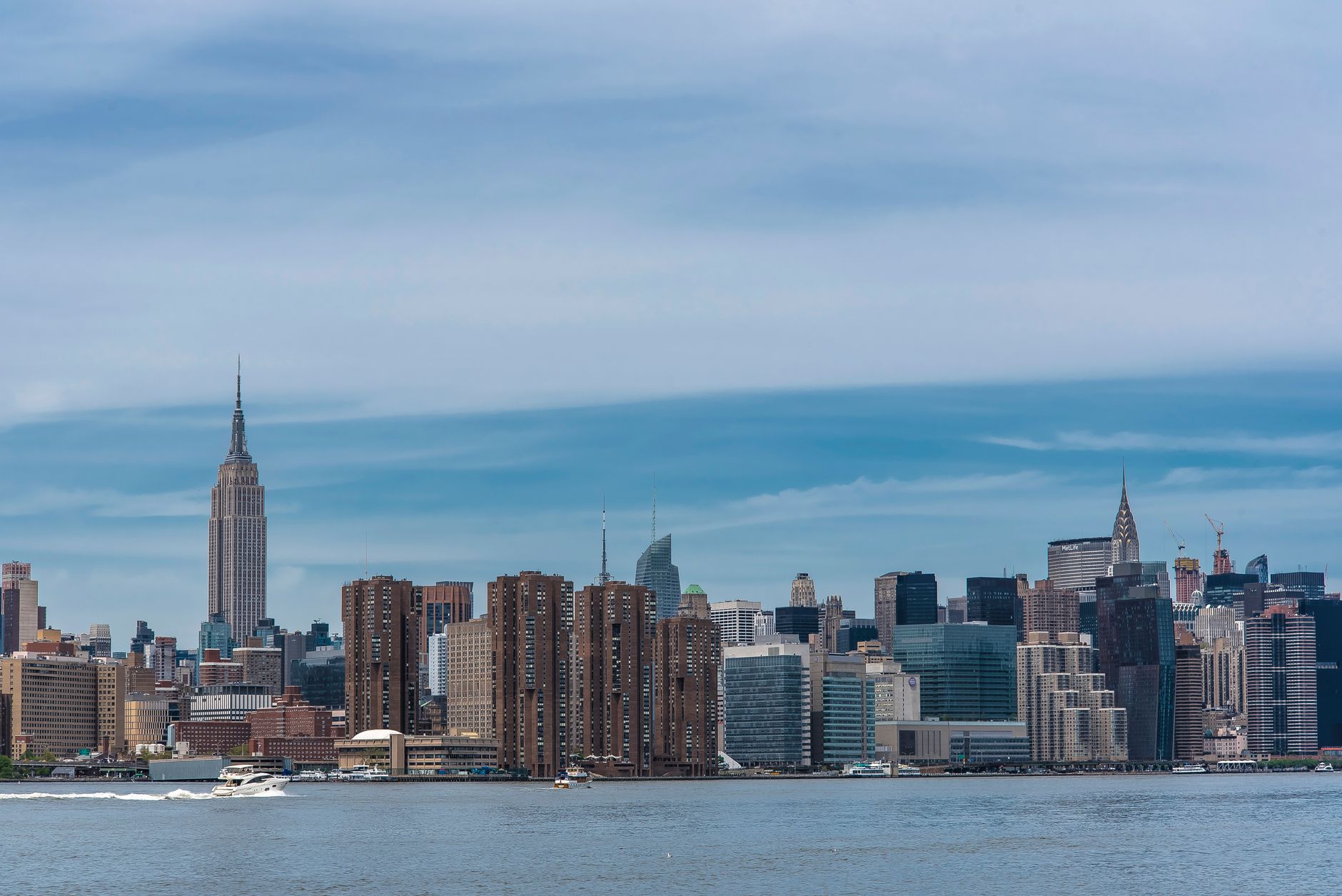
The skyline is the country's autobiography written in zoning codes and speculation. New York City and Chicago taught height to behave like destiny; Washington D.C. refused skyscrapers and made power sprawl horizontally, which is its own form of vanity.
Elsewhere, the buildings reveal regional theology. In San Francisco, Victorian houses climb impossible slopes with decorative stubbornness. In los angeles, the bungalow and the strip mall confess that the automobile won the century and demanded architecture kneel.
What moves me most is the friction. A nation obsessed with novelty preserves diners, courthouses, motels, and train stations with an almost tender nostalgia, as if demolition were one more frontier and memory the last territory left to defend.
New York City, Chicago, San Francisco, and Washington D.C. are not variations on one urban theme. Each has its own pace, architecture, transit logic, and appetite.
American cooking makes sense when you stop treating it as one cuisine. Gumbo, Texas brisket, deep-dish pizza, hot chicken, and green chile burgers belong to specific histories and places.
This is one of the few countries where driving becomes part of the plot. Deserts, mountain passes, lake shores, and motel towns turn distance into its own experience.
The best time to visit depends entirely on where you are going. Spring suits much of the Northeast and Midwest, while the Southwest and Gulf South are often better in cooler months.
The story starts long before 1776, from White Sands footprints in New Mexico to Cahokia's earthworks and mission-era settlements. American history is older, stranger, and less tidy than the clichés suggest.
The country is built for visual whiplash: Pacific cliffs, Appalachian ridgelines, desert basins, Great Lakes shorelines, and skylines that announce themselves from miles away. Photographers rarely run out of material.
12 cities — start with the ones we'd send you to first.
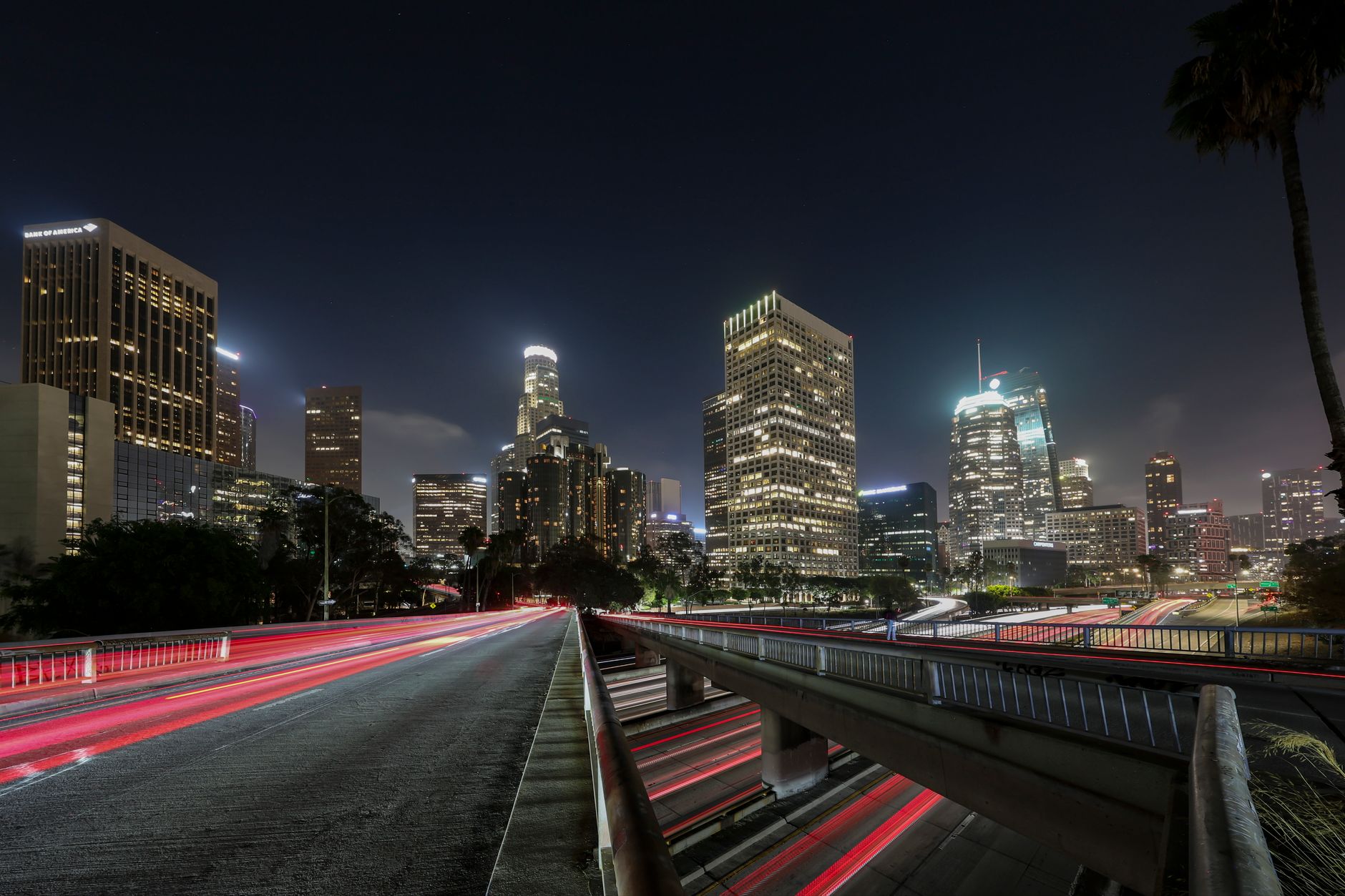
Los Angeles is a city of edits: ocean glare, jacaranda shade, neon, and canyon dust cut together in the same afternoon. The surprise is not that it is huge—it is how many different worlds fit inside one sunset.
Atlanta is a city of reinvention where rail lines become sculpture trails and history still speaks in a preacher’s cadence. It doesn’t ask for quick admiration; it rewards attention.
The grid ends at the Hudson and the East River, but the city's actual borders are psychological — once it has you, distance becomes irrelevant.
The only American city where a Tuesday afternoon funeral can turn into a street party by the second block, and everyone already knows the choreography.
The Loop rises from a flat prairie like a dare, and the architecture — Sullivan, Mies, Helmut Jahn — reads as a century-long argument about what a city owes the sky.
Forty-nine square miles of hills so steep the cable cars were an engineering necessity, not a tourist attraction, and the fog rolls in off the Pacific every afternoon like a curtain call.
The Mall's sightlines were engineered by Pierre Charles L'Enfant in 1791 so that power would always be visible from a distance — and it still works.
The honky-tonks on Lower Broadway run noon to 3 a.m., 365 days a year, and the musicians are genuinely that good.
The oldest state capital in the country sits at 7,000 feet in high desert, its adobe architecture legally protected since 1957, and the green chile cheeseburger at a roadside diner here is a more honest meal than anythin
This is the part of the country where distance collapses and the train still makes sense. New York City and Washington D.C. anchor the region, but the real appeal is the density of museums, old street grids, immigrant neighborhoods, and institutions that have spent two centuries arguing about what the United States is supposed to be.
The Midwest does not waste time trying to charm you. Chicago gives you steel, limestone, lake wind, and one of the world's great architecture lineups, while Detroit shows what happens when industry, music, money, and collapse all leave visible marks on the same streets.
This region runs on performance, memory, and food that rarely bothers with restraint. Nashville, atlanta, and New Orleans each tell a different Southern story: one about songs, one about power and reinvention, and one about a port city that still moves to its own beat.
The Pacific edge feels less like one region than a string of separate republics connected by Highway 1, airport shuttles, and weather mood swings. San Francisco, los angeles, and Portland each have their own tempo, but all three share expensive real estate, serious food culture, and a habit of treating geography as identity.
Here the scale changes first. Santa Fe and Marfa sit in landscapes that make Eastern cities seem cramped, and the region's appeal comes from adobe towns, long drives, Indigenous history, railroad-era ambition, and the odd fact that some of the country's sharpest contemporary art scenes ended up in places with more sky than people.
From White Sands footprints to a digital superpower still debating its own promises
Human footprints are left in ancient mud at White Sands in present-day New Mexico, including tracks from children and a person carrying a toddler. The scene is domestic, almost tender, and it pushes the American story far deeper into time than older schoolbook narratives allowed.
In present-day Louisiana, communities begin building the monumental earthworks now known as Poverty Point. The site proves that large-scale construction and long-distance trade did not require kings, stone palaces, or later European models of state power.
Southern Ohio becomes a major ceremonial center where mounds, geometric earthworks, mica, copper, and obsidian gather in a ritual landscape of astonishing reach. Materials arrive from places as distant as Yellowstone and the Gulf Coast, suggesting pilgrimage as much as exchange.
Chaco Canyon develops into a ceremonial and political center connected by engineered roads across the Southwest. Great houses such as Pueblo Bonito turn stone, astronomy, and regional power into architecture.
Near present-day St. Louis, Cahokia grows into the largest urban center north of Mesoamerica. Monks Mound dominates the settlement, and the city's scale unsettles any easy notion that complex urban life arrived only with Europeans.
Christopher Columbus reaches the Caribbean, setting in motion colonization, disease, conquest, and forced labor across the Americas. The territory of the future United States is not yet a nation, but its fate has changed.
English settlers establish Jamestown in Virginia, the first permanent English settlement in North America. The colony survives only narrowly, thanks in part to Powhatan diplomacy and trade, then nearly collapses during the Starving Time.
The Virginia House of Burgesses convenes, and the same year recorded Africans arrive in English Virginia. Self-government and racial slavery enter the English colonial story side by side, a pairing the future republic never fully escapes.
In Philadelphia, the colonies declare independence from Britain. The language is magnificent, but its universal claims stand beside slavery, dispossession, and exclusion, giving the new nation its founding contradiction.
Delegates in Philadelphia write the Constitution, creating a stronger federal system while postponing the deepest moral questions. The document is brilliant, durable, and compromised from the start.
The United States buys a vast territory from France, doubling its size on paper. Expansion looks elegant in diplomacy, but the lands are already inhabited, governed, and contested by Native nations.
Congress authorizes the removal of Native nations from the Southeast, clearing land for white settlement. The policy leads to forced marches, death, and the Trail of Tears, one of the clearest moral indictments in U.S. history.
After Southern secession, war erupts at Fort Sumter. What follows is a conflict over Union, slavery, political power, and the country's future on an industrial scale of death.
Abraham Lincoln declares enslaved people in rebelling states to be free, turning the war more openly into a fight against slavery. It is both a military act and a moral threshold.
The Civil War ends, the Thirteenth Amendment abolishes slavery, and Lincoln is assassinated days later. Victory brings liberation, grief, and the beginning of a struggle over what freedom will mean in practice.
The United States defeats Spain and acquires Puerto Rico, Guam, and the Philippines. A republic born in anti-colonial revolt now faces the uncomfortable fact of imperial rule.
The Nineteenth Amendment prohibits denying the vote on the basis of sex. The victory crowns decades of organizing, though access remains uneven for many women of color in practice.
The stock market collapses, shattering the confidence of the 1920s and plunging the country into the Great Depression. Bank failures, unemployment, and hunger force Americans to rethink the role of government.
Japan attacks Pearl Harbor, bringing the United States formally into World War II. The conflict transforms the country into an armed industrial giant and accelerates its rise to global dominance.
In Montgomery, Rosa Parks refuses to give up her bus seat, helping spark the modern civil rights movement. The boycott that follows turns everyday transport into a battlefield over dignity and law.
After years of protest, violence, organizing, and federal pressure, the Civil Rights Act outlaws segregation in public accommodations and employment discrimination. It does not end racism, but it changes the legal terrain decisively.
Apollo 11 places American astronauts on the Moon, turning Cold War competition into televised wonder. The achievement is technological theater of the highest order, watched by millions around the world.
Coordinated terrorist attacks kill thousands in New York City, Washington D.C., and Pennsylvania. The shock reshapes U.S. foreign policy, domestic security, and the emotional atmosphere of the new century.
First Peoples and Sacred Landscapes
The woman at White Sands survives without a name, but the widening of her footprints under a child's weight makes her the most intimate figure in the earliest American archive.
Morning light catches a line of footprints in what is now White Sands, near present-day Santa Fe's wider southwestern world, and suddenly the oldest American story stops being abstract. Around 23,000 years ago, someone carried a toddler across wet ground, paused, shifted the child from one hip to the other, and kept walking while giant sloths and dire wolves crossed the same mud. Ce que l'on ignore souvent, c'est que the first chapter of the United States is not a tale of conquest at all. It is an errand.
Centuries later, the continent had no single center because it had many. At Poverty Point in present-day Louisiana, between 1700 and 1100 BCE, people raised vast earthworks without kings in crowns or marble palaces; in southern Ohio, Hopewell communities turned ceremony into geometry on a grand scale; at Chaco Canyon, roads ran with a stern, almost royal straightness across the desert; at Cahokia, near modern St. Louis, a city rose whose scale would have startled later Europeans who liked to imagine they had brought urban life with them.
The rooms themselves tell the story. In Pueblo Bonito, the great house of Chaco, archaeologists found traces of cacao in cylinder jars, a detail so small and so devastating that it changes everything: chocolate in the high desert means trade, ritual, status, taste. At Mesa Verde, homes were tucked beneath sandstone overhangs like balconies built for another civilization's weather. And in Cahokia, shell beads, copper, mica, and human sacrifice suggest power that was splendid, theatrical, and sometimes brutal.
Nothing here was empty. That is the point. When English colonists later described a wilderness awaiting history, they were standing in a land already full of law, memory, diplomacy, astronomy, roads, fields, burial mounds, and grief. The next era begins when Europeans arrive and fail, at first, to understand what was already before them.
At White Sands, some children stepped into giant sloth tracks as if monsters and play belonged to the same afternoon.
Colonies, Empires, and Revolution
Benjamin Franklin moved through the revolutionary age like a man who had read every room before he entered it, half philosopher, half impresario.
A winter pot simmers in Jamestown in 1609, and there is almost nothing in it. During the Starving Time, 80 to 90 percent of the English settlers died; the grand imperial venture shrank to hunger, mud, disease, and the awful discovery that a colony can perish before it learns how to live. It makes for a less flattering founding scene than the later myths preferred.
The future United States was never only English. Spanish missions and presidios had already reshaped Florida and the Southwest long before Philadelphia printed its declarations, and French ambitions ran down the Mississippi toward New Orleans with priests, traders, soldiers, and a great appetite for maps. Native nations negotiated, resisted, allied, and fought at every turn. Powhatan diplomacy mattered. Haudenosaunee political thought mattered. The colonies were not babies growing toward independence; they were frontier societies entangled in older worlds.
Then the quarrel with Britain turned theatrical. In Boston, tea was thrown into the harbor in 1773 with the flair of a political masque, and in Philadelphia, in the heat of 1776, men argued over phrases that would outlive them. Thomas Jefferson wrote that all men are created equal while slavery endured around him, a contradiction so glaring that the republic would spend centuries trying to explain it away. Better to look at it directly.
What gave the Revolution its force was not only principle but paper: pamphlets, broadsides, letters, constitutions, signatures. Benjamin Franklin, that deliciously worldly republican courtier, knew how to flatter Paris and provoke London in the same week. George Washington understood something just as important: in a republic, refusal can be more majestic than possession, and surrendering power may be the grandest performance of all. That gesture opened the door to the next problem: how to build a nation without agreeing on what it was.
When Franklin arrived in France, his fur cap became a fashion event; the new republic learned early that image could travel faster than armies.
Union, Expansion, and Civil War
Harriet Tubman appears in legend as fearless, but the living woman behind the icon suffered seizures from a childhood head injury and kept going anyway.
In New Orleans, cotton bales rise on the levee while enslaved people are sold within earshot of the river. That is the young United States in one frame: rich, expanding, inventive, and built on a trade in human beings so visible that only deliberate blindness could miss it. Ce que l'on ignore souvent, c'est que the republic's elegance on paper rested on a daily machinery of violence.
The new federal capital in Washington D.C. staged dignity with columns and ceremony, yet the country's real energy kept spilling westward. The Louisiana Purchase in 1803 doubled the nation's scale with a flourish of diplomacy, though the land was already inhabited, governed, and known by others. Then came removal. In the 1830s, the Indian Removal Act pushed Native nations from their homelands, and the Trail of Tears remains one of the clearest examples of how legal language can march beside cruelty without blushing.
Meanwhile the United States developed a gift for reinvention and self-deception in equal measure. Canals, railroads, newspapers, revival meetings, new fortunes, abolitionist networks, and immigrant neighborhoods made the country louder and more fractured. Harriet Tubman crossed borders in darkness to break slavery's claims one person at a time. Frederick Douglass turned his own life into an argument the nation could not morally answer.
Then came secession, cannon fire, and four years of industrial slaughter. Abraham Lincoln, who could sound almost biblical one day and devastatingly plain the next, tried to hold Union and emancipation together until they became the same cause. When the war ended in 1865, slavery had been destroyed, but not the habits of hierarchy or the appetite for racial terror. That unfinished victory shaped everything that followed, from Reconstruction's brief promise to the hard metallic age of industry.
Douglass and Lincoln met at the White House, where Douglass later noticed something rare for the era: the president received him like a man, not a symbol.
Industry, Empire, and the American Century
Franklin D. Roosevelt governed from a wheelchair he worked fiercely to hide, turning physical vulnerability into one of the most formidable performances of political strength in modern history.
Stand in Chicago in 1893 and the electric lights of the World's Columbian Exposition make modernity look almost innocent. White facades glow, crowds stare, and the republic seems to have dressed itself as an empire without quite admitting it. Yet a few miles away lie stockyards, tenements, machine politics, and labor conflict. Splendor above. Soot below.
This was the age of Carnegie steel, Rockefeller oil, Ellis Island arrivals, Pullman strikes, and newspapers fat with both ambition and lies. New York City rose as a financial capital because money likes concentration and spectacle, while Detroit turned motion into manufacture and the assembly line into a social order. The United States also looked outward with a sharper appetite, taking Puerto Rico, Guam, and the Philippines after the war of 1898 and discovering that anti-colonial language becomes awkward when one acquires colonies.
And yet culture kept outrunning power. In New Orleans, jazz made its unruly entrance from Black neighborhoods, brass bands, church music, ragtime, and the hard education of the street. In Harlem during the 1920s, writers and musicians gave the nation a language for Black modernity that the nation did not deserve but desperately needed. Louis Armstrong changed not just music but timing itself; one trumpet could reorganize a century's nerves.
The crash of 1929 shattered the old swagger. Franklin D. Roosevelt answered with radio, improvisation, and an aristocrat's instinct for making crisis sound personal. Then came World War II, and the United States emerged not merely victorious but transformed into a military, industrial, and cultural power of planetary reach. It had grown enormous. It had also learned that size solves less than it promises.
At the 1893 Chicago fair, visitors could marvel at new technology and then step into displays that treated living peoples as exhibits, a reminder that progress and prejudice often shared the same ticket.
Rights, Reinvention, and Fractured Power
Rosa Parks was no accidental heroine; she had investigated sexual violence against Black women years before the bus boycott made her globally known.
A city bus in Montgomery, Alabama, 1955: one woman remains seated. Rosa Parks was not tired in the sentimental way schoolbook versions like to suggest; she was disciplined, politically trained, and fully aware that small acts, in the right setting, can detonate history. That refusal helped launch the modern civil rights movement, and with it came boycotts, sermons, beatings, court cases, federal troops, and cameras that forced the nation to watch itself.
The postwar United States sold suburban comfort, tailfins, television dinners, and the cheerful architecture of consensus. It also hunted dissent, segregated schools, redlined neighborhoods, deported farmworkers, and built a nuclear arsenal capable of ending the world several times over. Martin Luther King Jr. spoke in cadences that sounded scriptural because ordinary prose was too small for the moral emergency. His movement changed the law. It did not, by itself, change the country enough.
Then the map of influence shifted west. In San Francisco, counterculture challenged the tidy certainties of postwar life, while in Los Angeles the screen turned national anxieties into exportable dreams. Later, Silicon Valley made code, capital, and convenience into a new ruling style, promising liberation through devices while measuring every human habit it could monetize. The old republic of pamphlets became a republic of platforms.
The United States today still lives inside arguments it never settled: who belongs, who votes, who profits, who is remembered, who gets policed, who gets mourned, who gets to call disorder freedom. That is not a sign of failure alone. It is also the mark of a country founded in declaration, enlarged by contradiction, and repeatedly remade by people who were supposed to wait their turn and did not.
During the Montgomery bus boycott, carpools ran with military precision for more than a year, turning everyday commuting into a form of civic warfare.
American English begins in the mouth, not the mind. "How are you?" means "I accept your presence," and the correct reply is a bright little coin tossed back at once; linger too long and you have turned a handshake into a confession.
The country has a genius for reducing whole theologies into one word. "Awesome" once belonged to cathedrals and thunderstorms; in the United States it now blesses parking validations, iced coffee, and a package that arrived on time.
Then the dialects begin their delicious mutiny. In New York City, speech can slice salami-thin; in New Orleans, consonants loosen like linen in heat; in Chicago, a flat vowel can sound more loyal than a flag. A country is a table set for strangers, and here the first course is verbal ease.
American manners are not old-world manners. They do not bow, they beam.
A waiter introduces himself by first name, returns every seven minutes, and asks whether everything is tasting amazing with a sincerity so practiced it becomes a kind of national theater. Europeans often misread this as intimacy. It is technique, yes, but technique can still be generous.
The true rule is strange and exact: be open, but never obstructive. Hold the door, smile at the cashier, tell a stranger your dog had surgery, but do not make the line wait while you discover your wallet at the bottom of a large philosophical handbag.
Tipping completes the ritual. Money enters where gratitude and wages should have met long before, and every visitor learns the same lesson by the third receipt: in the United States, ethics sometimes arrive as a percentage.
American food is a magnificent argument conducted over fire and refrigeration. The country loves excess, but its real talent lies elsewhere: in making immigrant memory edible, then serving it on paper, in cardboard, in cast iron, in a pie tin, in the front seat of a car with the engine still running.
Consider the map. Brisket darkened for 14 hours in Texas; gumbo in New Orleans, where okra, filé, sausage, and French method stop pretending they came from separate worlds; a folded dollar slice in New York City; deep-dish in Chicago, which is less pizza than a legal dispute involving cheese and gravity.
Then the rituals turn almost liturgical. In San Francisco, sourdough is discussed with the solemnity once reserved for relics. In Santa Fe, green chile arrives with the force of a local oath: red or green is a question, Christmas the shrewd answer.
The country eats as if appetite were a branch of federal power. And yet the most American flavor may be plain old longing, smoked, pickled, frosted, or poured over ice.
American literature distrusts moderation. It prefers prophets, runaways, frauds, saints with dirty shoes, women at kitchen tables having revelations they did not request, and men crossing 600 pages in search of a sentence large enough to contain a continent.
Read the nation by region and it becomes indecently alive. Flannery O'Connor gives Georgia a violence so exact it feels theological; Toni Morrison turns memory into weather; James Baldwin writes New York City with such moral voltage that a block can read like destiny; Joan Didion looks at California and finds fever beneath sunlight. No empire likes mirrors. America mass-produces them.
The oddity is that this literature is both boastful and frightened. It announces itself in a barbaric yawp, then spends the next century wondering who heard it, who was excluded, and who paid for the microphone.
That is why the books matter to travelers. They do not flatter the country. They teach you how to hear the crackle beneath the pleasant small talk.
If you want to understand the United States, listen before you look. The country has explained itself more honestly in song than in speeches, and the evidence runs from the Black church to the juke joint, from Appalachian ballads to the studio gloss of los angeles, from brass funerals in New Orleans to the disciplined ache of Nashville.
Jazz is not merely a genre here; it is a method for surviving contradiction. Blues names pain without tidying it. Country turns divorce, weather, trucks, and God into formal structures. Hip-hop, born in New York City, treated the city block as both orchestra pit and witness stand.
And then the American miracle, which is also the American theft: forms created by Black musicians become the common grammar of the planet, often with profit taking the scenic route away from the inventors. The songs remain wiser than the business.
In a diner, a bar, a supermarket aisle, music fills the air not as decoration but as constitutional law. Silence would feel almost impolite.
American architecture swings between swagger and consolation. One moment it is a Manhattan tower reflecting capital back at itself in blue glass; the next it is a wooden porch in Georgia, a Chicago bungalow, an adobe wall in Santa Fe the color of baked apricot, holding evening coolness like a secret.
The skyline is the country's autobiography written in zoning codes and speculation. New York City and Chicago taught height to behave like destiny; Washington D.C. refused skyscrapers and made power sprawl horizontally, which is its own form of vanity.
Elsewhere, the buildings reveal regional theology. In San Francisco, Victorian houses climb impossible slopes with decorative stubbornness. In los angeles, the bungalow and the strip mall confess that the automobile won the century and demanded architecture kneel.
What moves me most is the friction. A nation obsessed with novelty preserves diners, courthouses, motels, and train stations with an almost tender nostalgia, as if demolition were one more frontier and memory the last territory left to defend.
Pocahontas was turned into a fairy tale almost the moment she died, which has obscured the harder truth of her life. She moved through diplomacy, captivity, conversion, and marriage under immense pressure, a young woman carrying the burden of two worlds while England marketed her as proof that colonization could be gentle.
Franklin understood that nations are made in salons as much as on battlefields. In Paris he played the rustic sage, charmed the French court, and helped turn a colonial rebellion into an international cause with money, ships, and glamour.
Washington's greatest act was not winning power but stepping away from it. In a world still drunk on kings, he made resignation look grand, and that performance of restraint became one of the United States' founding myths.
Tubman did not write treatises; she went back into danger. She returned again and again to guide enslaved people northward, then served the Union during the Civil War, proving that courage can be logistical, practical, and cold-bloodedly effective.
Douglass took the crime committed against his own body and turned it into language so sharp the nation could not hide behind abstraction. When he asked what the Fourth of July meant to the enslaved, celebration itself became evidence for the prosecution.
Lincoln remains compelling because he never sounds entirely at ease inside greatness. His speeches carry wit, melancholy, calculation, and moral growth, and by the end of the Civil War he had moved the Union cause toward emancipation in a way that changed the country's meaning.
Wells investigated lynching when doing so could get her killed, and she named the lie at the center of white mob violence with a reporter's discipline. She belongs in any serious American pantheon because she showed that facts, gathered without flinching, can become a political weapon.
Roosevelt had the instincts of a patrician and the timing of an actor. Through fireside chats, improvised programs, and sheer political appetite, he made Washington D.C. the cockpit of national survival during the Depression and then wartime command.
King's gift was not only moral authority but scale: he could make a local bus boycott sound like a universal reckoning. He is too often embalmed as a dreamer when he was also an organizer, a strategist, and, in his final years, a fierce critic of war and economic injustice.
Parks is usually reduced to a seamstress who would not stand, which is far too neat. She had years of political work behind her, and when she remained seated in 1955, she gave the movement a disciplined act of defiance the country could neither ignore nor easily sentimentalize.
This is the sharpest short U.S. route if you want museums, political theater, and two cities that work well without a car. Start in New York City for density and late nights, then take the train to Washington D.C. for monuments, Smithsonian collections, and a calmer finish.
This week gives you the industrial Midwest without wasting time on long transfers. Chicago brings architecture, lakefront scale, and great rail bones; Detroit adds music history, factory-era bravado, and some of the most revealing urban reinvention in the country.
This route moves from the modern South into its loudest musical capitals, with food getting better as you go. Atlanta gives you civil rights history and big-city logistics, Nashville leans into live music and late bars, and New Orleans ends the trip with brass bands, Creole cooking, and a street plan built for wandering.
This is a long, high-contrast route for travelers who do not need the country to make one tidy argument. You start on the damp Pacific edge in Portland, drop down through San Francisco and los angeles, then turn inland to Santa Fe and Marfa, where the landscape gets bigger and the towns get stranger.
Eaten at noon on butcher paper, with white bread, pickles, onions, and silence during the first bite. Families, workers, pilgrims in line since 9am.
Served in deep bowls over rice on Friday evenings and damp Sundays. Grandmothers, cousins, arguments, hot sauce, second helpings.
Folded lengthwise and eaten standing on the sidewalk between subway stops in New York City. One hand for pizza, one hand for life.
Fried chicken under cayenne paste, on white bread with pickle chips. Late lunch, brave friends, iced tea, immediate regret, then pride.
A roadside lunch in Santa Fe or farther south, with roasted Hatch green chile running down the wrist. Paper napkins fail. That is part of the form.
Ordered for a table, never for impatience, in Chicago. Fork, knife, long wait, red sauce on top, debate underneath.
Breakfast in San Francisco, 7am light, strong coffee, butter going glossy on warm crumb. Solitary meal, laptop nearby, fierce opinions about fermentation.





Most travelers from Visa Waiver Program countries, including the UK, EU, and Australia, enter with ESTA rather than a visa. ESTA costs $21, is valid for two years, and allows stays of up to 90 days; if it is refused, you need a B-2 visitor visa, which usually means a consulate appointment and a $185 fee.
The United States uses the U.S. dollar, and cards are accepted almost everywhere from coffee stands to highway motels. Budget around $80 to $120 a day for bare-bones travel, $200 to $350 for a comfortable city trip, and remember that sales tax is added at the register and restaurant tips of 18 to 22 percent are standard.
Most long-haul visitors arrive through big hubs such as JFK, Newark, Miami, Atlanta, Chicago O'Hare, LAX, or SFO. The country is too large to think of as one transport zone, so choose the airport that fits your route rather than defaulting to New York City or los angeles.
For the Northeast, trains between New York City and Washington D.C. are fast, frequent, and usually easier than flying. For cross-country trips, domestic flights save days, while outside dense cities like Chicago or San Francisco you will often need a rental car.
Weather is regional, not national: a February weekend in New Orleans can feel mild while Chicago is buried in wind and snow. For New England and the Great Lakes, aim for May to June or September to October; for the Southwest around Santa Fe and Marfa, October to April is easier than midsummer heat.
Wi-Fi is common in hotels, airports, chain cafes, and many intercity buses, but quality swings wildly once you leave major metro areas. Prepaid SIMs and eSIMs from T-Mobile, AT&T, and Verizon usually cost about $30 to $50 for 30 days, and they matter if you are driving long distances.
Tourist travel is generally uncomplicated, but the sensible rule is the same as in any large country: know which neighborhoods you are entering after dark and do not leave valuables visible in cars. Medical care is expensive, so travel insurance with health coverage is not optional unless you enjoy four-figure emergency room bills.
Restaurant prices are not the full price. Add 18 to 22 percent for table service, 15 to 20 percent for taxis and rideshares, and a few dollars a night for hotel housekeeping.
Amtrak is strongest between Washington D.C. and New York City, and decent for a few scenic long routes. For most cross-country jumps, flying saves so much time that the romance of rail stops being romantic.
Rates in New York City, San Francisco, and New Orleans spike hard around weekends, festivals, and conference dates. Booking even three to six weeks ahead can save a three-figure difference per night.
Do not pick up a rental the minute you land in a big city. Spend your city days in places like Chicago or Washington D.C. without a car, then rent only when the route turns rural.
The places people actually talk about in Nashville, New Orleans, and los angeles can fill days ahead, not hours. If dinner matters to you, book it before you book the museum.
A working phone matters more in the United States than in much of Europe because addresses are spread out and public transport is patchy. Set up an eSIM before arrival or buy one on day one.
Urgent care is common, but payment systems can be messy if you are uninsured or cannot show policy details quickly. Keep your insurer's emergency number and policy ID offline on your phone.
Explore United States with a personal guide in your pocket
Audio guides for 1,100+ cities across 96 countries. History, stories, and local insight — offline ready.
If you hold a passport from a Visa Waiver Program country, usually yes. ESTA is the standard online authorization for tourist trips of up to 90 days, and if you are not eligible or it is denied, you need a B-2 visitor visa instead.
For most travelers, $80 to $120 a day is the lower realistic budget, while $200 to $350 buys a comfortable hotel-based trip. The big catch is that tax is added later and tipping is expected, so cheap-looking prices do not stay cheap for long.
For long distances, fly. Trains are useful in the Northeast and scenic on a few classic routes, but once you are moving between regions such as Chicago, New Orleans, and San Francisco, domestic flights save entire days.
In many places, yes. You can manage without one in New York City, Washington D.C., Chicago, San Francisco, and parts of New Orleans, but outside dense urban cores the country is built around driving.
That depends entirely on the region. September and October work well for New York City and Chicago, winter is better for the Gulf South and desert routes around Santa Fe, and the Pacific Northwest is at its easiest from July to September.
In cities, generally yes. Hotels, apartments, and restaurants in places like atlanta, Portland, and Washington D.C. use safe municipal water, though in some rural or reservation areas you should check local advisories.
Plan on 18 to 22 percent for sit-down service. This is not treated as a bonus in the American system; it is part of how servers are paid, which is why leaving 10 percent reads as a complaint.
Usually yes, but roaming charges can be ugly if you rely on your home plan. Most travelers are better off with a U.S. prepaid SIM or eSIM, especially if they are driving between cities where directions and booking apps matter.
Yes, with normal city awareness and decent planning. The main risks for visitors are petty theft, bad late-night decisions in unfamiliar neighborhoods, and the cost of medical care if something goes wrong.
Last reviewed