
Introduction
The British royal family's surname is not an ancient birthright — it's borrowed from a building. Windsor Castle, perched on a chalk bluff above the Thames in Windsor, United Kingdom, has been a working royal residence for over 950 years, longer than any other occupied castle on Earth. Forty monarchs have called it home, and the current King still raises his standard above its Round Tower when he's inside.
What strikes you first is the sheer mass of the place. The castle covers roughly 13 acres — about seven football pitches — and its silhouette dominates the town from almost every angle. The Round Tower, sitting atop the original Norman mound, looks ancient and imposing, though most of its height is actually a 19th-century addition by the architect Jeffry Wyatville. Appearances here are layered, and almost nothing is quite as old as it seems.
This is not a museum frozen in amber. The State Apartments still host diplomatic receptions. St George's Chapel still holds services. Guards still change on the grounds. You're walking through a building that has been continuously adapted — fortified, burned, rebuilt, redecorated — for a millennium, and that restless reinvention is what makes it more compelling than any static ruin.
Expect to walk. The visitor route covers long stretches outdoors and up a steep hill, and the wind along the Upper Ward can bite even in May. Wear shoes you'd choose for a hike, not a gallery. The reward is a place where medieval murder holes sit a few hundred metres from Rubens paintings, and where a king's coffin was once buried in a blizzard that appeared from a clear sky.
Windsor Castle: An Exclusive Tour Of The Royal Residence
Best History DocumentariesWhat to See
St George's Chapel
You walk in expecting a royal chapel and find yourself standing beneath one of the finest fan-vaulted ceilings in England — stone ribs spreading overhead like the skeleton of some enormous, petrified forest canopy. Built between 1475 and 1528 in the Perpendicular Gothic style, this is where 10 monarchs are buried, including Henry VIII (who lies beside Jane Seymour) and Queen Elizabeth II, interred here in 2022. The light does something particular in the nave: it falls through the enormous west window in long, colored shafts that make the limestone glow warm even on grey afternoons. Listen for the choristers rehearsing if you arrive mid-morning — their voices fill the space with an acoustic richness that no recording captures. What strikes you most isn't the grandeur but the intimacy. For a building that hosts state occasions, it feels surprisingly close, almost confessional. The carved wooden choir stalls, each topped with a Knight of the Garter's personal banner and helmet, give the place the feel of a private club that happens to be 550 years old.
The State Apartments
Here's where the castle stops being a fortress and starts being a palace. The State Apartments were remodeled in the 1670s by Hugh May for Charles II, who wanted something to rival Versailles — and the Baroque ceilings painted by Antonio Verrio and the limewood carvings by Grinling Gibbons suggest he came closer than most English monarchs managed. Then came the fire. On November 20, 1992, a restorer's lamp ignited a curtain in the Private Chapel, and within hours 115 rooms were ablaze. The five-year restoration that followed is itself a masterpiece: in the rebuilt rooms, look carefully at the woodwork and you'll spot where 21st-century craftsmanship meets 17th-century originals, the grain subtly different, the finish fractionally smoother. The Waterloo Chamber alone — 30 metres long, hung with portraits of every leader who defeated Napoleon — could swallow a tennis court. But the room that stays with you is the smaller Queen's Drawing Room, where a Van Dyck portrait of Charles I's family hangs in light so carefully controlled it feels like the painting is generating its own glow. Pick up the multimedia guide, narrated by King Charles III himself; it transforms the walk from spectacle into story.
The Long Walk and the Round Tower: A Route That Earns the View
Start at the copper statue of George III at the southern end of the Long Walk — a dead-straight, tree-lined avenue stretching 4.3 kilometres toward the castle. From here, the Round Tower rises on its artificial motte like something from a playing card, and at dawn or dusk the silhouette is so perfectly composed it looks staged. Walk north toward the castle, and the scale shifts with every hundred metres: the tower grows from a thumbnail sketch into a mass of stone that William the Conqueror first raised in timber around 1070, later rebuilt in stone by Henry II in the 1170s. Check the flag at its peak — the Royal Standard means the King is home; the Union Flag means he's elsewhere. Once inside the castle walls, don't rush past the Undercroft. Now a café, it occupies one of the oldest surviving medieval spaces in the entire complex, with low stone vaults that predate most of what you've just walked through. Sit with a coffee under 14th-century stonework and let the thousand-year timeline settle. The whole route — Long Walk to Undercroft — takes about 90 minutes at an easy pace, and it gives you the castle the way it was designed to be experienced: first as a distant symbol of power, then as a fortress, and finally as a home where someone still lives.
Photo Gallery
Explore Windsor Castle in Pictures

The historic Round Tower of Windsor Castle stands prominently against a bright blue sky in the United Kingdom.
John Nail on Pexels · Pexels License
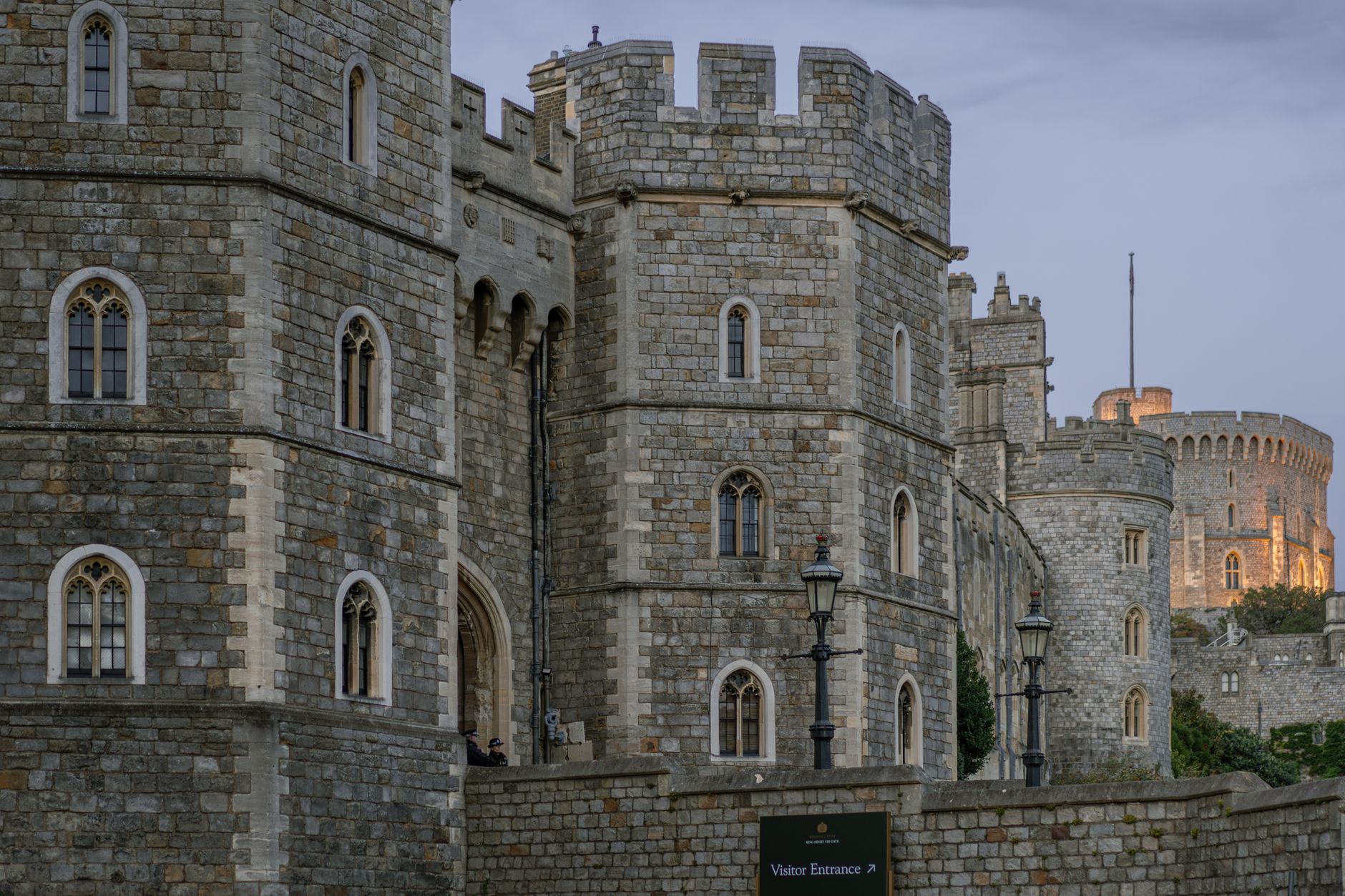
A view of the historic stone fortifications and towers of Windsor Castle, one of the most iconic royal residences in the United Kingdom.
Mario Spencer on Pexels · Pexels License
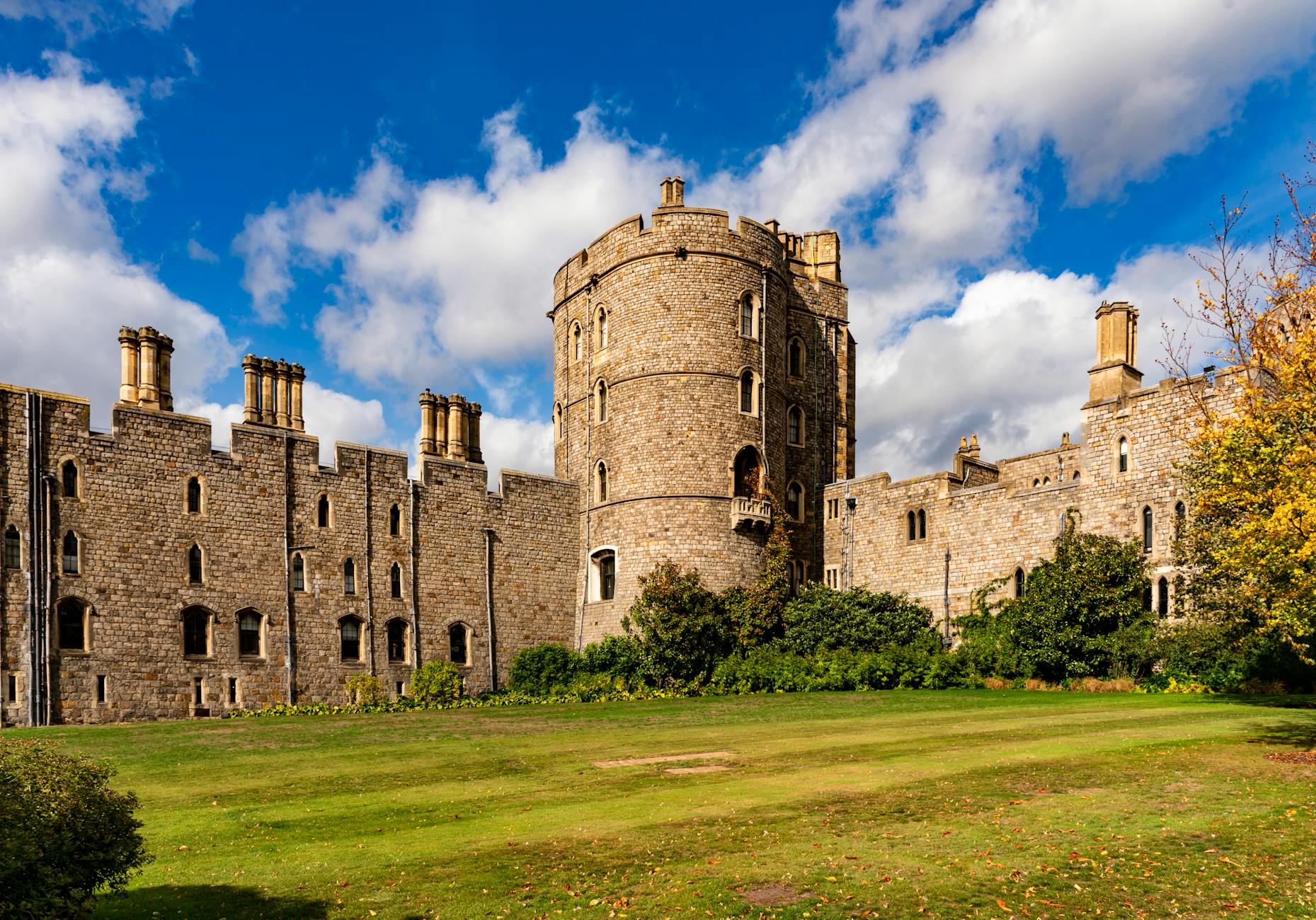
A scenic view of the historic Windsor Castle in the United Kingdom, showcasing its impressive stone fortifications and sprawling green grounds.
John Nail on Pexels · Pexels License

A scenic view of the historic stone walls and towers of Windsor Castle, set against a clear blue sky in the United Kingdom.
ALENA MARUK on Pexels · Pexels License

The historic Round Tower of Windsor Castle stands prominently against a bright blue sky in the United Kingdom.
ALENA MARUK on Pexels · Pexels License
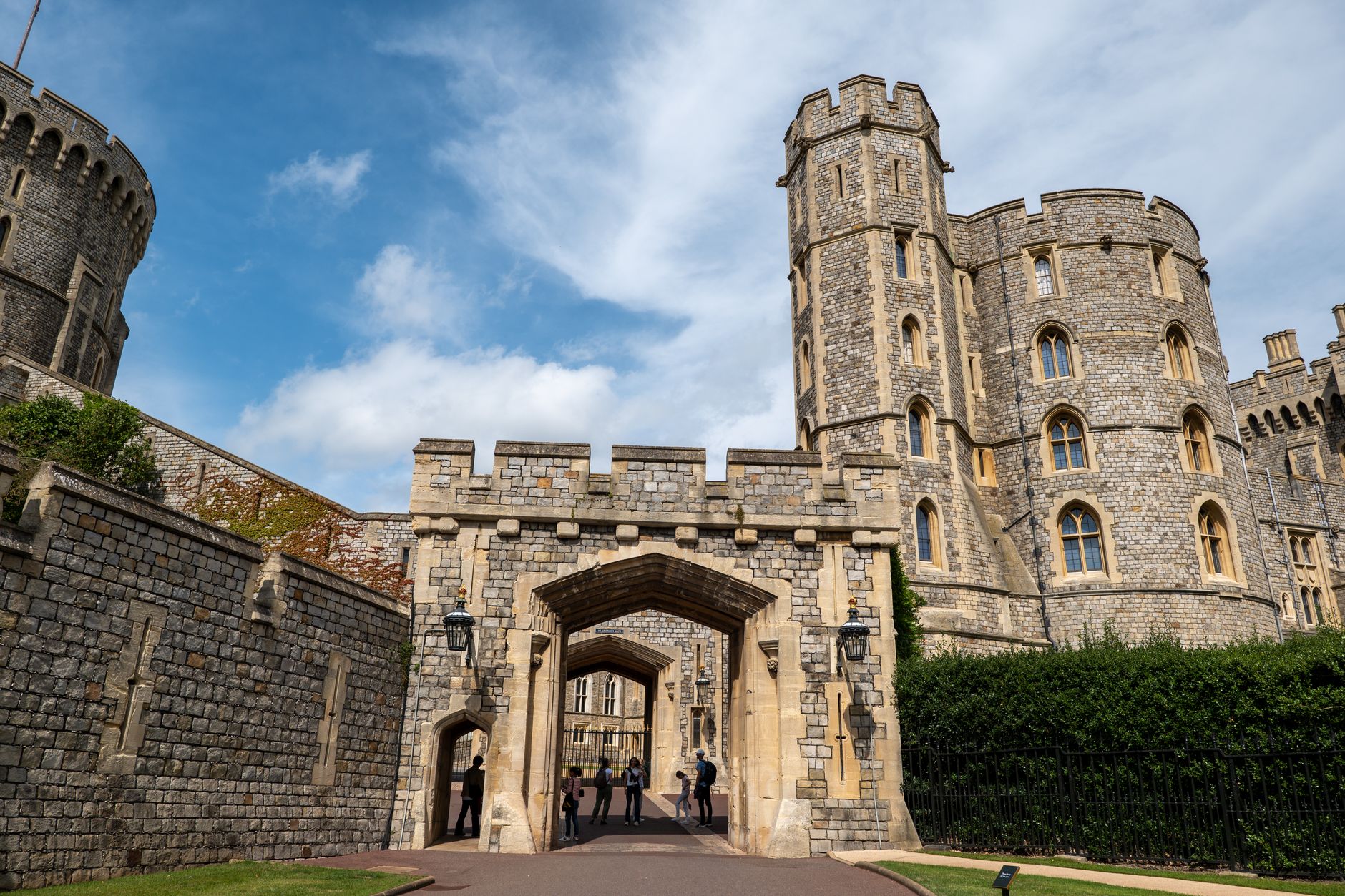
A view of the historic stone gateway and towers at Windsor Castle in the United Kingdom on a bright, sunny day.
Eren Cebeci on Pexels · Pexels License

A view of the historic stone walls and iconic round tower of Windsor Castle, set against a vibrant blue sky and manicured lawns in the United Kingdom.
Marvin Sacdalan on Pexels · Pexels License

A stunning view of the historic Round Tower at Windsor Castle, showcasing its medieval stone architecture against a clear blue sky.
Beata Zsigoova on Pexels · Pexels License
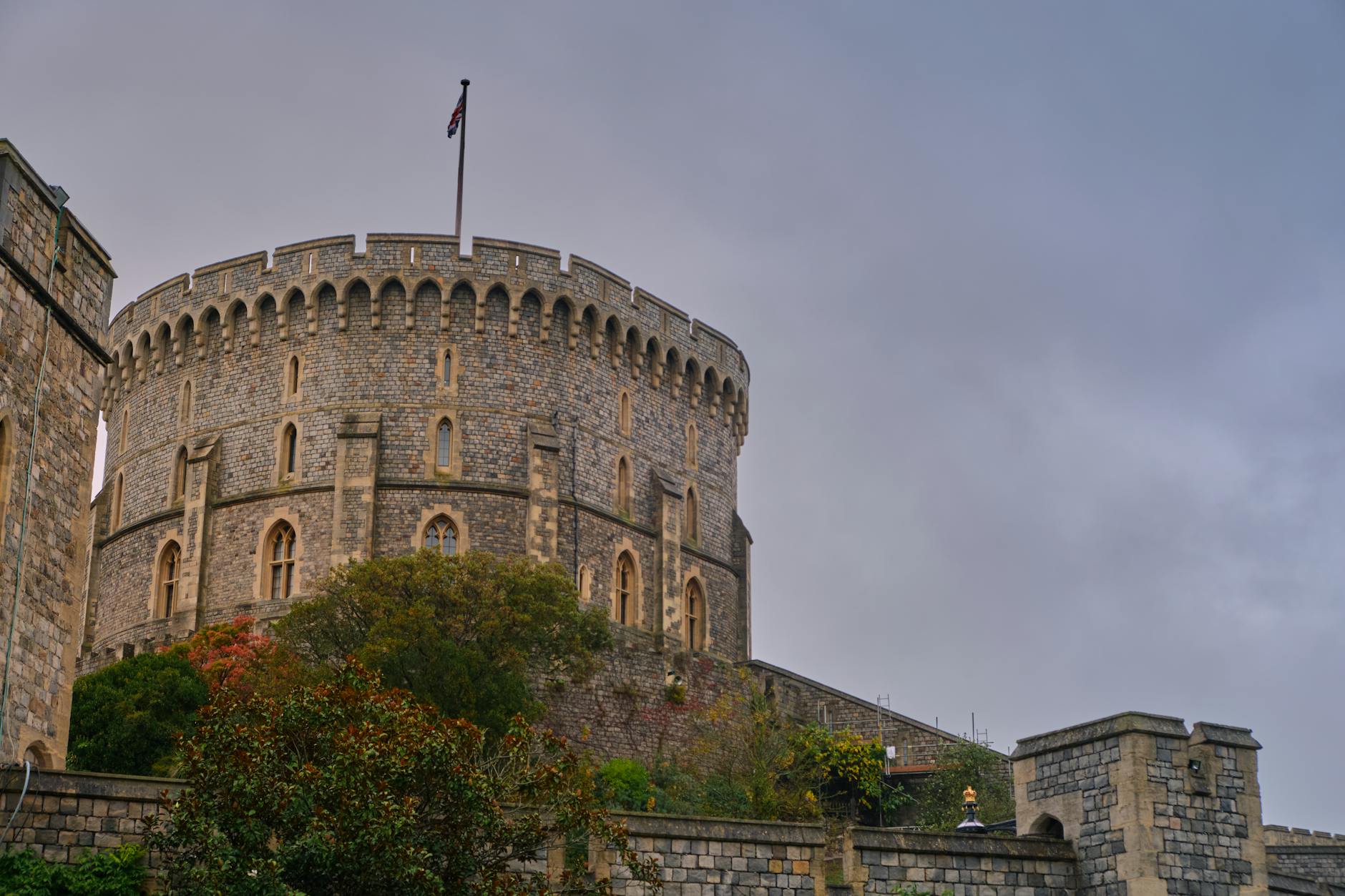
The historic Round Tower of Windsor Castle stands prominently against a moody, overcast sky in the United Kingdom.
Nick on Pexels · Pexels License
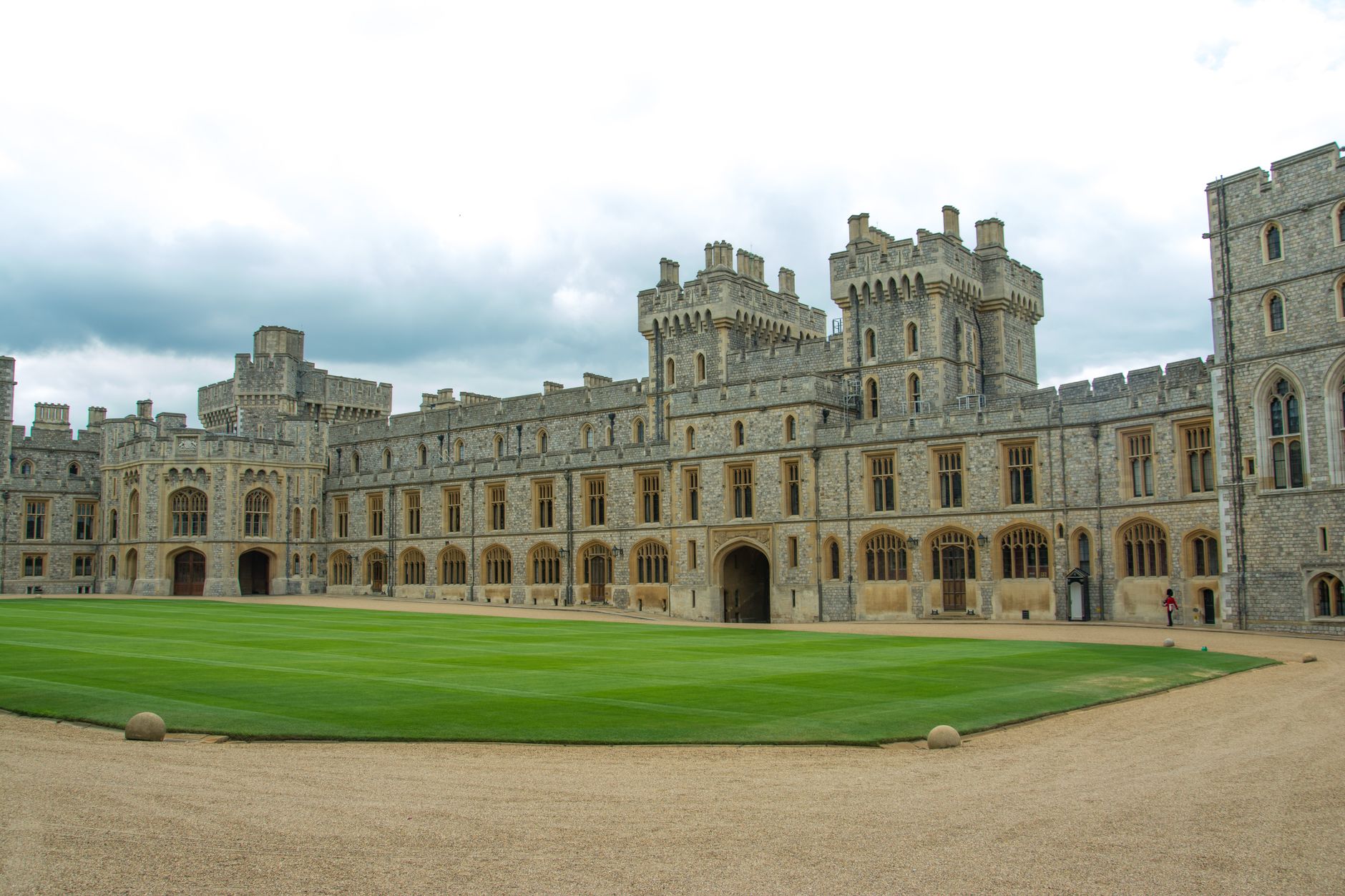
A view of the historic Windsor Castle in the United Kingdom, showcasing its grand stone architecture and expansive, well-maintained courtyard lawn.
Marvin Sacdalan on Pexels · Pexels License

A view of the historic stone towers and battlements of Windsor Castle, one of the most iconic royal residences in the United Kingdom.
Marvin Sacdalan on Pexels · Pexels License

The historic stone towers and defensive walls of Windsor Castle stand tall against a bright blue sky in the United Kingdom.
ALENA MARUK on Pexels · Pexels License
Videos
Watch & Explore Windsor Castle
Inside The State Rooms Of Windsor Castle With Dan Snow
Visiting WINDSOR CASTLE in England - Everything You Need to Know
Inside Windsor Castle & Windsor Tour, England - RIP Queen Elizabeth
Look up at the Round Tower as you enter the Middle Ward and check the flagpole: the Royal Standard (quartered lions and harp) means King Charles III is physically inside the castle that day — a detail most visitors photograph without realising its meaning. If you see the Union Flag instead, he's away.
Visitor Logistics
Getting There
Two train stations sit within a 5–10 minute walk of the Castle gates. Windsor & Eton Central connects via Slough to London Paddington and the Elizabeth Line; Windsor & Eton Riverside runs direct from London Waterloo in about 55 minutes. From Heathrow, the 703 bus drops you in town. Don't drive unless you enjoy circling for parking — the Castle has none, and traffic around the Changing of the Guard is miserable.
Opening Hours
As of 2026, Windsor Castle opens Thursday–Monday, typically 10:00 AM–5:15 PM (last admission 4:00 PM), with shorter winter hours closing at 4:15 PM. It's closed every Tuesday and Wednesday. Because it remains a working royal residence, unscheduled closures for state events happen — always check the Royal Collection Trust website before you travel.
Time Needed
A focused visit covering the State Apartments and St George's Chapel takes 1.5–2 hours. To properly absorb the Precincts, Queen Mary's Dolls' House, and the audio guide's stories of 40 monarchs across a thousand years, budget 3–4 hours. Factor in 20–30 minutes for airport-style security queues, especially on weekends.
Tickets & Costs
As of 2026, adult tickets cost roughly £32 booked online in advance or £36 on the day (subject to availability). Pre-booking is strongly recommended — capacity limits mean walk-ups risk being turned away on busy days. Here's the real trick: your ticket converts to a one-year pass for free repeat visits, making it one of the best deals in British heritage.
Accessibility
The Castle sits on a steep hill with cobblestones throughout — it's a workout even for able-bodied visitors. Most areas including the State Apartments are wheelchair accessible via elevators, though some historic sections remain restricted by the architecture itself. Plan for long outdoor walking distances between the main attractions.
Tips for Visitors
No Indoor Photos
Photography is strictly forbidden inside every building — the State Apartments, St George's Chapel, all of it. You can shoot freely in the outdoor precincts, so save your camera for the Round Tower and the sweeping views across the Thames Valley.
Pack Light, Seriously
Security screening is airport-grade. Large backpacks, oversized luggage, and blades over 7.7 cm are banned — even long umbrellas can cause delays. Travel with a small day bag and leave everything else at your hotel or in a station locker.
Eat Beyond the Gates
The Undercroft Café inside the walls is fine for a quick coffee, but for a proper meal, cross the bridge to Eton or try The Boatman on the riverside for mid-range pub food with Thames views. For a splurge, The Brasserie at Sir Christopher Wren sits right on the water.
Arrive at Opening
The Castle is calmest in the first hour after doors open at 10:00 AM — head straight for the State Apartments while most visitors cluster around the entrance. If you want to catch the Changing of the Guard at 11:00 AM, position yourself in the Lower Ward by 10:40.
Evensong Over Touring
St George's Chapel closes to tourists on Sundays, but evensong at 5:15 PM on other days is free and open to all. You'll hear the choir in a space where Henry VIII and Queen Elizabeth II are buried — 10 monarchs in total, beneath some of the finest fan vaulting in England.
Cross to Eton
A 5-minute walk over the pedestrian bridge lands you in Eton, which feels like a different century. The pace drops, the crowds vanish, and Eton College's courtyards are open to visitors during school holidays (roughly May–September). It's the perfect counterweight to the Castle's intensity.
Where to Eat
Don't Leave Without Trying
Undercroft Café
cafeOrder: Seasonal cakes and fresh coffee—a convenient pit stop while exploring the castle grounds without leaving the royal enclosure.
The only café inside Windsor Castle itself, offering a unique vantage point to rest and refuel. The menu rotates seasonally, so there's always something fresh to discover.
Dining Tips
- check Check opening hours before visiting—many Windsor establishments have limited weekday schedules.
- check Windsor's historic pubs are excellent for authentic British meals and local atmosphere.
- check Riverside restaurants often offer views of the castle and Thames—book ahead during peak season.
- check Afternoon tea is a local tradition; many hotels and tea rooms offer formal service if you book in advance.
Restaurant data powered by Google
Historical Context
A Fortress That Became a Surname
William the Conqueror chose this site in the 1070s for a blunt military reason: it sat a day's march from London, close enough to retreat to or rally from, high enough above the river to spot trouble coming. The original structure was timber and earth — a motte-and-bailey castle, functional and disposable. It was Henry I who first dared to actually live here, and Henry II who, between 1165 and 1179, began replacing the wooden walls with stone, turning a garrison into something approaching a palace.
Every century since has left its mark. Edward III was born within these walls and poured money into making them grander. Edward IV began St George's Chapel in 1475; Henry VIII finished it in 1511. George IV hired Wyatville in the 1820s to raise the Round Tower and reshape the skyline into something more theatrically medieval than the Middle Ages ever managed. The castle you see today is less a single building than a palimpsest — each generation writing over the last, rarely erasing completely.
A Coffin, a Clear Sky, and a Sudden Blizzard
In late January 1649, King Charles I knelt before the executioner's block at Whitehall. He had lost the Civil War, been tried for treason by his own Parliament, and refused to recognise the court's authority. The axe fell. What remained was the question of where to put his body.
Parliament denied a burial at Westminster Abbey. The remains were brought instead to St George's Chapel at Windsor, carried by a small, subdued party of loyalists. According to contemporary accounts, the sky was clear and calm as the procession approached the castle grounds. Then, without warning, a violent snowstorm erupted. Within minutes, the black velvet pall covering the coffin turned white. To the mourners — men who had just watched their king lose his head — this was not weather. It was a sign. Royalist writers seized on the image: divine innocence blanketing a wrongful death.
Whether miracle or coincidence, the moment became one of the most potent pieces of Stuart propaganda. Charles I's body still lies beneath the chapel floor, alongside Henry VIII and Jane Seymour. The snow, of course, melted. The symbolism never did.
The Night the Castle Burned
On November 20, 1992, a spotlight ignited a curtain in the Private Chapel, and within hours fire had consumed or damaged 115 rooms across 9,000 square metres — an area roughly the size of a Premier League penalty box repeated 90 times over. The blaze raged for 15 hours. Restoration took five years and cost £36.5 million, funded in part by opening Buckingham Palace to tourists for the first time. The rebuilt rooms are a fascinating split: some were restored to their pre-fire state, while others — like the new Private Chapel and the Lantern Lobby — were designed in a distinctly modern Gothic style. The fire was a catastrophe, but it also produced some of the castle's most interesting architecture.
A Princess in the Bunker
When the Luftwaffe began bombing London in 1940, 13-year-old Princess Elizabeth and her younger sister Margaret were evacuated to Windsor. The castle's windows were blacked out, its treasures removed, and the young princesses slept in a makeshift shelter beneath the Brunswick Tower. Elizabeth made her first public radio broadcast from here in 1940, addressing evacuated children across the Commonwealth. She was 14. Five years later she joined the Auxiliary Territorial Service as a mechanic and driver — the first female member of the royal family to serve in the armed forces. Windsor was her refuge during the war and, decades later during the COVID-19 pandemic, it became her primary residence again. She died at Balmoral in 2022, but her burial took place here, in St George's Chapel, closing a circle that began with a frightened teenager in a blacked-out castle.
Listen to the full story in the app
Your Personal Curator, in Your Pocket.
Audio guides for 1,100+ cities across 96 countries. History, stories, and local insight — offline ready.
Audiala App
Available on iOS & Android
Join 50k+ Curators
Frequently Asked
Is Windsor Castle worth visiting? add
Absolutely — it's the oldest and largest continuously inhabited castle in the world, and the contrast between its brutal Norman fortress origins and the gilded State Apartments inside is genuinely startling. You walk under 11th-century murder holes in the Norman Gate (most people never look up) and then find yourself standing before Grinling Gibbons wood carvings and paintings by Van Dyck and Rubens. St George's Chapel alone, where Henry VIII and Queen Elizabeth II are buried beneath the same fan-vaulted ceiling, would justify the trip.
How long do you need at Windsor Castle? add
Plan for at least 2.5 to 3 hours if you want to see the State Apartments, St George's Chapel, and Queen Mary's Dolls' House without rushing. A quick pass through takes about 1.5 hours, but you'll miss details — like the subtle differences in wood grain where post-1992-fire restoration meets centuries-old craftsmanship. Factor in 20–30 minutes for airport-style security screening, which can stretch longer on weekends.
How do I get to Windsor Castle from London? add
The easiest route is a train from London Paddington to Slough, then a 6-minute connection to Windsor & Eton Central — the whole trip takes about 35 minutes. Alternatively, direct trains from London Waterloo reach Windsor & Eton Riverside in roughly 55 minutes. Both stations are a 5–10 minute walk from the castle entrance. If you're coming from Heathrow, the 703 bus runs directly to Windsor.
What is the best time to visit Windsor Castle? add
Weekday mornings, arriving right at the 10:00 AM opening, give you the thinnest crowds and the best chance of walking the State Apartments in relative quiet. Avoid weekends and school holidays if you can — locals describe the peak-season chaos around the castle as genuinely frustrating. Winter visits offer a more atmospheric, moody silhouette of the Round Tower against grey skies, and queues shrink considerably.
Can you visit Windsor Castle for free? add
No — adult tickets cost around £32 when booked in advance online, or £36 on the day. But here's a trick most guidebooks bury: your ticket can be converted into a 1-year pass granting free return visits, which is one of the best deals in British heritage tourism. Evensong at St George's Chapel (5:15 PM) is free to attend, though the Chapel is closed to tourists on Sundays.
What should I not miss at Windsor Castle? add
St George's Chapel is non-negotiable — its Perpendicular Gothic fan-vaulted ceiling, built between 1475 and 1511, rivals anything at Westminster. In the State Apartments, look for the Baroque rooms remodeled by Hugh May for Charles II in the 1670s, where Grinling Gibbons' carvings seem to drip from the walls. And don't skip the Undercroft Café: it sits inside one of the oldest surviving medieval spaces in the castle, which most visitors walk right past on their way to lunch.
Can you take photos inside Windsor Castle? add
Photography is strictly prohibited inside all buildings, including the State Apartments and St George's Chapel. You can photograph freely in the outdoor precincts and courtyards. For the most dramatic exterior shot, walk the Long Walk — the 2.65-mile avenue that frames the castle's silhouette perfectly at sunrise or sunset.
What is the history of the 1992 Windsor Castle fire? add
On November 20, 1992, a spotlight ignited a curtain in the Private Chapel, and the fire tore through 115 rooms over 15 hours — roughly 9,000 square metres of floor space, an area larger than a Premier League football pitch. The five-year restoration cost £36.5 million and became one of the most ambitious heritage conservation projects in British history. If you look carefully in the restored rooms, you can spot where modern craftsmanship meets the original medieval and Georgian fabric — the wood grain and stone finishes subtly differ.
Sources
-
verified
Royal Collection Trust – Windsor Castle
Official visitor information including history, founding details, opening hours, and ticket prices.
-
verified
Royal Collection Trust – Top Things to See
Details on St George's Chapel, State Apartments, and key attractions within the castle.
-
verified
Royal Collection Trust – Practical Information
Accessibility details, multimedia guide information, photography rules, and security policies.
-
verified
Royal Collection Trust – The Fire at Windsor Castle
Detailed account of the 1992 fire and subsequent five-year restoration.
-
verified
Royal Collection Trust – Who Built Windsor Castle
Architectural history including the Round Tower and motte-and-bailey evolution.
-
verified
Windsor.gov.uk – Windsor Castle
Local tourism authority information on ticket prices, the Round Tower flag protocol, and State Apartments.
-
verified
Visit Windsor – Getting Here
Transport options including train, bus, and car parking information.
-
verified
Visit Windsor – Accessibility
Wheelchair access details and terrain warnings for the castle grounds.
-
verified
Historic England – Conservation Bulletin 21
Official report on the 1992 fire and conservation response.
-
verified
Secret London – Windsor Castle
Confirmation of 11th-century founding and general historical overview.
-
verified
Living London History – Windsor Castle Visit
Detailed architectural notes on the State Apartments and Baroque remodeling by Hugh May.
-
verified
Hand Luggage Only – Windsor Castle Tips
Practical visitor tips including Changing of the Guard times, Eton walk, and the annual pass conversion.
-
verified
Good Journey – Windsor Castle
Sustainable transport options for reaching Windsor Castle.
-
verified
Rome2Rio – London to Windsor Castle
Route planning and travel time estimates from London.
-
verified
The Tour Guy – Best Restaurants Near Windsor Castle
Restaurant recommendations near the castle at various price points.
-
verified
Muddy Stilettos – Best Restaurants in Windsor
Local dining guide for Windsor and surrounding area.
-
verified
Evan Evans Tours – Windsor Castle Facts
Historical facts and trivia about the castle including earlier fires.
-
verified
The Little House of Horrors – Windsor Castle History
St George's Chapel construction dates and ghost legends.
-
verified
Great Castles – Windsor Castle Ghosts
Account of Charles I's funeral and ghost stories associated with the castle.
-
verified
IWM – Royal Family in WWII
Details on the royal family's use of Windsor Castle during the Blitz.
-
verified
Locationscout – Windsor Castle
Best photography viewpoints and angles for the castle exterior.
-
verified
Windsor.gov.uk – My Favourite View in Windsor
Local recommendations for scenic viewpoints including Alexandra Gardens.
-
verified
Reddit – Living in Windsor
Local resident perspectives on living near the castle and tourist impact.
-
verified
Wikipedia – Windsor Castle
General historical overview including WWII use as royal refuge.
-
verified
Tripadvisor – Windsor Castle Reviews
Visitor reviews highlighting crowd levels and queue frustrations.
Last reviewed:


