Nottingham
United Kingdom Updated May 2026
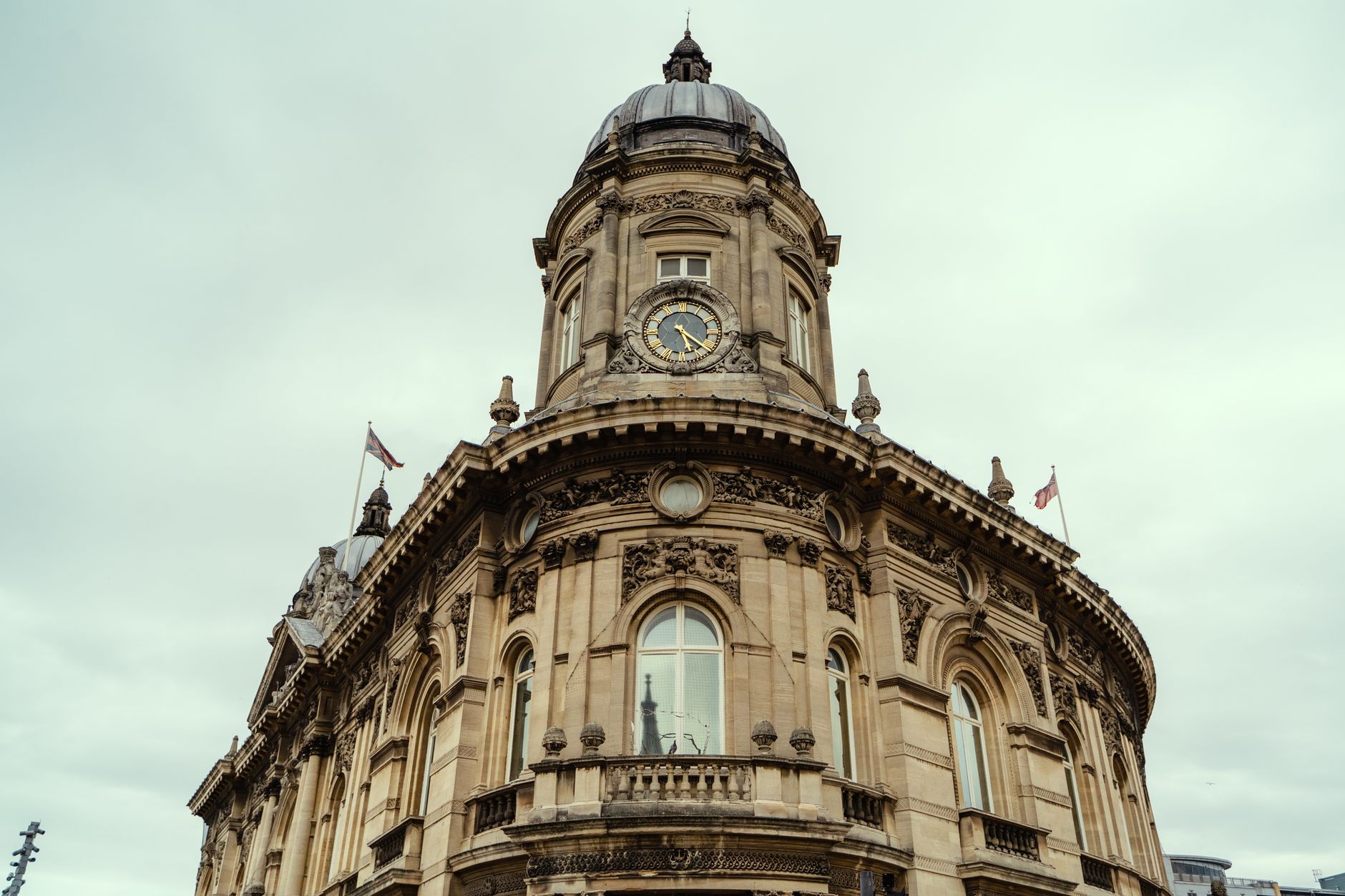
Sandstone dust, pub yeast, and the cold smell of old cellars hang under Nottingham, United Kingdom, because much of the city is hollow. More than 800 man-made caves run beneath the streets, turning an ordinary walk between chain stores and tram stops into something stranger. Nottingham surprises you that way. A UNESCO City of Literature with a Robin Hood problem and a lace-trade past, it keeps slipping from folklore into industry and back again.
 Photo: Altaf Shah / Pexels
- Attractions
- 12
- Audio
- 2 h 24 min
- Trip length
- 2-3 days
- Best season
- Late spring to early autumn (May-September)
Why Nottingham
Built from cited sources · see the method · How we make our guides →
Castle Rock explains the city's temperament better than any slogan could. William the Conqueror ordered a fortress here in 1068, Edward III's allies crept through Mortimer's Hole in 1330 to seize power, and Charles I raised his standard here in 1642 before the country tore itself apart. Then came the 19th century, when Nottingham's machine-made lace warehouses filled the Lace Market with red brick, iron columns, and the money that built a different kind of empire.
Nottingham feels young because it is constantly being restocked with students from the University of Nottingham and Nottingham Trent, but the old structures still set the rhythm. Trams hiss through the centre every few minutes, the Council House watches over Old Market Square, and a ten-minute walk can take you from medieval church stone at St Mary's to Japanese small plates in a back alley off Hockley. That's the city in miniature.
And the caves matter beyond their novelty. They stored ale, sheltered people during air raids, hid workshops, and gave Nottingham a habit of building in layers rather than lines. You come for Robin Hood if you like, but the city stays with you for a different reason: it has spent 1,000 years turning soft sandstone into hard memory.
Castle Rock and Caves
Nottingham was built into sandstone, and the city still lives with that fact every day. Beneath the streets sit more than 800 man-made caves, while Nottingham Castle rises above them on Castle Rock, where a 1330 coup slipped through Mortimer's Hole and Charles I raised his standard in 1642.Lace Market
The Lace Market tells you exactly how rich machine-made lace once made this city. Red-brick Victorian warehouses, cobbles that click under your shoes, and the vast Adams Building give the old textile quarter a hard industrial beauty that survives the cocktail bars and design studios.City of Literature
Nottingham trades on Robin Hood, but books may explain the place better. UNESCO named it a City of Literature in 2015, and the student energy from the University of Nottingham and Nottingham Trent keeps the centre quick-witted, late-opening, and a little argumentative in the best way.Green Space with Teeth
Wollaton Park feels almost excessive so close to the centre: deer on the lawns, an Elizabethan hall on the ridge, and 500 acres of space where the city noise falls away. Sherwood Forest sits about 20 miles north, which means the Robin Hood story never stays purely literary for long.
Neighborhoods
Where to wander, by quarter — each with its own rhythm.
Lace Market
Victorian warehouses line the streets here with the stern confidence of a district that once helped clothe half the world. Adams Building still shows what lace money looked like in brick and glass, while St Mary's Church rises above it all with 14th-century Perpendicular Gothic stone and a hush that cuts through the bar noise outside. Come for the architecture first, then stay for the restaurants, boutique hotels, and the odd pleasure of eating dinner where bolts of lace were once traded.Hockley
Hockley is where Nottingham stops posing as a heritage city and gets on with being itself. Independent coffee shops, cocktail bars, bookstores, record-shop energy, and restaurants like Taquero, Raymond's, and Everyday People give the streets a lived-in confidence that chain-heavy city centres can't fake. After dark it gets louder, but not slicker.Old Market Square and the City Centre
The city's civic heart is broad, windy, and hard to ignore: Old Market Square is the largest city square in the UK outside London, anchored by the Council House dome. Around it, Long Row and the surrounding streets mix listed facades, fast shopping, tram bells, and the practical churn of everyday Nottingham. This is not the city's prettiest quarter. It is the one that explains how the place works.The Park
A few minutes from Nottingham Castle, The Park feels like the city lowered its voice. This private Victorian estate is full of curving roads, large villas, and sandstone details, with the Park Tunnel cutting through rock in a way that seems faintly absurd and entirely Nottingham. Walk here when the centre starts to feel crowded.Sneinton
Sneinton has edges, which is part of the point. Green's Windmill stands here as a reminder that mathematician George Green came from a working miller's world, not an ivory tower, and the wider area still carries that practical, workshop-built character. You will find murals, small independents, and a side of Nottingham that feels less polished than the Creative Quarter and more honest for it.Arboretum and Canning Circus
North-west of the centre, this stretch softens the city without sanding it down. The Arboretum, one of Nottingham's earliest public parks, brings mature trees, aviaries, and benches where students and pensioners share the same patch of light; nearby Canning Circus adds handsome 19th-century buildings and the slow climb up Derby Road toward places like Alchemilla. It suits mornings and hungry afternoons.Sherwood
Sherwood trades on the name, naturally, but the neighborhood itself is less legend than local habit. Visitors come this way for independent shops, good fish and chips at Cod's Scallops, and a more residential rhythm than the centre offers. If you want to see how Nottingham eats on an ordinary evening, this is a better bet than another themed Robin Hood pub.
Plan your trip
Before you go
- Getting There
- East Midlands Airport (EMA) is the nearest airport, about 12 miles (19 km) from central Nottingham; the 24-hour Skylink coach usually takes 45 to 50 minutes into the city in 2026. Birmingham Airport (BHX) is about 48 miles (77 km) away and works well for wider long-haul connections. Nottingham Station is the main rail hub, with direct East Midlands Railway services to London St Pancras in about 1 hour 30 minutes, and road arrivals usually come via the M1, with the A52 and A453 feeding into the city.
- Getting Around
- Nottingham has no Underground, but the NET tram does the heavy lifting with 2 lines over roughly 32 km, linking the centre with Beeston, Chilwell, Toton Lane and Phoenix Park; trams run about every 7 to 10 minutes in 2026. Nottingham City Transport buses fill the gaps from Broad Marsh and Victoria, and Robin Hood Network tickets cover buses, trams and some local rail. Cyclists should look for the Big Track along the River Trent and canal, while the centre itself is compact enough to cross on foot in 15 to 20 minutes.
- Climate & Best Time
- Spring usually sits around 10 to 15C by day, summer around 19 to 21C, autumn around 8 to 16C, and winter around 1 to 8C, with rain spread through the year rather than saved for one dramatic season. June to August brings the busiest months, while May, September and early October tend to give you the better bargain: mild light, greener parks, and fewer queues at the caves and castle.
- Language & Currency
- English is the working language, though you may hear East Midlands flourishes like "Ey up" or being called "duck"; both are friendliness, not code. Currency is Pound Sterling (£), and in 2026 contactless cards and mobile wallets are accepted almost everywhere, from trams to pubs. For emergencies, dial 999 or 112.
- Safety
- Central Nottingham is generally easy to handle if you keep normal city habits: stay on well-lit streets after dark and keep an eye on bags around Old Market Square, tram stops and the station. West Bridgford, The Park and Wollaton make comfortable visitor bases, while areas such as The Meadows, St Ann's and Bulwell are better treated with more caution late at night.
From Cave Settlement to Lace Capital
How sandstone, rebellion, and invention kept remaking Nottingham
- c. 10,000 BCE
Hunters Leave Flint Traces
Long before any town stood here, hunter-gatherers moved along the warming Trent Valley and left worked flints on the ground that would become Nottingham Castle and Wollaton. The finds are small, almost easy to miss. They matter because they show people were already using this sandstone ridge and river corridor when mammoth-age Britain was giving way to forest.
- c. 600
Snot's People Settle
Most scholars place the first enduring Anglo-Saxon settlement on the sandstone high ground around today's Lace Market in the 6th or early 7th century. The name Snotingaham meant the homestead of Snot's people, which sounds comic now and carried real power then. The caves below offered storage, shelter, and cool air in summer.
- 868
Vikings Take Snotengaham
The Great Heathen Army seized the town and forced Nottingham into the hard politics of the Danelaw. The Anglo-Saxon Chronicle records the place as Snotengaham when Mercian and West Saxon forces came to challenge the Danes. No heroic last stand followed, just a negotiated peace, which tells you plenty about where power sat that year.
- 918
Edward Rebuilds the Burh
Edward the Elder retook Nottingham and refortified it as part of the expanding English kingdom. This was more than a change of flag. Timber defenses, planned streets, and a revived crossing over the Trent pulled the settlement into a new English state.
- 1068
Normans Crown the Cliff
William the Conqueror ordered a castle on the sandstone outcrop above the town, and the choice was bluntly strategic. From that rock the new rulers could watch the road, the river, and the people below. Nottingham became a fortress town overnight.
- 1086
Domesday Fixes the Record
Domesday Book listed Nottingham as Snotingeham and confirmed a place already tied to royal control, tax, and hunting land. Written records can feel dry on the page. In a town this old, they are the moment mist turns into ink.
Show the full timeline (23 moments)
- 1194
Richard Breaks the Castle
Richard I besieged Nottingham Castle after supporters of his brother John held it against him. Siege engines and royal anger did the rest. The episode fixed Nottingham as a place where national quarrels arrived fast and hit stone first.
- 1330
Mortimer's Hole Coup
On 19 October 1330, Edward III's supporters slipped through the cave passage now called Mortimer's Hole and burst into Nottingham Castle. Roger Mortimer was arrested in the dark confusion below the royal apartments, then sent to execution a few weeks later. Few cities can point to a tunnel and say: power changed hands here.
- c. 1400
Robin Hood Claims Nottingham
By the 14th and early 15th centuries, ballads had tied Robin Hood and the Sheriff of Nottingham together so tightly that the city entered English folklore for good. Legend is not a court record, and it should not be treated as one. Still, the story changed Nottingham's afterlife more than many documented laws ever did.
- 1642
A Standard Starts War
On 22 August 1642, Charles I raised the royal standard at Nottingham, a theatrical gesture in ugly weather that marked the start of the English Civil War. The hilltop was windy, exposed, and symbolic in exactly the way kings like. A city of caves suddenly stood at the mouth of a national rupture.
- 1649
George Fox Defies the Pulpit
George Fox came to Nottingham, challenged a sermon at St Mary's, and ended up imprisoned in the town's guildhall. That collision between a shoemaker's son and civic authority mattered. Early Quakerism found one of its sharpest public moments here, in a town already used to religious argument echoing through stone streets.
- 1793
George Green Is Born
George Green was born in Sneinton, the son of a baker and miller, far from the polished universities that later claimed his mathematics. He worked around the sails and gears of his father's windmill while teaching himself the language of forces and fields. Modern physics still carries his name, which is a fair return for a Nottingham mill boy.
- 1811
Frames Begin to Break
The Luddite rising began in Nottingham's hosiery trade, where framework knitters saw wages collapsing as machine use spread and cheap work flooded the market. Men attacked stocking frames by night because petitions had failed by day. The noise of smashed wood and iron was an argument the authorities could finally hear.
- 1817
Brandreth Marches Toward Revolt
Jeremiah Brandreth, a Nottinghamshire knitter with a gift for fury, became the face of the Pentrich Rising's push toward armed reform. The march collapsed, helped along by government informers, and Brandreth was hanged. His story sits close to Nottingham because the city's radical politics had already taught working people to expect little from polite waiting.
- 1831
Reform Rioters Burn the Castle
When the House of Lords threw out the Reform Bill in October 1831, Nottingham exploded. Crowds torched the ducal mansion that occupied the old castle site, and flames lit Castle Rock for hours. The blaze was political, not random: a city tired of being governed from above decided to make its anger visible.
- 1850
Jesse Boot Arrives
Jesse Boot was born into a struggling Nottingham family and would turn a small herbalist shop into Boots, one of Britain's great retail names. His wealth remade the city in brick and philanthropy, from parks to university land. Ambition left fingerprints here.
- 1879
Fothergill Dresses the Boomtown
Watson Fothergill began work on the Nottingham and Nottinghamshire Bank on Pelham Street, one of the high-Victorian buildings that gave the city its spiky brick swagger. Lace money wanted architecture with nerve. He supplied gables, turrets, and a skyline that still looks faintly theatrical in wet evening light.
- 1885
D. H. Lawrence's World Begins
D. H. Lawrence was born in Eastwood, just beyond the city, and Nottingham's factories, classrooms, and class tensions shaped him from the start. He knew the smell of coal, the strain of social climbing, and the emotional weather of the Midlands. His fiction returned that knowledge with very little mercy.
- 1941
Bombs Fall on the Caves
During the Nottingham Blitz of 8 and 9 May 1941, German bombing killed civilians and drove many residents into the sandstone caves beneath the city. Those old chambers, carved for trade and storage, became air-raid shelters filled with damp air, muffled voices, and waiting. Medieval geology met modern war.
- 1961
Ibuprofen Takes Shape
At Boots in Nottingham, Stewart Adams and his team developed the anti-inflammatory compound that became ibuprofen. Laboratory work rarely makes much street noise. Yet one of the world's most familiar painkillers began in this city, in rooms that smelled more of solvents than glory.
- 1977
MRI Changes Medicine Here
Peter Mansfield's work at the University of Nottingham pushed magnetic resonance imaging from theory toward usable scanning. The achievement would later earn a Nobel Prize, but the local fact matters more: a Midlands university helped change how doctors look inside the body without a surgeon's cut. That's the kind of revolution cities hide in plain sight.
- 2015
Literature Gets the City Mark
UNESCO named Nottingham a City of Literature, recognizing a place that had produced writers from Byron's orbit to Alan Sillitoe and kept reading tied to civic identity. The title was modern, but the roots ran deep. A city once known for lace and bicycles claimed books with equal confidence.
- 2021
Castle Reopens, Story Revised
Nottingham Castle reopened after a major restoration that tried to tell the site whole: Norman fortress, ducal mansion, burned shell, museum, symbol. That matters because Castle Rock has never been one thing for long. In Nottingham, history tends to come layered, like rooms cut one above another into sandstone.
Who lived here
-
Novelist · 1928–2010
Alan Sillitoe
Born here
Alan Sillitoe grew up in working-class Nottingham and turned its factories, pubs, and cramped backstreets into literature with real grit. He'd still recognize the city's stubborn streak, though the old industrial smoke has given way to espresso machines and students with tote bags.
-
Mathematician and physicist · 1793–1841
George Green
Lived and worked here
George Green ran the family windmill in Sneinton and, with almost no formal schooling, wrote mathematics that later shaped modern physics. Stand by Green's Windmill and the story still feels improbable: a miller in Nottingham quietly altering the language of science.
-
Pharmacist and philanthropist · 1850–1931
Jesse Boot
Built his business here
Jesse Boot turned a small family chemist's shop into Boots and then poured money back into Nottingham, funding land and institutions that still shape the city. He would probably approve of the practical streak that survives here: less grandeur for its own sake, more civic usefulness.
-
Fashion designer · born 1946
Paul Smith
Opened his first boutique here
Paul Smith opened his first shop in Nottingham's Lace Market, a fitting place for someone who built elegance out of wit and sharp detail. The quarter has changed from warehouse grit to creative polish, but that mix of industry and mischief still feels very much his.
-
Religious reformer · 1624–1691
George Fox
Imprisoned here in 1649
George Fox came to Nottingham, challenged a preacher at St Mary's, and was jailed in the city, an early flashpoint in the story of the Quakers. The episode suits Nottingham: a place where dissent has long been less a slogan than a habit.
Where to Eat
Where locals actually book dinner — not the tourist menus.
Insider tips
Small things that change how the city treats you.
Use the Tram
NET trams run about every 7 minutes and cover the places visitors actually use, including the station, city centre, and Wollaton links. Buy your ticket before boarding; checks are routine and the fine costs more than a decent lunch.Bundle Cave Tickets
The City of Caves is often sold with the National Justice Museum for a small combined-ticket saving. Book ahead on weekends, and note that the cave entrance inside the Broadmarsh area can be oddly easy to miss.Order at Bar
In traditional pubs, you usually order and pay at the bar unless staff tell you otherwise. Tipping at pubs isn't expected, so save it for table service or genuinely excellent help.Eat East of Square
Skip the chain-heavy edges of Old Market Square when you're hungry. Hockley and the Lace Market hold the city's sharper cooking, from tapas at Iberico to tacos at Taquero and cave-aged pub atmosphere nearby.Save on Meals
Lunch deals and early menus in the Lace Market often cost far less than dinner, especially midweek. If you want fish and chips with local bragging rights, head to Cod's Scallops in Sherwood or West Bridgford rather than the city-centre imitators.Pick Your Season
Late spring and early autumn suit Nottingham best: deer move through Wollaton Park, the sandstone glows warmer, and the centre is easier to enjoy on foot. December brings Winter Wonderland crowds, which are fun if you want noise and mulled wine, less so if you want breathing room.
Gallery
The city, as it actually looks.

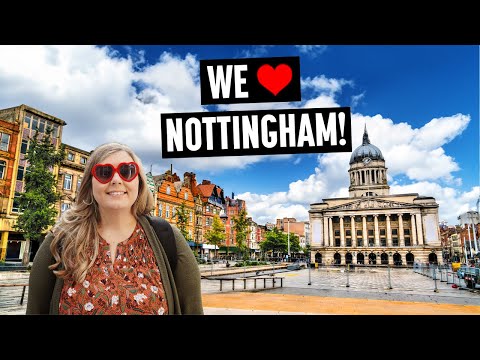
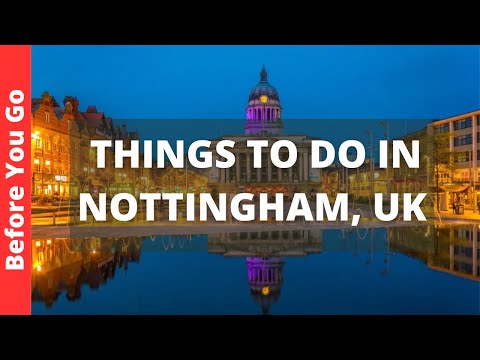
Watch
-
Sophie Nadeau Nottingham: The Rebel Heart of England
-
The Magic Geekdom First Time in Nottingham: Exploring the Vibrant History, Culture, and Food
-
Before You Go Nottingham England Travel Guide: 12 BEST Things To Do In Nottingham, UK
-
DoTravel Top 10 Best Things to do in Nottingham, England [Nottingham Travel Guide 2025]


Frequently asked
Is Nottingham worth visiting?
Yes, especially if you like cities with odd layers under the pavement. Nottingham gives you Norman power politics, more than 800 sandstone caves, serious literary history, and a food scene that feels more confident than its size suggests.
How many days in Nottingham?
Two to three days works well for the city itself. That gives you time for Nottingham Castle, the City of Caves, the Lace Market and Hockley, Wollaton Hall, and one slower afternoon in a pub or park without turning the trip into a checklist.
How do you get from London to Nottingham?
The easiest route is the direct train from London St Pancras, which takes about 1 hour 30 minutes. Coaches are cheaper but slower, and East Midlands Airport sits about 13 miles from the centre if you're flying in.
How do you get around Nottingham without a car?
Very easily. The centre is compact and walkable, while NET trams and Nottingham City Transport buses cover the longer hops, and the Big Track gives you a traffic-light route along the Trent and canal if you want to cycle.
Is Nottingham safe for tourists?
Generally yes, with normal city precautions after dark. Stick to well-lit main streets late at night, keep an eye on your phone around busy nightlife areas such as Hockley, and use licensed taxis or booked rides if you've stayed out past the last tram.
Is Nottingham expensive to visit?
No by UK city standards, though splurges exist if you want them. You can keep costs down with free walks through the Lace Market and Old Market Square, park time at Wollaton, and mid-range eating in Hockley, then spend big only on places like Restaurant Sat Bains if that's your plan.
What is Nottingham famous for?
Robin Hood gets the headlines, but the city's stranger claim is its underground. Nottingham is built over Britain's largest network of man-made sandstone caves, and above them sits a city shaped by lace warehouses, rebellion, and one castle that has been burned, rebuilt, and argued over for centuries.
Do I need to book Nottingham Castle or the City of Caves in advance?
Booking ahead is wise for weekends, school holidays, and rainy days when everyone suddenly wants to go underground. The caves run on timed entries, and the combined ticket with the National Justice Museum can save money if you're planning both.
Pick up where you left off
Saved and recently read places — kept on this device only.
Photo credits (3)
- Altaf Shah — Pexels License (https://www.pexels.com/license/) — Source: https://www.pexels.com/photo/26289338/
- 43 Clicks North — Pexels License (https://www.pexels.com/license/) — Source: https://www.pexels.com/photo/5321470/
- Mateusz — Pexels License (https://www.pexels.com/license/) — Source: https://www.pexels.com/photo/6029270/
Photos may have been resized or cropped.