Plan and listen to Statue Of William Ewart Gladstone with Audiala.
Audio guide in your pocket, itinerary in your browser. Built for the way you actually visit.
Introduction
Standing prominently in Manchester’s Albert Square, the Statue of William Ewart Gladstone is a celebrated historical and cultural landmark. Created by Italian sculptor Mario Raggi and unveiled in 1901, the statue honors Gladstone’s legacy as a four-time British Prime Minister and a champion of liberal reforms. Surrounded by Manchester’s iconic neo-Gothic Town Hall and the vibrant city center, the monument reflects both the city’s Victorian-era values and its ongoing dedication to political progress and civic pride. This guide provides a comprehensive overview of the statue’s history, artistic features, visiting information, and practical travel tips to help you make the most of your visit.

Historical Background
The Origins and Creation of the Statue
Commissioned shortly after Gladstone’s death in 1898, the statue was part of a broader trend in Victorian Britain to honor statesmen with public monuments (Mancunian Matters). It was unveiled in 1901 in Albert Square, a civic space designed for commemoration and public gatherings, reflecting Manchester’s desire to celebrate its political heritage.
William Ewart Gladstone: A Brief Biography
William Ewart Gladstone (1809–1898) was one of Britain’s most prominent political leaders, serving as Prime Minister four times. Renowned for his oratory, he championed Irish Home Rule, expanded suffrage, and promoted liberal reforms (BBC History). Manchester’s industrial and reformist spirit made it a fitting location for his memorial.
Victorian Manchester and the Culture of Public Monuments
The late 19th and early 20th centuries saw a surge in the creation of public statues throughout Manchester, reflecting civic pride and the city’s progressive values (Geograph). Albert Square became a focal point for such commemorations, hosting monuments to figures like Prince Albert, John Bright, and Oliver Heywood.
Artistic Design and Symbolism
Sculptor Mario Raggi
Mario Raggi (1821–1907) was an Italian-born sculptor known for his realistic portrayals of political leaders. His works, including statues of Benjamin Disraeli and Lord Beaconsfield, are notable for their expressive detail and dignified style (Art UK).
Materials and Features
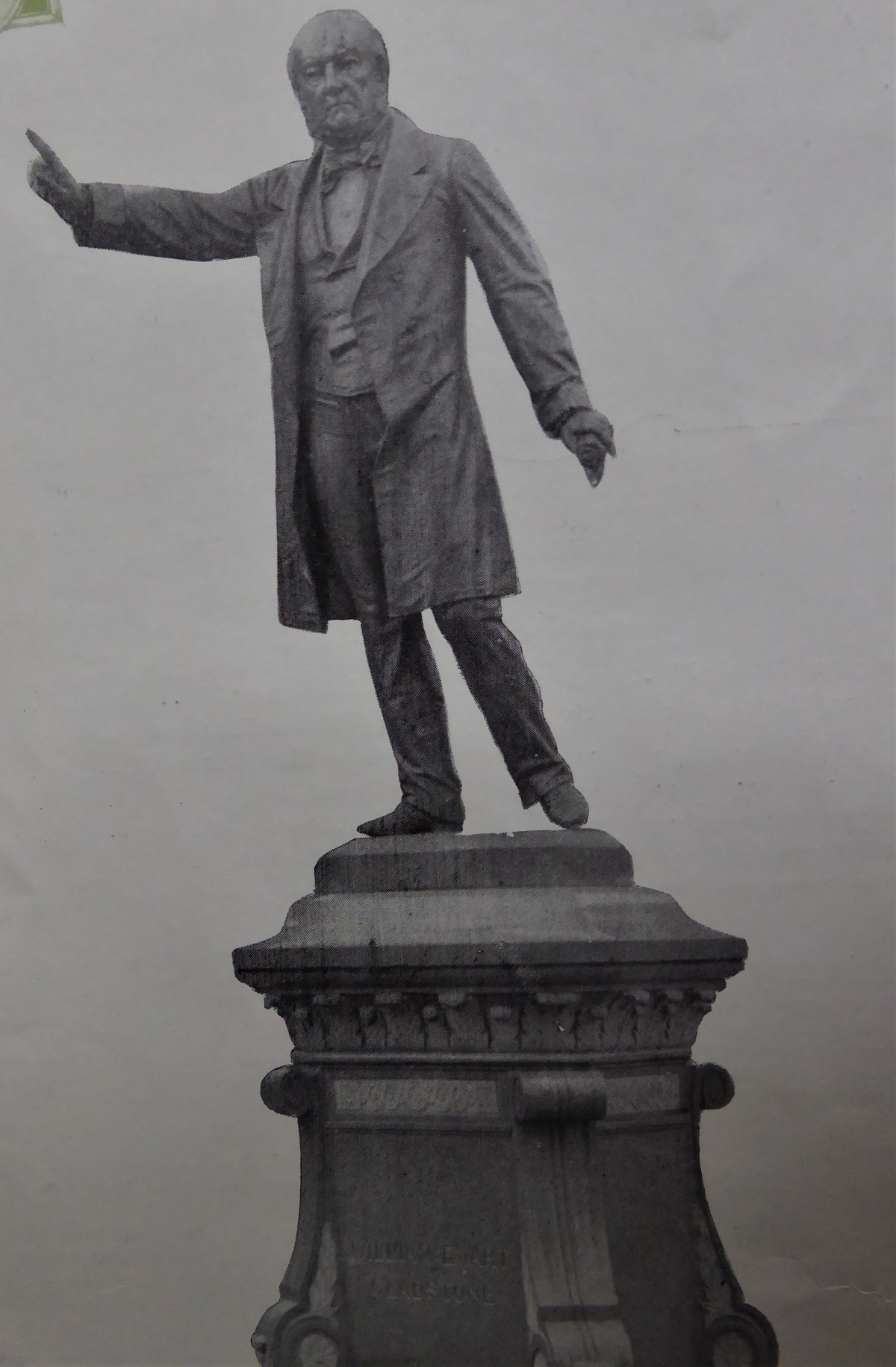
- Bronze Statue: The statue depicts Gladstone in mid-speech, reflecting his reputation as an orator.
- Peterhead Granite Plinth: Sourced from Scotland, the plinth is both durable and symbolic of strength.
- Dimensions: The statue stands approximately 3 meters tall, with the plinth adding another 3 meters, creating a commanding presence in Albert Square (Art UK).
- Inscription: “WILLIAM EWART GLADSTONE” and the sculptor’s signature, “M. Raggi SC,” are engraved on the base.
Symbolic Elements
Gladstone’s outstretched arm and open hand symbolize his persuasive political style and dedication to public engagement. The statue’s classical proportions and attire evoke his era, while the choice of Scottish granite hints at his heritage and the lasting impact of his work (World History Edu).
Visiting Information
Location and Access
- Address: Albert Square, Manchester, M2 5PE (Art UK)
- Getting There:
- On Foot: A 10-minute walk from Piccadilly Gardens.
- Tram: St. Peter’s Square Metrolink stop is a 5-minute walk away (Visit Manchester).
- Bus: Multiple routes serve the city center.
- Car: Several public car parks nearby; street parking is limited.
Visiting Hours and Entry
- Open 24/7: As Albert Square is a public space, the statue is accessible at all times, free of charge.
- Restoration Note: As of 2024, access may be limited due to ongoing restoration work at Manchester Town Hall. Check for updates on the Manchester City Council website.
Accessibility
- The square is fully wheelchair accessible, with level paths and dropped kerbs.
- Nearby public transport and facilities cater to visitors with diverse needs.
Visitor Tips
- Best Times: Early mornings or late afternoons for photography and quieter visits.
- Events: The square hosts markets, festivals, and public events—check schedules before visiting.
- Guided Tours: Several historical walking tours feature the Gladstone statue; inquire at the Manchester Visitor Centre or with local operators.
Facilities
- Restrooms: Available nearby, including at the Town Hall Extension and local cafes.
- Seating: Benches throughout the square.
- Food/Drink: Numerous nearby cafes, restaurants, and pubs.
Conservation and Interpretation
The Gladstone statue, a Grade II listed monument since 1974, benefits from regular conservation to protect its bronze and granite features (Art UK). Ongoing restoration efforts, including those associated with Manchester Town Hall, ensure it remains an integral part of the city’s heritage. Informational plaques and online resources offer historical context and support educational engagement.
Nearby Attractions
Albert Square is the gateway to several major Manchester attractions:
- Manchester Town Hall: Victorian neo-Gothic masterpiece.
- The Albert Memorial: Honoring Prince Albert.
- John Rylands Library: Famed for its architecture and rare collections.
- Manchester Art Gallery: A 10-minute walk from Albert Square (Visit Manchester).
Current Debates and Evolving Narratives
Manchester’s statues have become part of broader discussions about public commemoration and representation. The 2020 removal of Edward Colston’s statue in Bristol prompted reviews of Manchester’s monuments, leading to public consultations and academic discussions about inclusivity and historical context (Manchester Evening News, Sky News, University of Manchester). While the Gladstone statue has not been a focus of controversy, the city is committed to contextualizing all its monuments through interpretive signage and public education.
Additionally, Manchester is commissioning new memorials, such as those dedicated to Emmeline Pankhurst and the Peterloo Massacre, reflecting a broader and more inclusive historical narrative (Manchester Evening News).
Visitor Experience and Practical Advice
- Family-Friendly: Open spaces and informative plaques make Albert Square suitable for educational visits.
- International Visitors: Signage in English; staff at tourist centers often speak additional languages.
- Safety: The area is well-patrolled; remain mindful of personal belongings.
- Photography: Ideal lighting conditions in early morning or late afternoon; Manchester Town Hall provides a stunning backdrop.
FAQ
Q: What are the visiting hours for the Gladstone statue?
A: The statue is accessible 24/7, as Albert Square is an open public space.
Q: Is there an entry fee?
A: No, the statue is free to visit.
Q: Is the statue wheelchair accessible?
A: Yes, the square and immediate area are accessible to wheelchair users.
Q: Are guided tours available?
A: Yes, several city walking tours include the statue and Albert Square.
Q: What are the best nearby attractions?
A: Manchester Town Hall, John Rylands Library, and Manchester Art Gallery are all nearby.
Q: Are there any restrictions during events?
A: Access may be temporarily restricted during large public events—check event calendars for details.
Discover More
For up-to-date information on Manchester’s monuments, guided tours, and cultural events, download the Audiala app and follow us on social media. Discover more about Manchester’s rich heritage by exploring our related articles and interactive guides.
Listen to the full story in the app
The whole Statue Of William Ewart Gladstone,
told well.
Audio guides for 1,100+ cities across 96 countries. History, stories, and local insight — offline ready.
Verified, and shown.
Researched and written by the Audiala editorial team from historical records, architectural archives, and local expertise.
Researched from Wikidata, Wikipedia & official sources · fact-checked · How we make our guides →