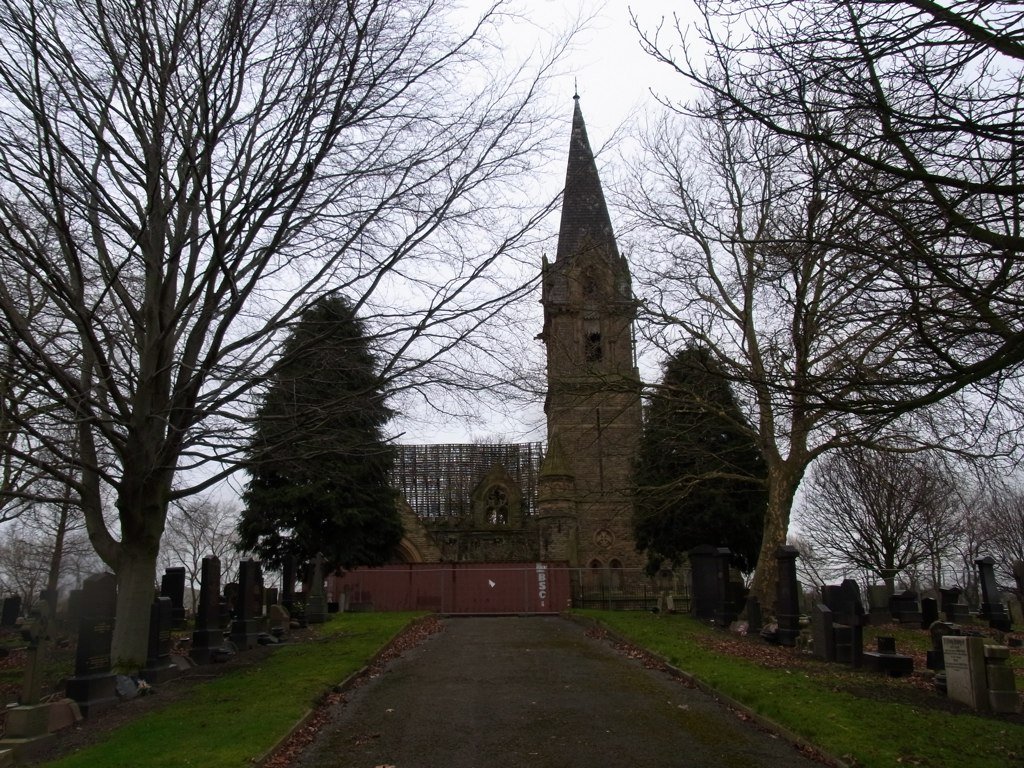
Plan and listen to Cemetery Chapel At Phillips Park Cemetery with Audiala.
Audio guide in your pocket, itinerary in your browser. Built for the way you actually visit.
Introduction
Philips Park Cemetery, located in Manchester’s Miles Platting district, is not only the city’s first municipal public cemetery but also a microcosm of Victorian urban planning, religious diversity, and architectural sophistication. Established in the 1860s to accommodate Manchester’s soaring population, the cemetery is renowned for its denominational zoning, Grade II listed Anglican chapel, and its role as a war memorial site (Historic England; Manchester City Council).
This comprehensive guide provides detailed information on the cemetery’s history, architectural features, visiting hours, ticketing and accessibility, nearby attractions, and practical tips. Whether you are a history enthusiast, architecture lover, genealogist, or simply seeking a tranquil urban sanctuary, this article will help you plan a rewarding visit.

Historical Origins and Development
Founding and Planning
Philips Park Cemetery was conceived in response to the public health crisis and overcrowding of churchyards brought about by Manchester’s rapid industrialization in the mid-19th century (manchester-future.com). In 1863, the Manchester Corporation initiated a design competition, selecting architects Paull and Ayliffe for the buildings and William Gay, a prominent landscape architect, for the site layout. The cemetery opened in 1866, named after Mark Philips, a distinguished local MP and social reformer.
The 46-acre site was meticulously divided into denominational zones: Church of England (8 hectares), Nonconformist or Dissenters (5.5 hectares), Roman Catholic (3 hectares), and later a Jewish section (Cemetery Scribes; jewsfww.uk). Each community originally had its own mortuary chapel, but only the Anglican chapel survives today.
Victorian Principles and Social Context
William Gay’s landscape design reflected Victorian ideals of integrating green public spaces with solemn memorial functions, creating a “garden of the dead” that balanced beauty, reflection, and remembrance. The cemetery also provided employment for local workers amid economic hardship (Find a Grave).
Cemetery Layout and Chapel Architecture
The Surviving Anglican Chapel
The Anglican chapel, completed in 1867, remains a Grade II listed structure and a rare example of Gothic Revival funerary architecture in Manchester (Historic England; manchestervictorianarchitects.org.uk). Designed by Paull and Ayliffe, it features:
- Sandstone rubble construction with a slate roof
- A nave, apsed chancel, and south aisle
- A striking south-east tower with a patterned slate spire
- Intricate lancet windows and detailed stonework
- Geometric tracery and decorative tilework
The chapel stands as a testament to the multicultural and religiously inclusive ethos of Victorian Manchester, with its architecture echoing the importance of dignified public burial spaces (GENUKI).
Cemetery Features
- Grade II listed entrance lodges and gateway, with red Mansfield columns and wrought iron gates
- Winding pathways, mature trees, and carefully designed landscaping
- Distinct denominational zones, each with historical monuments and memorials
Visiting Philips Park Cemetery: Hours, Tickets, and Accessibility
Opening Hours
- Daily: Dawn until dusk (typically 8:00 AM to 6:00 PM; winter closure may be earlier)
- Special Events: Chapel interior access may be available during heritage open days or guided tours
Always check the Manchester City Council website for seasonal updates or special closures.
Entry and Tickets
- Admission: Free of charge for both the cemetery and grounds
- Chapel Access: Usually exterior only; interior open during select events (advance booking may be required)
Accessibility
- Pathways: Main paths are suitable for wheelchairs; some older sections may be uneven
- Transport: Served by numerous bus routes from Manchester city centre; parking available but limited during busy periods
- Facilities: On-site facilities are minimal; plan ahead for restrooms and refreshments
- Safety: Wear suitable footwear and dress for variable weather
Notable Burials and Memorials
Commonwealth War Graves & Military Memorials
Philips Park Cemetery contains 448 Commonwealth war graves (274 from WWI, 174 from WWII), scattered throughout the cemetery (CWGC). Key features include:
- Screen Wall Memorial: Lists war casualties whose graves are not individually marked
- Cross of Sacrifice: Prominent symbol of collective military remembrance
- Victoria Cross Recipient: Burial of a decorated soldier, commemorated by a plaque (Memorials to Valour)
Community and Civilian Graves
The cemetery is also the resting place for numerous local leaders, philanthropists, and ordinary citizens, reflecting the social history of Manchester. Comprehensive records are accessible via the Manchester City Council Burial Index.
Nearby Attractions & Travel Tips
- Phillips Park: Adjacent historic park with walking trails, gardens, and play areas (Manchester City Council Parks)
- Miles Platting: Area rich in industrial heritage and local cafés
- Other Sites: Consider visiting Southern Cemetery and Heaton Park for more historical exploration
Travel Tips
- Use public transport whenever possible, as parking is limited
- Early mornings or weekdays offer a quieter experience
- Respect the solemnity of the grounds, especially during ceremonies
Genealogical Research and Community Involvement
Genealogists can access detailed burial records online or seek support from the Friends of Philips Park Cemetery, who also organize guided walks and heritage events (Friends of Philips Park Cemetery). The cemetery offers rich resources for family historians and those interested in community heritage.
FAQ
Q: What are the opening hours?
A: Open daily from dawn until dusk; check council website for seasonal variations.
Q: Is there an entrance fee?
A: Entry is free to all.
Q: Can I access the chapel’s interior?
A: Generally only during special events or guided tours.
Q: Are guided tours available?
A: Yes, offered occasionally by the Friends group and local heritage organizations.
Q: Is the site wheelchair accessible?
A: Main paths are accessible, but some older areas may be uneven.
Q: Can I take photographs?
A: Yes, for personal use; commercial photography may require permission.
Q: How can I research family history here?
A: Use the council’s online burial index or contact the Friends group for assistance.
Listen to the full story in the app
The whole Cemetery Chapel At Phillips Park Cemetery,
told well.
Audio guides for 1,100+ cities across 96 countries. History, stories, and local insight — offline ready.
Verified, and shown.
Researched and written by the Audiala editorial team from historical records, architectural archives, and local expertise.
Researched from Wikidata, Wikipedia & official sources · fact-checked · How we make our guides →