Plan and listen to Albert Memorial with Audiala.
Audio guide in your pocket, itinerary in your browser. Built for the way you actually visit.
Introduction
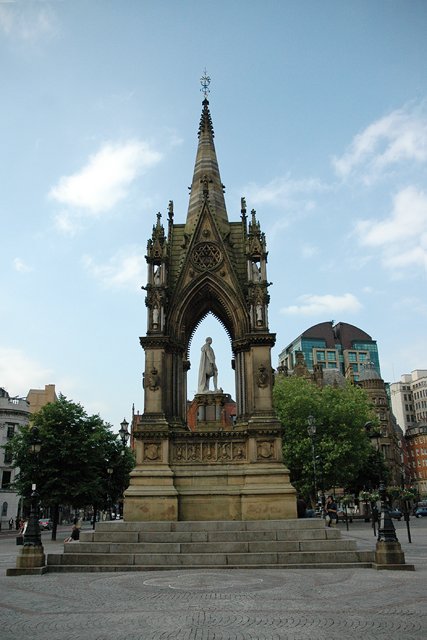
Situated in the heart of Manchester’s Albert Square, the Albert Memorial stands as a stunning testament to Victorian Gothic Revival architecture and the city’s dynamic cultural heritage. Commissioned in 1866 to honor Prince Albert, consort of Queen Victoria, this Grade I-listed monument is both a celebration of 19th-century progress and a symbol of Manchester’s civic pride during its industrial expansion. Designed by Thomas Worthington and sculpted by Matthew Noble, the memorial is renowned for its intricate canopy, statuary, and allegorical figures representing Arts, Commerce, Science, and Agriculture.
This comprehensive guide provides detailed information on the Albert Memorial’s historical significance, architectural features, visiting hours, ticketing, accessibility, nearby attractions, and practical travel tips. Whether you are an architecture enthusiast, history buff, or casual visitor, the Albert Memorial offers a unique glimpse into Manchester’s Victorian past and an engaging cultural experience. For further reading and updates on special events, consult official resources and heritage organizations (Chetham's Library, Manchester City Council, Historic England).

Historical Background
Origins and Motivation
Following Prince Albert’s death in 1861, Manchester—like many UK cities—wished to honor his legacy. While initial proposals included practical memorials such as a hospital or school, the then-mayor, Thomas Goadsby, spurred a shift toward a more symbolic gesture. His substantial donation on the condition of a statue within a ‘proper temple’ inspired public fundraising, reflecting Albert’s popularity among Mancunians (Chetham's Library).
Prince Albert’s Connection to Manchester
Albert’s direct influence on Manchester’s cultural life was significant, notably through his support of the 1857 Art Treasures Exhibition—the largest art exhibition in UK history. The Prince and Queen Victoria lent many works, and Albert himself inaugurated the event, reinforcing his enduring relationship with the city (Chetham's Library).
Design and Construction
In 1863, Albert Square was selected as the memorial’s site, transforming former derelict land into a new civic space (Manchester City Council). Sculptor Matthew Noble crafted the statue, and Thomas Worthington designed the ornate Gothic canopy. Construction began in 1863, with completion in 1866. The process required deep foundations due to challenging subsoil conditions and was supported by land donated by Sir Oswald Mosley (National Archives).
Architectural and Artistic Features
The memorial exemplifies the Victorian Gothic Revival style, inspired by structures such as the 13th-century church of Santa Maria della Spina in Pisa. Its canopied shrine rises nearly 23 meters, crowned by a spire and intricate wrought-iron finial (Manchester Victorian Architects). Robust piers, carved pinnacles, and rich stonework frame the white marble statue of Prince Albert, who stands holding a catalogue from the Great Exhibition. Each corner features allegorical statues symbolizing Art, Commerce, Science, and Agriculture. Heraldic panels and armorial bearings highlight Albert’s international connections (Historic England).
Civic and Cultural Significance
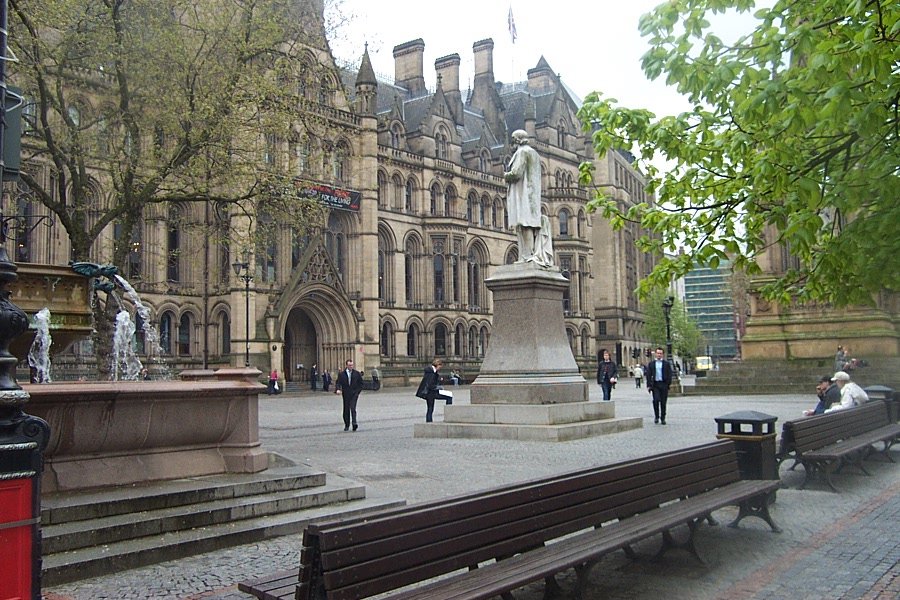
The Albert Memorial quickly became a focal point of Manchester’s civic life, anchoring Albert Square and complementing the Town Hall. Its public funding and prominent setting reflected the city’s identity and aspirations during a period of rapid industrial growth (Manchester City Council).
Evolution of the Surroundings
Albert Square has undergone significant transformations, including pedestrianization and resurfacing in 1987, with heritage paving and street furniture added to enhance the area’s character (Manchester City Council). The creation of a ‘peace garden’ in 1971 and further redevelopment have ensured the space remains vibrant and welcoming.
Heritage and Legacy
As the first major memorial to Prince Albert in the UK, the Manchester Albert Memorial predates its more elaborate London counterpart. Its design and urban integration have influenced subsequent commemorative monuments and established Albert Square as a central venue for civic events, festivals, and gatherings (Victorian Web; Historic England).
Visiting the Albert Memorial
Visiting Hours
- Open Access: The Albert Memorial is located in the open-air Albert Square, accessible 24 hours a day throughout the year.
- Recommended Times: Daylight hours (8:00 AM to 8:00 PM) are ideal for photography, safety, and the best appreciation of the monument's details.
Ticket Information
- Admission: No ticket or entry fee is required; the memorial is a free public monument.
Accessibility
- Wheelchair Access: Albert Square is fully accessible, featuring level paving and ramps.
- Public Transport: Served by nearby tram stops, bus routes, and within walking distance of Manchester Piccadilly and Victoria train stations.
- Facilities: Public restrooms are available in adjacent buildings; ample seating and well-lit paths ensure comfort and safety (The Travel Bunny).
Travel Tips
- Use public transport for convenience; parking is available but limited.
- Bring a camera for architectural and event photography.
- Manchester’s weather can be unpredictable—carry an umbrella or raincoat.
Nearby Attractions
- Manchester Town Hall: Iconic Victorian Gothic building adjacent to the square.
- John Rylands Library: Renowned neo-Gothic library a short walk away.
- Manchester Art Gallery: Features Victorian and contemporary collections.
- Central Library and Northern Quarter: Both offer further cultural and dining experiences (About Manchester).
Guided Tours and Events
- Walking Tours: Several operators and local heritage organizations include the Albert Memorial in their tours, providing historical context and insights.
- Events: Albert Square hosts regular public events—seasonal markets, festivals, and civic gatherings—often centered around the memorial (ManchesterWorld).
Photography Tips
- Early morning and late afternoon offer the best lighting.
- Capture the memorial’s intricate stonework and the lively activity of Albert Square.
- During events, unique decorations and lighting provide creative photographic opportunities.
Cultural Impact
Symbol of Manchester’s Identity
The Albert Memorial is a powerful symbol of Manchester’s Victorian innovation, civic pride, and commitment to the arts and education. Its central location and impressive design anchor Albert Square as a gathering place and civic hub, reflecting the city’s historical narrative and enduring cultural vibrancy (I Love Manchester).
Civic Life and Community Engagement
Albert Square, with the memorial as its centerpiece, hosts political rallies, festivals, and public celebrations. Recent redevelopment has prioritized accessibility and inclusivity, ensuring the space remains open, welcoming, and relevant for all residents and visitors (ManchesterWorld).
Educational and Artistic Value
Interpretive signage, guided tours, and school visits make the memorial an important educational resource. The Gothic design and restoration work continue to inspire artists and architects, while community-led artistic features (such as bespoke manhole covers) strengthen the site’s local identity (I Love Manchester).
Economic and Social Regeneration
The revitalization of Albert Square—centered on the memorial—has boosted local businesses and tourism, especially as Manchester recovers from the Covid-19 pandemic. The memorial’s presence draws visitors and supports the city center’s vibrancy (ManchesterWorld).
Frequently Asked Questions (FAQs)
Q: What are the Albert Memorial’s visiting hours?
A: The memorial is outdoors in Albert Square, open 24 hours daily. Daylight visits are recommended.
Q: Is there an entry fee or ticket required?
A: No. The memorial is free and open to all.
Q: Is the memorial wheelchair accessible?
A: Yes. The square features level paving and ramps.
Q: Are guided tours available?
A: Yes. Multiple walking tours and local heritage groups include the memorial; check local tourist information for schedules.
Q: What are the best times for photography?
A: Early morning or late afternoon for optimal lighting; during events for unique scenes.
Q: What attractions are nearby?
A: Manchester Town Hall, John Rylands Library, Manchester Art Gallery, Central Library, and the Northern Quarter.
Listen to the full story in the app
The whole Albert Memorial,
told well.
Audio guides for 1,100+ cities across 96 countries. History, stories, and local insight — offline ready.
Verified, and shown.
Researched and written by the Audiala editorial team from historical records, architectural archives, and local expertise.
Researched from Wikidata, Wikipedia & official sources · fact-checked · How we make our guides →