Plan and listen to Wellington Monument with Audiala.
Audio guide in your pocket, itinerary in your browser. Built for the way you actually visit.
Introduction
The Wellington Monument, also referred to as the Statue of Achilles, is a significant historical landmark within Hyde Park, London. Erected to commemorate Arthur Wellesley, the 1st Duke of Wellington, it serves as a tribute to his military triumphs, particularly his victory over Napoleon at the Battle of Waterloo. This comprehensive guide delves into the rich history and architectural significance of the monument and provides practical information for visitors, including visiting hours, ticket details, and nearby attractions. Whether you are a history enthusiast or a curious tourist, this guide aims to enhance your visit to one of London's most iconic landmarks. For those planning a visit, the Wellington Monument and its surroundings offer a unique blend of historical insights and modern-day attractions (Atlas Obscura).

Early Conception and Commissioning
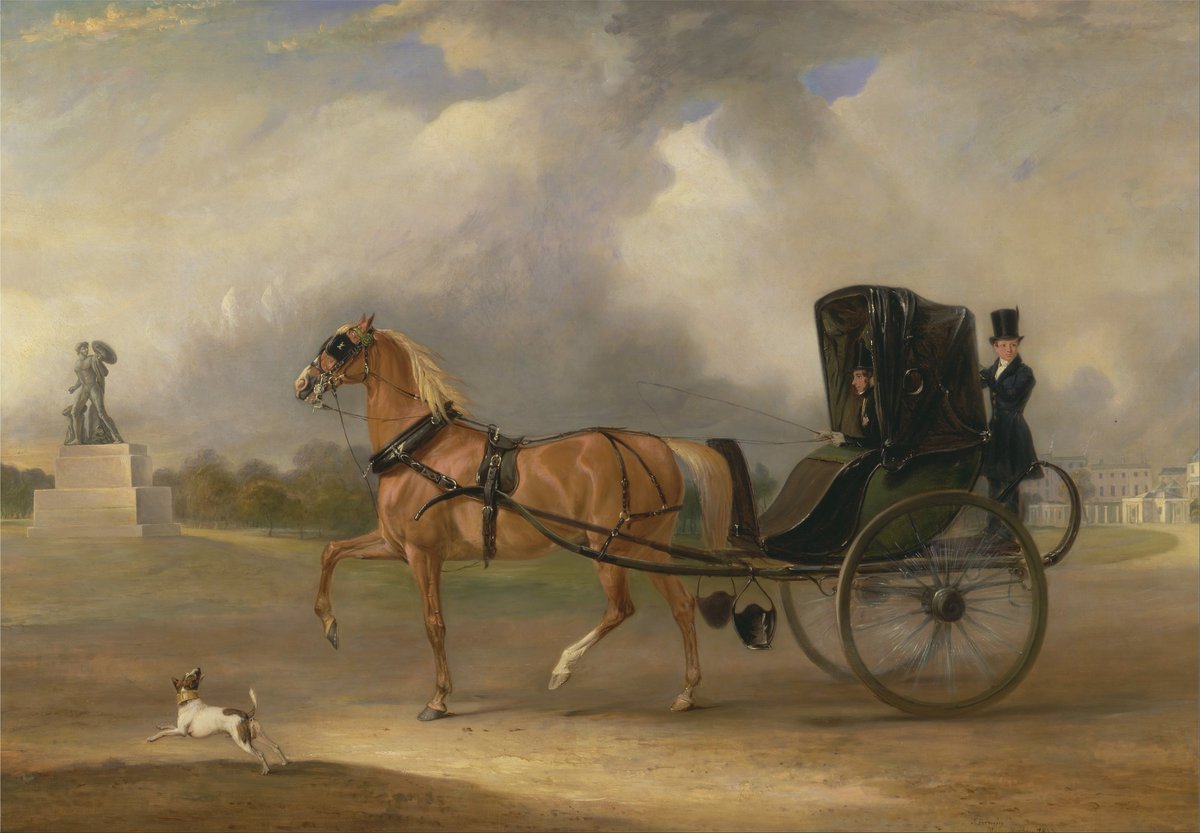
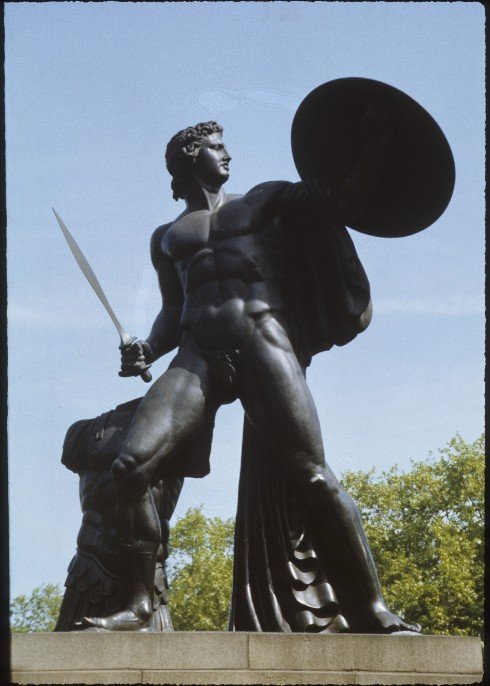
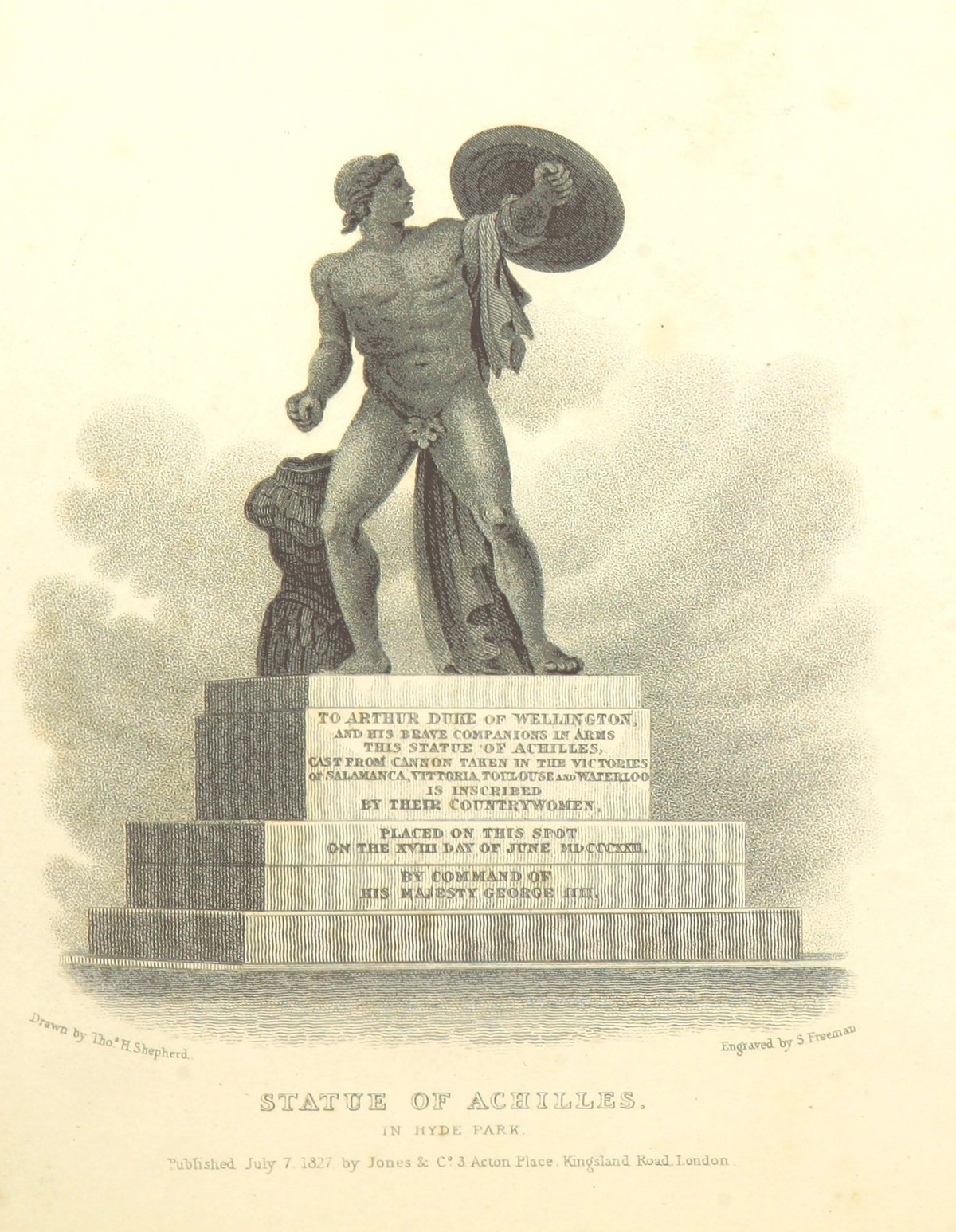
The Wellington Monument, also known as the Statue of Achilles, was commissioned shortly after the Battle of Waterloo in 1815. A patriotic upper-class society known as the Ladies of England spearheaded the initiative to honor Arthur Wellesley, the 1st Duke of Wellington, who was celebrated for his victory over Napoleon. The society turned to the acclaimed sculptor Richard Westmacott, who cast the statue out of 33 tonnes of bronze sourced from enemy cannons captured in the Battles of Salamanca (1812), Vitoria (1813), Toulouse (1814), and Waterloo (Atlas Obscura).
Design and Unveiling
The statue, modeled on a Roman figure from Monte Cavallo in Italy, was unveiled in Hyde Park on June 18, 1822. Standing 18 feet tall, the statue of Achilles was notable for its nudity, with Achilles’ armor resting by his right leg. This design choice led to immediate controversy. As noted by contemporary observers, the undraped figure of Achilles sparked a significant public outcry (Atlas Obscura).
Public and Critical Reception
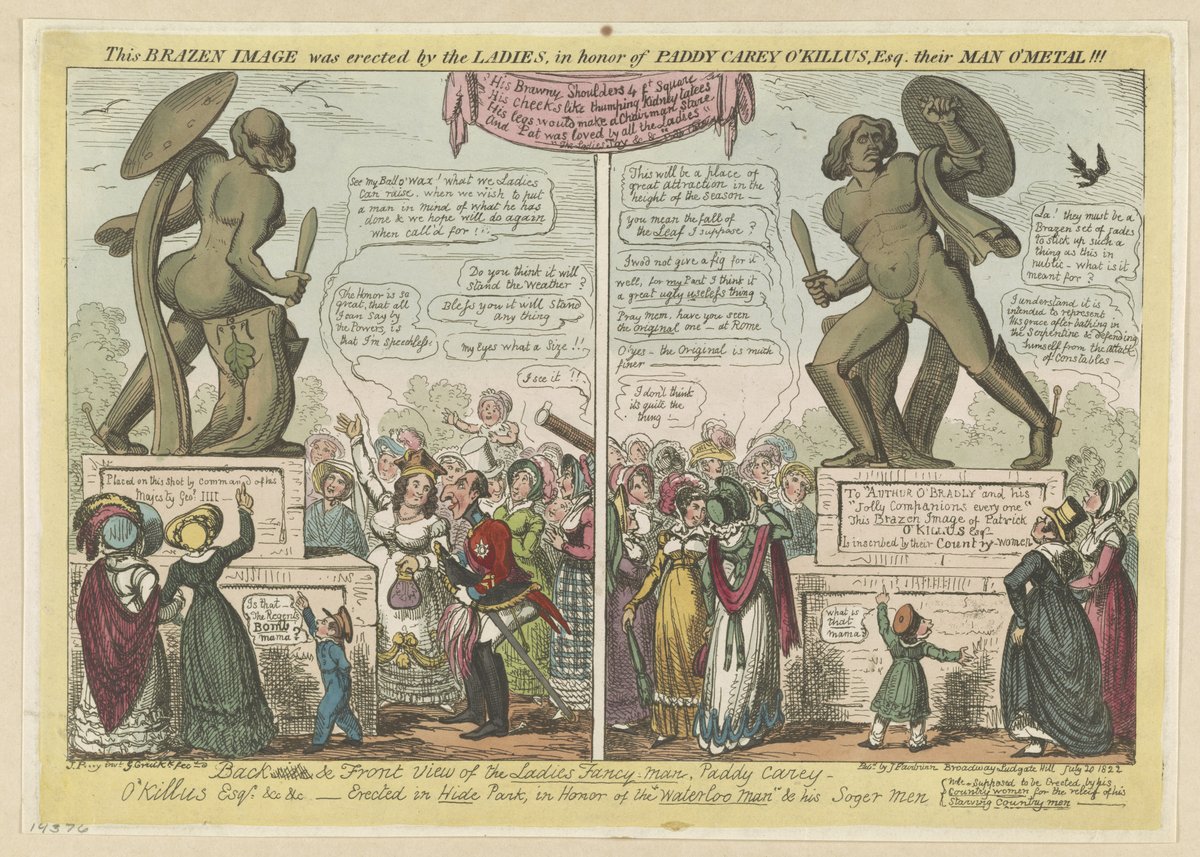
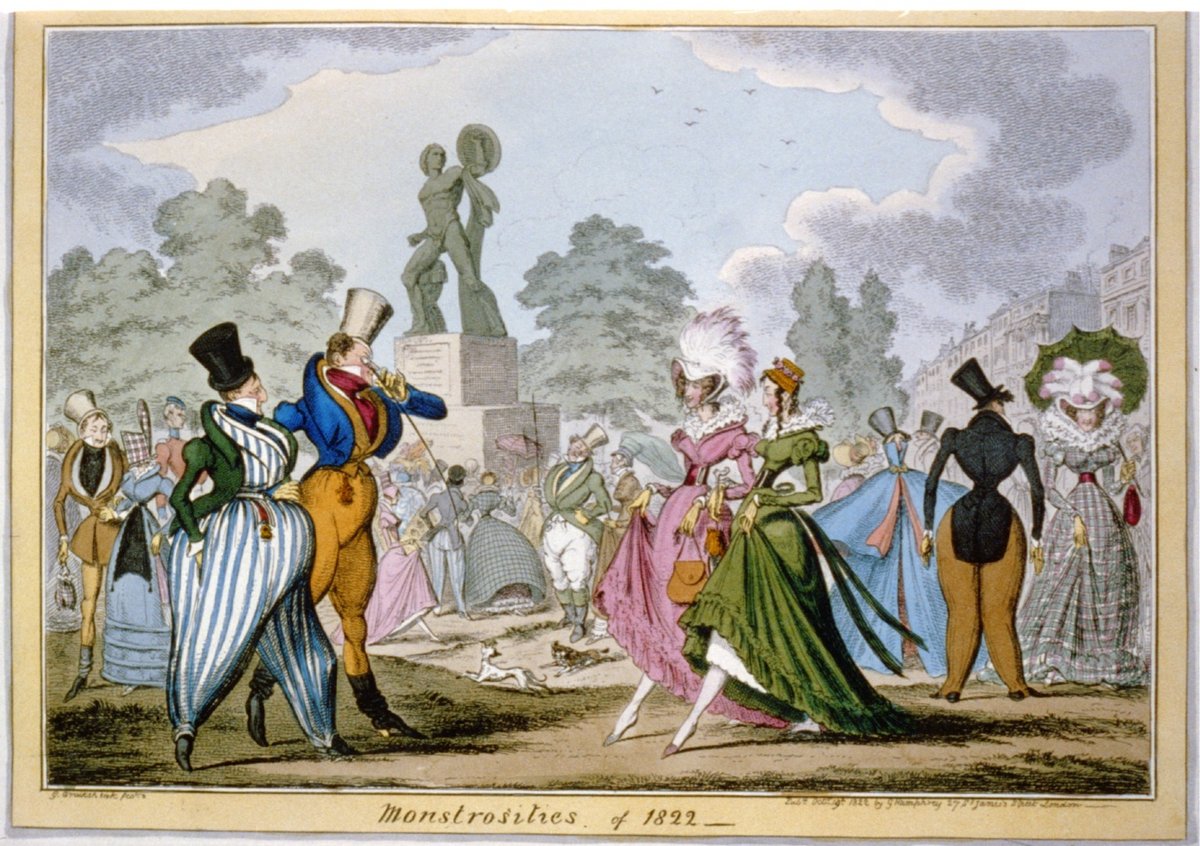
The statue faced criticism not only for its nudity but also for its timing and appropriateness. British caricaturist George Cruikshank lampooned the statue in 1822, arguing that it was inappropriate to devote resources to such projects when the country was in distress and people were starving. This criticism highlighted the broader societal issues of the time and questioned the allocation of public and private resources (Atlas Obscura).
Relocation and Modifications
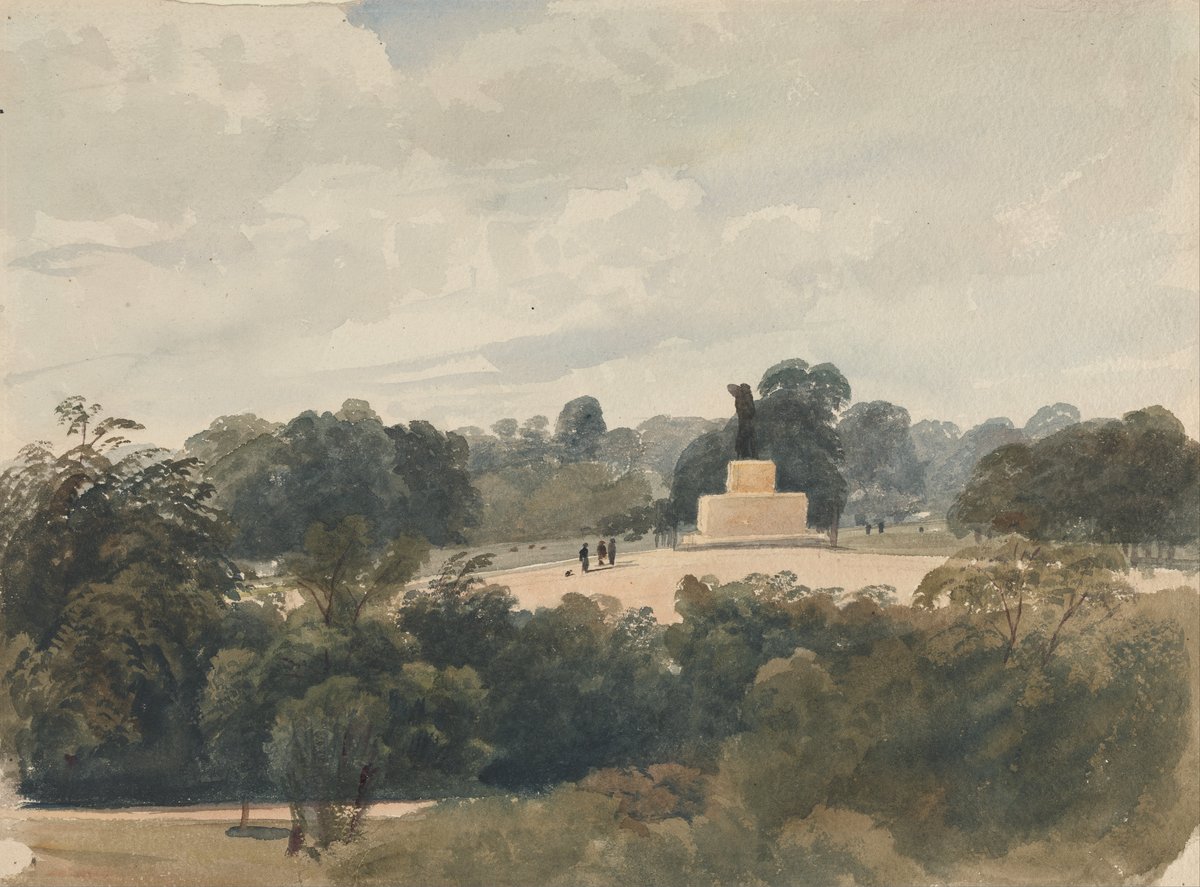
Originally, the Wellington Monument was located in the southeast corner of Hyde Park, near the Queen Elizabeth Gate at Hyde Park Corner. Over time, the statue's location and context have evolved. The Wellington Arch, also known as the Constitution Arch or Green Park Arch, was initially constructed between 1826 and 1830 as a triumphal arch by Decimus Burton. It was intended to serve as a grand entrance to Buckingham Palace but later became associated with the Duke of Wellington due to the colossal equestrian statue of Wellington by Matthew Cotes Wyatt that was placed atop it (Wikipedia).
Controversies and Criticisms
The equestrian statue by Matthew Cotes Wyatt, which eventually crowned the arch, was the largest equestrian figure ever made, standing at 28 feet high and weighing 40 tons. Despite its grandeur, the statue faced significant criticism. Guy Williams claimed that Wyatt was "not noticeably talented," and F. M. O'Donoghue wrote in the Dictionary of National Biography that Wyatt's reputation and practice were not commensurate with his abilities (Wikipedia).
Restoration and Current Status
The Wellington Monument has undergone various restorations and modifications over the years. The most recent restoration efforts have focused on preserving the statue and its historical significance. Today, the monument stands as a tribute to the Duke of Wellington and his victory at the Battle of Waterloo, serving as a prominent landmark in Hyde Park and a symbol of British military history (National Trust).
Visitor Experience
Visitors to the Wellington Monument can explore its rich history and significance through guided tours and informational displays. The surrounding area, including Hyde Park and the nearby Wellington Arch, offers a variety of attractions and activities for tourists. The Wellington Arch, now a Grade I-listed structure, provides unrivaled views of London from its balconies and houses an excellent exhibition on its history (English Heritage).
Travel Tips and Accessibility
For those planning to visit the Wellington Monument, it is located in Hyde Park, just off Park Lane and Achilles Way in Central London. The nearby Wellington Arch is open to visitors from Wednesday to Sunday, 10 am to 5 pm, with tickets priced at £4.50. Booking online in advance is recommended for the best price and guaranteed entry (English Heritage). The surrounding area offers a variety of attractions, including the Royal Parks and the Changing of the Guard, making it a must-visit destination for history enthusiasts and tourists alike (Travels with Louise).
Nearby Attractions
While visiting the Wellington Monument, be sure to explore the other attractions in Hyde Park. From the Serpentine Lake to the Diana Memorial Fountain, there is plenty to see and do. The park is also home to numerous gardens, walking paths, and recreational facilities, making it an ideal spot for a leisurely day out.
Significance in Modern Context
The Wellington Monument and Wellington Arch continue to hold cultural and historical significance in modern London. They serve as reminders of Britain's military past and the legacy of the Duke of Wellington. The monuments also reflect the evolving public attitudes towards commemorative art and the allocation of resources for public projects. As such, they offer valuable insights into the historical and cultural context of early 19th-century Britain (Atlas Obscura).
FAQ
Q: What are the visiting hours for the Wellington Monument? A: The Wellington Monument itself is located in Hyde Park, which is open from 5 am to midnight every day. The nearby Wellington Arch is open to visitors from Wednesday to Sunday, 10 am to 5 pm.
Q: How much are the tickets for the Wellington Arch? A: Tickets for the Wellington Arch are priced at £4.50. Booking online in advance is recommended for the best price and guaranteed entry.
Q: Is the Wellington Monument wheelchair accessible? A: Yes, Hyde Park is generally accessible to visitors with disabilities, and there are pathways suitable for wheelchairs. The Wellington Arch also offers step-free access.
Tickets & tours.
These are guided options from our partners — same price as booking direct.
Prices are indicative — final pricing and availability are confirmed at checkout. Audiala may earn a commission from bookings made through these links.
Listen to the full story in the app
The whole Wellington Monument,
told well.
Audio guides for 1,100+ cities across 96 countries. History, stories, and local insight — offline ready.
Verified, and shown.
Researched and written by the Audiala editorial team from historical records, architectural archives, and local expertise.
Researched from Wikidata, Wikipedia & official sources · fact-checked · How we make our guides →