An introduction.
Researched by the Audiala editorial team from historical records, architectural archives, and local expertise.
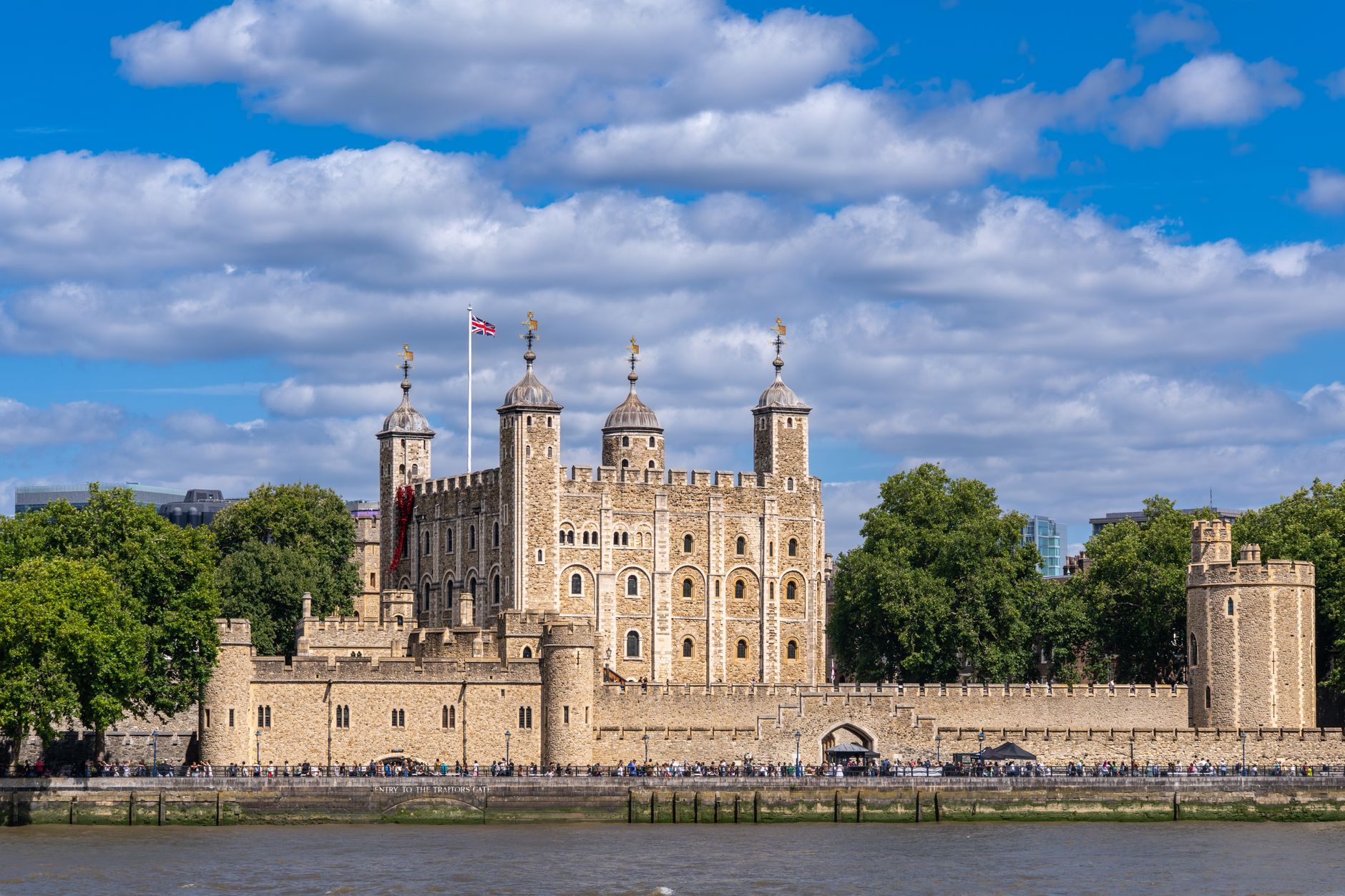
TThe building that kept England's money, its kings, its lions, and its condemned all under one roof still stands on the north bank of the Thames — and it's been doing so for nearly a thousand years. The Tower of London, in the heart of the United Kingdom's capital, is less a single tower than a sprawling 12-acre fortress of concentric walls, 21 towers, and a dry moat wide enough to park a fleet of double-deckers. Come here not for a sanitized heritage experience but for the raw, layered sediment of English power.
Most visitors arrive expecting a dungeon. What they find is stranger: a working royal palace, a military storehouse, and the permanent home of the Crown Jewels, all pressed together inside walls that have witnessed coronation feasts and botched beheadings in roughly equal measure. The complex sits just east of the City of London's financial district, a few minutes' walk from the river and within sight of Tower Bridge.
What makes this place extraordinary isn't any single story — it's the density of them. Anne Boleyn walked these cobblestones. So did Guy Fawkes, Rudolf Hess, and a polar bear gifted by the King of Norway in 1252. The stones here have absorbed more concentrated drama per square metre than almost anywhere else in London.
You could spend an hour or a full day. The Crown Jewels alone draw over three million visitors annually, but the quieter corners — a Norman chapel on the upper floor of the White Tower, graffiti scratched into cell walls by Elizabethan prisoners — reward anyone willing to slow down and look closely.
Inside the Tower's Medieval Palace | Dan Snow at the Tower of London
Historic Royal Palaces01 What to see.
The White Tower
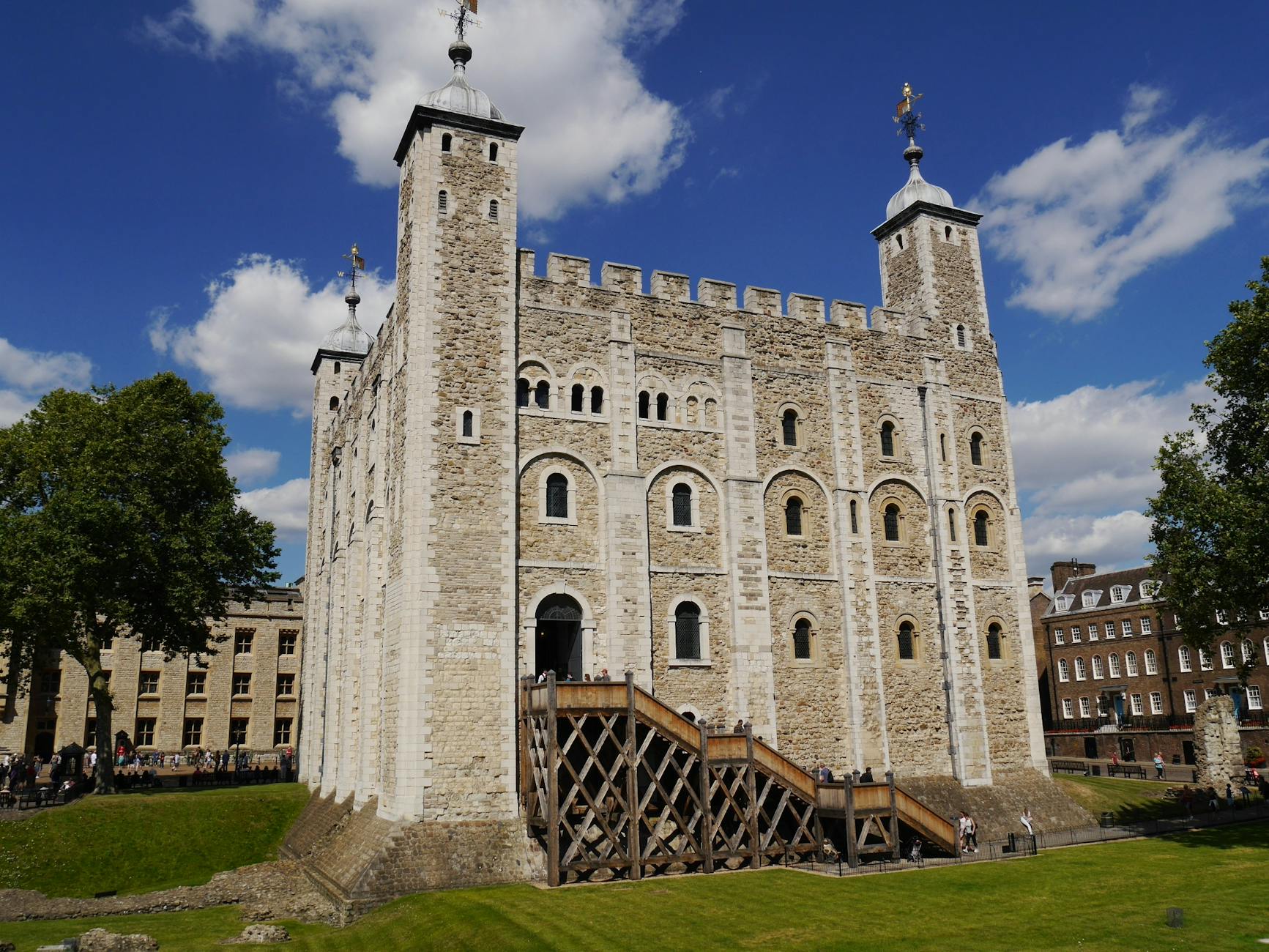
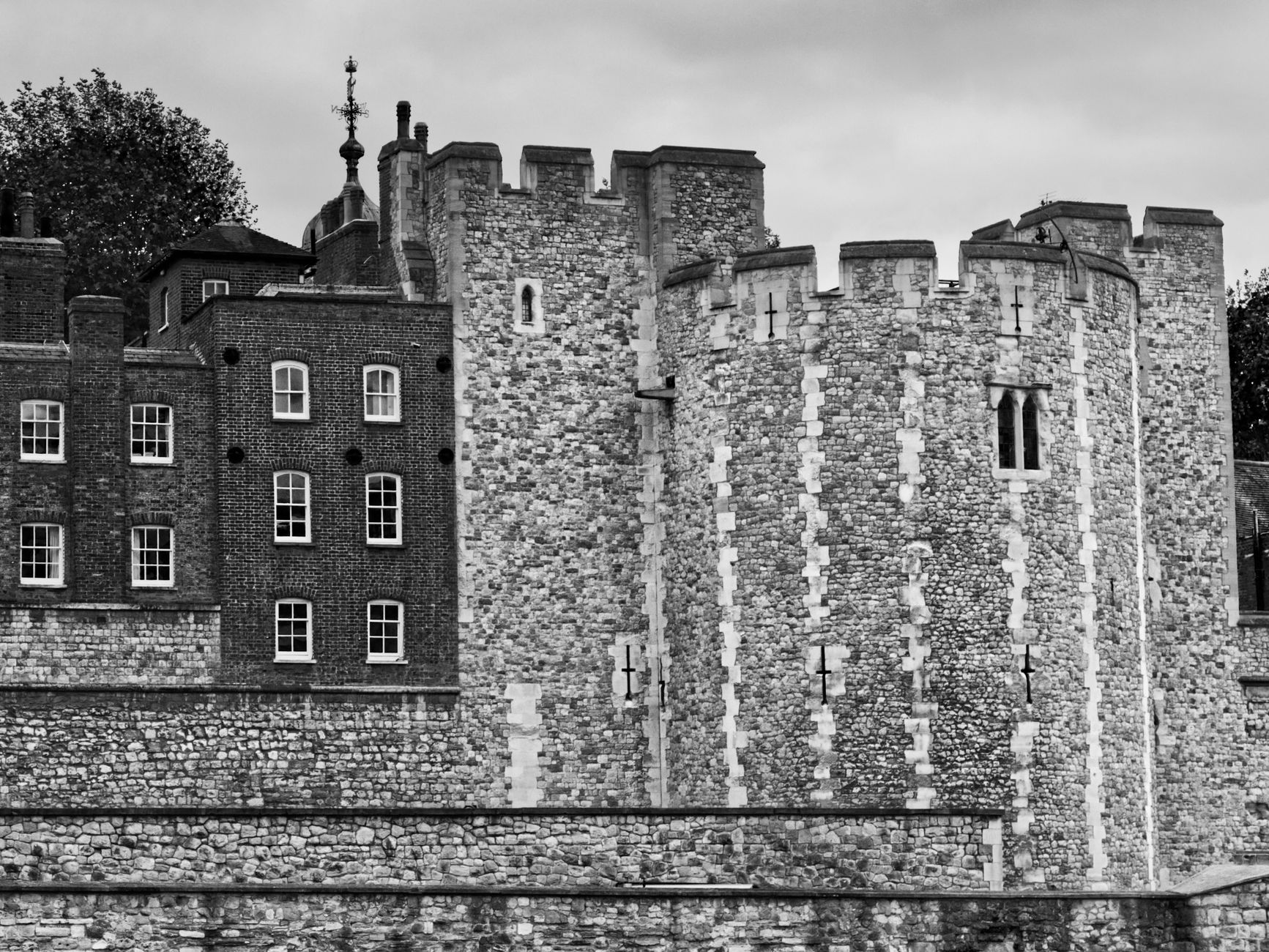
Most people assume the Tower of London is one building. It's not — it's 22 towers, two curtain walls, and a moat, all wrapped around a single, brutally elegant Norman keep that William the Conqueror ordered built in 1078. The White Tower got its name because Henry III had it whitewashed in 1240, turning a military stronghold into a gleaming symbol of royal authority visible from miles along the Thames. That psychological trick still works: even stripped of its plaster, the pale Kentish ragstone radiates cold authority against a grey London sky.
Step inside and the scale shifts. Walls nearly 4.5 metres thick — wider than a double-decker bus is tall — absorb all sound. The air cools immediately. Climb to St John's Chapel on the second floor, a Romanesque space dating to roughly 1080, where barrel vaults and unadorned columns create an atmosphere of startling austerity. It served as an archive as much as a chapel, which tells you something about Norman priorities. The Royal Armouries collection fills the lower floors with 500 years of weaponry, but it's the architecture itself that stops you — the sheer mass of stone that has outlasted every dynasty that built upon it.
The Beauchamp Tower and Prisoner Graffiti
Here's what most visitors miss entirely: the walls talk. The Beauchamp Tower, built between 1275 and 1281 as part of Edward I's expansion, held some of England's most prominent prisoners — and they carved their desperation directly into the stone. Names, dates, religious symbols, elaborate family crests scratched with whatever was at hand. Philip Howard, Earl of Arundel, imprisoned in 1585, left his name alongside the phrase "the more suffering for Christ in this world, the more glory with Christ in the next." You can trace the letters with your eyes from inches away.
Anthony Salvin restored the tower in the 1850s specifically to reveal these markings to the public, and the decision was inspired. The carvings transform an empty stone room into something uncomfortably intimate — a direct line to people who knew they might never leave. Only 12 executions actually happened within the Tower walls; most took place at nearby Tower Hill. But the waiting, the not-knowing, happened here. Stand in the Beauchamp Tower on a quiet morning before 11:00 and you'll understand why the silence feels heavier than the stone.
The Wall Walk and a Route Through 900 Years
Skip the Jewel House queue first thing — everyone goes there. Instead, start your visit on the Wall Walk, the battlements circuit that threads through the eastern towers along the old defensive perimeter. From up here, you get the layout Edward I intended: concentric rings of stone designed so defenders could fire down into any breach. The Thames glitters to one side, the glass towers of the City crowd the other, and you're standing exactly where medieval archers once stood scanning for trouble.
From the Wall Walk, drop down to Tower Green, where the execution site of Anne Boleyn (1536) and Lady Jane Grey (1554) is marked with a simple glass memorial. Then cross to the King's House — a rare timber-framed Tudor building from 1540, its dark wood and leaning geometry a sharp contrast to all that surrounding stone. End at the Chapel Royal of St Peter ad Vincula, where the executed are buried beneath the floor. The whole circuit takes about two hours if you linger, and you should linger. The Tower rewards slow looking: the way light falls differently through arrow slits than through Tudor windows, the echo of your boots shifting from cobblestone to flagstone. You'll leave understanding this place was never just a prison or a palace. It was both, always, at the same time — and that tension is what makes it unlike anything else in London.
02 In pictures.




Watch & Explore Tower of London.
Plan and listen to Tower of London with Audiala.
Audio guide in your pocket, itinerary in your browser. Built for the way you actually visit.
Tickets & tours.
These are guided options from our partners — same price as booking direct.
Prices are indicative — final pricing and availability are confirmed at checkout. Audiala may earn a commission from bookings made through these links.
Also on GetYourGuide
More tours for Tower of London
Curated from GetYourGuide. Same price as official, free cancellation on most.
 GetYourGuide
Tower of London and Crown Jewels Exhibition Ticket
from
€43
 GetYourGuide
Tower of London Early Access with Beefeater and Crown Jewels
from
€74
 GetYourGuide
Easy Access Tower of London and Crown Jewels Tour
from
€103
 GetYourGuide
VIP Beefeaters Meet & Greet with Tower of London Guided Tour
from
€59
Prices shown are indicative — final pricing and availability are confirmed at checkout. Audiala may receive a commission from bookings made via these links.
03 Visitor logistics.
The practical scaffolding for a good visit — kept short.
Getting There
Tower Hill station on the District and Circle lines drops you about a 3-minute walk from the entrance — follow the signs downhill toward the river. Bus routes 15, 42, 78, and 100 also serve the area. There's no public parking at the Tower, so leave the car behind; a riverside walk east from London Bridge station (about 20 minutes) gives you a gorgeous approach past St Katharine Docks.
Opening Hours
As of 2026, the Tower is generally open Tuesday–Saturday 09:00–18:00 and Sunday–Monday 10:00–18:00, though hours shift seasonally. The Middle Tower entrance is closed for conservation until mid-June 2026, so check the Historic Royal Palaces website before you go — alternative entry routes may apply during peak periods.
Time Needed
A focused sprint through the Crown Jewels and a lap of the grounds takes 1–2 hours. But 3–4 hours is what you actually want: enough time to join a Yeoman Warder tour, climb through the White Tower's armour collections, and linger in the 12th-century Chapel of St John without feeling rushed.
Accessibility
The Tower is honest-to-God challenging for wheelchair users — roughly 80% of the site involves stairs, and the cobblestones are uneven enough to rattle your teeth. Step-free access exists at the southwest corner and the Crown Jewels exhibit is fully accessible, but the White Tower and Bloody Tower are not. Loaner wheelchairs and a digital BSL guide are available on-site.
Tickets
As of 2026, adult tickets are £37.00 and children (5–15) £18.50 — book online in advance to secure a timed entry slot, as there's no traditional skip-the-line option. Historic Royal Palaces members enter free. Companions of disabled visitors are also admitted at no charge.
04 Tips for visitors.
Small things that change the day.
Arrive at Opening
The Crown Jewels queue swells to 45+ minutes by midday. Get there when doors open — on a Tuesday–Saturday that's 09:00 — and head straight to the Jewel House before the tour groups arrive.
No Photos in Jewel House
Photography is strictly banned inside the Crown Jewels exhibit — no flash, no sneaky phone shots, nothing. Guards enforce this firmly. Save your camera for the White Tower and Tower Green, where you can shoot freely.
Watch for Pickpockets
Tower Hill station and the entrance queue are prime pickpocket territory. Keep bags zipped and in front of you, and ignore anyone offering "free" friendship bracelets, fake petitions, or unsolicited help with directions.
Eat at St Katharine Docks
Skip the overpriced tourist traps on Tower Hill. Walk 5 minutes east to The Dickens Inn at St Katharine Docks — a converted 18th-century warehouse with solid pub food and a waterside terrace. Budget option: grab a sandwich from the Pret A Manger near Tower Hill station.
Book Ceremony of Keys
The nightly Ceremony of the Keys — 700 years of locking the Tower gates — is free but requires booking months in advance through Historic Royal Palaces. It's the single best "insider" experience at the Tower, and most visitors don't know it exists.
Combine with Nearby Sites
The ruined church of St Dunstan-In-The-East is a 10-minute walk northwest — a striking, ivy-draped shell from the Blitz. Tower Bridge is right next door and free to photograph from below, though the walkway exhibition costs extra.
Where to Eat
Don't Leave Without Trying
Chicome Mexican Restaurant & Bar
local favoriteOrder: Fresh ceviche, house-made salsas, and their signature margaritas. The kitchen takes its Mexican traditions seriously—this isn't tourist-trap Tex-Mex.
With 606 reviews and a 4.8 rating, Chicome is where locals actually go for authentic Mexican food in the Docks. The riverside location and vibrant bar scene make it feel like a proper neighborhood spot, not a tourist trap.
Côte St Katharine Docks
local favoriteOrder: Classic French bistro fare—steak frites, duck confit, and their all-day breakfast (Eggs Royale is excellent). The wine list punches above its price point.
Côte is a reliable, unpretentious French bistro with nearly 2,800 reviews and a solid 4.4 rating. It's the kind of place where you can grab breakfast before the Tower opens or a proper dinner after exploring the neighborhood.
Bless Start
cafeOrder: House-made pastries, specialty coffee, and their breakfast sandwiches. This is the kind of spot where everything is made fresh, not mass-produced.
A small, quality-focused cafe right in St Katharine Docks with a perfect 5.0 rating. It's the ideal quick stop for ethically sourced coffee and something proper to eat before or after your Tower visit—no chain-café mediocrity here.
Slug & Lettuce Tower Bridge
local favoriteOrder: Proper pub classics—fish and chips, sausage and mash, a pint of real ale. The riverside terrace is perfect for people-watching while you eat.
With nearly 3,800 reviews, this is the go-to pub for visitors and locals alike. It's unpretentious, the food is honest, and the location right on the water can't be beat—especially on a sunny afternoon.
Dining Tips
- check St Katharine Docks is the epicenter of dining near the Tower—nearly all top restaurants cluster here within a 5-minute walk.
- check Borough Market (a short walk across London Bridge) offers artisanal produce, street food, and specialty goods if you prefer to graze rather than sit down.
- check The Street Food Market at Leadenhall Building operates Tuesdays, Wednesdays, and Thursdays (11:30 AM – 2:30 PM) and features global cuisines.
- check Tower Bridge Collective is a newer food hall with 13 global cuisines in a family-friendly setting—great for groups with different tastes.
- check Many pubs and cafes around the Tower offer excellent breakfast and brunch options, ideal for fueling up before a morning visit.
Restaurant data powered by Google
05 Nine Centuries of Stone and Blood
William the Conqueror began fortifying this bend in the Thames shortly after his victory at Hastings in 1066. Records indicate the White Tower itself — the pale, squared-off keep that still dominates the skyline — was started around 1078, built from Caen limestone shipped across the Channel. It was designed to terrify. Originally plastered and whitewashed so it gleamed above the wooden city, the Tower told Saxon Londoners exactly who ruled them now.
Over the next two centuries, Richard the Lionheart, Henry III, and Edward I transformed William's single keep into the concentric fortress visible today, adding curtain walls, a moat, and a ring of defensive towers between roughly 1190 and 1285. The complex then accumulated roles the way old houses accumulate furniture: royal residence, state prison, armoury, Royal Mint (from 1279 until 1810), and — improbably — a zoo.
Margaret Pole and the Worst Morning on Tower Green
On the morning of 27 May 1541, Margaret Pole, Countess of Salisbury, was led to a low wooden block on Tower Green. She was 67 years old, the last of the Plantagenet line, and had committed no crime beyond being a political inconvenience to Henry VIII. Her real offence was her bloodline: she had a stronger hereditary claim to the throne than the king himself, and her son, Cardinal Reginald Pole, had publicly denounced Henry's break with Rome from the safety of the continent.
What happened next became one of the Tower's most notorious episodes. The usual executioner was unavailable; a young, inexperienced substitute took his place. According to contemporary accounts, the first blow missed her neck entirely, striking her shoulder. Margaret reportedly rose from the block and tried to flee. What followed was a series of desperate, clumsy strikes — witnesses described as many as eleven — before the countess finally died. The scene was so horrific that even Tudor-era observers, accustomed to public violence, recorded their shock.
Margaret Pole's execution illustrates something the Tower's walls know well: the machinery of state power often failed at the human level. Only about 12 people were ever executed within the Tower grounds — a privilege, grotesquely, reserved for the highest-ranking prisoners. The vast majority met their end at Tower Hill, outside the walls, in front of crowds. To die inside was considered a mercy. On that May morning, it was anything but.
Lions, a Polar Bear, and an Elephant
The Ravens and a Victorian Invention
Listen to the full story in the app
The whole Tower of London,
told well.
Audio guides for 1,100+ cities across 96 countries. History, stories, and local insight — offline ready.
06 Frequently asked.
The questions travellers send us most about Tower of London.
Is the Tower of London worth visiting?
Yes — it's nearly a thousand years of English power, paranoia, and pageantry compressed into 12 acres on the Thames. The Crown Jewels alone justify the £37 ticket, but the Yeoman Warder tours deliver the human stories that the stone walls can't tell on their own. Budget at least three hours; rushing through means missing the prisoner graffiti in the Beauchamp Tower and the eerie quiet of the chapel where Anne Boleyn is buried.
How long do you need at the Tower of London?
Plan for 3–4 hours if you want to see it properly. A quick pass through the Crown Jewels and the White Tower can be done in 90 minutes, but you'd miss the Wall Walk along the battlements, the Yeoman Warder tour (included in your ticket and genuinely excellent), and the quieter corners like the Medieval Palace rooms overlooking the river.
How do I get to the Tower of London from central London?
The easiest route is the Tube to Tower Hill station on the District or Circle lines — the fortress walls are literally visible from the station exit. Bus routes 15, 42, 78, and 100 also serve the area. There's no public parking at the Tower itself, so don't drive; the walk along the Thames from London Bridge station is a scenic 15-minute alternative.
What is the best time to visit the Tower of London?
Arrive right at opening — 9:00 AM on Tuesday through Saturday — and head straight for the Crown Jewels before the queues build. Weekday mornings outside school holidays are the calmest. A grey, misty London day actually improves the atmosphere; the cold stone feels more authentic when the weather matches the mood of a 900-year-old fortress.
Can you visit the Tower of London for free?
No, there is no general free entry — adult tickets are £37 and children (5–15) cost £18.50. Members of Historic Royal Palaces get free access, and companions of disabled visitors are admitted at no charge. The Ceremony of the Keys, the nightly locking ritual that's been performed for around 700 years, is free but requires booking months in advance through the official HRP website.
What should I not miss at the Tower of London?
The Crown Jewels are the obvious draw, but don't skip the Beauchamp Tower, where prisoners carved names, dates, and desperate religious symbols into the walls — most visitors walk right past without looking closely. Join a Yeoman Warder tour for the stories behind the stones. And find St. John's Chapel inside the White Tower: a 12th-century Romanesque space that once served as an archive, stripped to bare stone and quieter than anywhere else on the site.
Is the Tower of London accessible for wheelchair users?
Partially, but it's challenging — roughly 80% of the site involves stairs, and the historic cobblestones are uneven throughout. The Crown Jewels exhibit is fully step-free, and wheelchair access is available at the southwest corner entrance. Loaner wheelchairs and a digital British Sign Language guide are provided, but most of the historic towers, including the White Tower and Bloody Tower, remain inaccessible to wheelchair users.
Are the ravens really kept at the Tower of London?
Yes, six ravens (plus spares) live at the Tower full-time, cared for by a professional Ravenmaster. The famous legend that the Crown will fall if the ravens ever leave is largely a Victorian-era romanticization of older folklore, not an ancient prophecy. They're clipped to prevent long flights, well-fed, and surprisingly vocal — you'll hear them before you see them.
Verified, and shown.
Researched and written by the Audiala editorial team from historical records, architectural archives, and local expertise.
Official UNESCO listing providing founding date, architectural significance, and Outstanding Universal Value designation.
Official visitor information including opening hours, ticket prices, accessibility details, and the Ceremony of the Keys.
Detailed accessibility information including step-free routes and loaner wheelchair availability.
Information on the Wall Walk experience along the Tower's defensive perimeter.
History of the Royal Mint's operation within the Tower from approximately 1279 to 1810.
Information on reduced-capacity events designed for neurodivergent visitors.
Historical context on the White Tower, St. John's Chapel, and notable prisoners.
Details on the Princes in the Tower, execution history, and the concentric wall construction.
Architectural details and dating for the Middle Tower gatehouse (1275–1281).
Details on the 1540 timber-framed Tudor building within the Tower complex.
Detailed accessibility review including cobblestone ratings, step-free routes, and visit duration recommendations.
Analysis of the raven legend's Victorian origins and the contested Princes in the Tower remains.
Account of Edmund Lenthal Swifte's supernatural encounters and the stabbed door in the Martin Tower.
Details on the execution of Margaret Pole and the distinction between Tower Green and Tower Hill executions.
History of the Tower's zoo from Henry III through Alfred Cops and its closure in the 1830s.
Legend of Cromwell's hidden gold and other unsolved Tower mysteries.
Anthony Salvin's 1850s restoration of the Beauchamp Tower and its prisoner graffiti.
Details on the Yeoman Warders' Club, a private pub within the Tower walls.
Sensory environment review noting echoing indoor spaces and noise levels.
Warnings about pickpocket tactics and distraction scams near Tower Hill.
General safety advice for tourists including cashless payment tips and bag security.
Researched from Wikidata, Wikipedia & official sources · fact-checked · How we make our guides →