Type 2+ letters to search all countries, cities, and places
/Ctrl KEsc
travel_explore
Type 2+ letters to search all countries, cities, and places
Press Enter to open the top result
Tower Bridge
London·United Kingdom·51° N · 0° W·Updated Apr 2026
London's most photographed bridge still rises for ships about 800 times a year, turning a Victorian crossing into one of the city's last working spectacles.
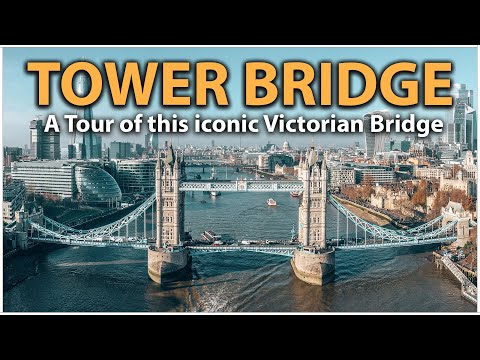
Why does London's most photographed bridge dress itself like a medieval fortress when its real heart is a Victorian machine? That's the puzzle that makes Tower Bridge in London, United Kingdom worth visiting: you come for the skyline, then stay for the delicious fraud of it all. On the river today, the two towers rise in pale granite above the Thames, gulls wheel in the wind, traffic hums over the roadway, and the upper walkways catch a cold silver light that can make the whole structure look older than it is.
Up close, the trick starts to show. Records and surviving structure confirm that Tower Bridge, opened on 30 June 1894, is a steel-framed bascule and suspension bridge wearing a Gothic costume so it would sit politely beside the nearby Tower of London.
That double identity is exactly why you should come. Few places in London reveal the city's character so neatly: imperial ambition, engineering swagger, river trade, and a sharp instinct for theatrical self-presentation, all compressed into one crossing.
Also, this bridge still does its original job. Around 800 lifts a year on average keep faith with the Thames, so when the bascules rise and the road splits apart, you are not watching a heritage performance but a living piece of civic machinery.
Researched by the Audiala editorial team from historical records, architectural archives, and local expertise.
What to see
The High-Level Walkways
Tower Bridge saves its best trick for 42 meters above the Thames, where the two walkways float between the towers at roughly the height of a 14-storey building and London suddenly spreads sideways instead of upward. Morning light pours through the long windows, the traffic drops to a murmur, and you can read the city like a map: the white stone of the Tower of London just west of you, the dome of St Pauls Cathedral farther upriver, and glass-floor panels under your shoes that turn buses into toy models and cyclists into quick strokes of color. Most people rush to the view and miss the point: this is where the bridge stops pretending to be a fairy-tale castle and admits it is a machine, its rivets, trusses, and steel logic showing through the Gothic costume.
The Engine Rooms
The Engine Rooms smell faintly of oil and warm metal, and that matters because this is where the postcard turns back into hard labor. The original Victorian machinery once used steam and high-pressure water to lift the bascules, and standing beside those flywheels and pistons you feel the weight of the bridge's numbers properly: more than 11,000 tons of steel, 31 million bricks, and over 13 million rivets, a body held together by enough fasteners to fill freight wagons. Listen for the soft hissing the site itself mentions. That little sound changes everything, because Tower Bridge stops being a pretty symbol of London and becomes what it always was: an industrial answer to a traffic problem, dressed up for the capital's ego.
Walk the Bridge Properly
Start on the south side at Butler's Wharf, where the old warehouse brick of Shad Thames gives Tower Bridge the setting it deserves, then cross toward the North Tower and finish by following the Blue Line to the Engine Rooms. Look down as often as up: 80 bronze plaques are set into the pavement like a quiet roll call for riveters, divers, and fitters, and once you've noticed them the bridge feels less like a monument than a workplace that happened to acquire turrets. And if you want one detour, take ten minutes to St Dunstan-in-the-East afterward. Medieval ruin after Victorian engineering is a good London sequence.
Plan your visit
Getting There
The visitor entrance sits on the west side of the North Tower. From Tower Hill Underground on the District or Circle line, it is a 7-minute walk, about 500 meters, past the moat of the Tower of London; from London Bridge station, follow Queen’s Walk west for just under 15 minutes, roughly 1 kilometer, with HMS Belfast keeping you company on the river. Buses 15, 42, 78, 100, and 343 stop nearby, and if you insist on driving, know that Tower Bridge Road is a Red Route where stopping is banned and parking around the bridge is thin.
Opening Hours
As of 2026, Tower Bridge is open daily from 09:30 to 18:00, with last entry at 17:00 and last admission to the Engine Rooms at 17:30. The bridge closes on 24, 25, and 26 December, then opens later on 1 January at 10:00; the second Saturday of each month begins with a quieter low-capacity session from 09:30 to 11:30, last entry 11:10.
Time Needed
Give it 45 to 60 minutes if you want the glass floor, the high walkways, and a quick look at the engines below. Most people need 75 to 90 minutes, while a slow visit with exhibition panels, river views, and a timed bridge lift can stretch to 1.5 to 2 hours, about the length of a solid West End play without the interval.
Accessibility
Lifts serve both towers and an external lift takes you down to the Engine Rooms, so the standard route is built for step-free access. Accessible toilets are available in the North Tower, South Tower, and Engine Rooms, and staff can arrange priority entry if queueing is difficult; wheelchairs, rollators, induction loops, and Braille books are also available. One caveat: a few quieter spaces are not step-free, and the nearest Changing Places toilets are 700 meters away at the Tower of London and 750 meters away at London Bridge station.
Cost & Tickets
As of 2026, standard entry is £18 for adults, £13.50 for concessions, and £9 for children aged 5 to 15; under-5s enter free, and one companion for a disabled visitor is also free. Residents of Southwark, Tower Hamlets, or the City of London can get in for £1 with proof of address, and National Rail 2FOR1 can cut the bill nicely, but pre-booking a timed ticket does not mean you skip the security queue.
History
The Bridge That Still Bows to the River
Tower Bridge has changed its power source, its paint, and even the way visitors move through it, but one rule has held since the Corporation of London (Tower Bridge) Act received Royal Assent on 14 August 1885: river traffic comes first. That is the thread worth following. Roads crowded above, docks boomed around the Pool of London, yet the bridge was designed to stop for ships and still does.
You can feel that continuity in the mechanics and in the ritual. The hiss of hydraulics is quieter now than the coal-fired thunder of the original engines, but the gesture remains the same: the roadway parts, the river passes, and London remembers that this crossing was built to serve water as much as land.
The turning point
Horace Jones's Beautiful Lie
At first glance, Tower Bridge seems to tell a simple story. Visitors see battlement-like towers, pointed arches, and stone that appears to belong to the same historical family as the Tower of London, and many assume they are looking at an old fortress bridge that somehow drifted into the modern city.
But the dates refuse to behave. Records show the project began with a committee on 10 February 1876, construction started on 22 April 1886, and the bridge opened only in 1894; that makes it a late-Victorian answer to traffic and shipping, not a medieval survivor. Sir Horace Jones, the City Architect, had a personal stake here: if he solved the crossing problem with bare industrial ironwork, he risked public fury for planting a factory beside the Tower; if he leaned too far into pageantry, the bridge might fail as engineering.
The turning point came in November 1884, when Jones and engineer Sir John Wolfe Barry won approval for a compromise that was clever enough to look inevitable: a steel machine wrapped in Gothic masonry. Jones died on 21 May 1887 and never saw whether London would accept the bargain. Once you know that, the bridge changes in front of you. The towers stop looking ancient and start looking strategic, a costume with a purpose, and one of the best reasons to visit is to catch London admitting that image-making has always been part of the job.
What Changed
Power changed first. The original system used coal-fired boilers, steam pumping engines, and high-pressure hydraulics; by 1976, records show electricity and oil had taken over, and the Victorian engines became exhibits in the Engine Rooms. Public use changed too: the high walkways, meant to keep pedestrians moving during lifts, closed in 1910 because most Londoners preferred to wait below rather than climb all those stairs.
What Endured
The bridge still opens for tall vessels, free of charge, because the river's right of way did not vanish when the docks declined. That continuity is more than legal text; it lives in the trained judgment of Bridge Drivers, in the radio calls, in the timed lifts, and in the brief hush that falls when traffic halts and the Thames takes command again.
Tips for visitors
Best Photos
Inside the exhibition, handheld photography is allowed and flash is fine, which still surprises people. Tripods are banned, drones are banned within the restricted area around the bridge, and the cleanest outdoor angle usually comes from Butler’s Wharf or the riverside near Potters Field rather than the middle of the crossing where everyone stops dead.
Mind Your Phone
The real risk here is not a theatrical scam but quick phone theft in crowded pedestrian traffic. Shoot your photo, then put the phone away; don’t leave it on a cafe table, and don’t drift into a bike lane while staring at the towers.
Eat Nearby
Skip the lazy view-premium meal right by the bridge apron if you care more about food than scenery. For budget, try Crol & Co on Bermondsey Street; for mid-range, Tower Tandoori is the old local hand; for a splurge, Legare in Shad Thames is a better dinner than most places selling the bridge in the window.
Catch A Lift
Tower Bridge still opens for ships around 800 to 850 times a year, which means this postcard still behaves like machinery. Check the published lift schedule before you go, then aim for late afternoon light when the stone turns honey-colored and the Thames loses its flat grey sulk.
Make It A Walk
The smartest visit does not end on the bridge. Pair it with the Tower of London, the ruined garden church at St Dunstan-in-the-East, or a riverside walk toward London Bridge through Shad Thames, where the old warehouse gantries still hang overhead like iron eyebrows.
Pack Light
Bags larger than 45 x 35 x 20 centimeters are refused, and that includes suitcases and wheeled luggage. No left-luggage facility is provided on site, so sort storage before you arrive unless you enjoy being turned away at the door.
Where to Eat
local_dining
Don't Leave Without Trying
Pie and mash with liquorJellied eelsSunday roastFish and chipsFull English breakfast
Brother Marcus Borough
local favorite
Mediterranean€€star4.8(5924)
Order: The smoked shakshouka and the avocado beetroot hummus are standout dishes that locals swear by.
This spot is a local favorite for its warm, attentive service and generous, flavorful portions that make it the perfect place to start a day in London.
Flying Through London’s Tower Bridge (World First)
Red Bull1 min1M
Tower Bridge London Icon: Tower Bridge Tour
MemorySeekers11 min110K
How one little boat (and me) held up miles of London traffic at Tower Bridge
Tom Scott7 min3M
Frequently asked
Is Tower Bridge worth visiting?
Yes, especially if you want more than the postcard. The surprise is upstairs: the high walkways turn the bridge into a viewing gallery over the Thames, while the Engine Rooms reveal the steel-and-steam machine hiding inside the Gothic costume. If you only photograph it from outside, you miss the quiet hissing machinery, the glass floor, and the whole Victorian trick.
How long do you need at Tower Bridge?
Most people need 1 to 1.5 hours. Give it 90 minutes if you want the walkways, glass floor, Blue Line plaques, and Engine Rooms without rushing; stretch to 2 hours if you like reading displays or want to time your visit with a bridge lift. A fast pass-through can be done in 45 to 60 minutes, but that feels a bit mean.
How do I get to Tower Bridge from London?
The easiest route is usually the Tube to Tower Hill, then a 7-minute walk of about 500 metres. London Bridge station also works well, especially if you want a riverside approach past HMS Belfast: the walk is about 1 kilometre, or just over half a mile, which feels short until you start stopping for photos.
What is the best time to visit Tower Bridge?
Early morning or late afternoon is best. The walkways get better light then, the river looks less flat, and you dodge some of the midday crush that can make the bridge approaches feel like a slow-moving pavement jam. If you can, check the lift schedule and build your visit around a bascule opening, because seeing the roadway split is the moment the bridge stops being scenery and starts being theatre.
Can you visit Tower Bridge for free?
You can walk across Tower Bridge for free, but the exhibition inside the towers and Engine Rooms is ticketed. As checked on 28 April 2026, standard entry is £18 for adults, under-5s go free, one companion for a disabled visitor goes free, and permanent residents of Southwark, Tower Hamlets, or the City of London can get a £1 local ticket. No regular public free-entry day appears on the official visitor pages.
What should I not miss at Tower Bridge?
Don't miss the high-level walkways, the glass floor, and the Engine Rooms. The walkways give you London in two directions at once, the glass floor drops buses and boats right beneath your shoes, and the Engine Rooms swap postcard prettiness for flywheels, pistons, and the low industrial hush that makes the whole bridge make sense. Also look down for the Blue Line plaques outside; most people don't.
Sources & attribution11
Researched and written by the Audiala editorial team from historical records, architectural archives, and local expertise. Last updated April 2026.
Tower Bridge Plan Your Visit — Provided current opening hours, annual closure dates, entrance location, and practical visitor planning details.
Tower Bridge Entry Tickets — Provided current ticket prices, timed-entry information, and the note that pre-booking does not create fast-track access.
Tower Bridge Concessions and Offers — Provided free and reduced-entry categories, including under-5 entry, companion tickets, and the £1 local ticket.
Tower Bridge Getting Here — Provided Tube, rail, bus, walking, and station-distance information used for the directions answer.
Tower Bridge Engine Rooms — Provided details on the visitor route, walkways, glass floor, and Engine Rooms experience.
Tower Bridge Walkways — Provided background on the walkways and their role in the visit experience.
Tower Bridge Lift Times — Provided the public bridge-lift schedule used to recommend timing a visit around a bascule opening.
Strictly necessary cookies keep the site working. Analytics (PostHog, Google Analytics) measures how each visitor uses our pages. Marketing loads YouTube videos and walking-route maps without a tap and lets Google Analytics set advertising cookies. We never sell your data. You can change this any time from the footer.
Analytics and marketing cookies are optional and only load if you agree. Details under Customize.
Privacy
Cookie preferences
Pick what you're okay with. You can change this any time from the footer.
Strictly necessary
Always on
Sign-in, language, navigation. Always on.
Product analytics
PostHog (EU) and Google Analytics record which pages you view and how you use them, under a random identifier stored in your browser. Helps us see which pages work and which need fixing. Google's ad personalisation stays off. No selling.
Marketing
Loads YouTube videos and the walking-route maps (OpenFreeMap) without a tap; without it, they load only when you tap them. If analytics is also on, Google Analytics may set advertising cookies. Ad personalisation stays off.