Introduction
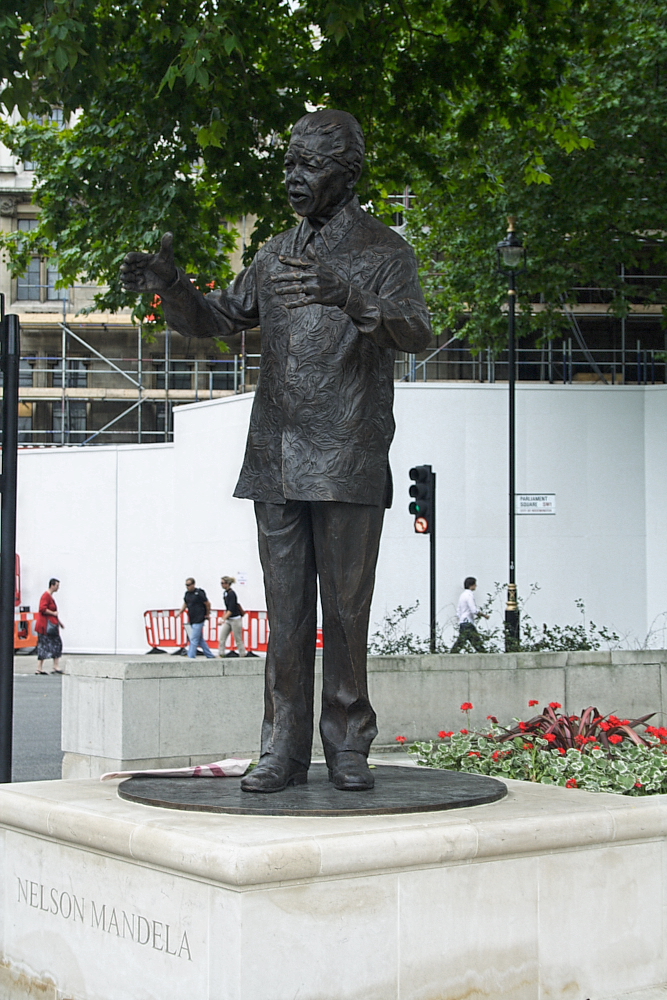
The Nelson Mandela statues in London stand as profound tributes to one of the 20th century’s most influential figures. Situated in two significant locations—the full-length bronze statue in Parliament Square and the commemorative bust on the South Bank—these monuments are enduring symbols of justice, reconciliation, and the global fight against apartheid. This guide provides an in-depth exploration of their history, artistic features, visitor information, and practical tips to enrich your visit. For official resources and walking tours, refer to the Southbank Centre and UK Parliament Visitor Information.
Historical Background
Origins, Proposal, and Vision
The idea for a statue honoring Nelson Mandela in London was first proposed in 2001 by Donald Woods, a South African journalist and close friend of Mandela (Kiddle). Woods, with the support of his wife Wendy and Lord Richard Attenborough, led early fundraising and advocacy efforts for the project (BBC News). Mandela himself gave his approval, and the Mandela Statue Fund was established in 2003 (Kiddle).
Political Debate and Site Selection
An initial proposal to install the statue in Trafalgar Square was rejected due to concerns about scale and aesthetics, with support for the final placement in Parliament Square coming after significant public and political debate (Southbank Centre). This decision placed Mandela among historic figures such as Churchill and Lincoln, reflecting his international stature (BBC News).
Artistic Creation and Design
British sculptor Ian Walters crafted both the Parliament Square statue and the earlier South Bank bust. The Parliament Square monument, standing 2.7 meters (9 feet) tall, depicts Mandela with open arms—a gesture signifying unity and reconciliation (Syrcast). The South Bank bust, originally installed in 1985 and recast in bronze in 1988 after being destroyed by vandals, presents Mandela with a calm, resolute expression, capturing his dignity and resilience (Southbank Centre).
Unveiling and Public Reception
The Parliament Square statue was unveiled on August 29, 2007, with Nelson Mandela, his wife Graça Machel, Prime Minister Gordon Brown, and other dignitaries in attendance (BBC News). Mandela described the moment as a tribute not only to himself but to all who fought against oppression. The South Bank bust, unveiled in 1985 by ANC president Oliver Tambo, became a rallying point for anti-apartheid activism during the 1980s (london.myownguide.com).
Visiting Information
Locations and Directions
Parliament Square Statue:
- Address: Parliament Square, Westminster, London SW1P 3BD
- Nearest Tube: Westminster (Jubilee, Circle, and District lines)
- Buses: Routes 11, 24, 88, and others serve Parliament Square (Evendo)
South Bank Bust:
- Location: Mandela Walk, outside the Royal Festival Hall, South Bank
- Nearest Tube: Waterloo (5-minute walk)
- Bus: Multiple lines serve the South Bank arts complex
Opening Hours and Tickets
Both statues are situated in open public spaces and are accessible 24 hours a day, seven days a week. There are no entry fees or tickets required (Evendo).
Accessibility
Both sites are wheelchair accessible, with level pavements and dropped kerbs. The South Bank area offers step-free access to Mandela Walk, while Parliament Square provides level access via pedestrian crossings (London Photo Tours).
Best Times to Visit
For a quieter experience and optimal lighting for photography, visit early in the morning or late in the afternoon on weekdays. Peak times include weekends and when Parliament is in session.
Facilities
There are no toilets or refreshment stands within Parliament Square, but cafés, public toilets, and hotels are nearby along Whitehall and around Westminster Abbey (Evendo).
Nearby Attractions
- Westminster Abbey: Just across the road; a UNESCO World Heritage Site.
- Houses of Parliament and Big Ben: Iconic London landmarks adjacent to Parliament Square.
- Churchill War Rooms: A short walk for a unique historical experience.
- St. James’s Park: A nearby green space for relaxation.
- South Bank Attractions: The Royal Festival Hall, Southbank Centre, London Eye, and National Theatre are all within easy reach of the South Bank bust.
Photographic Opportunities
Both statues offer excellent photo opportunities. The Parliament Square statue’s open-armed pose and backdrop of the Palace of Westminster are especially striking. The South Bank bust’s reflective granite plinth and expressive detail make it highly photogenic, especially during daylight hours.
Symbolism and Historical Context
The statues are powerful symbols of the international struggle against apartheid, as well as the UK’s evolving relationship with Mandela and the anti-apartheid movement. The Parliament Square statue, positioned among world leaders, underscores Mandela’s global legacy. The South Bank bust’s inscription, “the struggle is my life,” serves as a reminder of enduring activism and resilience (london.myownguide.com).
Contemporary Relevance
The statues remain focal points for commemorative events, activism, and public gatherings, especially on Mandela Day (July 18). During times of heightened political protest, such as the 2020 global racial justice demonstrations, the Parliament Square statue was temporarily protected, underscoring its ongoing significance (Kiddle).
Frequently Asked Questions (FAQs)
Q: Do I need a ticket to visit the Nelson Mandela statues?
A: No, both statues are in open public spaces and are free to visit.
Q: What are the visiting hours?
A: Both locations are accessible 24/7.
Q: Are guided tours available?
A: While there are no dedicated tours for either statue, many walking tours of Westminster and the South Bank include them as highlights.
Q: Are the sites suitable for wheelchair users?
A: Yes, both locations are wheelchair accessible.
Q: Where can I find the nearest facilities?
A: Cafés, public toilets, and other amenities are available nearby in both Parliament Square and the South Bank area.
Related London Landmarks
- Top Historical Monuments to Visit in London
- A Guide to London’s South Bank Attractions
- Walking Tours of London’s Political Landmarks
- Big Ben and the Houses of Parliament
- Westminster Abbey
Discover More
Plan your visit to the Nelson Mandela statues today to connect with a legacy that continues to inspire justice and equality. For interactive maps, audio guides, and the latest updates on London’s historical sites, download the Audiala app. Stay connected via social media for event updates and travel inspiration.
Summary
The Nelson Mandela statues in London are more than monuments; they are living symbols of the global struggle for freedom and human rights. Their accessible locations, rich history, and cultural significance make them must-see sites for visitors of all backgrounds. Incorporate them into your next London itinerary for a meaningful and memorable experience. For further guidance, official links, and additional resources, see below.
Images


Listen to the full story in the app
Your Personal Curator, in Your Pocket.
Audio guides for 1,100+ cities across 96 countries. History, stories, and local insight — offline ready.
Audiala App
Available on iOS & Android
Join 50k+ Curators
Sources
- verified
- verified
- verified
- verified
- verified
- verified
- verified
Last reviewed: