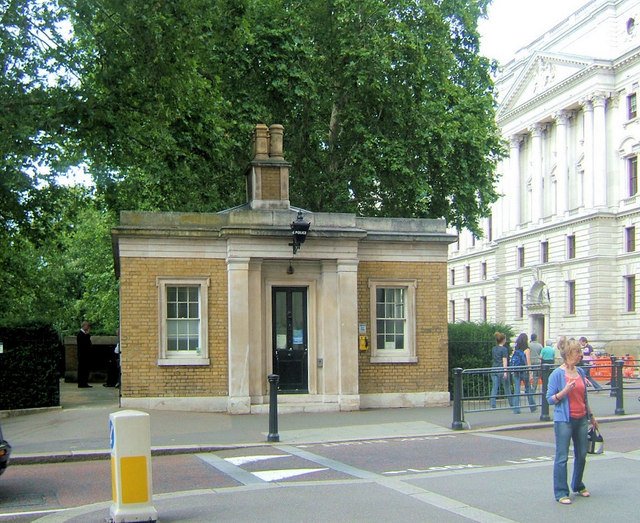
Introduction
Located at the crossroads of history, politics, and art, the Statue of James II is a distinguished monument that enriches London’s vibrant landscape. Erected in 1686, this remarkable bronze statue not only immortalizes one of Britain’s most controversial monarchs but also stands as a testament to the city’s layered royal, architectural, and cultural heritage. Visitors interested in “Statue of James II visiting hours,” “tickets,” and “London historical sites” will find this comprehensive guide an essential resource for planning a meaningful and insightful visit.
The guide below blends historical context, artistic analysis, practical visitor tips—including accessibility, hours, and ticketing—as well as recommendations for nearby attractions. Whether you are a history enthusiast, an art lover, or a casual explorer, this article provides all you need to make your visit to the Statue of James II educational and memorable. For additional details or the latest updates, consult sources like British History Online, the Banqueting House official website, and MyLondonPass.
Photo Gallery
Explore Statue of James Ii in Pictures
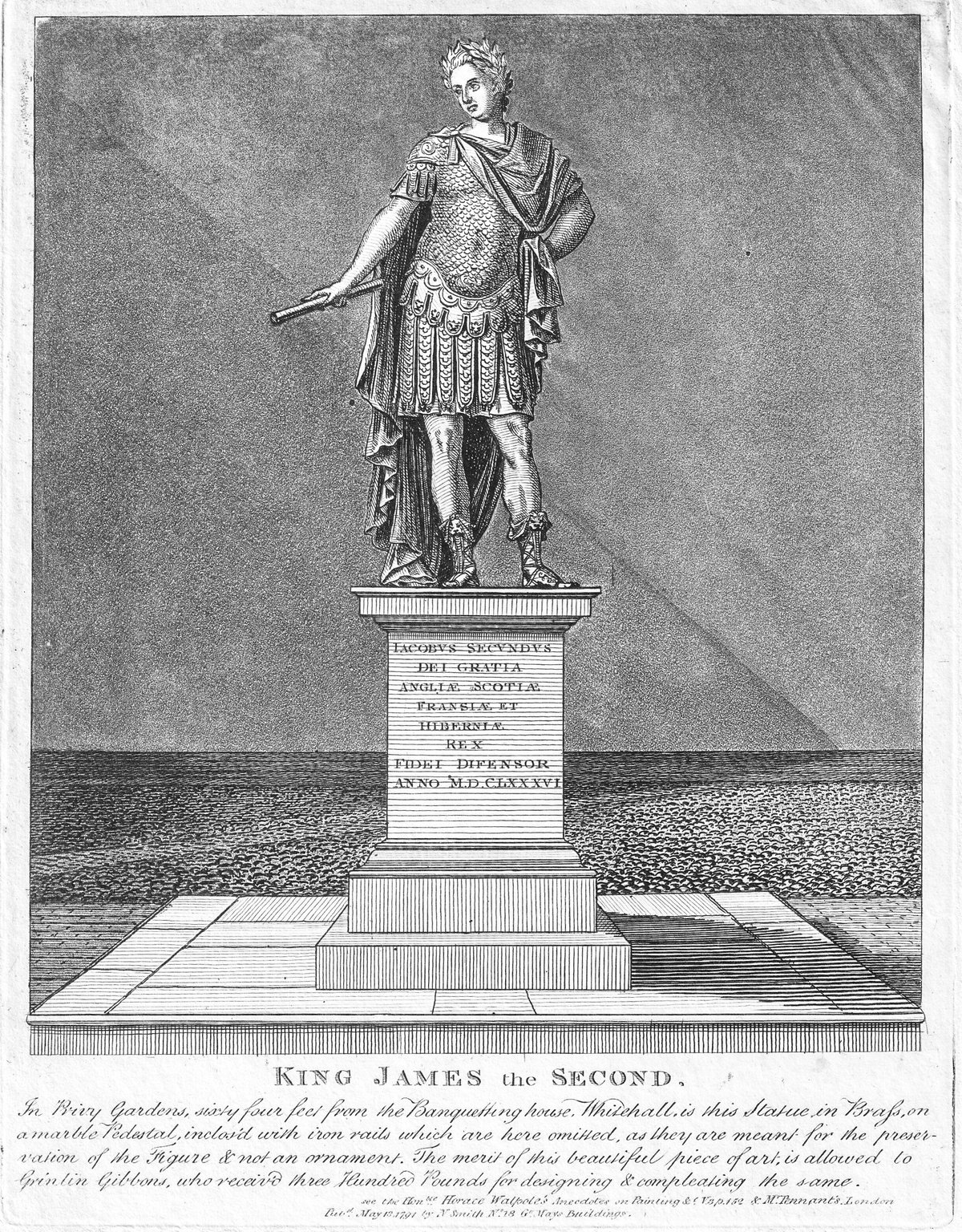
Detailed engraving of the statue of King James II created by N. Smith at 18 G Mays Buildings, published on 13 May 1791.
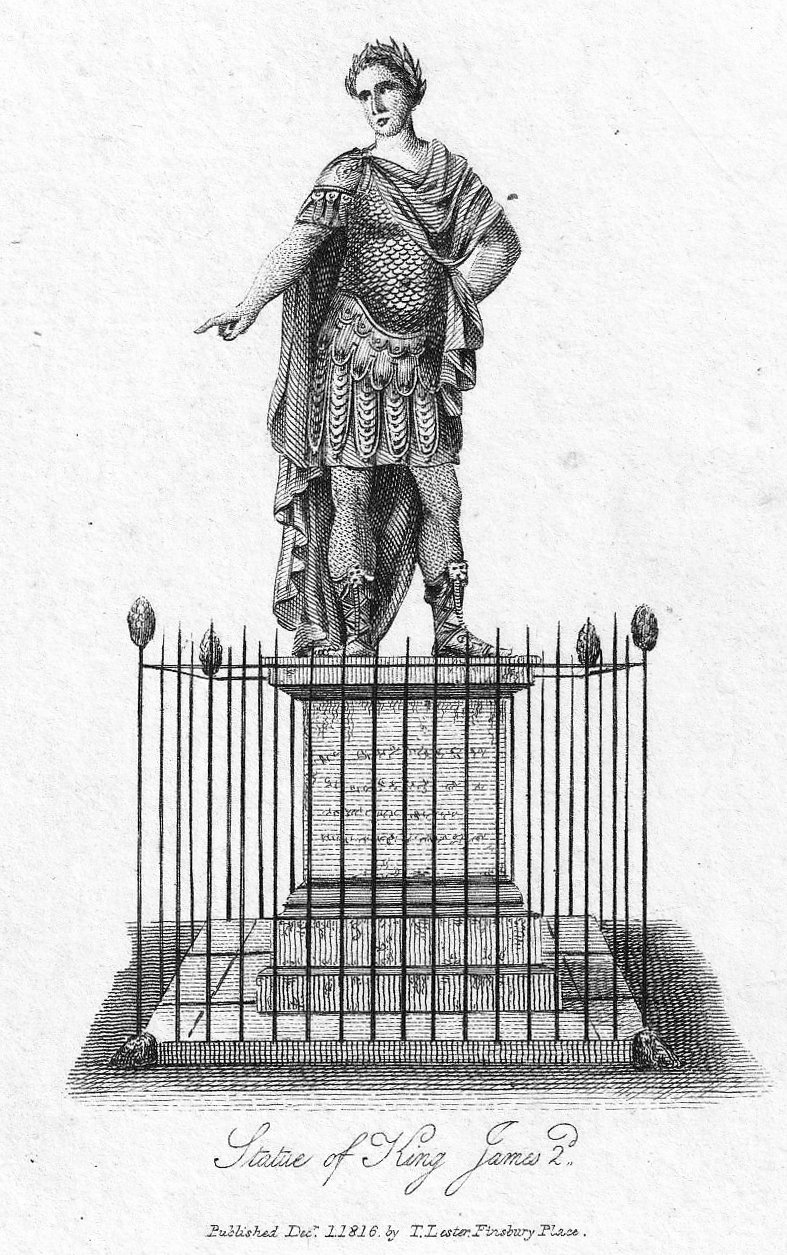
Detailed engraving of the statue of King James II created by artist T. Lester of Finsbury Place, published on December 1, 1816
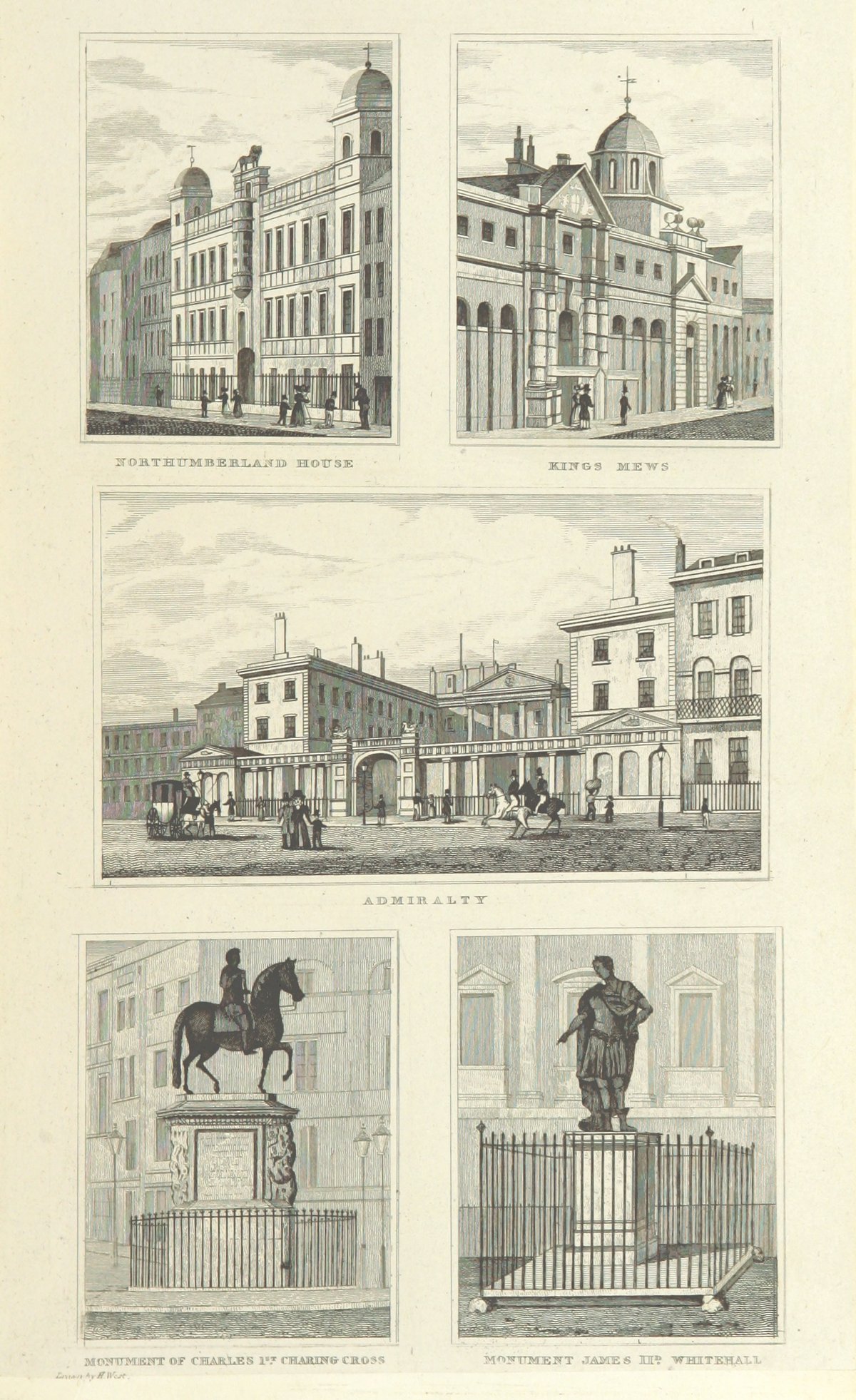
Historic black and white drawing depicting London cityscape with buildings along the river, from an old book 'National History and Views of London and its environs' edited by C. F. P.
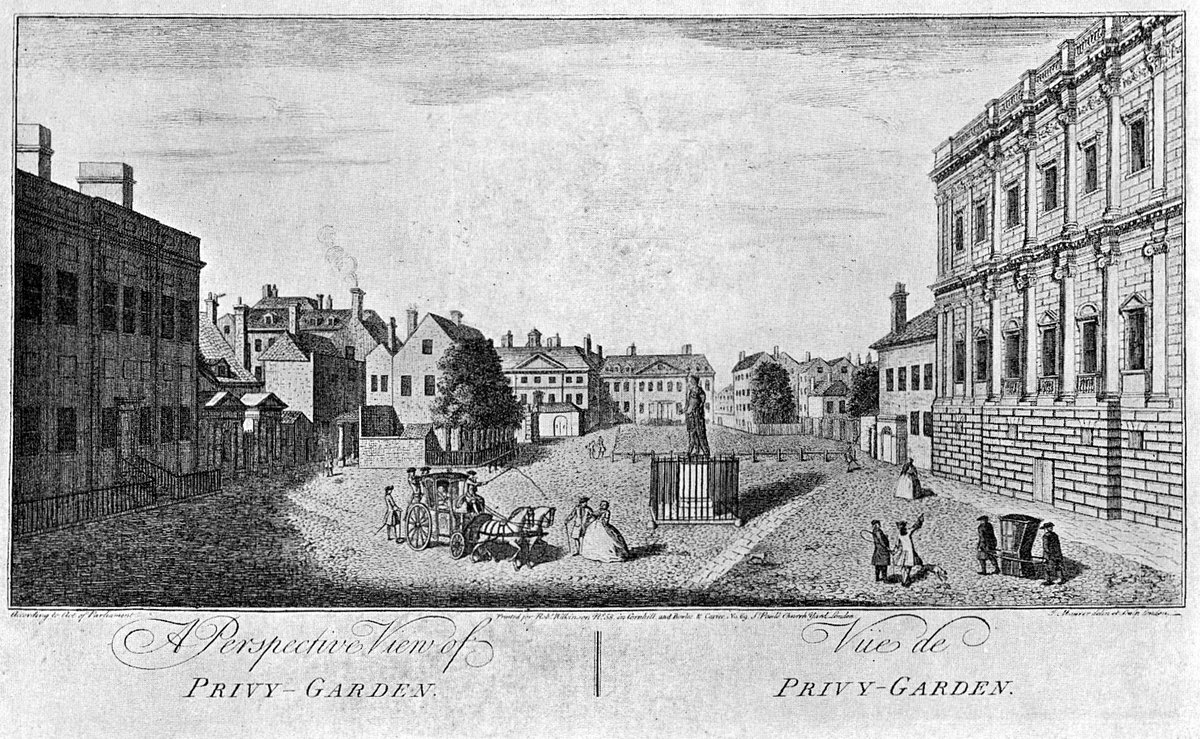
Historic depiction of Privy Gardens from 1741 featuring the statue of King James II, which is presently situated in Trafalgar Square, London.
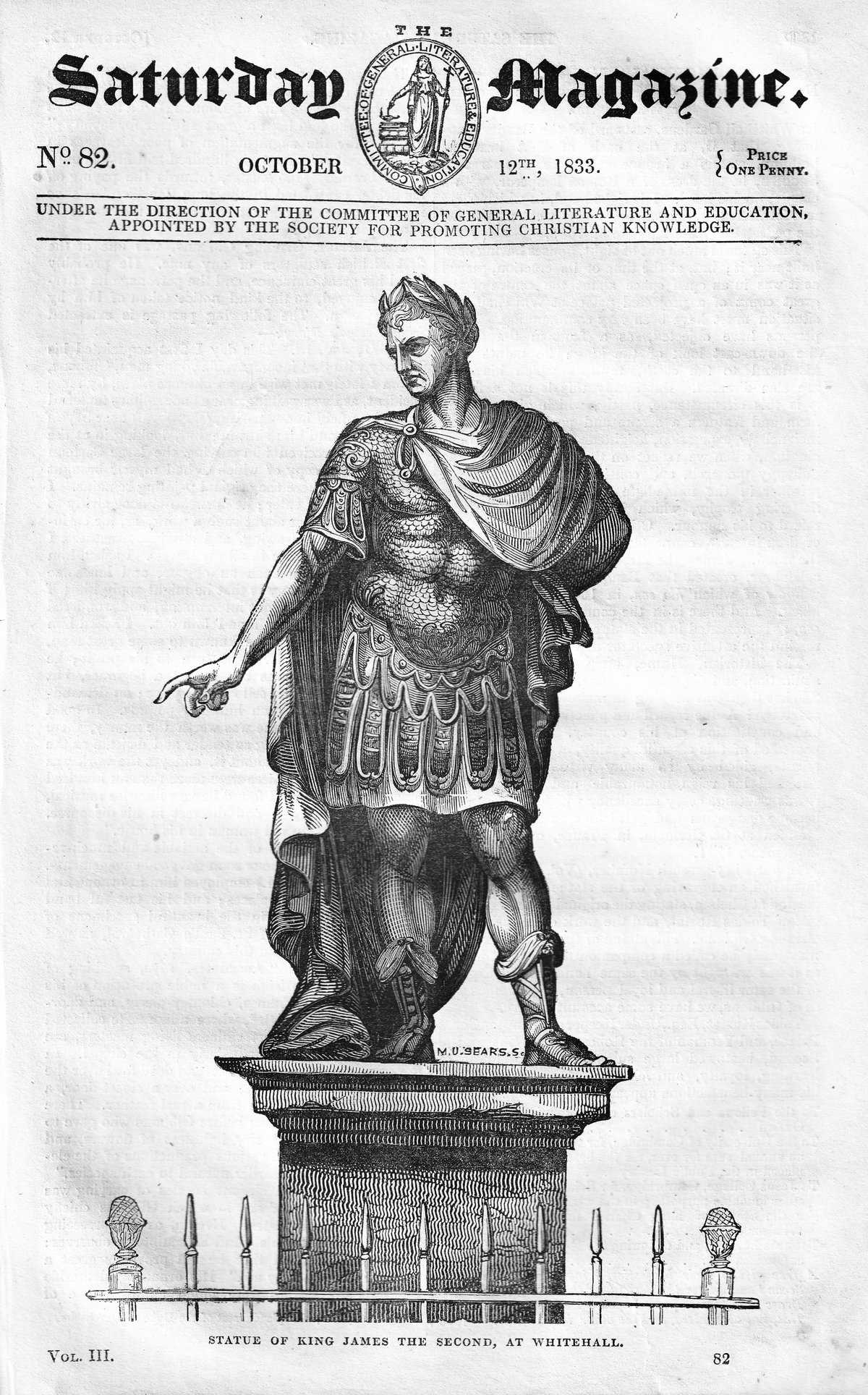
Front page engraving of the Statue of James II located in Trafalgar Square featured in The Saturday Magazine number 82, volume III, dated 12 October 1833
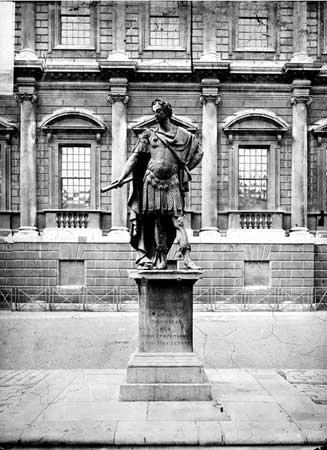
Bronze statue of King James II, the last Catholic King of England, carved by Grinling Gibbons. Originally placed in Whitehall Gardens behind the Banqueting House in 1686, depicting the King in Roman Armour. The statue reflects historical changes around Whitehall Palace after the fire and was moved m
Historical Significance & Origins
James II (1633–1701) was the last Catholic monarch of England, Scotland, and Ireland. His short reign (1685–1688) was marked by tension over religious tolerance, centralization of power, and ultimately, the Glorious Revolution, which led to his deposition. The statue, commissioned during his lifetime, is a rare survivor of shifting regimes and remains a focal point for discussions about monarchy, legitimacy, and the evolving British constitutional order (Wikipedia: James II of England).
Initially installed at the Palace of Whitehall, the statue has witnessed London’s transformation over centuries. Its endurance through political revolutions, urban redevelopment, and wartime threats cements its status as a significant artifact of the Stuart era (British History Online).
Artistic Features and Symbolism
The statue exemplifies Baroque craftsmanship, depicting James II in Roman-style armor—a popular motif for European monarchs seeking to emphasize authority, valor, and classical legitimacy. He is shown holding a baton of command and adorned with a laurel wreath, referencing imperial Rome and reinforcing claims of divine right.
Notably, the absence of overt religious symbols in the statue suggests an intentional focus on secular authority during a time of intense religious division. The life-like modeling and attention to detail in the folds of his cloak and facial features demonstrate the era’s artistic ambition (Google Arts & Culture).
Commissioning, Creation, and Original Placement
Commissioned in 1686 by Tobias Rustat, the statue was produced in the workshop of Grinling Gibbons, though Flemish sculptors Peter van Dievoet and Laurens van der Meulen are credited with its execution. The work was cast in bronze at a cost of £300 (equivalent to about £42,000 today), reflecting both royal patronage and the international nature of Restoration-era artistry (London Remembers).
Originally, the statue stood in the Pebble Court of Whitehall Palace, facing the Thames, symbolizing royal power and accessibility. Its placement was as much a statement of authority as it was an artistic endeavor.
Survival, Relocation, and Restoration
The Statue of James II is unique for having survived the Glorious Revolution and subsequent periods when many royal monuments were removed or destroyed. The statue’s preservation can be attributed to the relatively peaceful nature of the English revolution and the familial ties between James II and his successors.
Over the centuries, the statue was relocated multiple times in response to urban development and wartime threats:
- 1898: Moved to Trafalgar Square, in front of the National Gallery, as part of a citywide initiative to make public art more accessible (National Gallery History).
- World War II: Stored safely during the Blitz to prevent damage (Historic England).
- Post-war: Reinstalled in Trafalgar Square, where it remains a prominent feature.
Conservation and Preservation Efforts
The statue is a Grade I listed monument, recognized for its exceptional historical and artistic value. Conservation measures include regular cleaning, waxing, and structural assessments to combat pollution and weathering. These efforts ensure the statue’s survival for future generations and maintain its status as a key element of London’s public sculpture heritage (Historic England Conservation Principles).
Visiting Information: Hours, Tickets, and Accessibility
Trafalgar Square Location
The Statue of James II currently resides on the west side of Trafalgar Square, near the National Gallery (London WC2N 5DN).
- Visiting Hours: The statue is outdoors and accessible 24/7. For optimal viewing and photography, visit during daylight hours.
- Tickets: No admission is required; the statue is freely accessible to all.
- Accessibility: Trafalgar Square offers step-free access and is wheelchair friendly. The nearest Underground stations are Charing Cross and Leicester Square.
- Etiquette: Please do not climb on the statue or its plinth. Photography is welcomed.
Banqueting House Gardens (Alternative Location)
Some sources and historical tours may reference a statue of James II behind the Banqueting House in Whitehall. This is due to historical relocations; currently, the principal statue is in Trafalgar Square. The Banqueting House and its gardens are also accessible (typically 10:00 AM–5:00 PM), sometimes as part of guided tours (Banqueting House official website).
Nearby Attractions and Guided Tours
- National Gallery: Houses world-class art collections, free admission.
- Nelson’s Column and the Fourth Plinth: Iconic statues in Trafalgar Square.
- Banqueting House: Renowned for its Rubens ceiling and Stuart history.
- Horse Guards Parade: Ceremonial events and Changing of the Guard.
- Churchill War Rooms: Historic World War II command center.
- Covent Garden, Leicester Square, West End: Dining, shopping, and entertainment within walking distance.
Guided walking tours focusing on London’s statues, royal heritage, and historic sites frequently include the Statue of James II. Check with local tour providers or MyLondonPass for schedules and booking.
Cultural Context and Current Reception
The Statue of James II has become a focal point for wider debates on how Britain commemorates its past, particularly regarding figures with complex or contested legacies. As public attitudes shift, the statue’s interpretation is often revisited, making it an active participant in London’s ongoing cultural narrative (London Remembers).
Frequently Asked Questions (FAQ)
Q: What are the visiting hours for the Statue of James II?
A: The statue in Trafalgar Square is accessible 24/7, with best viewing in daylight.
Q: Is there an entrance fee?
A: No, visiting the statue is completely free.
Q: Is the statue wheelchair accessible?
A: Yes, Trafalgar Square offers step-free, wheelchair-friendly access.
Q: Are there guided tours that include the statue?
A: Yes, many walking tours of central London and Trafalgar Square include the statue.
Q: Where else can I learn about London’s royal monuments?
A: Explore the National Gallery, Banqueting House, and other statues in Trafalgar Square for a comprehensive experience.
Key Facts and Figures
- Date of Erection: 1686
- Material: Bronze
- Sculptor: Grinling Gibbons (workshop); execution by Peter van Dievoet and Laurens van der Meulen
- Original Location: Palace of Whitehall
- Current Location: Trafalgar Square, near the National Gallery
- Height: Approximately 2.5 meters (statue only)
- Status: Grade I listed monument
- Public Access: Free, 24/7
Recommendations and Travel Tips
- Combine with a Gallery Visit: The National Gallery is next door and free to enter.
- Guided Tours: Enhance your knowledge with expert-led tours focusing on London’s statues and royal sites.
- Photography: Early morning and late afternoon offer the best light and fewer crowds.
- Plan Ahead: Check the Mayor of London's events calendar for special events in Trafalgar Square.
- Accessibility: Use Charing Cross or Leicester Square tube stations for step-free access.
Discover More
Experience the history and artistry of the Statue of James II by visiting Trafalgar Square. For a deeper understanding, download the Audiala app for guided audio tours of London’s statues and historical sites. Stay informed about events and heritage news by following our social channels and exploring related articles.
Listen to the full story in the app
Your Personal Curator, in Your Pocket.
Audio guides for 1,100+ cities across 96 countries. History, stories, and local insight — offline ready.
Audiala App
Available on iOS & Android
Join 50k+ Curators
Sources
- verified
- verified
- verified
- verified
- verified
- verified
- verified
Last reviewed: