Introduction
The most peaceful garden in London grows inside a church that was bombed, burned, and abandoned — twice. St Dunstan-in-the-East, tucked between the Thames and the Tower of London in the City of London, United Kingdom, is what happens when a city decides to let nature finish what the Luftwaffe started. Its roofless nave, threaded with ivy and Virginia creeper, offers something no intact building can: the sky where a ceiling used to be, and the sound of a fountain where sermons once echoed.
You'll find it down a narrow lane off Lower Thames Street, easy to miss if you're not looking. The entrance is modest — a gate in a stone wall — but step through and the noise of the city drops away. Gothic arches frame open sky. Mature trees push through what was once the church floor. A small fountain murmurs at the centre of the former nave, surrounded by benches where office workers eat lunch among ruins that predate the Magna Carta.
What survives is selective and strange. Christopher Wren's steeple, completed in 1701, stands intact above the wreckage, its Portland stone spire rising 56 metres — roughly the height of the column at the Monument to the Great Fire, less than 400 metres away. The walls of the nave still stand to full height in places, their window tracery now framing leaves instead of glass. Scorch marks from 1941 incendiary bombs are still visible on the north wall, though most visitors mistake them for ordinary weathering.
The City of London Corporation opened the site as a public garden in 1971, and it's free to enter every day. It draws photographers, couples, readers, and the occasional film crew. But it rewards the unhurried visitor most — someone willing to sit on a bench, look up through the empty window frames, and feel the particular quiet of a place that has been destroyed and remade so many times it finally became something better than what it was.
This is Central London! St Dunstan-in-the-East Church Garden is a hidden gem in London, Walking Tour
Just Around The CornerWhat to See
The Wren Steeple
Most of Christopher Wren's churches announced themselves with domes and classical porticos. This one is different. Between 1695 and 1701, Wren built a Gothic steeple here — one of only two he ever attempted — with flying buttresses launching from octagonal turrets to cradle a central stone lantern. It survived the Great Fire that damaged the original church, then survived the Blitz that gutted the nave around it. The diagonal buttresses rising from the tower corners are pure structural theatre, each capped with finials taller than a person, and the whole composition in pale Portland stone still catches afternoon light in a way that stops you mid-step on St Dunstan's Hill. Look for the clock face: the number 1953 appears in its corners, marking the final post-war restoration of the tower. Wren's more famous steeple sits a ten-minute walk west at St Paul's Cathedral, but this one feels more personal — less monument, more survivor.


The Ruined Nave and Garden
Step through the arched entrance and the city drops away. The roofless nave — rebuilt in Gothic Revival style by David Laing and William Tite between 1817 and 1821, then torn open by German incendiary bombs in 1941 — now holds a lawn, mature trees, and a small central fountain where the altar once stood. Ivy has claimed the walls with a slow, total authority, threading through empty window tracery and softening the fire-scarred Portland stone into something that looks almost deliberately sculpted. The thick walls sink the garden below street level, dampening traffic noise until all you hear is birdsong, wind through leaves, and water. The air runs cooler and damper here than on the pavement outside, even in July.
The details reward patience. A fig tree planted in 1937 for George VI's coronation still grows here — it outlasted the bombs. A rainwater head stamped with 1971 marks the year the City of London Corporation stopped trying to rebuild and simply let nature finish the job. In autumn, when the ivy thins and office workers stay indoors, you can stand alone inside these walls and feel the full weight of nine centuries pressing gently on your shoulders.
A Walk Through Nine Centuries: Tower to Thames
Start at the east entrance on St Dunstan's Hill for the most symmetrical view of the steeple framed by ruins, then move inside to photograph the nave arches — they create natural stone frames around the sky and the glass towers of the modern City behind them. Spend ten minutes here, then exit south toward Lower Thames Street and turn east along the river. In under fifteen minutes you'll reach the Tower of London, and the walk threads you through the narrow lanes where medieval London still whispers beneath the office blocks. The garden is free, open from 8:00 AM until 7:00 PM or dusk, and closed only on Christmas Day, Boxing Day, and New Year's Day. Come on a weekday morning before the lunch crowd, or on a grey winter weekend when you might have the entire ruin to yourself.
Photo Gallery
Explore St Dunstan-in-the-East in Pictures

A peaceful wooden bench rests within the historic, ivy-covered stone ruins of St Dunstan-in-the-East in London.
Tom Page · cc by-sa 2.0

The weathered stone arches of St Dunstan-in-the-East are beautifully reclaimed by nature in this atmospheric black and white study.
CGP Grey · cc by 2.0

The picturesque ruins of St Dunstan-in-the-East, a historic church in London, United Kingdom, featuring beautiful Gothic architecture and climbing ivy.
CGP Grey · cc by 2.0

The historic stone ruins of St Dunstan-in-the-East in London frame a view of a leafless tree and modern construction scaffolding.
Tom Page · cc by-sa 2.0

The historic, moss-covered stone ruins of St Dunstan-in-the-East in London offer a serene, atmospheric glimpse into the city's architectural past.
Tom Page · cc by-sa 2.0

A striking monochrome view through the historic gothic stone arches of the St Dunstan-in-the-East church ruins in London.
Tom Page · cc by-sa 2.0

The historic ruins of St Dunstan-in-the-East in London offer a serene, atmospheric public garden framed by stunning Gothic architecture.
CGP Grey · cc by 2.0

The historic stone archway of St Dunstan-in-the-East frames a vibrant view of palm trees, blending Gothic architecture with nature.
Tom Page · cc by-sa 2.0

The beautiful, ivy-clad stone arches of St Dunstan-in-the-East create a serene garden oasis amidst the historic ruins in central London.
CGP Grey · cc by 2.0

A close-up view of a historic crest set against the lush, overgrown greenery of the St Dunstan-in-the-East church ruins in London.
Tom Page · cc by-sa 2.0

The serene, weathered ruins of St Dunstan-in-the-East in London, where historic gravestones sit beneath the gothic arches of the former church.
Tom Page · cc by-sa 2.0

A detailed view of the weathered Gothic stone window arches at the historic ruins of St Dunstan-in-the-East in London.
Tom Page · cc by-sa 2.0
Videos
Watch & Explore St Dunstan-in-the-East
Best Places to visit in London, United Kingdom | UK Best Places | Travel London |
Top 10 London Attractions (You MUST try!)
St Dunstan-in-the-East Ruined Church Garden = To St Mary at Hill. On-foot tour + organ music ⬇️
Look up at the Wren steeple from inside the ruined nave and notice how its ornate Gothic stonework is entirely intact — a striking contrast to the roofless, ivy-consumed walls below. This steeple survived both the Great Fire of 1666 and the 1941 Blitz, making it one of the most resilient structures in the City of London.
Visitor Logistics
Getting There
Monument and Tower Hill stations (both District/Circle lines) are each a 5-minute walk away — exit and head toward St Dunstan's Hill, between Eastcheap and Lower Thames Street. Fenchurch Street mainline station is equally close. The Tower of London sits barely 400 metres east, so combining the two is effortless. No dedicated parking exists, and driving into the City of London means congestion charges — take the Tube.
Opening Hours
As of 2025, the garden opens daily from 8:00 AM to 7:00 PM or dusk, whichever comes first — so winter visits end much earlier. Closed on Christmas Day, Boxing Day, and New Year's Day. Entry is completely free, no tickets or reservations needed.
Time Needed
A brisk walk-through with photos takes 15–20 minutes. If you want to sit on a bench, read the historical plaques, and let the quiet settle in, allow 30–45 minutes. The site is compact — roughly the footprint of a single medieval church nave — so even a thorough visit won't eat your afternoon.
Accessibility
Paved stone paths wind through the ruins and are generally level, though some stretches are uneven with age. The site is open-air with no stairs required to enter the main garden area. Wheelchair users can access most of the space, but the historic stonework means surfaces aren't perfectly smooth — wet weather makes them slippery.
Tips for Visitors
Arrive Early Weekdays
Before 9:00 AM on a weekday, you'll have the ruins almost to yourself — just pigeons and the odd jogger. By lunchtime, City workers flood the benches, and on weekends the Instagram crowd descends in force.
Photography Permits
Personal photography is welcome and the ivy-draped Gothic arches practically beg for it. Commercial shoots, tripod setups, or anything that blocks paths require a permit from the City of London Corporation — and drones need CAA registration, so leave yours at the hotel.
Eat Nearby
The Victoria pub on Eastcheap does solid, affordable pub lunches steps away. For something sharper, Larch Restaurant offers modern European cooking at mid-range prices. If you want views with your cocktail, Sky Pod Bar at the nearby Walkie Talkie building delivers the City skyline at splurge-level prices.
Combine With Neighbours
The Tower of London is a 5-minute walk east, and Leadenhall Market — the real-life inspiration for Diagon Alley — is 7 minutes north. Christopher Wren's steeple here was built in the same decade as his dome at St Paul's Cathedral, making the two a natural architectural pair.
Best Seasons
Late spring and early autumn deliver the most dramatic look — ivy at full green, soft golden light angling through the empty window frames. Winter strips the foliage back to bare stone and skeleton branches, which has its own stark beauty, but the garden closes at dusk, sometimes as early as 4:00 PM.
No Toilets On Site
The garden has no public restrooms. Your nearest options are the cafés along Eastcheap or the facilities inside Tower Hill or Monument Tube stations — plan accordingly before you settle in.
Where to Eat
Don't Leave Without Trying
Indra's net cafe
cafeOrder: Specialty coffee and homemade pastries — this is where locals actually grab their morning brew before heading into the office.
Indra's net has built a loyal following with consistent 5-star reviews, making it the real deal in a neighborhood drowning in chain cafes. It's the kind of place where the barista knows your order.
Saint Espresso - Tower Hill
cafeOrder: Espresso-based drinks and breakfast items — this is serious coffee territory with a minimal, focused menu that respects the craft.
Perfect 5-star rating with a tight operation that opens early (7 AM most days) for the City crowd. It's the kind of no-nonsense spot that gets it right every time.
Simmons Bar | Monument
local favoriteOrder: Craft cocktails and bar snacks — the drinks program is serious, and they know how to execute a proper Negroni.
Nearly 2,200 reviews at 4.8 stars isn't luck—Simmons has earned its reputation as one of the City's most reliable cocktail bars. It's where people actually want to drink after work.
The Negroni Bar by Campari
quick biteOrder: Negroni — it's literally in the name, and this Campari-backed venue takes the classic seriously.
A specialized bar hidden inside The Alchemist that focuses on one drink done right. It's a novelty worth experiencing if you're a cocktail enthusiast exploring the area.
Dining Tips
- check Leadenhall Market is a stunning Victorian covered market just steps away—perfect for a quick bite with serious architectural charm.
- check Borough Market (short walk across London Bridge) is London's most famous food destination for specialty foods, artisan breads, cheeses, and international street food.
- check Spitalfields Market in East London offers diverse street food, fashion, and events if you're willing to venture slightly further.
- check The City of London dining scene caters heavily to the financial district crowd—expect weekday lunch rushes and quieter weekends.
Restaurant data powered by Google
Historical Context
Three Disasters and a Garden
St Dunstan-in-the-East is a record of London's talent for catastrophe and its stubborn refusal to leave things alone. The original church dates to around 1100 — Norman-era construction, despite persistent claims of Saxon origins that likely confuse the 10th-century saint's lifetime with the building's actual foundations. For over 500 years it served a parish wedged between the river and the commercial heart of the City, accumulating additions, repairs, and debts along the way. A new south aisle went up in 1391. By the 1630s, repairs cost £2,400 — a sum that would buy a substantial London house at the time.
Then came the fire. Then the bombs. Then, unexpectedly, the flowers.
Wren's Gothic Gamble
When the Great Fire of 1666 tore through the City, St Dunstan-in-the-East was gutted but not obliterated. The medieval walls survived in part, and the parish needed a tower. Christopher Wren — already consumed with the reconstruction of St Paul's Cathedral and over 50 other City churches — took the commission. What he produced between 1695 and 1701 was unlike almost anything else in his portfolio: a Gothic steeple, not a classical dome.
Wren modelled the design on St Nicholas Cathedral in Newcastle, using flying buttresses to support an octagonal lantern and spire. For a man synonymous with English Baroque, this was a deliberate act of architectural sympathy — matching the surviving medieval fabric rather than imposing his preferred style. The flying buttresses weren't decorative. They distributed the steeple's weight outward, giving the structure a flexibility that would prove lifesaving 240 years later.
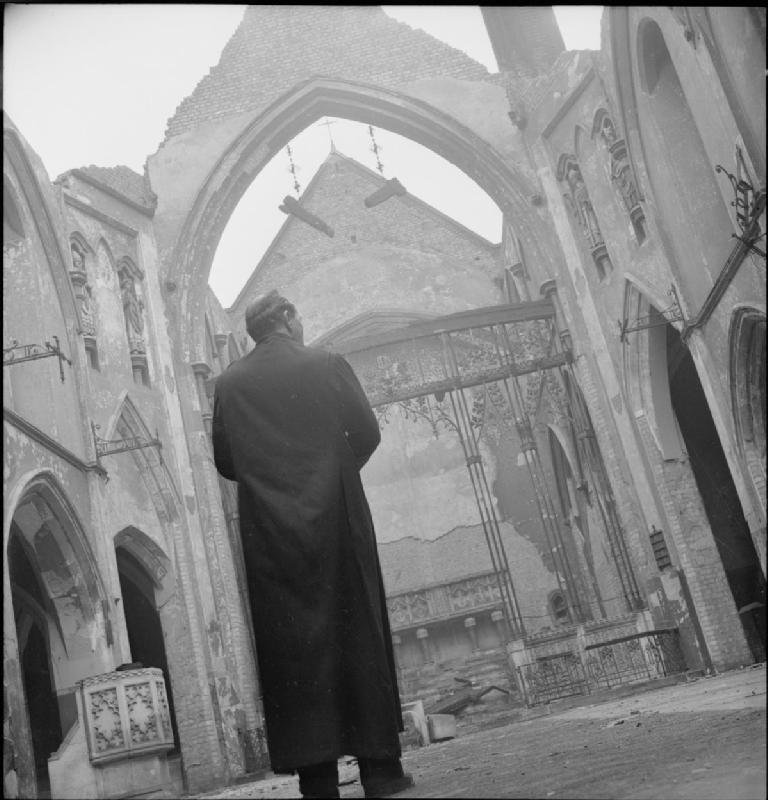
On the night of 10 January 1941, incendiary bombs struck the church during one of the heaviest Blitz raids on the City. The roof collapsed. The interior burned. But Wren's tower held. The same structural logic that let the buttresses absorb lateral wind loads also absorbed the shockwaves of high-explosive detonation. The steeple swayed and settled rather than shattering. It stands today exactly as Wren left it — the one piece of St Dunstan that has survived every disaster London has thrown at it.
The Rector Who Fought the False Messiah
In the 17th century, the church's rector Dr. Childerley faced an unusual pastoral challenge: a man named Hackett appeared in the parish claiming to be the Messiah. Childerley, evidently not a man inclined to theological debate when physical persuasion would do, reportedly seized Hackett's wrists and twisted them near to breaking to force a confession of fraud. The episode captures something of the church's "Peculiar" status — it answered directly to the Archbishop of Canterbury, not the Bishop of London, giving its clergy an independence that apparently extended to their methods of dispute resolution.
From Ruin to Garden
After the Blitz, the church sat open to the sky for three decades. The parish had already been merged with All Hallows, Lombard Street, and rebuilding was never seriously considered. In 1950, the site received Grade I listed status, protecting what remained. By 1967, landscape architect John Cathles designed the garden that opened in 1971, planting trees and climbers that would slowly colonise the walls. The decision not to rebuild was, in its way, as radical as any of the church's reconstructions — an acknowledgement that some ruins are more eloquent than any restoration.
Listen to the full story in the app
Your Personal Curator, in Your Pocket.
Audio guides for 1,100+ cities across 96 countries. History, stories, and local insight — offline ready.
Audiala App
Available on iOS & Android
Join 50k+ Curators
Frequently Asked
Is St Dunstan-in-the-East worth visiting? add
Absolutely — it's one of the most atmospheric spots in London, and it costs nothing to enter. The roofless ruins of a church bombed in the 1941 Blitz have been reclaimed by climbing ivy, mature trees, and a gentle fountain, all framed by Gothic arches and Christopher Wren's 1701 steeple. It sits just a five-minute walk from the Tower of London, so pairing the two is effortless.
Can you visit St Dunstan-in-the-East for free? add
Yes, entry is completely free — no tickets, no booking, no queue. The site is a public garden maintained by the City of London Corporation. Ignore any third-party websites selling "tickets"; those are for guided walking tours that happen to pass through, not for access to the garden itself.
How long do you need at St Dunstan-in-the-East? add
Most visitors spend 15 to 20 minutes walking through and photographing the ruins. If you want to sit on a bench, sketch, or read the historical plaques carefully, budget 30 to 45 minutes. It's a small site — the footprint of a single medieval church — but the details reward slow looking.
How do I get to St Dunstan-in-the-East from central London? add
The closest Tube stations are Monument and Tower Hill, both on the District and Circle lines, each about a five-minute walk away. Fenchurch Street mainline station is even closer. The garden is tucked on St Dunstan's Hill between Eastcheap and Lower Thames Street — easy to miss if you're not watching for the entrance.
What is the best time to visit St Dunstan-in-the-East? add
Early morning on a weekday or any time on a weekend gives you the quietest experience — the City of London financial district empties out when offices close. During weekday lunchtimes the garden fills with workers eating sandwiches among the arches. In autumn and winter, when the ivy thins and the stone skeleton shows through, the ruins take on a genuinely melancholic, Gothic quality that summer greenery softens.
What should I not miss at St Dunstan-in-the-East? add
Look up at the tower clock — the year 1953 is inscribed in the corners, marking the post-war restoration of Wren's steeple. On the north and south walls, you can spot scorch marks left by incendiary bombs in 1941, though most people mistake them for ordinary weathering. Also hunt for the Coronation Fig Tree, planted in 1937 for George VI's coronation, which somehow survived the Blitz and still grows inside the ruins.
What are the opening hours of St Dunstan-in-the-East? add
The garden is open daily from 8:00 AM to 7:00 PM or dusk, whichever comes first. It closes on Christmas Day, Boxing Day, and New Year's Day. There are no toilets on site, so use facilities at nearby cafés or London Bridge Station before you arrive.
Who designed the tower at St Dunstan-in-the-East? add
Sir Christopher Wren — the same architect behind St Paul's Cathedral — designed the tower and steeple between 1695 and 1701 after the Great Fire of 1666 gutted the medieval church. His design used flying buttresses to support the spire, a structural decision that likely saved the tower when the Blitz destroyed the nave 240 years later. The rest of the church you see in ruins was rebuilt in 1817–1821 by architects David Laing and William Tite.
Sources
-
verified
History Hit – St Dunstan-in-the-East
Founding date, historical timeline, and key events including the 1391 remodel.
-
verified
The Empty Nest Explorers
Detailed historical timeline, visitor logistics, photography rules, and visit duration estimates.
-
verified
Historic UK – St Dunstan-in-the-East Gardens
Blitz damage details, 1971 garden opening, and cultural context of the site.
-
verified
Emm in London
First-person account of visiting the bombed-out church and Blitz history.
-
verified
Historic England – Listed Building Entry 1359173
Grade I listing details, architectural description, materials (Portland stone), and structural features.
-
verified
City of London Corporation – St Dunstan-in-the-East Church Garden
Official opening hours, closure dates, free entry confirmation, and site management details.
-
verified
Moovit – Public Transport to St Dunstan-in-the-East
Nearest Tube and rail stations, public transport directions.
-
verified
SillySuitcase – London Hidden Gems
Local cultural perspective on the site as a City of London lunch-break sanctuary.
-
verified
Historic England – Educational Images
Community events and historical imagery of the site.
-
verified
SuperScout.ai – Free Filming Locations in London
Commercial photography and filming permit requirements at the site.
-
verified
LondonWebcam – Best Spots for Photography in London
Photography tips and popular photo spots at the ruins.
-
verified
Trip.com – St Dunstan-in-the-East
Visitor sensory descriptions and atmosphere details.
-
verified
TripAdvisor – Restaurants Near St Dunstan-in-the-East
Nearby dining recommendations at various price points.
Last reviewed: