Introduction
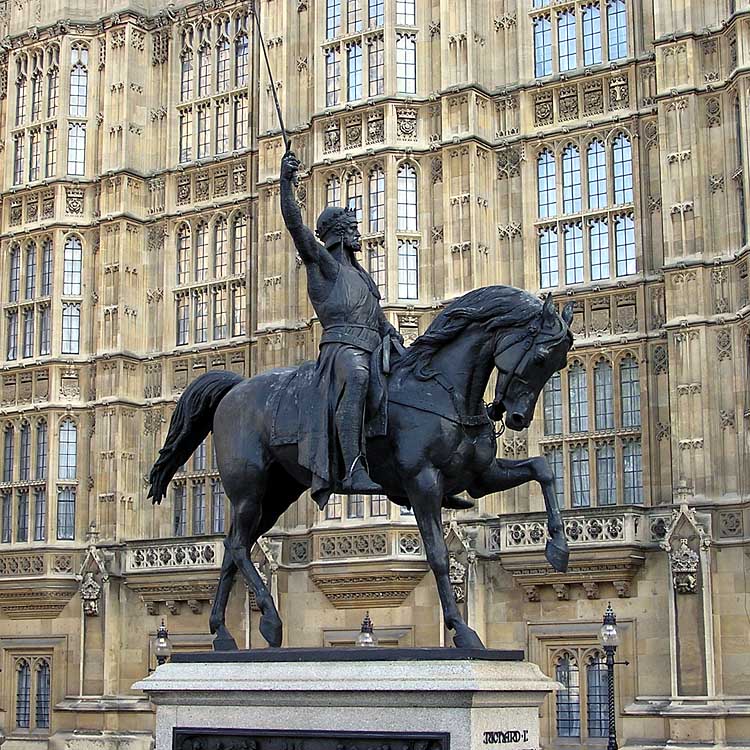
The Richard Coeur De Lion statue stands as a powerful tribute to King Richard I—Richard the Lionheart—just outside the Palace of Westminster in London. Crafted by Baron Carlo Marochetti and unveiled in the mid-19th century, this bronze equestrian monument captures the Victorian fascination with medieval chivalry and national identity. Richard I’s legendary valor during the Third Crusade and enduring image as a chivalric hero are immortalized in this iconic statue, which remains a cultural landmark and a symbol of British heritage.
This guide provides comprehensive information for visitors, including location details, accessibility, historical context, and practical tips for making the most of your visit. Whether you are a history buff or a casual explorer, you will find everything you need to enrich your experience at this remarkable London monument.
For authoritative background and further reading, see Historic UK, World History Edu, and Footprints of London.
Location and Accessibility
The Richard Coeur De Lion statue is prominently located in Old Palace Yard, outside the Palace of Westminster (London SW1A 0). Facing the House of Lords and opposite Westminster Abbey, it is easily accessible by:
- Underground: Westminster Station (Jubilee, Circle, and District lines) is a 5-minute walk.
- Bus: Numerous routes serve Parliament Square and Abingdon Street.
- Foot/Bicycle: The area is pedestrian-friendly, with nearby cycle lanes and docking stations.
The statue is set in a public space with wheelchair-accessible pavements and dropped kerbs. However, the immediate area around the statue is used as a car park for the House of Lords, so visitors can view it from the perimeter but not approach the plinth directly (Wikipedia).
Visiting Information
Visiting Hours and Tickets
- Open Access: The statue is outdoors and can be visited 24 hours a day, year-round.
- Admission: No ticket or entry fee is required—it is free for all.
- Best Times to Visit: Early mornings and late afternoons provide optimal lighting for photography and fewer crowds.
Guided Tours
Many Westminster walking tours include a stop at the Richard Coeur De Lion statue, providing insightful commentary on its history and context. Tours must be booked in advance through local operators and may include other Westminster highlights.
Practical Facilities
- Restrooms: Available at Westminster Underground Station and Westminster Abbey.
- Seating: Benches can be found in Parliament Square and Victoria Tower Gardens.
- Security: The area is under constant surveillance due to its proximity to Parliament. Respect all barriers and follow security instructions.
Historical Background of the Statue
The dramatic bronze statue was first presented as a clay model at the 1851 Great Exhibition. Due to its popularity, a bronze version was commissioned and installed in Old Palace Yard in 1860 (Footprints of London). The pedestal was enhanced with bronze bas-reliefs in 1866–67, depicting scenes from Richard’s life.
The monument reflects Victorian ideals of chivalry and national pride, and its placement near the seat of government emphasizes Richard I’s symbolic importance in English history.
About King Richard I (Richard the Lionheart)
Richard I reigned from 1189 to 1199 and is celebrated for his military prowess during the Third Crusade. Despite spending little time in England, his reputation as a warrior king and his use of the three lions on his coat of arms established enduring symbols of English identity (World History Edu).
His legacy is both celebrated and debated—admired for bravery and criticized for neglecting domestic affairs. Nevertheless, the statue immortalizes the romanticized image of Richard as the quintessential chivalric king.
Artistic Features and Symbolism
Baron Carlo Marochetti’s statue stands approximately 9 feet tall (with the plinth reaching over 12 feet). Richard is depicted in chainmail and crowned helmet, raising his sword in a gesture of leadership. Only the west-side bas-relief, showing Richard pardoning his assassin, is visible from public areas (London Remembers).
The statue’s orientation and Gothic Revival detailing harmonize with the surrounding architecture, reinforcing themes of continuity and tradition.
Cultural Context and Legacy
The statue’s creation during the Victorian era coincided with a renewed interest in medieval history and national myths. Richard the Lionheart was idealized as a symbol of chivalry, even though his actual reign was marked by long absences from England and heavy taxation. The monument’s prominent display near Parliament links the monarchy’s historical role with modern governance (Historic UK).
While modern historians offer a more nuanced view of Richard’s legacy, the statue remains a focal point for public memory, ceremonies, and debates about how history is commemorated (The History Herald).
Nearby Attractions and Travel Tips
The statue’s central location makes it ideal for combining with visits to:
- Westminster Abbey – UNESCO World Heritage Site, royal coronations, and burials.
- Houses of Parliament and Big Ben – Iconic government buildings.
- Parliament Square – Statues of Churchill, Gandhi, and others.
- St. James's Park – Green spaces and Buckingham Palace views.
Travel Tips:
- Visit during parliamentary recesses or weekends to avoid crowds.
- Combine your trip with a Westminster walking tour (Westminster walking tour).
- Check the UK Parliament website for public event schedules that may affect access.
Visuals and Media
Alt text: Richard Coeur De Lion statue in Westminster, London, bronze monument depicting King Richard I on horseback.

View on Google Maps
Virtual Tour of Westminster
Frequently Asked Questions (FAQ)
Q: Is there an entry fee or ticket required to visit the statue?
A: No, the statue is outdoors and free to visit at any time.
Q: What are the best times for photography?
A: Early mornings and late afternoons provide the best lighting and fewer crowds.
Q: Is the site wheelchair accessible?
A: Yes, the pavements around Old Palace Yard are wheelchair accessible, though access to the statue’s base is limited by car park boundaries.
Q: Are guided tours available?
A: Yes, many Westminster walking tours include the statue. Check with tour providers for details.
Q: Are drones allowed for photography?
A: No, drones are prohibited due to proximity to government buildings.
Q: Can I approach the statue’s base?
A: The immediate area is restricted as a car park for the House of Lords, so only perimeter viewing is possible.
Listen to the full story in the app
Your Personal Curator, in Your Pocket.
Audio guides for 1,100+ cities across 96 countries. History, stories, and local insight — offline ready.
Audiala App
Available on iOS & Android
Join 50k+ Curators
Sources
- verified
- verified
- verified
- verified
- verified
Last reviewed:


