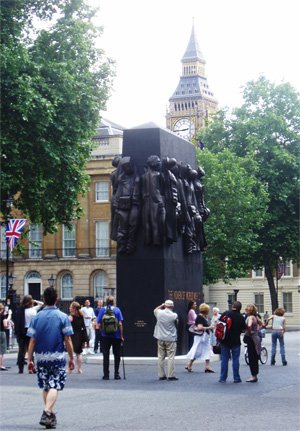
Introduction
The Machine Gun Corps Memorial, also known as "The Boy David," is an evocative monument located at Hyde Park Corner in London. Dedicated to the men of the Machine Gun Corps (MGC) who served and died during World War I, it stands as a testament to both the technological evolution of warfare and the profound human cost of modern combat. This guide provides detailed historical context, visitor information, accessibility tips, nearby attractions, and practical advice to help you make the most of your visit to this important London landmark.
Photo Gallery
Explore Machine Gun Corps Memorial in Pictures
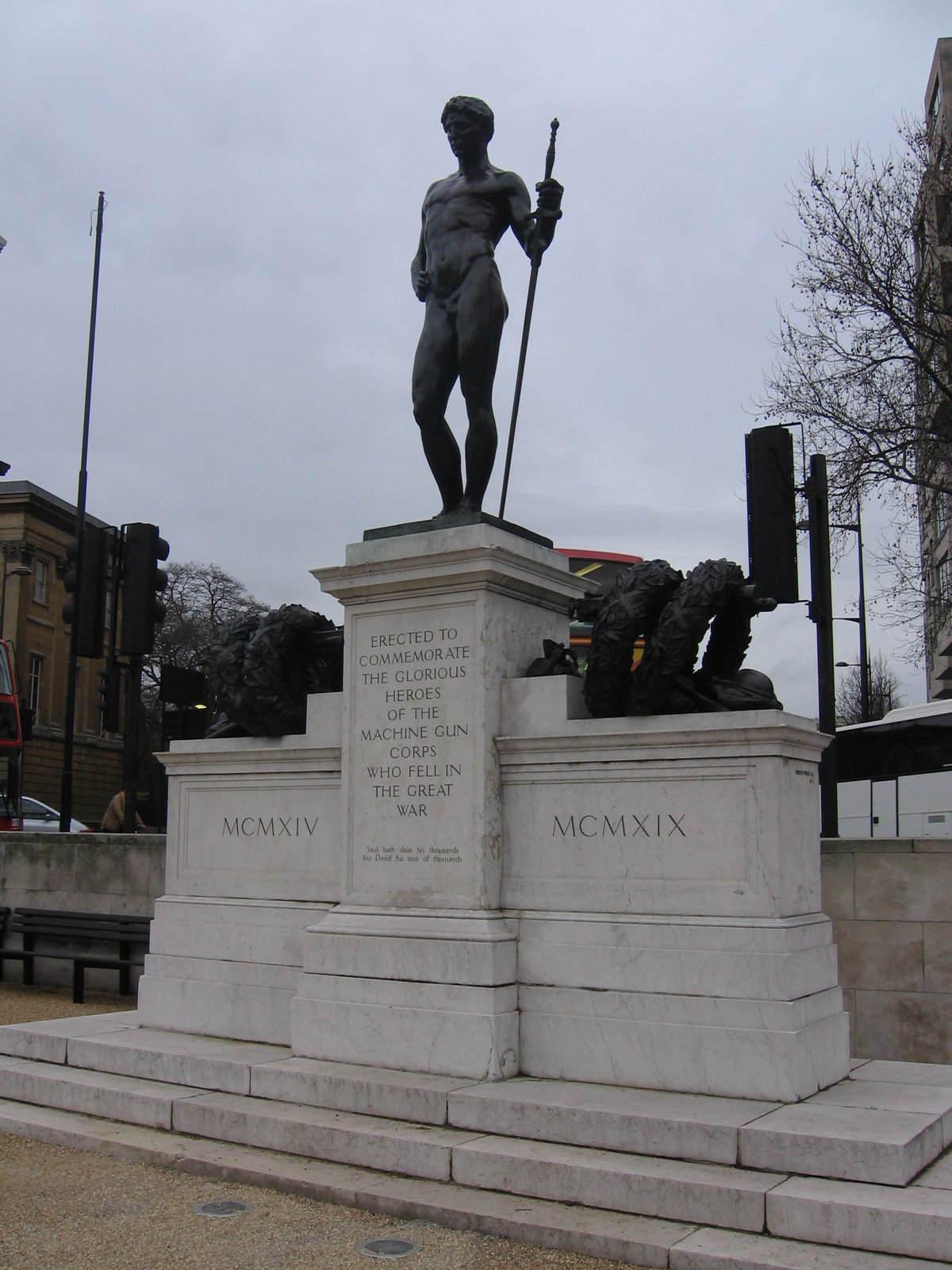
The Statue of David in London, a monument honoring those who died during the World War, standing as a symbol of remembrance and sacrifice.
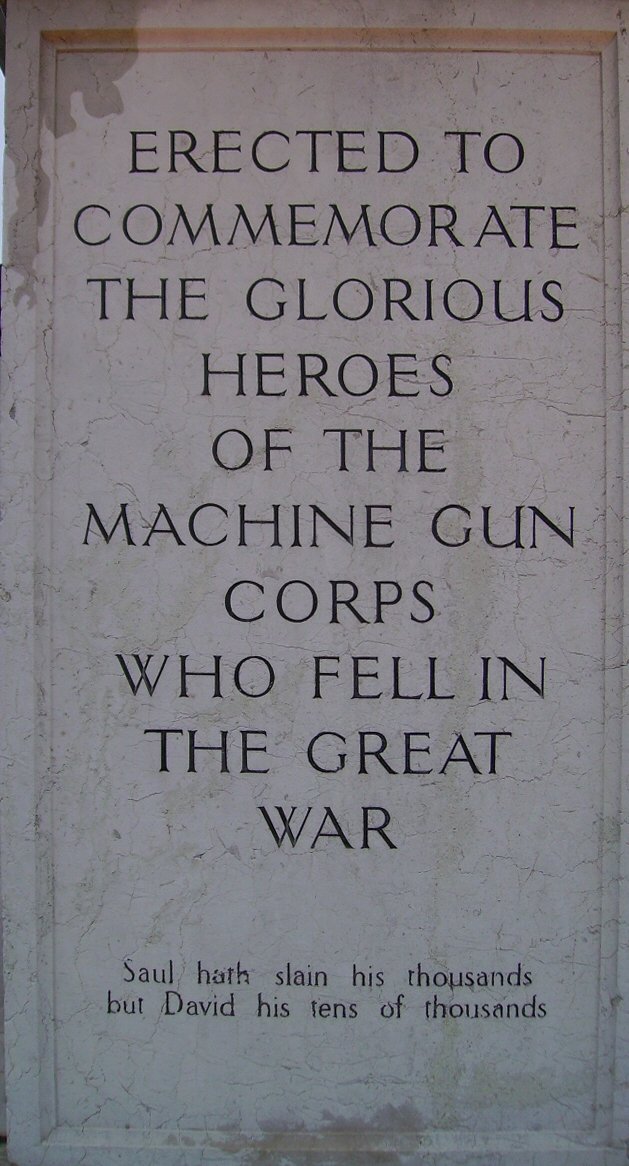
Close-up of the Machine Gun Corps Memorial inscription located at Hyde Park Corner in London
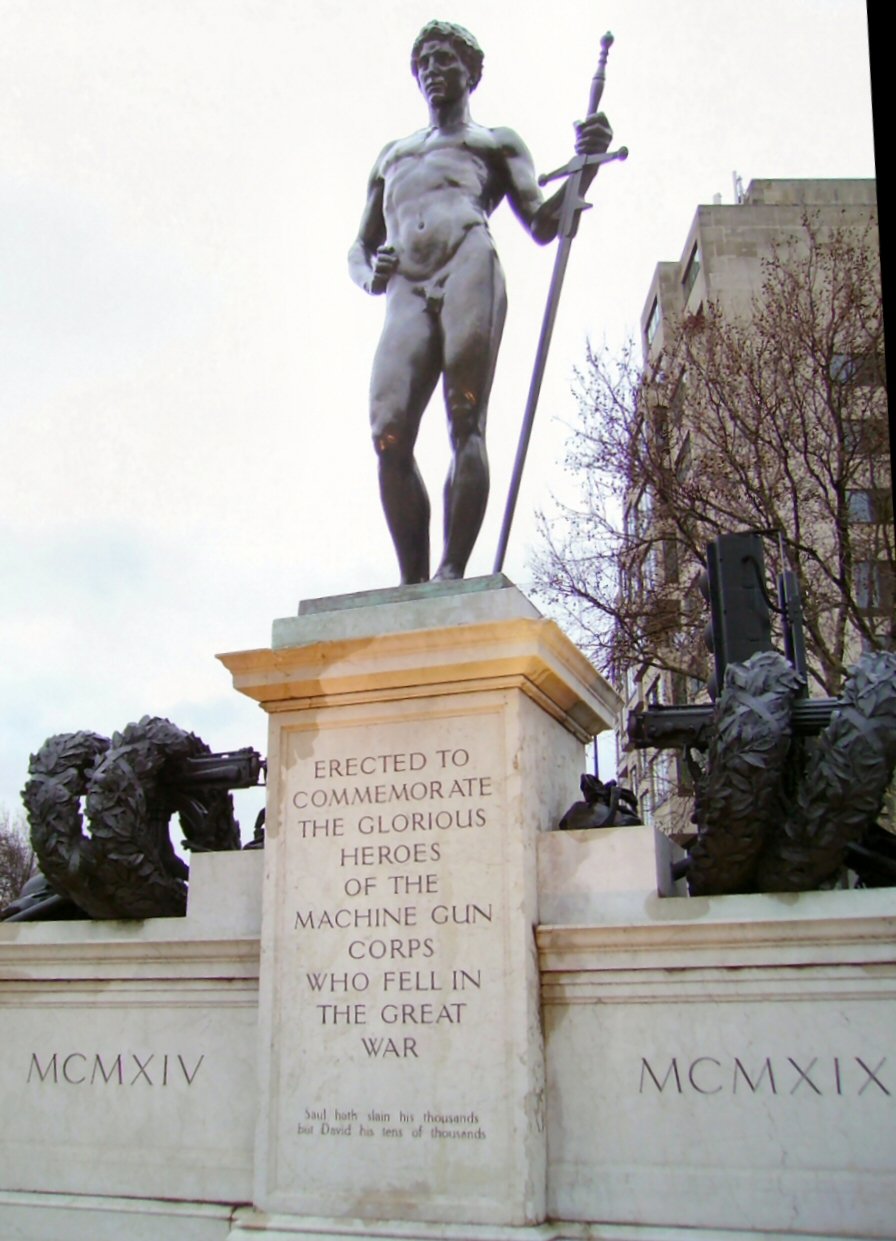
The Machine Gun Corps Memorial located at Hyde Park Corner in London commemorates the service of the Machine Gun Corps.
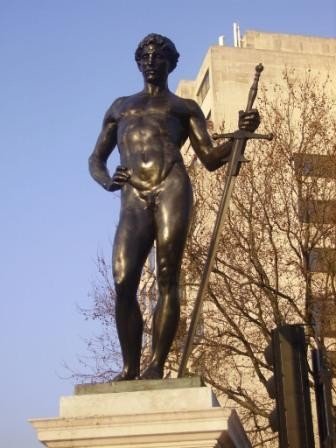
Close-up of the detailed bronze sculpture on the Machine Gun Corps Memorial, commemorating the soldiers who served in the corps.
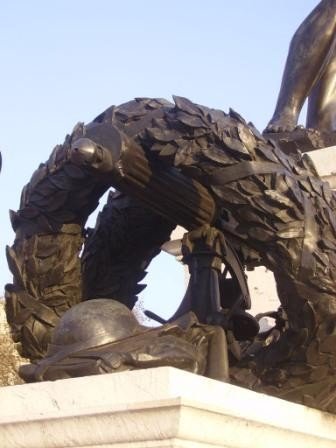
High-quality image of the Machine Gun Corps Memorial, showcasing the detailed commemorative sculpture dedicated to the Machine Gun Corps.
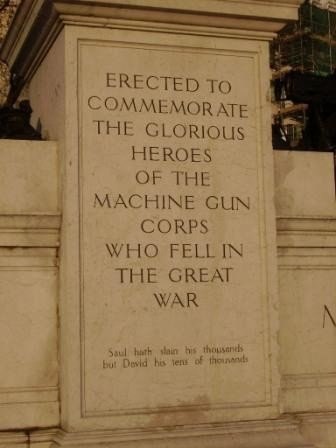
The Machine Gun Corps Memorial in London, featuring a detailed bronze statue of a soldier holding a machine gun, set against a stone pedestal with inscriptions, surrounded by greenery under a clear blue sky.
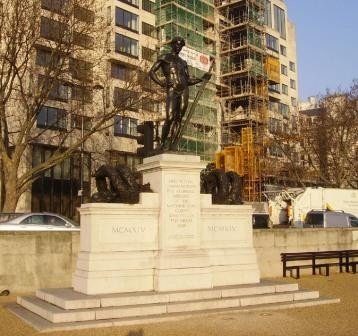
Detailed view of the Machine Gun Corps Memorial located in London, featuring sculptures commemorating soldiers
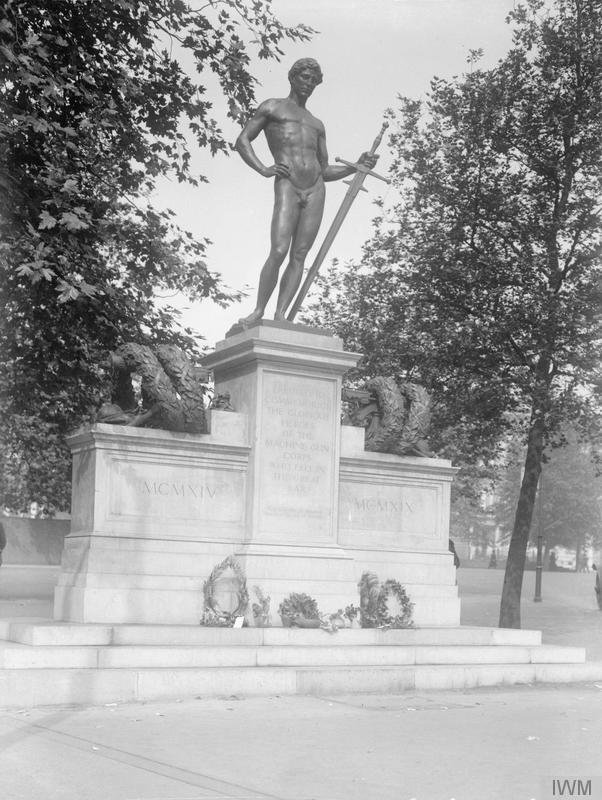
The Machine Gun Corps Memorial, a World War I war memorial located at Hyde Park Corner in London, commemorating the sacrifices of the Machine Gun Corps during the First World War
Historical Background and Significance
Formed in October 1915, the Machine Gun Corps was established in response to the changing face of warfare on the Western Front during World War I (London Remembers). The MGC played a pivotal role in modernizing infantry tactics, introducing the widespread use of machine guns that dramatically increased both firepower and battlefield casualties.
At its peak, the Corps numbered nearly 160,000 officers and men, operating Vickers machine guns across various theatres including the Western Front, Russia, Italy, Egypt, and East Africa (Family Tree). The extreme danger faced by MGC servicemen earned them the nickname "the Suicide Club." Despite their sacrifices, the Corps was disbanded in 1922, but its legacy endures in British military history and the evolution of armored warfare.
Seven MGC members were awarded the Victoria Cross for their valor, and the Corps is commemorated through research projects and remembrance ceremonies (Family Tree).
The Memorial: Design, Symbolism, and Artistic Features
Architectural Features
Unveiled in 1925 and designed by sculptor Francis Derwent Wood, the Machine Gun Corps Memorial features a 9-foot bronze statue of the biblical David atop an Italian marble plinth (C20 Society). On either side of the plinth are two life-sized bronze Vickers machine guns, wreathed in laurel, symbolizing both victory and mourning.
Symbolism and Inscriptions
- David: Represents youthful sacrifice and contemplation; his nudity underscores vulnerability.
- Machine Guns: Flanked by laurel wreaths, they reflect the mechanized nature of WWI combat.
- Inscription: “Saul hath slain his thousands, but David his tens of thousands” (1 Samuel 18:7), emphasizing the devastating impact of machine guns in war (Stuff About London).
- Names: The base lists the number of MGC casualties—nearly 14,000—reinforcing the memorial’s solemn purpose.
Artistic Context
Francis Derwent Wood himself served in the Royal Army Medical Corps and created facial prosthetics for wounded soldiers, bringing a powerful sense of empathy and realism to his work (Stuff About London). The memorial’s design initially sparked controversy due to the juxtaposition of a classical nude and modern weaponry, but it remains one of London’s most moving tributes.
Visitor Information: Hours, Admission, and Accessibility
Location: Hyde Park Corner, Wellington Place, London, SW1A 2EJ (opposite Apsley House)
Admission: Free; no tickets required.
Visiting Hours: Open 24 hours a day as an outdoor monument in a public space (Royal Parks).
Accessibility: Fully accessible via step-free paved walkways and signal-controlled pedestrian crossings. The nearest tube station (Hyde Park Corner) and local bus stops are wheelchair-friendly.
Facilities:
- Public toilets (including accessible facilities) at Hyde Park entrances
- Refreshment kiosks and cafés nearby
- Benches and shaded areas for rest and reflection
For an accessible and safe visit, follow signage and use pedestrian crossings around the busy traffic island.
Location and Getting There
Situated at Hyde Park Corner, the memorial sits within a cluster of significant war monuments (Historic England).
Transport Details:
- Underground: Hyde Park Corner (Piccadilly Line) is a 2-minute walk. Green Park and Knightsbridge stations are also within a 10–15 minute walk.
- Buses: Multiple routes serve Hyde Park Corner, including 2, 9, 10, 14, 16, 19, 22, 36, 38, 52, 73, 74, 137, 148, 390, and 414.
- Cycling: Santander Cycles docking stations are close by; cycling routes pass through Hyde Park (Komoot).
- Parking: No dedicated parking; nearby metered spaces are limited. Use Park Lane or Knightsbridge car parks if needed.
Guided Tours and Events
While there are no official guided tours solely for the Machine Gun Corps Memorial, it is included on many walking tours of Hyde Park Corner and London’s war memorials (Travel Lens).
- Audio guides are available via mobile apps.
- Remembrance events: Major ceremonies are held on Remembrance Sunday in November and the annual Machine Gun Corps observance in May (Wikipedia). Access may be restricted during official events.
Nearby Attractions and Memorials
Hyde Park Corner features the highest concentration of war memorials in London:
- Royal Artillery Memorial: Commemorates artillery losses in WWI (English Heritage)
- Wellington Arch: Offers exhibitions and panoramic views (Royal Parks)
- Australian and New Zealand War Memorials: Honoring Commonwealth forces (Komoot)
- Hyde Park: London’s largest park, with walking trails, gardens, and the Serpentine lake
Practical Tips for Visitors
- Best visiting times: Early mornings and late afternoons are quietest and offer the best lighting for photos.
- Photography: Permitted and encouraged. Capture the bronze statue and marble plinth, as well as nearby monuments.
- Accessibility: The entire area is step-free and suitable for wheelchairs and strollers.
- Amenities: Public restrooms and cafés are within Hyde Park and at Wellington Arch.
- Safety: Use signal-controlled crossings to access the traffic island safely.
Frequently Asked Questions (FAQ)
Q: Is admission to the Machine Gun Corps Memorial free?
A: Yes, there is no charge.
Q: Are there set opening hours?
A: No, the memorial is accessible 24/7 as an outdoor monument.
Q: Are guided tours available?
A: Many Hyde Park Corner walking tours include the memorial; audio guides are also available.
Q: Is the memorial wheelchair accessible?
A: Yes, with step-free paths and accessible crossings.
Q: Are there toilets nearby?
A: Yes, public facilities are available in Hyde Park and at Wellington Arch.
Q: When are commemorative events held?
A: Major events take place on Remembrance Sunday and during the annual Machine Gun Corps observance in May.
Plan Your Visit
To deepen your experience, download the Audiala app for audio tours and updates on London’s historic sites. Consider pairing your visit with other Hyde Park attractions, such as Wellington Arch or the Serpentine. For those unable to visit in person, virtual tours and interactive maps are available online.
Listen to the full story in the app
Your Personal Curator, in Your Pocket.
Audio guides for 1,100+ cities across 96 countries. History, stories, and local insight — offline ready.
Audiala App
Available on iOS & Android
Join 50k+ Curators
Sources
- verified
- verified
- verified
- verified
- verified
- verified
- verified
Last reviewed: