Why does the Houses of Parliament in London, United Kingdom, look medieval when so much of what you see rose from a Victorian disaster and a wartime rebuilding? That tension is exactly why you should come: few places turn British power, vanity, damage, ritual, and repair into such a readable facade. Step onto the Thames embankment and the place hits you all at once: pale stone ribbed with soot, the clock face burning above the river, and a long Gothic frontage that seems older than it is.
Most visitors arrive for the silhouette and stay for the contradictions. Westminster Hall survives from 1097 to 1099 with an oak roof spanning 20.7 meters, about the length of a London bus, while the Commons chamber beyond is a post-Blitz room reopened on 26 October 1950 after German bombs tore the old one apart.
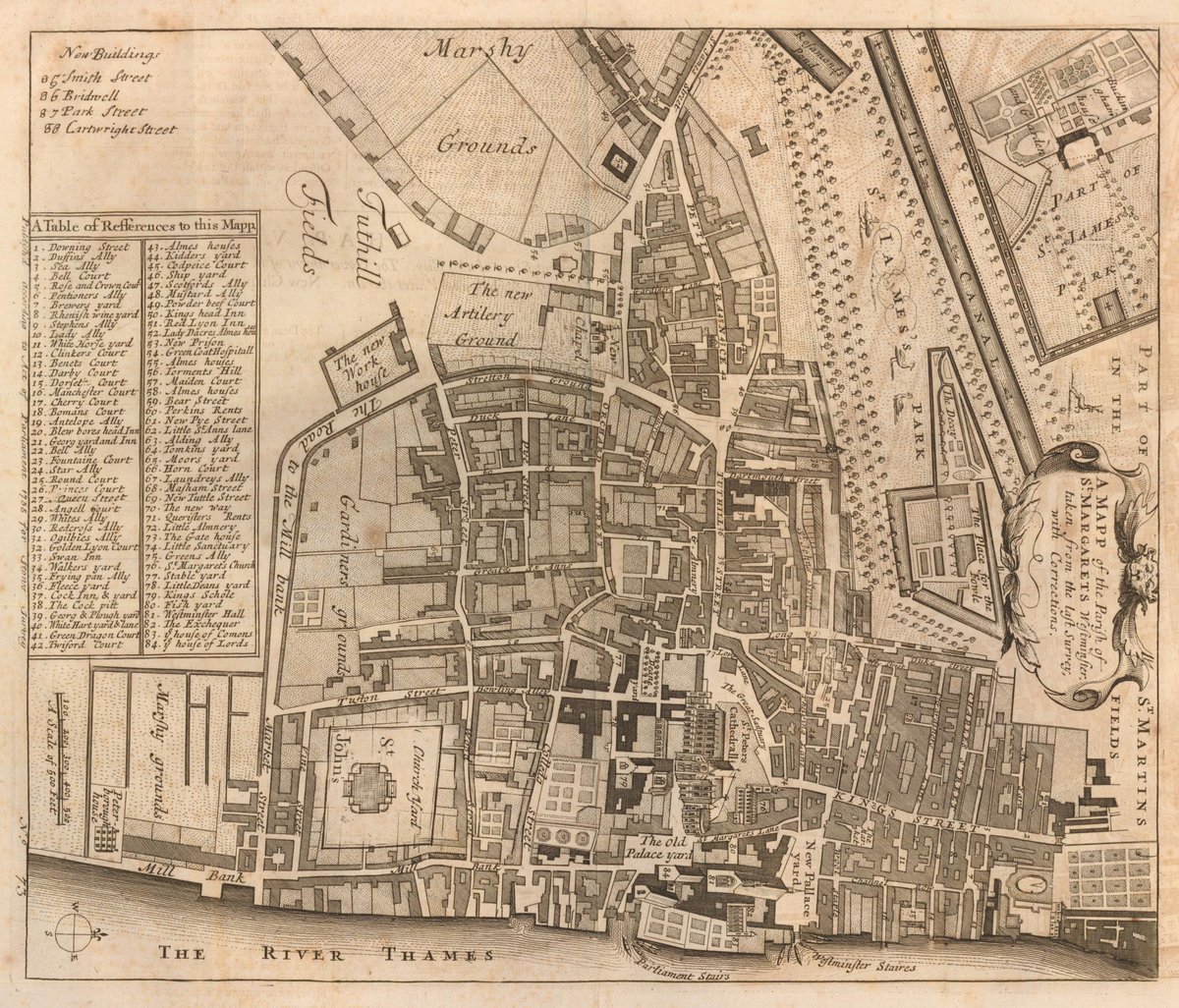
Records show this began as a royal palace on Thorney Island, not a purpose-built parliament. Kings feasted here, judges sat here, plotters tried to blow it up here, and legislators slowly took over spaces first designed for worship and monarchy.
And the setting still does half the storytelling for free. The Thames throws back the light, traffic growls over Westminster Bridge, and the stonework seems to change color by the hour; walk in knowing the building's secrets, and the famous view becomes far stranger than the postcard.
Researched by the Audiala editorial team from historical records, architectural archives, and local expertise.
What to see
Westminster Hall
Westminster Hall feels older than the monarchy around it, which is saying something. William II ordered it in 1097, and the hammerbeam oak roof added in 1393-1401 still stretches above you like the hull of an upturned ship, a span so bold it makes the lawyers, kings, and mourners who passed beneath it seem briefly small; listen for the scrape of shoes on stone and the soft lift of voices into all that timber, because this is the part of Parliament that still remembers it was once a palace before it became an argument.
Central Lobby and the Lords Sequence
Central Lobby is where Victorian confidence turns almost theatrical: mosaic saints over the doorways, a tiled floor busy as a carpet, and light falling through stone tracery onto the place where citizens still come to lobby MPs. Then the route towards the House of Lords grows richer by the room until red benches, gilding, heraldry, and the throne make the chamber read less like a debating room than a stage set for constitutional ritual; look closely at the metal grilles in the lobby, because those decorative screens once blocked women in the old Ladies' Gallery, and the prettiest detail in the building carries one of its meaner social histories.
Read the Building With Your Feet
Skip the urge to rush for the postcard view of Big Ben and follow the quieter story inside: start in St Stephen's Hall, where brass studs in the floor mark the lost House of Commons chamber, then notice the bomb-scarred stone of Churchill Arch near Members' Lobby before stepping back outside to Victoria Tower Gardens for the long southern sweep of the palace above the Thames. That route takes barely 20 minutes at an unhurried pace, about the length of two Tube platforms laid end to end, and by the finish the building stops looking like a single Gothic monument and starts reading as what it really is: a patched, ceremonial, quarrelsome machine built after the fire of 16 October 1834 and still carrying its scars in public.
Plan your visit
Getting There
Cromwell Green, Palace of Westminster, SW1A 0AA, is the main visitor entrance. Westminster Underground station on the Jubilee, District, and Circle lines is about 5 minutes away on foot, while Victoria, Charing Cross, and Waterloo are roughly 20 minutes away; buses 11, 12, 24, 26, 87, 88, 148, 159, and 453 stop around Parliament Square as of January 2026. From Big Ben and Westminster Bridge, the walk is under 10 minutes, but traffic around the square moves with the grace of an argument.
Opening Hours
As of 2026, the Palace does not keep one simple public opening schedule because it is still a working legislature. Self-guided multimedia tours run on Saturdays year-round and Monday to Saturday during parliamentary recess, with last admission at 16:15; guided tours run on Saturdays year-round and usually Tuesday to Saturday during recess, with last admission around 16:00, and tours can be cancelled at short notice when parliamentary business takes over.
Time Needed
Give the exterior 20 to 30 minutes if you want the river view, the clock face, and that dark-gold stone catching London light before rain moves in. A standard Palace tour works best with about 2 hours door to door, including security, while a fuller half-day of 3 to 4 hours lets you add Westminster Hall, Parliament Square, Victoria Tower Gardens, and the exterior of Westminster Abbey without turning the visit into a sprint.
Accessibility
Parliament offers step-free access, accessible toilets, hearing support, wheelchairs on request, and lift alternatives for the main tour route. Cromwell Green has a downward slope with handrails, the route from Westminster Hall to Central Lobby can avoid 37 steps by lift, and the public galleries differ: the Commons has step-free access, while the Lords gallery uses stairs but staff can arrange an alternative viewing position; Big Ben is another matter, with 334 steps packed into a shaft as tight as a ship's interior.
Cost & Tickets
As of 2026, official prices up to 30 April are £34 for a guided tour and £27 for a multimedia tour, then from 1 May 2026 they rise to £40 and £31; Big Ben remains £35 until 31 July 2026, then jumps to £55 from 1 August 2026. Under-5s enter free on Palace tours, debates and committee hearings are free, and advance online booking usually gives the best price, though no ticket lets you skip security.
History
A Medieval Mask for a Burned and Bombed State
The Palace of Westminster belongs to two timelines at once. UNESCO and Parliament's own records show an 11th-century royal palace grew here beside Westminster Abbey, then a fire in 1512 pushed Henry VIII toward Whitehall and left Parliament to inherit the site almost by accident.
What stands now is mostly a 19th-century rebuild after the fire of 16 October 1834, with one blunt 20th-century correction after the Blitz. So when people call the Houses of Parliament ancient, they are half right in the most misleading way possible.
The turning point
Pugin's Gothic Victory, and the Price of It
At first glance, the story seems simple: Britain lost its old Parliament in the 1834 fire, then built a grand Gothic replacement and got the skyline London knows today. Tourists usually stop at Sir Charles Barry, the official winner of the design competition, and move on to Big Ben.
But the building's personality does not add up if Barry is the whole explanation. Parliament's own history says the credit question still lingers, because Augustus Welby Northmore Pugin, a 23-year-old Catholic designer with a ferocious belief in Gothic architecture, drew much of the tracery, furniture, metalwork, tiles, stained glass, and the final design for the great clock tower; what was at stake for him was personal as well as professional, since this was his chance to prove that a consciously medieval style could become the face of the modern British state.
The turning point came after the 1834 inferno forced the country to decide what its legislature should look like when rebuilt. Records show the competition rules required a Gothic or Elizabethan design, Barry won the commission, and Pugin supplied the visual language people now mistake for a seamless medieval survival; then he collapsed into mental illness and died in 1852 at 40, before the palace was finished. Once you know that, the facade changes: you stop seeing a single author and start seeing an argument in stone, a classical plan wearing a Gothic costume so persuasive that most visitors never notice the disguise.
The Fire Everyone Watched
The old palace did not die in battle or revolt. Clerks burned obsolete Exchequer tally sticks in the underfloor stoves of the House of Lords on 16 October 1834, the flues overheated, and by 6:30 pm flames burst through the roof while crowds packed the Thames to watch. J. M. W. Turner painted the blaze, and Lords clerk Henry Stone Smith threw bundles of records from the windows into Old Palace Yard to save what he could.
A Working Ruin Rebuilt Again
German bombing tore through the palace in 1940 and 1941, and on the night of 10 to 11 May 1941 incendiaries destroyed the House of Commons chamber. Winston Churchill fought hard for a narrow rectangular replacement rather than a semicircle, because he believed adversarial politics needed members facing each other at close range. The chamber reopened on 26 October 1950, which means one of the most familiar rooms in British public life is younger than many of the people who queue to see it.
Tips for visitors
Photo Limits
Take your indoor photos fast in Westminster Hall, St Stephen's Hall, and the visitor section of New Palace Yard, because those are the only areas where personal photography is allowed. The rest of the route is camera-off territory, tripods are banned, and no photography is allowed inside Elizabeth Tower on the Big Ben tour.
Travel Light
Security works like an airport queue and can take up to 30 minutes on average, or 45 minutes on busier Monday to Wednesday afternoons as of 2026. Bags larger than 60cm by 40cm are not allowed, Parliament has no cloakroom, and clothing with political or offensive slogans can be stopped at screening.
Bridge Scams
Westminster Bridge is the weak spot here, not Parliament Square itself. Avoid shell-game operators, illegal snack sellers, and pedicabs quoting fantasy prices, and keep your phone in a zipped pocket when crowds thicken around the station and bridge approaches.
Where To Eat
Skip the generic bridge-side grab-and-go counters. For budget food, try Regency Cafe on Regency Street for a proper London fry-up; for a mid-range political pub, Westminster Arms on Storey's Gate has the division bell and solid pies; for a smarter sit-down, Cellarium Cafe & Terrace by Westminster Abbey does lunch and afternoon tea without making you feel trapped in a souvenir aisle.
Best Timing
Early Saturday or a recess weekday morning gives you the best chance of softer light on the river facade and shorter security lines. Late afternoon can be beautiful when the stone turns honey-colored, but the square also fills with tour groups, buses, and that steady wind off the Thames that cuts through coats better than you'd expect.
Pair It Well
This area rewards a sequence, not a single stop. Combine Parliament with Big Ben, Westminster Abbey, and a walk through Victoria Tower Gardens, or continue north along Whitehall before heading elsewhere in London; the building reads differently once you see how tightly power, ceremony, and tourism are packed into a few city blocks.
Where to Eat
local_dining
Don't Leave Without Trying
Fish and chipsSunday roastFull English breakfastPie and mashOmelette Arnold BennettEggs DrumkilboScotch eggAfternoon tea
Regency Cafe
local favorite
Traditional British Cafe€star4.7(4770)
Order: The full English breakfast, specifically including the bubble and squeak and black pudding.
This is a quintessential, no-frills London institution that serves the most honest, hearty fry-up in the city. It’s a favorite for its authentic atmosphere and incredibly friendly service.
Order: Any of the daily fresh pasta dishes from their chalkboard menu.
An intimate, authentic hidden gem in Westminster where the pasta is always cooked just right. It’s the perfect spot for a relaxed, home-cooked meal away from the tourist rush.
Order: The Shakshuka or the Fancy Bacon Roll, followed by their excellent coffee.
With floor-to-ceiling glass and incredible natural light, this spot offers a modern, health-conscious take on brunch. It’s a vibrant, airy space that feels like a breath of fresh air near Buckingham Palace.
Order: The duck confit or the oat porridge brûlée for a unique breakfast treat.
It’s like being transported straight to a Parisian bistro. The retro-style interior and warm hospitality make it a standout for all-day dining in the Victoria area.
Yes, if you care about more than the skyline. Westminster Hall alone earns the ticket: a medieval space with an oak roof so ambitious UNESCO singles it out, and the rest of the route shows how a fire on 16 October 1834 and the Blitz remade British power in stone, tile, brass, and bomb-scarred masonry. Even people who think they already know the place usually realize they've been looking at a Victorian rebuild, not a frozen medieval relic.
How long do you need at Houses of Parliament?
Give it about 2 hours for the main Palace visit, or 3 to 4 if you want to do it properly. The official multimedia tour lasts about 90 minutes, and security can add up to 30 minutes, which means the whole visit stretches about as long as a West End matinee. Big Ben is separate, with a 90-minute tour and about 1 hour 45 minutes total once check-in is counted.
How do I get to Houses of Parliament from central London?
The easiest route is the Tube to Westminster station, then a walk of about 5 minutes to the visitor entrance at Cromwell Green, SW1A 0AA. If you're already in central London, Whitehall from Trafalgar Square makes a good approach on foot in about 15 to 20 minutes, and the building reveals itself gradually instead of hitting you all at once. Buses also fan into Parliament Square from across the city, which helps if you want street-level London rather than tunnels.
What is the best time to visit Houses of Parliament?
Saturday is usually the cleanest choice for most travelers because tours run year-round and the building feels less tangled with parliamentary business. Recess weekdays give you more tour availability, while late afternoon light from the river side can make the stone glow the color of weak tea; just remember last admissions are around 16:15 for the multimedia tour, so don't cut it close. If you want the place as a working legislature rather than a monument, queue for a free debate when Parliament is sitting.
Can you visit Houses of Parliament for free?
Yes, parts of the experience can be free, but the full sightseeing tours are usually paid. You can watch debates and committee hearings without paying, UK residents can request a free guided tour through their MP, and Prime Minister's Questions tickets are free though much harder to get. Paid tours, as of 28 April 2026, start at £27 for the multimedia version and £34 for the guided one, with higher prices scheduled from 1 May 2026.
What should I not miss at Houses of Parliament?
Don't rush past Westminster Hall or the brass studs in St Stephen's Hall. Westminster Hall gives you the oldest surviving heart of the site, while those studs quietly mark the vanished House of Commons floor plan, so you are quite literally standing where debate once occupied a former royal chapel. Also look for the Churchill Arch's bomb-scarred stone and, if you book the tower, the 334-step Big Ben climb, which rises like a mid-rise office block through clock mechanics and thunderous bells.
Can you go inside the Houses of Parliament and Big Ben?
Yes, but they are separate experiences and Big Ben needs its own ticket. Parliament offers guided and multimedia tours inside the Palace, while the Elizabeth Tower visit is a 90-minute climb with 334 steps, narrow passages, and no photography inside, so it feels more like entering the machinery of the city than admiring it from the pavement. Book ahead for both, because this is a working building and schedules can change at short notice.
Sources & attribution17
Researched and written by the Audiala editorial team from historical records, architectural archives, and local expertise. Last updated April 2026.
UNESCO World Heritage Centre — Confirmed the Palace of Westminster's World Heritage status, 11th-century origins, and the importance of Westminster Hall's medieval oak roof.
UK Parliament: Great Fire of 1834 — Provided the date of the 16 October 1834 fire and the broad story of the destruction that led to the Victorian rebuilding.
UK Parliament: Bomb Damage — Supplied the wartime damage context that explains why parts of the Palace, especially the Commons, are 20th-century reconstructions.
UK Parliament: St Stephen's Hall — Provided the detail about brass studs marking the former Commons chamber and the hall's link to the old royal chapel.
UK Parliament Tickets: Multimedia Tour — Provided current tour days, last admission time, and the official 90-minute duration for the self-guided visit.
UK Parliament: Tour Prices — Provided ticket prices valid up to 30 April 2026 and the scheduled price changes from 1 May 2026.
UK Parliament: Security — Provided average security wait times and practical entry rules for timing a visit.
UK Parliament: Directions — Provided the main visitor entrance at Cromwell Green, Westminster station details, nearby rail stations, and general transport guidance.
UK Parliament: Big Ben Tour — Confirmed that Big Ben tours are separate from Palace tours and provided the 90-minute tower-visit details.
UK Parliament Tickets: Big Ben Tour — Provided the total time allowance of about 1 hour 45 minutes including check-in and reinforced that Big Ben requires separate booking.
Elizabeth Tower, Palace of Westminster — The wub — CC BY-SA 3.0 (https://creativecommons.org/licenses/by-sa/3.0/) — Source: https://commons.wikimedia.org/wiki/File:Elizabeth_Tower,_Palace_of_Westminster.jpg
Westminster Hall 02 — Jon Worth — CC BY-SA 2.0 (https://creativecommons.org/licenses/by-sa/2.0/) — Source: https://commons.wikimedia.org/wiki/File:Westminster_Hall_02.jpg
Strictly necessary cookies keep the site working. Analytics (PostHog, Google Analytics) measures how each visitor uses our pages. Marketing loads YouTube videos and walking-route maps without a tap and lets Google Analytics set advertising cookies. We never sell your data. You can change this any time from the footer.
Analytics and marketing cookies are optional and only load if you agree. Details under Customize.
Privacy
Cookie preferences
Pick what you're okay with. You can change this any time from the footer.
Strictly necessary
Always on
Sign-in, language, navigation. Always on.
Product analytics
PostHog (EU) and Google Analytics record which pages you view and how you use them, under a random identifier stored in your browser. Helps us see which pages work and which need fixing. Google's ad personalisation stays off. No selling.
Marketing
Loads YouTube videos and the walking-route maps (OpenFreeMap) without a tap; without it, they load only when you tap them. If analytics is also on, Google Analytics may set advertising cookies. Ad personalisation stays off.