Introduction
The Church of St Peter ad Vincula, located within the iconic Tower of London in Tower Hamlets, is a remarkable site of royal history, architectural distinction, and solemn remembrance. Known as the final resting place for some of England’s most notable figures—including Anne Boleyn, Catherine Howard, Lady Jane Grey, and Sir Thomas More—this Tudor chapel is both a site of spiritual heritage and a compelling destination for anyone interested in London's past. Named "St Peter in Chains" after the biblical story of St Peter’s imprisonment, the church’s history is deeply intertwined with that of the Tower, serving both as a parish church and a Royal Peculiar under the monarch’s direct jurisdiction. This comprehensive guide covers its history, architectural highlights, significant burials, as well as all practical information for visitors, including hours, tickets, accessibility, nearby attractions, and frequently asked questions. For official details and updates, refer to the Historic Royal Palaces website and other trusted sources (Unofficial Royalty; English Monarchs; National Churches Trust).
Early History and Development
The site of St Peter ad Vincula predates the Norman Conquest, with a chapel existing here since the 11th century (English Monarchs). Originally built outside the Tower’s walls, it was later incorporated within the fortifications in the late 13th century by King Edward I, reflecting the Tower’s evolving role as a royal palace and fortress (Unofficial Royalty). The name “ad Vincula”—Latin for “in chains”—references the biblical imprisonment of St Peter and echoes the Tower’s own history as a site of incarceration and execution.
Tudor Reconstruction and Architecture
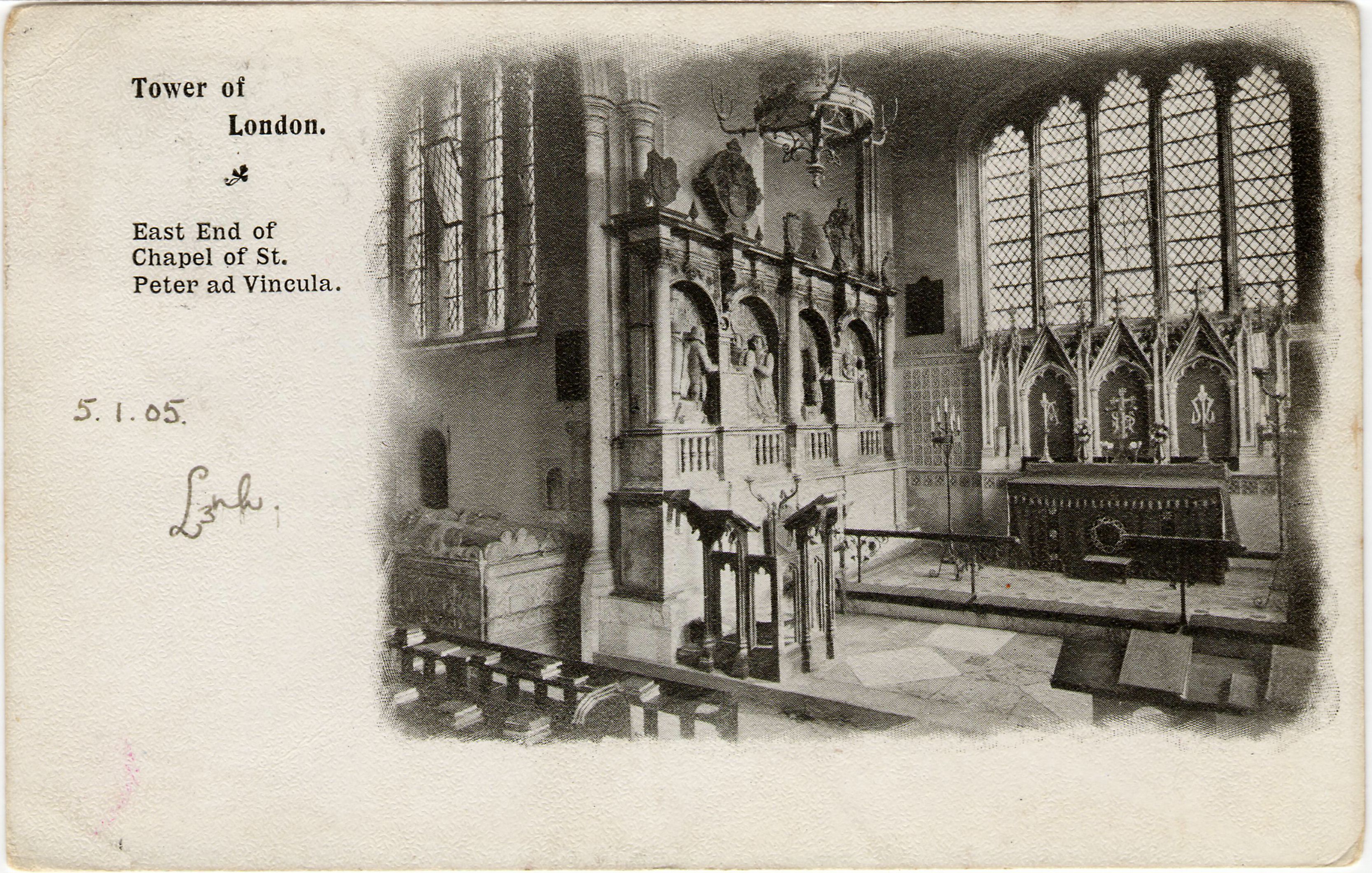
After a fire in 1512, Henry VIII commissioned the current chapel, completed in 1520 under Sir Richard Cholmondeley (English Monarchs; Historic England). The chapel is a fine example of early Tudor ecclesiastical architecture:
- Exterior: Modest Tudor brickwork with ashlar dressings, rectangular windows, and a lack of spire or tower, consistent with its military chapel function (National Churches Trust).
- Interior: A broad rectangular nave, timber roof with exposed beams, and no screen between nave and chancel—fostering a communal worship space. Victorian stained glass adds color and light, especially near the chancel, where the most significant burials are found.
- Memorials: The sanctuary includes a memorial pavement, installed during Queen Victoria’s reign, marking the burials of those executed under Henry VIII (English Monarchs).
- Notable Features: A four-bay north arcade with Tudor arches, an octagonal font, and various historic monuments, including the tombs of Sir Richard and Elizabeth Cholmondeley (Love British History).
The Chapel’s Role: Royal Peculiar and Chapel Royal
St Peter ad Vincula is designated as a Royal Peculiar, placing it under direct royal jurisdiction rather than that of a bishop. As the Chapel Royal of the Tower, it has served the spiritual needs of the Tower’s residents and military garrison for centuries and remains an active Anglican parish (Unofficial Royalty; Wikipedia). The chapel also serves as the regimental church of The Royal Regiment of Fusiliers, maintaining strong military and ceremonial traditions.
Executions, Burials, and Memorials
St Peter ad Vincula is renowned as the burial site for many high-profile individuals executed at the Tower—especially on Tower Green, which was reserved for private executions of nobility (Unofficial Royalty). Notable burials include:
- Anne Boleyn (1536), Henry VIII’s second wife, buried beneath the altar.
- Catherine Howard (1542), Henry VIII’s fifth wife.
- Lady Jane Grey (1554), the “Nine Days’ Queen.”
- Margaret Pole, Countess of Salisbury (1541), and Jane Boleyn, Viscountess Rochford (1542).
- Sir Thomas More (1535), canonized as a saint.
- John Fisher, Bishop of Rochester (1535), also canonized.
- Others: Edward Seymour, Thomas Howard, James Scott, Duke of Monmouth, and Simon Fraser, Lord Lovat (History of Royal Women).
Victorian restorations uncovered and respectfully reinterred many remains, now marked with inscribed marble slabs and memorials. A modern memorial on Tower Green commemorates all those executed at the Tower (Unofficial Royalty).
Victorian and Modern Restorations
Significant repairs and restorations in the 19th century included replacing the floor, constructing a crypt, and adding the sanctuary pavement. The 1876–77 restoration rebuilt the west end and added a Tudor-style vestry (Historic England). In the 21st century, interior upgrades improved lighting, furnishings, and choir facilities (Unofficial Royalty). The chapel’s layout and features remain largely unchanged, preserving its historic ambience.
Visiting Information: Hours, Tickets, Accessibility, and Tours
Location and Access
St Peter ad Vincula is located within the Tower of London’s Inner Ward, adjacent to Tower Green and the Queen’s House. Access is only possible with a valid Tower of London admission ticket; there is no separate entrance to the chapel (Historic Royal Palaces).
Visiting Hours
- Summer (March–October): 9:00 AM – 5:30 PM (last admission 5:00 PM)
- Winter (November–February): 9:00 AM – 4:30 PM (last admission 4:00 PM)
- Public access to the chapel is generally available during the final hour before Tower closing and may be restricted during services or special events. The chapel is currently closed for restoration until 28 September 2025; check the official website for current status (elizregina.com).
Tickets and Admission
Tower of London admission includes access to the chapel. As of June 2025:
- Adults: £34.80
- Children (5–15): £17.40
- Concessions: £27.80
- Family and group rates: Available.
Purchase tickets in advance online to avoid queues: Tower of London Tickets.
Guided Tours
- Yeoman Warder (Beefeater) tours, included with admission, provide expert insights and often incorporate chapel visits in the last hour of the day.
- Private tours are available by arrangement.
- Audio guides are also offered (Travels With My Tripod).
Accessibility
- Wheelchair access is available for main areas, but some historic features (e.g., the crypt) may be inaccessible.
- Assistance is available; contact visitor services in advance (National Churches Trust; Tower of London Accessibility).
Facilities
- Restrooms and cafés are available within the Tower complex.
- No luggage storage; security screening applies to all visitors.
Photography and Conduct
- Photography is generally prohibited inside the chapel to preserve its sacred atmosphere and ongoing worship.
- Visitors are asked to maintain silence or speak quietly.
Travel Tips and Nearby Attractions
- Arrive early for Yeoman Warder tours and to avoid crowds.
- Best time to visit: Late afternoon, just before closing, typically offers the best chance for chapel access.
- Dress modestly as the chapel remains an active Anglican church.
- Nearby attractions: After visiting the chapel, explore the Crown Jewels, White Tower, Tower Green, medieval palace, and Tower Bridge—all within walking distance.
Frequently Asked Questions (FAQs)
Q: Can I visit St Peter ad Vincula independently?
A: No; access is only via Tower of London admission.
Q: Are guided tours available?
A: Yes, Yeoman Warder tours and audio guides are available and highly recommended.
Q: Is the chapel wheelchair accessible?
A: Main areas are accessible, but some historic sections may not be. Contact visitor services for assistance.
Q: Is photography allowed?
A: Photography inside the chapel is generally prohibited.
Q: Are chapel services open to visitors?
A: Some Anglican services are open to visitors; check the events page for details.
Listen to the full story in the app
Your Personal Curator, in Your Pocket.
Audio guides for 1,100+ cities across 96 countries. History, stories, and local insight — offline ready.
Audiala App
Available on iOS & Android
Join 50k+ Curators
Sources
- verified
- verified
- verified
- verified
- verified
- verified
- verified
- verified
- verified
Last reviewed: