Introduction
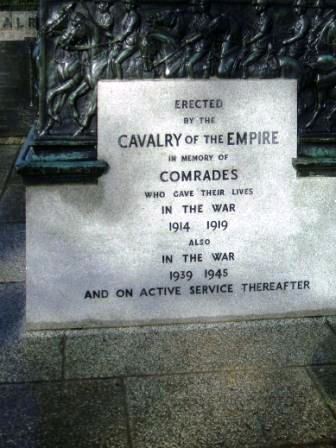
Prominently situated at Hyde Park Corner in London, the Cavalry of the Empire Memorial is a distinguished tribute to the cavalry regiments of the British Empire who served and sacrificed in the First World War and subsequent conflicts. Notably, it also commemorates the horses that endured hardship alongside these soldiers—a rare acknowledgment of the bond between man and animal in wartime. Conceived in the aftermath of World War I and unveiled in 1924 by the Prince of Wales, the memorial exemplifies both historical resonance and artistic mastery. Its bronze equestrian statue, crafted by Adrian Jones—himself a former cavalry officer—rests beside other significant war memorials such as the Wellington Arch, establishing its role within London’s commemorative landscape.
This guide provides comprehensive information for visitors, including the memorial’s origins, design symbolism, visiting hours, accessibility, travel tips, and the renowned annual Cavalry Memorial Parade. Whether you are a history enthusiast, a student of military heritage, or a curious traveler, a visit to this monument offers a profound insight into the evolving role of cavalry in modern warfare and the enduring legacy of those who served. For further details, consult official sources such as the Imperial War Museums, Royal Parks, and the HorsePower Museum.
Origins and Purpose
The Cavalry of the Empire Memorial stands as a solemn tribute to the cavalry regiments of the British Empire who served and fell during the First World War (1914–1918). Conceived by the Cavalry of the Empire Memorial Committee, the memorial was funded through public subscription, with significant contributions from former cavalrymen, their families, and supporters. Adrian Jones, a celebrated sculptor and former cavalry officer, was commissioned for the project. The memorial was unveiled on 21 May 1924 by the Prince of Wales, in a ceremony attended by dignitaries, veterans, and the public (Imperial War Museums).
Design Elements and Symbolism
The memorial features a striking bronze sculpture of a mounted cavalryman in full uniform, poised atop a Portland stone pedestal. The rider represents calm vigilance and the readiness of the cavalry, while the horse—rendered with anatomical precision—reflects the artist's equestrian expertise.
The inscription on the pedestal reads:
"To the Glorious Memory of the Cavalry of the Empire who fell in the Great War 1914–1918 and in memory of the horses who shared their suffering."
This rare dual dedication acknowledges both the soldiers and the horses, with over 400,000 horses and mules sent from Britain to the Western Front (Royal Parks). Bronze reliefs at the base illustrate cavalry action scenes, merging Edwardian monumentality with heroic realism.
Historical Context: Cavalry in World War I
At the outset of WWI, cavalry units played a vital role in mobility and reconnaissance. British cavalry divisions participated in key early battles such as Mons and the Marne. However, the advent of trench warfare, machine guns, and barbed wire rapidly diminished the effectiveness of traditional cavalry charges. Regiments adapted by serving as dismounted infantry and in reconnaissance roles. The memorial commemorates both their initial valor and their ability to adapt in the face of changing warfare (British Army Museum).
Visiting the Memorial: Hours, Tickets, and Accessibility
Visiting Hours
The Cavalry of the Empire Memorial is accessible year-round during Hyde Park’s opening hours, from 5:00 AM to midnight daily.
Tickets and Admission
There is no admission fee or ticket required; the memorial is located in a public space and may be visited freely at any time during park hours.
Accessibility
The site is wheelchair accessible with level, paved pathways. Hyde Park Corner and Marble Arch Underground stations both offer step-free access. Accessible restrooms are nearby within Hyde Park.
How to Get There
- Underground: Hyde Park Corner (Piccadilly Line) and Marble Arch (Central Line) are both within a 10–15 minute walk.
- Bus: Several routes serve Park Lane and Bayswater Road.
- Bicycle: Santander Cycles docking stations are close by, and cycling is permitted on certain park paths.
- On Foot: The memorial is easily reached from Buckingham Palace, Green Park, and central London attractions.
Guided Tours, Photography, and Special Events
Many walking tours of Hyde Park Corner and London’s war memorials include the Cavalry of the Empire Memorial. These tours enrich visitors’ understanding of the site’s history and significance (Visit London).
Photography is permitted and encouraged—especially in the soft light of morning or evening. Please be respectful during commemorative ceremonies.
Significant events include Armistice Day (11 November), regimental anniversaries, and the annual Cavalry Memorial Parade.
Restoration and Preservation
The Royal Parks, in collaboration with heritage organizations, ensures the ongoing conservation of the memorial. Regular maintenance addresses weathering and environmental effects on the bronze and Portland stone (Royal Parks Conservation).
The Memorial’s Place in London’s Commemorative Landscape
The Cavalry of the Empire Memorial is part of an important cluster of war memorials at Hyde Park Corner, including the Wellington Arch, Royal Artillery Memorial, and Machine Gun Corps Memorial. This proximity provides a rich narrative of military history and remembrance for visitors (Historic England).
Annual Commemorations and the Cavalry Memorial Parade
Cavalry Memorial Parade: Tradition and Ritual
The annual Cavalry Memorial Parade, held on the second Sunday in May, is the centrepiece of the memorial’s commemorative activities. Organized by the Combined Cavalry Old Comrades Association, the parade has been a fixture since 1924 (HorsePower Museum). The event begins near Stanhope Gate in Hyde Park and includes veterans, serving soldiers, and regimental associations. Marching, military bands, a religious service, and wreath laying are key elements.
Evolution and Significance
The parade’s traditions have adapted over time, including updates to inscriptions and temporary virtual ceremonies during the pandemic. Its continuity underscores the enduring significance of military remembrance.
Cultural Pageantry
Uniformed participants and military bands lend pageantry, while the memorial’s design—St George in armour on horseback—embodies chivalry and sacrifice (AllTrippers; HorsePower Museum).
Integration with Ceremonial London
The parade is part of London’s wider ceremonial calendar, complementing events such as the Changing of the Guard and Remembrance Sunday (London Drum).
Location, Setting, and Accessibility
Exact Location
The memorial is situated near Stanhope Gate, southeast corner of Hyde Park, with coordinates 51°30′17″N 0°09′19″W (Wikipedia). The address is Hyde Park, London, W1J 7NT (War Memorials Online).
Setting
Surrounded by mature trees and open lawns, the memorial is near the Horse Ride, Serpentine Road, and the Hyde Park bandstand. Its tranquil setting encourages reflection, and benches are available nearby. The original site was Stanhope Gate, with relocation in 1961 due to Park Lane’s expansion (Wikipedia).
Nearby Attractions
Visitors can also explore the Serpentine Gallery, Diana Memorial Fountain, Household Cavalry Memorial, and the Wellington Arch.
Practical Tips for Visitors
- Best Times to Visit: Early morning or late afternoon for a quieter experience; Cavalry Sunday (second Sunday in May) for the parade.
- Facilities: Public restrooms (including accessible) and refreshment kiosks are nearby.
- Weather: London weather is variable—bring an umbrella or raincoat as needed.
- Safety and Etiquette: Behave respectfully, especially during ceremonies; drones are prohibited.
- Combining Visits: The memorial can be part of a broader itinerary covering Buckingham Palace, Green Park, and other Royal Parks landmarks.
Frequently Asked Questions (FAQ)
Q: What are the opening hours?
A: Accessible during Hyde Park’s hours, 5:00 AM–midnight daily.
Q: Is there an admission fee or are tickets required?
A: No, visiting the memorial and parade is free.
Q: Is the site wheelchair accessible?
A: Yes, paved, level paths and accessible facilities are available.
Q: Are guided tours available?
A: Yes, as part of Hyde Park or war memorial walking tours.
Q: Can I take photographs?
A: Yes, but please be respectful during ceremonies.
Q: When is the Cavalry Memorial Parade held?
A: Annually on the second Sunday in May.
Discover More
Enhance your visit by downloading the Audiala app for audio guides and the latest information about London’s historical sites. For up-to-date news, events, and visitor tips, follow related posts and our social media channels.
Summary
The Cavalry of the Empire Memorial stands as a powerful testament to the valor and sacrifice of the British Empire’s cavalry regiments and their faithful horses. Its evocative design, accessible location, free admission, and integration with London’s commemorative traditions make it an essential destination for anyone seeking to connect with military heritage. Plan your visit around Hyde Park’s generous opening hours, utilize London’s excellent transport links, and consider attending the annual Cavalry Memorial Parade for a memorable experience. For more resources and guidance, refer to official sources such as the Imperial War Museums, Royal Parks, and HorsePower Museum.
Listen to the full story in the app
Your Personal Curator, in Your Pocket.
Audio guides for 1,100+ cities across 96 countries. History, stories, and local insight — offline ready.
Audiala App
Available on iOS & Android
Join 50k+ Curators
Sources
- verified
- verified
- verified
- verified
- verified
- verified
Last reviewed: