Introduction
Why does Camden Market in London, United Kingdom feel older than it is, as if a punk bazaar had somehow grown out of a freight machine? That tension is the reason to come: you visit Camden Market for the collision of Victorian brickwork, canal water, live music residue, and a trading culture that still feels improvised in a city that usually prefers polish. Today you smell frying dough and coffee by the Regent's Canal, hear the lock gates clank, and watch crowds stream through stable arches built for working horses rather than weekend shoppers.
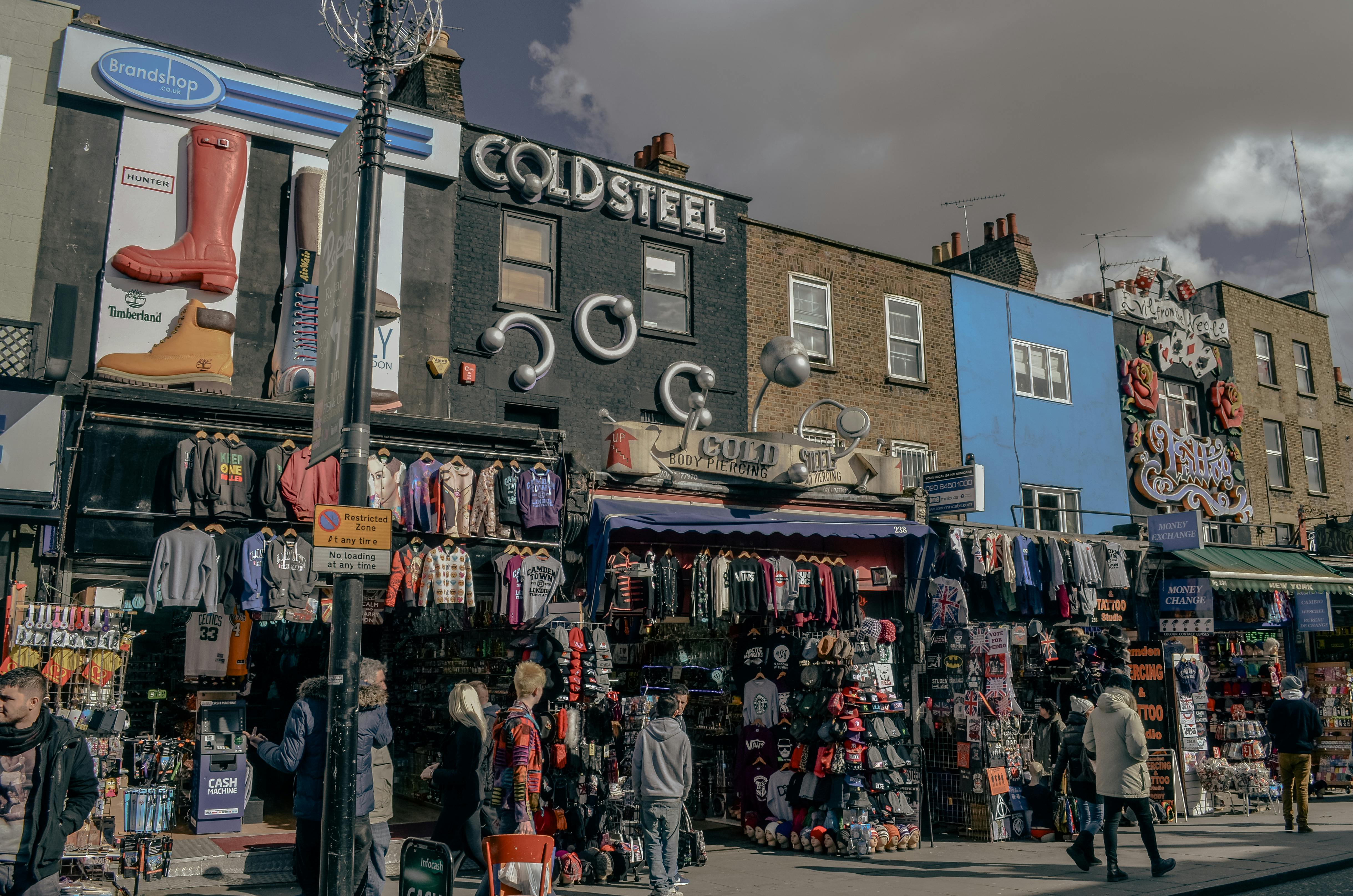
Most visitors think they are coming to one market. They aren't. Camden Market is a chain of adjoining spaces layered across old yards, warehouses, tunnels, and stables, where the borough's canal age, railway age, and subcultural age sit almost on top of each other.
The place works best when you look down as much as up. Cast-iron grilles cut across the road surface, cobbles dip under brick vaults, and horse motifs stop being decorative once you realise hundreds of animals once hauled freight through this site, long before punk boots and vintage leather took over.
And yes, parts of it are overrun. Go anyway. Few places in London show the city's talent for turning industrial leftovers into something loud, profitable, contested, and still oddly alive with such little shame about the seams.
Best Things To Do in London England 4K
Island Hopper TVWhat to See
Camden Lock
Camden began here in 1974 with 16 traders beside Regent’s Canal, and the original setting still does half the work: water slapping the lock gates, metal railings cold under your hand, steam from food stalls drifting over the towpath. Come for the little mechanical drama of the lock itself, then stay long enough to watch the light bounce off the canal and up onto the brickwork, because Camden makes more sense when you see that its swagger grew out of a working waterway, not a branding exercise.
Stables Market
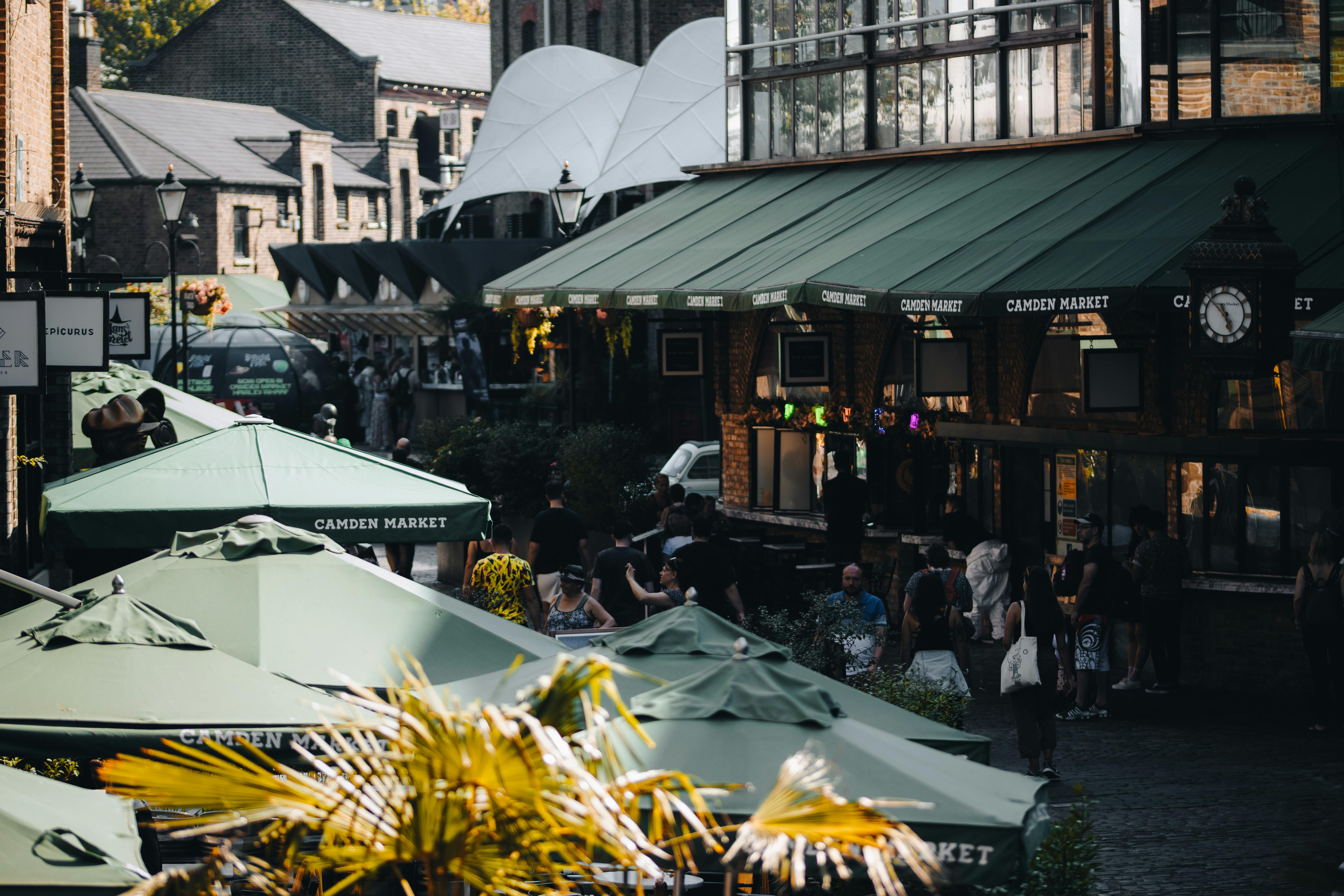
Stables Market looks theatrical until you remember it was built for labor, not mood: Victorian horse hospital blocks, cobbled yards, and viaduct arches shaped by animals hauling freight before the last shunting horse left in 1967. Walk slowly. The cobbles knock at your shoes, the passages tighten and open again, and the place stops feeling like a shopping district and starts reading as industrial London with its eyeliner still on.
Follow the Horse Tunnels
The best combined experience is to move from the open canal edge into the tunnel-linked back passages, especially around Horse Tunnel Market, where the air cools, voices thicken under the ceiling, and daylight arrives in slices rather than sheets. Look down for the cast-iron grilles set into the road above: records from Camden Market’s own history note that these openings brought the only light to horses below, a detail so odd and specific that it changes Camden from a good market into a place with a memory.

Photo Gallery
Explore Camden Market in Pictures

A view of Camden Market, London, United Kingdom.
Mark Ahsmann · cc by-sa 3.0

Diners fill the long tables beneath Camden Market's metal canopy, with brick shopfronts and food stalls packed closely around them. The overcast light gives the scene its familiar north London grit.
Mario Sánchez Prada · cc by-sa 2.0

A view of Camden Market, London, United Kingdom.
Jim Linwood · cc by 2.0

A view of Camden Market, London, United Kingdom.
Jim Linwood · cc by 2.0

A view of Camden Market, London, United Kingdom.
Mark Ahsmann · cc by-sa 3.0

A view of Camden Market, London, United Kingdom.
Jim Linwood · cc by 2.0

A view of Camden Market, London, United Kingdom.
Jim Linwood · cc by 2.0

A view of Camden Market, London, United Kingdom.
Jim Linwood · cc by 2.0

A view of Camden Market, London, United Kingdom.
Jim Linwood · cc by 2.0

A view of Camden Market, London, United Kingdom.
Tony Hisgett from Birmingham, UK · cc by 2.0

A view of Camden Market, London, United Kingdom.
Tony Hisgett from Birmingham, UK · cc by 2.0

A view of Camden Market, London, United Kingdom.
oatsy40 · cc by 2.0
Videos
Watch & Explore Camden Market
Best Things To Do in London England 4K
TOP 10 Best Places to Visit in LONDON 2024 - Travel Guide
Visitor Logistics
Getting There
Camden Market spreads along Camden Lock Place, Chalk Farm Road, and Hawley Wharf in NW1, so your arrival point changes the mood of the visit. Camden Town Underground on the Northern line is the closest at about 5 minutes on foot via Camden High Street to the lock; Chalk Farm is about 10 minutes south along Chalk Farm Road to the Stables; Camden Road Overground is about 8 minutes and is the best step-free rail arrival. Buses 214 from King’s Cross, 24 from Victoria, and 274 from the West End stop nearby. Driving is a bad idea: as of 2026 the market has no dedicated car park and Camden’s controlled parking zones can turn a short stop into a paperwork hobby.
Opening Hours
As of 2026, the main Camden Market estate is open daily from 10:00am to 7:00pm, including bank holidays, though most traders keep shorter hours of roughly 10:00am to 6:00pm. Hawley Wharf Food Halls run later, 11:30am to 11:00pm every day, while Hawley Wharf retail keeps staggered hours: Monday-Wednesday 12:00pm-6:00pm, Thursday 11:00am-6:00pm, Friday-Saturday 11:00am-7:00pm, Sunday 11:00am-6:00pm. The official FAQ says the market closes only on Christmas Day.
Time Needed
Give it 60 to 90 minutes if you want the canal, a fast browse, and one food stop. Two to three hours works better for a first proper visit, and 3 to 5 hours is realistic if you want Lock, Stables, Hawley Wharf, shopping pauses, and a sit-down meal. Weekends stretch everything; a queue here can bend through lanes tighter than a single traffic lane.
Accessibility
Hawley Wharf is the easy section: step-free, lifts to all floors, accessible toilets, baby changing, and a Changing Places toilet. Lock and Stables are more mixed; much is step-free, but cobbles, uneven floors, and historic thresholds can slow wheelchair users, prams, or anyone unsteady on their feet. As of 2026, Camden Market’s own guidance points to Camden Road Overground as the closest accessible station.
Cost & Tickets
As of 2026, entry to Camden Market is free and you do not need to book for an ordinary visit. Some special events at Hawley Wharf are also free, while others use separate event pages or ticket links. Public toilets across the estate may charge a small fee; a recent official event FAQ listed 40p, but that figure appears on one page only and could change.
Tips for Visitors
Beat The Crush
Tuesday to Thursday mornings give you the best version of Camden: enough noise to feel alive, enough breathing room to actually look at things. Saturday afternoon is when the market turns into a slow shuffle and the food queues start to feel longer than the canal lock itself.
Choose Your Entrance
Use Camden Town if you want the loud first hit of signs, smells, and street theatre. Use Chalk Farm for a calmer walk into the Stables, or Camden Road if step-free access matters more than atmosphere.
Cameras Fine, Crews No
Casual photography is normal, and Camden almost seems built to be photographed: iron bridges, canal reflections, brick arches, the lot. Professional shoots or filming on market land need licensing through Camden Market’s Film Office and FilmFixer, so don’t arrive with tripods, crew gear, or commercial plans and expect a shrug.
Watch Your Phone
Crowds are the main hazard here, not menace. Police data for Camden Town showed theft from the person as the top reported crime in January 2026, so keep your phone zipped away in the busiest passages and ignore street hustles like the ball-and-cup scam or anyone pushing suspiciously cheap goods.
Eat Deeper Inside
Skip the first flashy stall by the busiest entrance and compare prices once you’re further in. For budget eats, Three Uncles at Hawley Wharf is a solid fast-casual pick; Chin Chin Labs is still the local sugar rush; for mid-range, Pick & Cheese in the Stables is more fun than it has any right to be, while Hook Camden works if you want an actual meal rather than grazing.
Pair It Properly
Camden works best as half a day, then a walk rather than a shopping marathon. Follow the Regent’s Canal after the market, head up toward Primrose Hill, or fold it into a music-heavy North London day with the Roundhouse; the market makes more sense once you treat it as a piece of London street culture, not one giant souvenir shop.
Where to Eat
Don't Leave Without Trying
LUMI Camden
cafeOrder: The salt beef sourdough and chicken waffle are local favorites; don't miss their London Fog latte.
This gem is a masterclass in brunch, offering a comfortable vibe and surprisingly generous portions that keep locals coming back.
The Lost Elephant's Kitchen
local favoriteOrder: The meaty American pancakes are an absolute must-try for a hearty start to your day.
A beautiful, welcoming space that handles the weekend rush with grace, providing consistently tasty food and exceptionally kind service.
Best restaurant in Camden
local favoriteOrder: Their signature pizzas are highly recommended for a consistent and high-quality meal.
Known as a top-tier spot for birthdays and casual dinners, it offers a reliable menu that consistently pleases everyone in the group.
Fabler Bakery Camden
cafeOrder: The fresh fruit and breakfast formulas are well-presented choices for a morning bite.
A charming, cozy spot decorated with care, perfect for those who appreciate a well-plated breakfast and friendly service in the heart of Camden.
Dining Tips
- check London is largely cashless; rely on contactless cards, Apple Pay, or Google Pay.
- check A discretionary service charge of 12.5% is commonly added to bills; if included, you do not need to tip extra.
- check Tipping is not customary at pubs when ordering at the bar.
- check The standard tip for table service is 10%, or up to 15% for exceptional service.
- check Camden Market food halls are open daily from 11:30am to 11pm.
Restaurant data powered by Google
History
Trade Never Really Left
Camden's deepest continuity is not architectural style or subculture. It is exchange. Records show this stretch beside the Regent's Canal worked as a transfer point from the 1830s onward, first for freight moving between canal boats, railway wagons, carts, vaults, and stables, then for small traders selling craft, fashion, food, and music to anyone willing to squeeze through the lanes.
What changed was the cargo. By 1849, Historic England records 427 horses working the depot, and later totals rose to around 700 or 800, a living engine on a footprint dense as a small village. Today the animals are gone, but the habit remains: goods arrive, people browse, money changes hands, and Camden keeps performing its old job as a place where London comes to trade.
The Market That Pretended to Be Temporary
At first glance, Camden Market looks like a natural outgrowth of Camden Town's alternative reputation, as if punk, crafts, and canal-side chaos simply found their proper home here. Doubt creeps in when you look at the dates. Records show the freight infrastructure came first by more than a century, and even the market's own origin story wobbles between a Sunday arts-and-crafts fair and a Saturday antiques market in 1974.
The turning point belongs to Dr. Bill Fulford, who with Peter Wheeler bought the derelict Dingwalls timber-yard site in 1972 while a proposed urban motorway still cast a shadow over the area. What was at stake for Fulford was simple and personal: if the road scheme survived or the council lost patience, his experiment in workshops, music, and market stalls could be wiped away as a temporary inconvenience. Instead, the market opened with 16 traders on 30 March 1974, documented by official Camden Market history, and the temporary idea outlived the road plan.
That hidden truth changes the way the place looks now. The disorder is not accidental. Camden's ramps, arches, canal edges, and reused sheds were never designed for lifestyle retail at all; they were built for movement, loading, storage, and brute work. Once you know that, every food stall and leather jacket rail feels like a new cargo in an old machine.
What Changed
The Victorian depot linked canal, rail, and road on an industrial scale; records show Robert Stephenson chose Camden's goods terminus in 1839 because freight could move from wagons to boats and then on to the docks. That system died slowly through the 20th century, with the last shunting horse attributed to 1967 and the goods depot closing around 1980. Then came the other Camden story: Dingwalls, punk, goth fashion, street food, fires in 2008, 2014, and 2017, and the glossy Hawley Wharf redevelopment that replaced part of the old roughness with terraces and chain-friendly confidence.
What Endured
Trade endured, and so did performance. The goods are lighter now and the soundtrack louder, but the site still runs on circulation: people arriving by bridge, towpath, rail, and street; sellers improvising displays in inherited spaces; visitors treating shopping as a spectator sport. Even the old horse world lingers in plain sight. Historic England confirms the Stables Yard and horse hospital were built for working animals in the 1850s and 1880s, so when you pass under those brick arches you are still moving through a transport system that refused to disappear.
The fate of Camden's surviving vaults and horse tunnels remains unsettled. Parts of the so-called Camden Catacombs survive, parts are blocked or flooded, and the harder question still hangs in the air: how much of that underworld can be opened or interpreted without sanding Camden into just another heritage product?
If you were standing on this exact spot on 9 February 2008, you would hear timber crack and gas canisters popping above the shouts of firefighters. Smoke rolls over the canal as flames race through the market roofs, orange against the winter dark, and the air tastes of burnt wood, melted plastic, and panic. More than 100 firefighters and 20 engines close in while Camden watches one of its own myths catch fire.
Listen to the full story in the app
Your Personal Curator, in Your Pocket.
Audio guides for 1,100+ cities across 96 countries. History, stories, and local insight — offline ready.
Audiala App
Available on iOS & Android
Join 50k+ Curators
Frequently Asked
Is Camden Market worth visiting? add
Yes, especially if you like places that still show their working bones. Camden is less one market than a stitched-together sprawl of canal edges, brick arches, cobbles, and former horse infrastructure, so the pleasure is not just shopping but feeling Victorian freight space turned inside out. Go for the lock, the Stables, the food, and the people-watching; skip the idea that every stall is original or cheap.
How long do you need at Camden Market? add
Give it 2 to 3 hours for a first visit, and closer to half a day if you want to browse properly and eat well. An hour disappears fast once you start crossing between Camden Lock, the Stables, and Hawley Wharf, which together feel more like a small district than a single attraction. Weekend queues can stretch the visit, especially around lunch.
How do I get to Camden Market from London? add
The easiest route is the Northern line to Camden Town, then a 5-minute walk to Camden Lock Place. Chalk Farm is about 10 minutes on foot and often less hectic, while Camden Road Overground is about 8 minutes away and is the better call if step-free access matters. Buses also work well: Camden Market highlights the 214 from King’s Cross, the 24 from Victoria, the 274 from the West End, and the 393 from East London.
What is the best time to visit Camden Market? add
Weekday mornings, especially Tuesday to Thursday, are your best bet. The market opens from 10:00am daily, and early hours give you room to notice the cast-iron grilles, canal light, and stable-yard geometry before the crowds thicken and the narrow passages start moving at the pace of a slow escalator. Saturday afternoon is the opposite.
Can you visit Camden Market for free? add
Yes, general entry to Camden Market is free. You only pay for what you eat, drink, or buy, though some toilets may charge a small fee and special events can have their own booking rules. For ordinary visiting, you can simply walk in.
What should I not miss at Camden Market? add
Don’t miss the Stables Market, the canal-side views at Camden Lock, and the old horse-tunnel traces under your feet. The sharpest detail in the whole place is easy to miss: cast-iron grilles set into the ground that once brought light down to horses working below, a small clue that this was a freight machine long before it became a place for noodles, vinyl, and leather jackets. Also look for the abrupt shift from open canal glare to tunnel dimness; that change in light is half the point.
Sources
-
verified
Camden Market
Used for the market’s 1974 founding, its identity as a cluster of market areas, and the overall character of Camden Market today.
-
verified
Camden Market Visit Us
Used for current opening hours, nearest stations, walking times, and bus routes.
-
verified
Camden Market FAQ: What is Camden Market
Used to confirm that general entry to Camden Market is free and to support the market-wide overview.
-
verified
Camden Market FAQ: When are you open
Used for the trader-hours nuance and the note that restaurants may stay open later.
-
verified
Camden Market FAQ: How do I get to Camden Market
Used for official walking directions from stations and practical arrival advice.
-
verified
Camden Market FAQ: Is Camden Market accessible
Used for step-free access guidance and the note about cobbles and uneven historic surfaces.
-
verified
Camden Market Journal: The Ultimate Camden Market Itinerary
Used for realistic visit lengths and how long to allow on a first trip.
-
verified
The Empty Nest Explorers
Used for crowd patterns, weekday-morning timing advice, and half-day practical pacing.
-
verified
Camden Market Journal: The Life of a Camden Horse
Used for the horse-tunnel history, the cast-iron grilles, and the industrial backstory beneath the market.
-
verified
Camden Market Journal: Stables Market
Used for the character of the Stables area and why it is the market’s most distinctive section.
-
verified
Camden Market Journal: Camden Lock
Used for the canal-side atmosphere and the importance of Camden Lock within the wider market.
-
verified
Historic England
Used for verified history of the Horse Hospital and the working-horse infrastructure that shaped the Stables area.
-
verified
Historic England
Used for verified history of the canal-rail interchange and the industrial fabric underlying the market.
-
verified
Visit London
Used as a secondary current visitor source to support the market overview and free-entry status.
Last reviewed: