Plan and listen to Bt Tower with Audiala.
Audio guide in your pocket, itinerary in your browser. Built for the way you actually visit.
Introduction to BT Tower London
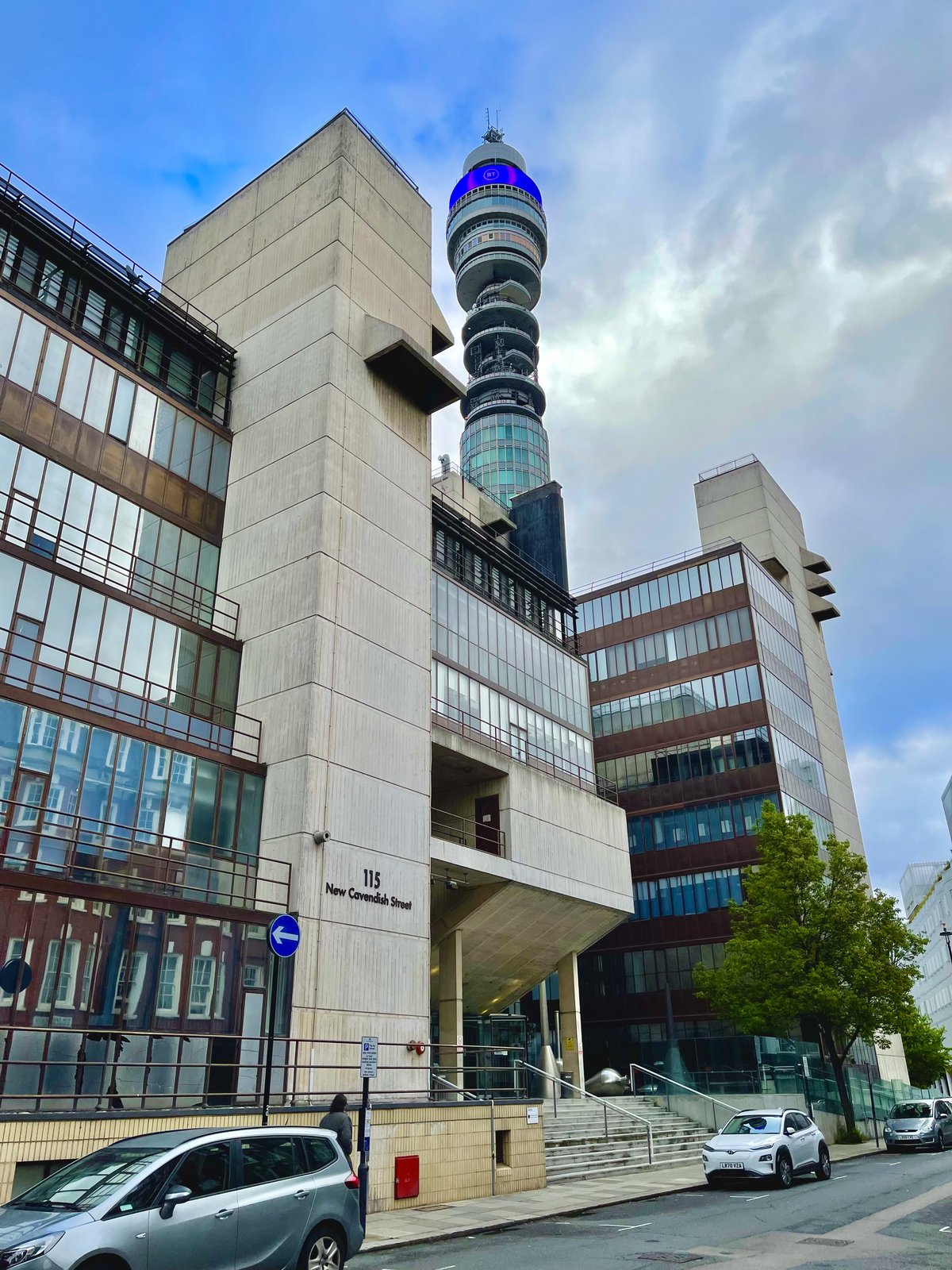
The BT Tower is one of London’s most striking landmarks, renowned for its unique cylindrical silhouette and pivotal role in Britain’s communications history. Constructed in the early 1960s to facilitate the nation's expanding microwave radio relay network, the tower has long symbolized technological progress and architectural ambition. Rising 177 meters above Fitzrovia, it was once the tallest building in London and a beacon of post-war optimism. While public access has been largely restricted since the early 1980s due to security concerns, the BT Tower remains a sought-after destination—especially during rare special events such as Open House London.
This guide provides an in-depth look at the BT Tower’s origins, design, cultural significance, visiting protocols, ticketing, accessibility, and future prospects following its acquisition by MCR Hotels. Whether you are a history enthusiast, architecture admirer, or simply a curious visitor, this article will equip you with everything you need to know for a meaningful BT Tower experience (Science Museum; Londonist; IanVisits; Buildington).

Origins and Engineering
Historical Purpose
Originally conceived in the late 1950s, the BT Tower—then known as the Post Office Tower or GPO Tower—was built to anchor the UK’s new microwave radio relay system. The General Post Office selected its central Fitzrovia site to maximize line-of-sight for microwave communication, replacing a smaller steel lattice structure that had become inadequate as London’s skyline grew (Science Museum; Wikipedia).
Engineering Feats
Construction began in 1961, with the design led by Eric Bedford and G. R. Yeats. The tower’s robust foundation includes beams sunk 53 meters into London clay, topped by a massive concrete platform. Its reinforced concrete core ensures stability, with the ability to sway up to 25 centimeters in high winds—critical for maintaining microwave transmission accuracy (Art-Facts).
Architectural Significance
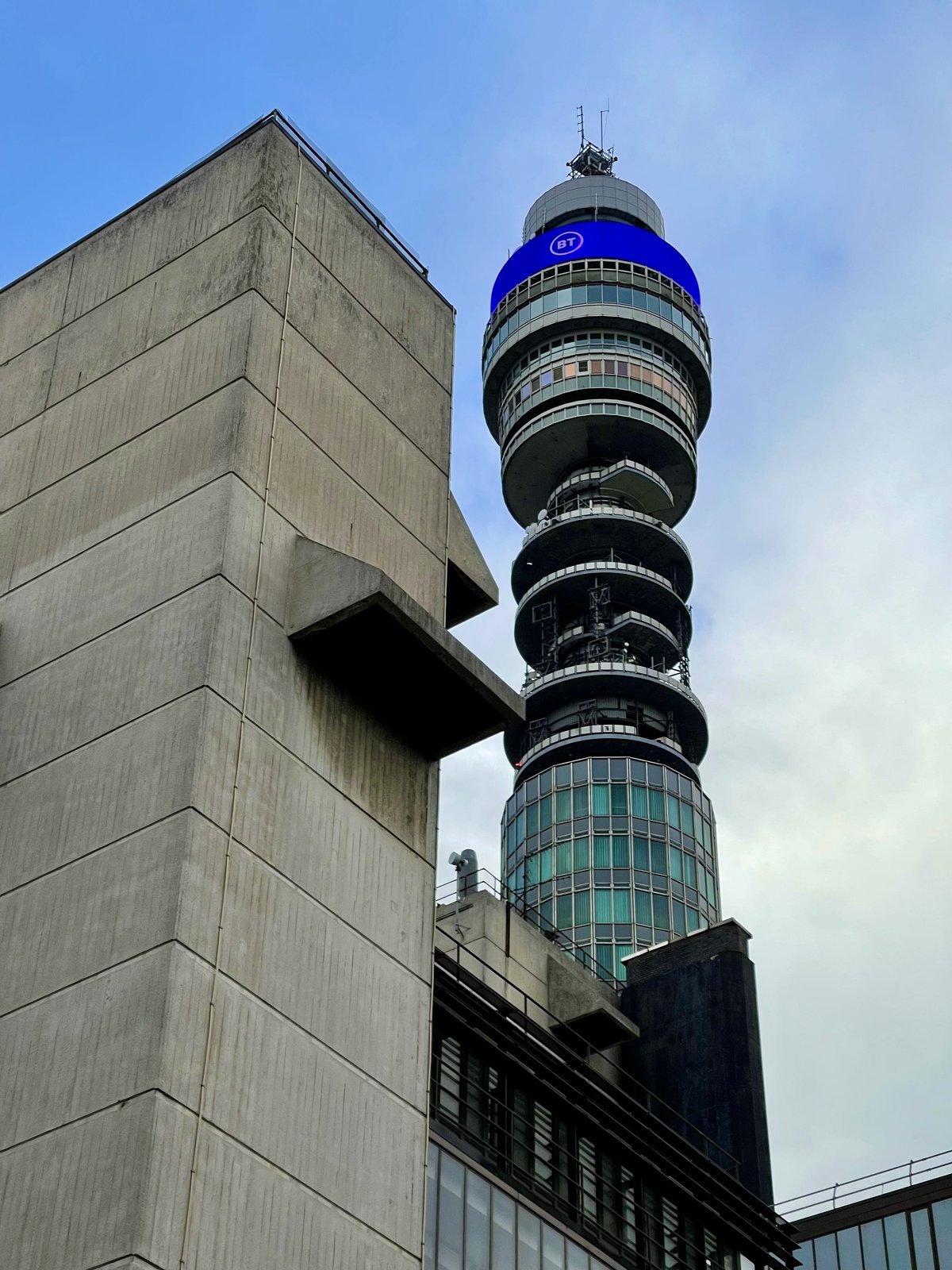
The BT Tower’s slender, glass-clad cylinder was intentionally designed for stability and to minimize wind resistance. This form also provided optimal support for the large microwave dishes originally arrayed around its upper levels. Upon completion in 1964, it stood as London’s tallest building, surpassing the Millbank Tower, and held this title until 1980. In 2003, it received Grade II listed status for its engineering and historical significance, ensuring architectural protections into the future (Britannica; Buildington; Retrospect Journal).
Role in National Communications
The BT Tower was a linchpin in the UK’s microwave relay network, handling telephone, television, and government communications. Its height and centrality enabled direct links to key stations across London and beyond. During the Cold War, the tower was integral to the “Backbone” secure communications network, designed to withstand potential nuclear threats. The tower’s address was classified under the Official Secrets Act, omitted from maps until the 1990s (Science Museum; Retrospect Journal).
Although fiber optics have since replaced much of the original microwave system, as of 2020, the BT Tower still played a major role in UK broadcasting infrastructure, including the relay of live sports and national TV content (Science Museum).
Public Access and Visiting Hours
Historic Public Access
When opened by Prime Minister Harold Wilson in 1965, the BT Tower was a major attraction, featuring public viewing galleries and the “Top of the Tower” revolving restaurant. This restaurant, on the 34th floor, completed a full rotation every 22 minutes and offered panoramic views (Buildington; Day Out Hub).
Current Access Status
Due to a bomb attack in 1971 and subsequent security concerns, public access was withdrawn in 1980. Today, entry is limited to BT staff, private events, and rare occasions such as the annual Open House London festival, when tickets are distributed via a ballot (IanVisits; Secret LDN). There are no regular visiting hours; special events are announced annually.
Tickets and Visiting Process
The only way for the general public to visit the BT Tower is through special events like Open House London or charity climbs. Tickets are free but allocated by lottery due to high demand. For up-to-date information, monitor the Open House London website and relevant local event listings. Occasionally, private bookings or corporate events are possible, but these usually require an invitation or special arrangement (IanVisits).
Accessibility and Travel Tips
Getting There
- Location: 60 Cleveland Street, Fitzrovia, London, W1T 4JZ
- Nearest Underground Stations: Warren Street (Northern, Victoria lines), Goodge Street (Northern line), Euston Square (Circle, Hammersmith & City, Metropolitan lines), Oxford Circus (Bakerloo, Central, Victoria lines)
- Bus Routes: Several serve the area
- Parking: Limited; public transport recommended (Britain All Over)
Accessibility
While the BT Tower is equipped with elevators, some areas may not be fully accessible for visitors with mobility needs, particularly during special events. Always confirm accessibility details when booking.
Nearby Attractions and Photographic Spots
Fitzrovia is a vibrant district with easy access to:
- The British Museum
- Regent’s Park
- Soho and Covent Garden
- Oxford Street
- Russell Square
For photography, top spots include:
- Regent’s Park (especially Primrose Hill)
- Blackfriars Bridge
- Tottenham Court Road
- Local rooftops in Fitzrovia
Evening visits are ideal for capturing the illuminated “infoband” LED display (British Telephones).
Cultural Impact
From its inception, the BT Tower embodied the “white heat of technology” spirit of the 1960s. Its futuristic form featured in films, TV idents, and postcards, and its revolving restaurant was a symbol of London’s cosmopolitan flair. The tower has since become a heritage landmark, beloved by Londoners and visitors alike (IanVisits; Londonist).
Security and Restricted Access
After the 1971 bombing by the Angry Brigade, public access was curtailed for safety. The restaurant closed in 1981, and access has since only been possible through occasional special events with strict security protocols. Visitors during these events must present valid ID and comply with bag checks (Britannica; Art-Facts).
Technological Evolution
The BT Tower has evolved with communications technology. In the early 2000s, the original external microwave dishes were removed, and a 360-degree LED “infoband” display was installed, broadcasting news and event messages across the city. The tower now supports digital infrastructure and remains a protected listed building (Wikipedia; Art-Facts).
Heritage Status and Future
In 2003, the BT Tower was granted Grade II listed status, protecting its architectural integrity. In 2024, it was sold to MCR Hotels, with plans to convert it into a luxury hotel while retaining its iconic form. The redevelopment, designed by Heatherwick Studio, aims to reopen parts of the tower to the public, creating new opportunities for engagement and appreciation (Buildington; Travel and Tour World; Design Times; BBC).
Frequently Asked Questions (FAQ)
Q: Can the public visit the BT Tower?
A: Only during special events like Open House London, with tickets allocated by ballot.
Q: How do I get tickets?
A: Register for the Open House London ballot or monitor official event announcements (IanVisits).
Q: Is the BT Tower accessible for those with disabilities?
A: Some areas may be accessible, but check with event organizers for details.
Q: Where is the BT Tower located?
A: 60 Cleveland Street, Fitzrovia, London, W1T 4JZ.
Q: What are the best nearby places to visit?
A: British Museum, Regent’s Park, Soho, Covent Garden, and Oxford Street.
Practical Tips for Your Visit
- Apply early for special event tickets
- Bring government-issued photo ID
- Arrive early for security checks
- Dress appropriately; upper floors can be breezy
- Check accessibility if needed
- Use public transport for convenience
- Plan to explore Fitzrovia and nearby attractions
Listen to the full story in the app
The whole Bt Tower,
told well.
Audio guides for 1,100+ cities across 96 countries. History, stories, and local insight — offline ready.
Verified, and shown.
Researched and written by the Audiala editorial team from historical records, architectural archives, and local expertise.
Researched from Wikidata, Wikipedia & official sources · fact-checked · How we make our guides →