Introduction: Exploring London’s Astronomical Heritage
The Royal Observatory Greenwich stands as a testament to humanity’s quest to understand time, navigation, and the cosmos. Founded in 1675 by King Charles II, it played a pivotal role in the advancement of astronomy and navigation, culminating in the adoption of the Greenwich Prime Meridian and the world’s standardization of Greenwich Mean Time (GMT). Today, the site offers visitors the chance to explore historic instruments, stand astride the Prime Meridian, and engage with immersive planetarium experiences (Royal Observatory Greenwich History; Space.com).
In parallel, the Bishop Observatory—established in 1836 by George Bishop near Regent’s Park—left a significant legacy in the field of double star and minor planet research, shaping the development of British astronomy (georgebishopjr.com). Though the original Bishop Observatory no longer exists, its spirit endures through historical research and innovative pop-up art installations in London, such as the Bishop Observatory immersive experience, which fuses technology, wellness, and public engagement (Experience UK; Secret London).
This comprehensive guide details the history, visitor information, and unique experiences offered by both the Royal Observatory Greenwich and the Bishop Observatory’s legacy, ensuring you make the most of your visit to these remarkable London sites.
The Royal Observatory Greenwich
Historical Significance and Scientific Achievements
Foundation and Purpose
Established by royal decree in 1675, the Royal Observatory Greenwich aimed to solve the longitude problem plaguing maritime navigation. Under the leadership of the first Astronomer Royal, John Flamsteed, the Observatory catalogued thousands of stars, providing essential data for navigation and laying the foundations for modern astronomy (Royal Observatory Greenwich History; Space.com).
The Longitude Problem and Marine Chronometer
The 18th-century “longitude problem” motivated the Board of Longitude (established in 1714) to seek practical solutions. John Harrison’s revolutionary marine chronometer, tested and certified at Greenwich, enabled accurate determination of longitude at sea. Contributions from Nevil Maskelyne, such as lunar distance tables and star charts, further advanced navigation (Avi-8; Cosmic Astra).
Prime Meridian and Greenwich Mean Time
In 1884, the International Meridian Conference designated Greenwich as the Prime Meridian (0° longitude), solidifying its role in global navigation and the establishment of GMT as the world’s time standard (Clock Wiki; Cosmic Astra).
The Greenwich Time Ball
Since 1833, the red Time Ball atop the Octagon Room has dropped daily at 1:00 pm, providing a visual time signal for ships on the Thames—a practice that set a global standard for public timekeeping (Greenwich World Heritage).
Scientific Instruments and Innovations
The Observatory houses a world-class collection of astronomical clocks, telescopes—including the Great Equatorial Telescope—and John Harrison’s marine chronometers. It served as Britain’s national center for timekeeping innovation throughout the 19th century (Greenwich World Heritage).
Modern Role
Though scientific operations relocated due to light pollution (to Herstmonceux in 1948, later Cambridge), the Greenwich site is now a museum and education center, featuring permanent galleries, interactive exhibits, and the Peter Harrison Planetarium (Nomadic Matt). It is a UNESCO World Heritage Site renowned for its cultural and scientific significance.
Visiting Hours, Tickets, Tours, and Accessibility
- Visiting Hours: Daily 10:00 am – 5:00 pm (last admission 4:15 pm). Hours may vary for holidays; verify via the official website.
- Tickets: Adult tickets approx. £16; discounts for children, seniors, and families. Planetarium shows require a separate ticket (~£10).
- Tours: Guided tours and educational programs available; advance booking recommended, especially during special events.
- Accessibility: Wheelchair-accessible site and facilities; nearest transport is Cutty Sark DLR station.
- Travel Tips: Arrive early for the Time Ball drop; combine with visits to the Cutty Sark and Greenwich Park.
Key Attractions and Events
- Prime Meridian Line: Stand with one foot in each hemisphere—a classic Greenwich photo opportunity.
- Historic Instruments: See Harrison’s chronometers and the Great Equatorial Telescope.
- Time Ball Drop: Observe this historic event at 1:00 pm daily.
- Planetarium Shows: Experience immersive astronomy at London’s only public planetarium.
- Special Events: 2025 marks the 350th anniversary with talks, workshops, stargazing, and the Astronomy Photographer of the Year exhibition (Visit Greenwich).
FAQs
- Q: When is the Observatory open?
A: Daily 10:00 am – 5:00 pm; check official site for holiday hours. - Q: How much are tickets?
A: Around £16 for adults; discounts available. Planetarium shows are extra. - Q: Are tours offered?
A: Yes, with advance booking recommended. - Q: Is the site accessible?
A: Yes, including wheelchair access. - Q: How do I get there?
A: Use Cutty Sark DLR and follow signs through Greenwich Park.
Bishop Observatory: Legacy and Modern Experience
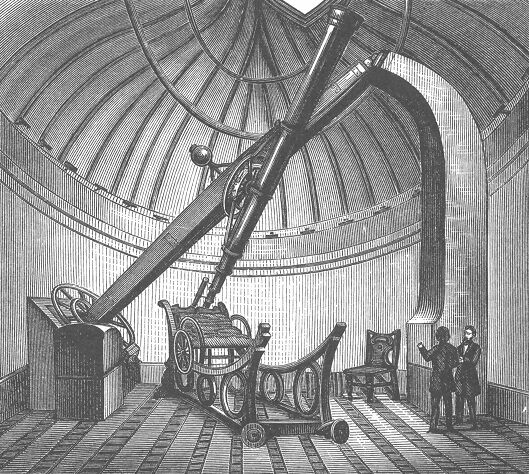
Founded in 1836 by George Bishop near Regent’s Park, Bishop Observatory (also known as George Bishop’s Observatory) became a leading center for double star and minor planet research. Its 7-inch Dollond refractor enabled discoveries by astronomers such as William Rutter Dawes (double stars) and John Russell Hind and Albert Marth (eleven minor planets, 1847–1854). The observatory fostered collaborations with prominent figures, including Eduard Vogel and Norman Robert Pogson (georgebishopjr.com).
Timeline Highlights
- 1836: Observatory established.
- 1839–1844: Dawes’ double star research.
- 1845: Asteroid Astræa discovery prompts minor planet search.
- 1847–1854: Eleven minor planets discovered.
- 1861: Observatory ceases operations; instruments later moved and donated to Italy.
Visiting the Regent’s Park Site
- Current Status: The original building is gone; the site is within Regent’s Park (Inner Circle) and now part of Regent’s College London.
- Access: No observatory remains or public tours exist, but the park is open daily from 5:00 am until dusk (Royal Parks).
- Nearby Attractions: Queen Mary’s Gardens, ZSL London Zoo, Baker Street museums.
- Stargazing: Join Baker Street Irregular Astronomers for public astronomy events (Londonist).
Bishop Observatory Pop-Up: Art, Technology, and Wellness
Reimagining the concept of an observatory, the Bishop Observatory pop-up at 56 Old Broad Street offers immersive art experiences focused on mindfulness and mental health.
Interactive Installations
- Harmony 2.0: EEG headsets capture participants’ brainwaves, generating live visuals and culminating in guided group meditation (Experience UK; Secret London).
- Soul Paint: Technology transforms visitors’ emotions into visual art, offering a personal creative journey.
Visiting Hours and Booking
- Hours: Typically open January, 10:00 am – 6:00 pm; check event pages for annual details.
- Tickets: Free but limited; book online in advance. Donations to CALM (Campaign Against Living Miserably) are encouraged.
- Accessibility: Wheelchair accessible; contact the venue for specific needs.
Location and Transport
- Located at 56 Old Broad Street, near Liverpool Street and Bank Underground stations.
- Easily combined with other central London attractions.
FAQs
- Q: When is the pop-up open?
A: Usually January, 10:00 am – 6:00 pm; check event sites for dates. - Q: Is admission free?
A: Yes, but book in advance; donations welcome. - Q: Can I take photos?
A: Yes, but no flash during meditation sessions.
Practical Visitor Information
Accessibility and Travel Tips
- Royal Observatory Greenwich: Fully accessible, with clear signage and step-free access. Use public transport for convenience.
- Regent’s Park (Bishop Observatory site): Paved paths, accessible restrooms, and step-free areas.
- Bishop Observatory Pop-Up: Wheelchair accessible; contact in advance for specific accommodations.
Nearby Attractions
- Greenwich: National Maritime Museum, Cutty Sark, Greenwich Park.
- Regent’s Park: Queen Mary’s Gardens, ZSL London Zoo, Sherlock Holmes Museum.
- City of London: Tower of London, St. Paul’s Cathedral, vibrant markets.
Amenities
- Cafés and restrooms at both Greenwich and Regent’s Park.
- Astronomy-themed souvenirs available at the Royal Observatory Greenwich shop.
Visual Highlights
 Alt text: Historic 7-inch Dollond refractor telescope from Bishop Observatory, London
 Alt text: Exterior view of the Royal Observatory Greenwich, a major astronomy attraction in London
Listen to the full story in the app
Your Personal Curator, in Your Pocket.
Audio guides for 1,100+ cities across 96 countries. History, stories, and local insight — offline ready.
Audiala App
Available on iOS & Android
Join 50k+ Curators
Sources
- verified
- verified
- verified
- verified
- verified
- verified
- verified
Last reviewed: