Plan and listen to Liverpool Metropolitan Cathedral with Audiala.
Audio guide in your pocket, itinerary in your browser. Built for the way you actually visit.
Introduction
Situated atop Mount Pleasant in Liverpool’s city centre, the Liverpool Metropolitan Cathedral—officially the Metropolitan Cathedral of Christ the King—is an iconic symbol of modern faith, resilience, and architectural ambition. As the largest Catholic cathedral in Britain, it serves as both a spiritual heart for the city’s Catholic community and a striking modernist landmark. This comprehensive guide explores the cathedral’s history, architectural highlights, visiting hours, ticketing details, accessibility, events, and practical travel tips, ensuring a rewarding experience for every visitor. For the latest updates, always consult the official Liverpool Metropolitan Cathedral website, and for historical context, resources such as Historic England and Only in Liverpool are invaluable.

Historical Background
Early Aspirations and Catholic Emancipation
The cathedral’s story begins in the 19th century, during a period of Catholic emancipation and the arrival of many Irish immigrants in Liverpool. With the Catholic population expanding rapidly, there was a growing need for a grand place of worship. Initial efforts in the 1850s to establish a cathedral met with financial and logistical obstacles. However, with Liverpool’s elevation to an Archdiocese in 1911, the vision for a metropolitan cathedral gained renewed momentum (Historic England).
The Lutyens Era: Monumental Vision
In 1930, Archbishop Richard Downey secured the site of the former Brownlow Hill workhouse for the future cathedral. Sir Edwin Lutyens, a celebrated British architect, was commissioned to design a vast classical edifice, intended to rival St. Peter’s Basilica in Rome. Construction commenced in 1933, focusing on the crypt, which was completed by 1941 in brick and Irish granite. However, World War II and subsequent economic constraints halted further progress, leaving only the crypt as a testament to Lutyens’ grand vision (Historic England).
Modernist Realization: The Gibberd Design
After the war, the need for a cathedral persisted, but a more feasible, modern design was required. In 1959, a competition was held, and Sir Frederick Gibberd’s modernist, circular plan was selected. Construction began in 1962, and the cathedral was completed in 1967. Gibberd’s design—characterized by a circular sanctuary, soaring lantern tower, and innovative use of light—embraced contemporary liturgical reforms and created a space that fostered inclusivity and community (Historic England).
Architectural and Artistic Significance
Modernist Innovation
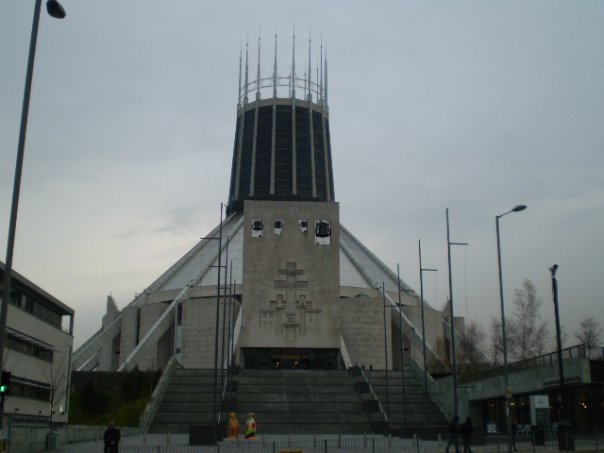
The Liverpool Metropolitan Cathedral’s circular plan—measuring 59.4 meters in diameter—and conical aluminium-clad roof represent a radical departure from traditional ecclesiastical architecture (Only in Liverpool). The altar’s central placement ensures that the congregation surrounds it, embodying the inclusive spirit of Vatican II.
The Lantern Tower and Stained Glass
Atop the conical roof sits the iconic lantern tower, designed by John Piper and Patrick Reyntiens. This feature comprises vibrant dalle de verre stained glass panels, which flood the sanctuary with kaleidoscopic light, creating a spiritual and uplifting atmosphere (Only in Liverpool).
Entrance and Approach
Visitors approach the cathedral via a grand staircase, with monumental bronze doors marking the entrance. The approach is intentionally dramatic, framing the lantern tower above (Liverpool Cycle Tours).
Interior Features
The spacious sanctuary seats up to 2,300 people, with a white marble altar beneath the lantern. Radial chapels, each with unique artworks and stained glass, provide intimate spaces for prayer (Masstime). The Lutyens Crypt below, with its brick-vaulted corridors and chapels, hosts exhibitions and events, offering a powerful contrast to the bright modern space above (Place North West).
Visitor Information
Opening Hours & Admission
- Cathedral: Monday–Saturday: 9:00 AM – 5:00 PM; Sunday: 9:00 AM – 6:00 PM (official website).
- Lutyens Crypt: Open during special tours and events; check ahead for availability.
- Admission: Free. Donations are welcome to support maintenance and community programs. Some tours and events may have a fee.
Guided Tours & Special Events
- Guided Tours: Available on weekends and by appointment; recommended to book via the cathedral website.
- Events: The cathedral hosts concerts, art exhibitions, and special liturgies throughout the year. Large events such as Christmas and Easter services are especially popular.
Accessibility & Facilities
- Step-free access and lifts.
- Accessible restrooms and hearing loops.
- Assistance for visitors with special needs is available upon request.
- Gift shop with religious items and souvenirs.
- No on-site café, but Hope Street nearby offers numerous dining options (Creative Tourist).
Travel Tips & Nearby Attractions
- Location: On Mount Pleasant, a short walk from Liverpool Lime Street Station.
- Public Transport: Well-served by buses and trains.
- Parking: Limited; public transport is recommended.
- Nearby Attractions: Anglican Liverpool Cathedral, Walker Art Gallery, St George’s Hall, Hope Street cultural quarter.
Worship, Music, & Community Events
- Services: Daily Mass and special liturgies; visitors of all faiths are welcome.
- Music: The renowned choir and organ recitals benefit from the cathedral’s excellent acoustics. Concerts span sacred and contemporary music (Liverpool Metropolitan Cathedral – News).
- Community Events: Exhibitions, lectures, and festivals—including events in the Lutyens Crypt—foster community engagement and celebrate Liverpool’s diverse culture.
Practical Visitor Tips
- Photography: Allowed for personal use (no flash or tripods during services).
- Quiet Reflection: Please respect the sacred space and maintain silence during worship times.
- Best Visiting Times: Early mornings and late afternoons tend to be quieter.
- Special Events: Some require advance tickets; consult the events calendar.
- Group Visits: Contact ahead for group arrangements or special assistance.
Frequently Asked Questions (FAQ)
Q: Are tickets required for entry?
A: Entry is free; guided tours and some events may require tickets.
Q: What are the cathedral’s opening hours?
A: Monday–Saturday: 9:00 AM – 5:00 PM; Sunday: 9:00 AM – 6:00 PM.
Q: Is the cathedral accessible for people with disabilities?
A: Yes, with step-free access, lifts, and accessible facilities.
Q: Can I take photos inside?
A: Yes, except during services; check with staff for any restrictions.
Q: Where can I eat nearby?
A: Hope Street offers a range of cafés and restaurants within walking distance.
Listen to the full story in the app
The whole Liverpool Metropolitan Cathedral,
told well.
Audio guides for 1,100+ cities across 96 countries. History, stories, and local insight — offline ready.
Verified, and shown.
Researched and written by the Audiala editorial team from historical records, architectural archives, and local expertise.
Researched from Wikidata, Wikipedia & official sources · fact-checked · How we make our guides →