Plan and listen to Liverpool Castle with Audiala.
Audio guide in your pocket, itinerary in your browser. Built for the way you actually visit.
Introduction
Liverpool Castle, though no longer standing in its original form, remains a powerful symbol of the city’s medieval heritage. Once a strategic stronghold and administrative center, the castle’s legacy is preserved through commemorative sites in Liverpool’s city center and an evocative early 20th-century replica in Lever Park, Rivington, Lancashire. This guide explores the castle’s rich history, architectural features, its role in shaping Liverpool, and provides all essential information for visitors—including visiting hours, ticketing details, accessibility, and nearby attractions. Whether you are a history enthusiast or a casual explorer, Liverpool Castle’s story offers a window into England’s medieval past and Liverpool’s transformation into a modern metropolis (Only in Liverpool; Historic Liverpool; Liverpool Echo).
Early History and Construction
Liverpool Castle was erected between 1232 and 1235 under the direction of William de Ferrers, 4th Earl of Derby, positioned on a plateau between what is now James Street and Castle Street—today marked by Derby Square (Only in Liverpool; Historic Liverpool). Its strategic location overlooking the River Mersey was chosen to defend the new port, facilitate trade, and secure England’s northwestern coast, especially for expeditions to Ireland.
The castle was fortified with a deep moat carved from solid rock, enhancing its defensive qualities. It stood as a formidable symbol of authority and a practical bastion for both military and administrative functions (The Guide Liverpool).
Architectural Features and Layout
Liverpool Castle was designed as a classic medieval fortress. Key features included:
- Five imposing towers (including a gatehouse, chapel, and prisoner tower)
- Curtain walls providing robust defense
- Moat approximately 18 meters wide
- Internal structures such as a great hall, brewhouse, bakehouse, covered well, and storage rooms
The castle’s design supported both defense and governance, with dedicated spaces for judicial proceedings and daily administration (History of Liverpool).
Role in Liverpool’s Development
The castle was integral to Liverpool’s emergence as a vital trading port, protecting the harbor and town from incursions and fostering economic growth (Only in Liverpool). It hosted important visitors, such as King Edward II in 1323, and was home to influential families like the Molyneuxs, who shaped the city’s fortunes.
Beyond military defense, the castle functioned as a seat of local governance and justice, playing a foundational role in Liverpool’s administration.
Decline, Civil War, and Demolition
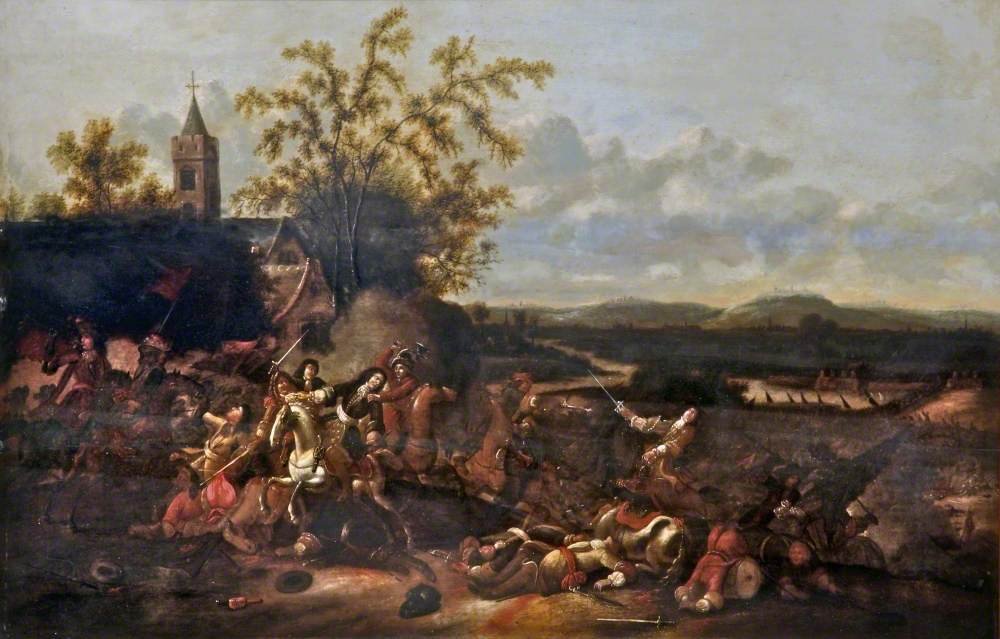
By the 16th century, Liverpool Castle had fallen into disrepair. A 1559 report described it as “utter rwyne [ruin] and decay” (Historic Liverpool). It suffered further damage and neglect during the English Civil War, changing hands between Royalist and Parliamentarian forces (Only in Liverpool).
In 1715, Liverpool Corporation ordered its demolition; by 1726, the last remnants were cleared to make way for St George’s Church. Today, a bronze plaque on the Victoria Monument in Derby Square marks the site (TravelTriangle).
Legacy and Modern Commemorations
Though the original castle has vanished, its legacy is preserved in Liverpool’s urban landscape—most notably in street names and the commemorative plaque at Derby Square. Artifacts and historical records are displayed at the Museum of Liverpool Life at Albert Dock (Only in Liverpool), and detailed reconstructions, such as those by E.W. Cox, help visualize its past (Historic Liverpool).
The Replica at Rivington: History and Visitor Guide
Location and Setting
The Liverpool Castle replica stands in Lever Park, Rivington, near Chorley, Lancashire—about a 60-minute drive from Liverpool. Commissioned by Lord Leverhulme in 1912 and left intentionally unfinished after his death in 1925, the replica was designed to evoke the romantic ruins of the original castle. It is nestled beside Rivington Reservoir, surrounded by woodland and scenic parkland, offering a tranquil contrast to the city (Liverpool Echo; Liverpool Echo).
Visiting Hours and Tickets
- Hours: Open year-round during daylight hours, typically from 9am to 6pm. There are no gates or formal opening times, but visiting during daylight is recommended for safety.
- Tickets: No admission fee or ticket is required to enter Lever Park or the Liverpool Castle replica.
Accessibility and Facilities
- Parking: Available at Rivington Reservoir Car Park and Rivington Hall Barn (charges may apply). From the car park, a well-signposted walk of 10–15 minutes leads to the castle (Liverpool Echo).
- Facilities: Toilets are located at the main car park. Rivington Hall Barn offers refreshments and a café.
- Accessibility: The path to the castle is uneven and may not be suitable for wheelchairs or pushchairs, especially in wet weather.
- Dogs: Welcome but must be kept on a lead within the ruins.
What to Expect
- Explore atmospheric, intentionally ruined towers, walls, and archways.
- Interpretive signs provide historical context for both the original and replica castles.
- The site offers excellent photography opportunities, especially at sunrise or sunset with views across the reservoir.
- Picnicking is popular in the open grassy areas, though facilities are basic.
- The surrounding Lever Park and Rivington Terraced Gardens offer additional trails and attractions.
Safety and Tips
- Do not climb on the castle walls due to safety hazards.
- Supervise children, especially around unstable structures and uneven ground.
- Wear sturdy footwear, as paths can become muddy or slippery.
- Respect the site by taking litter home and refraining from graffiti.
Frequently Asked Questions (FAQs)
Can I visit the original Liverpool Castle?
No, the original castle was demolished in the 18th century, but its site is commemorated by a plaque at the Victoria Monument in Derby Square.
Is the Liverpool Castle replica free to visit?
Yes, entry to the replica at Rivington and Lever Park is free, with no tickets required.
What are the visiting hours?
The replica is accessible year-round during daylight hours, generally 9am–6pm.
Is the site accessible for wheelchair users?
The terrain is uneven and may not be suitable for wheelchairs or pushchairs.
Are there guided tours?
No official tours are provided at the replica, but interpretive signage is available. For broader historical tours in Liverpool, see Liverpool Historical Walking Tours.
Can I bring my dog?
Yes, but dogs should be kept on a lead within the castle ruins.
Listen to the full story in the app
The whole Liverpool Castle,
told well.
Audio guides for 1,100+ cities across 96 countries. History, stories, and local insight — offline ready.

Verified, and shown.
Researched and written by the Audiala editorial team from historical records, architectural archives, and local expertise.
Researched from Wikidata, Wikipedia & official sources · fact-checked · How we make our guides →