
Kingston Bridge
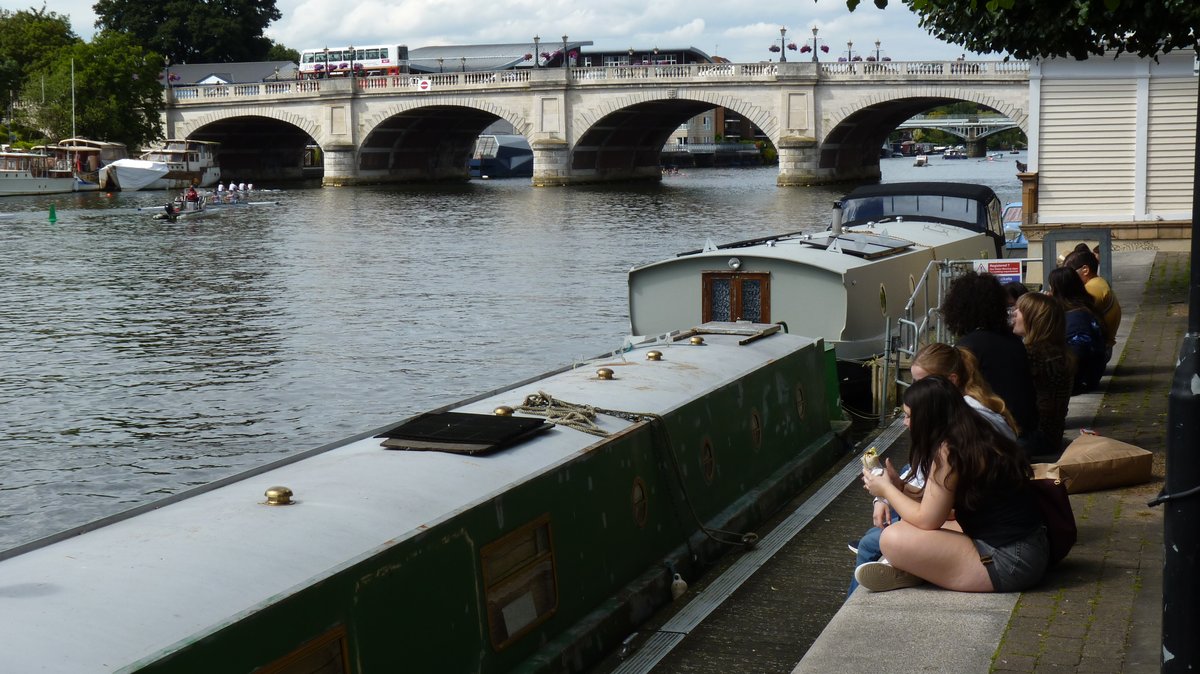
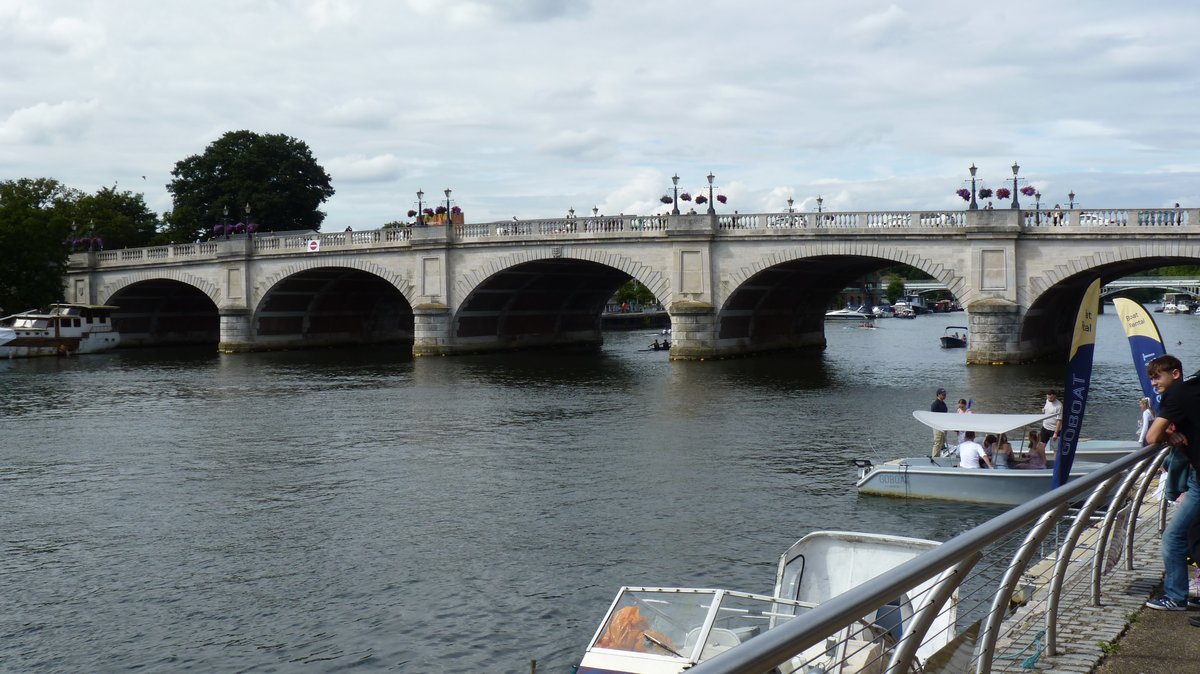
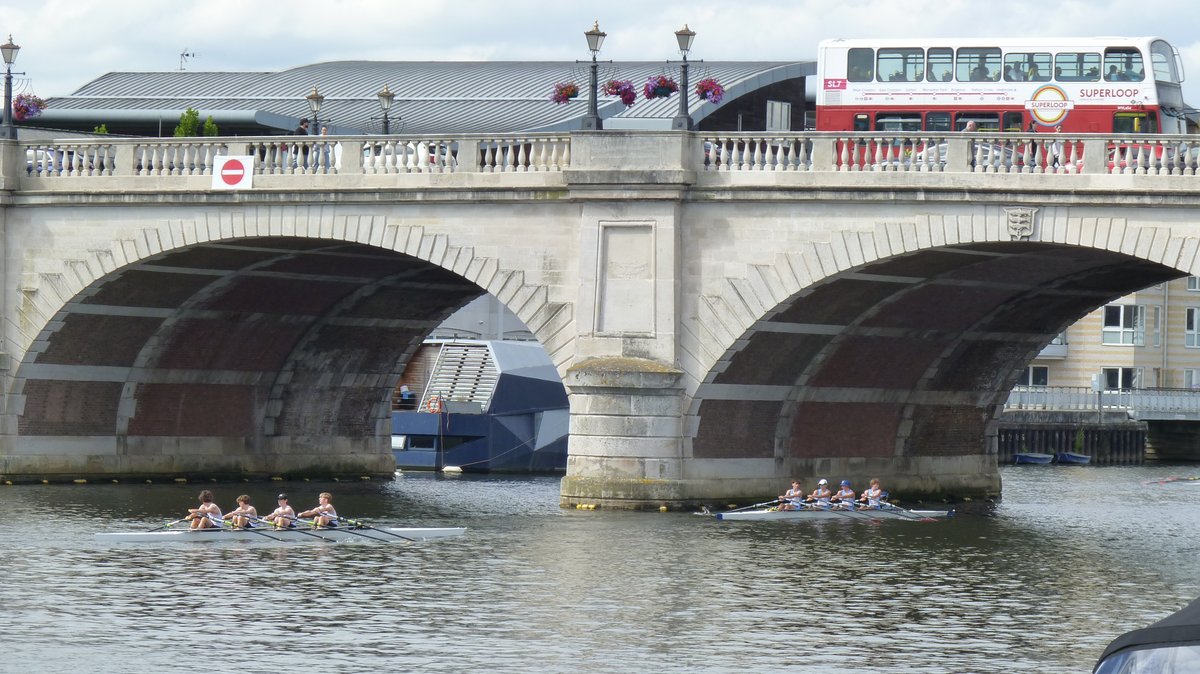
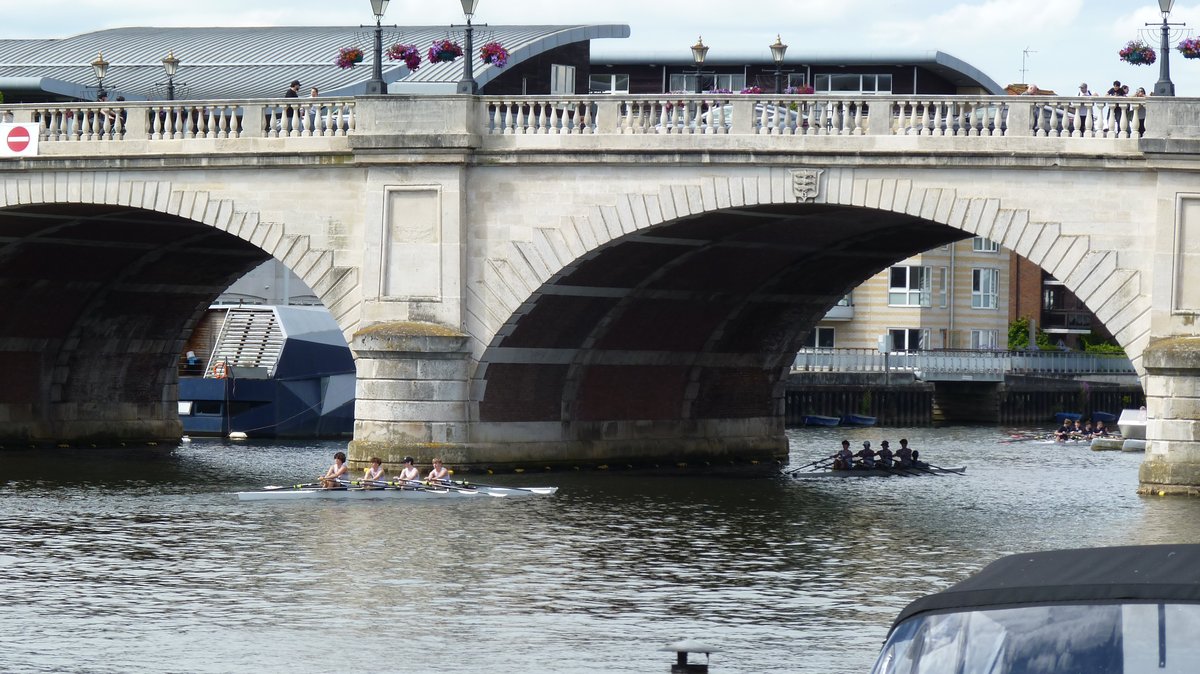
Kingston Bridge crosses the River Thames in the Royal Borough of Kingston upon Thames in southwest London. It is a Grade II* listed structure and a vital transport link, carrying approximately 50,000 vehicles per day as of 2005, with up to 2,000 vehicles per hour in each direction during peak times (Wikipedia). It is also a key pedestrian crossing.
History
Early beginnings and medieval period
According to 16th-century antiquarian John Leland, a bridge existed at Kingston during the Anglo-Saxon period, which followed Roman Britain and preceded the Norman Conquest of 1066. Leland noted that the original bridge was situated lower on the River Thames than its current location (Wikipedia).
The first documented construction of Kingston Bridge dates to the 1190s. This medieval timber bridge was the only crossing between London Bridge and Staines Bridge for over 500 years, supporting trade and travel and contributing to Kingston’s development as a market town (Kingston Nub News).
Destruction and rebuilding
In the 1300s, the bridge was described as being in a dangerous condition. It suffered significant damage during the Wars of the Roses and Wyatt’s Rebellion, leading to repeated repairs and reconstructions (Kingston Nub News).
By the early 1800s, increasing traffic and safety concerns made a new bridge necessary. After the bridge partially collapsed in 1814, a replacement was designed by Edward Lapidge. The stone bridge, 382 feet long, opened in 1828. It was opened by the Duchess of Clarence, after whom Clarence Street is named (Kingston Nub News).
Toll-free bridge
Kingston Bridge was initially a toll bridge. Following a lengthy campaign, it became toll-free on March 12, 1870. The change was celebrated with fireworks and the burning of the toll gates on Hampton Green (Wikipedia).
20th-century developments
In March 1906, London United Tramways installed tramlines on the bridge, connecting the Surrey and Middlesex routes. Trams were replaced by trolleybuses in 1931, which were subsequently replaced by diesel buses in 1962 (Wikipedia).
As traffic increased, the bridge’s narrowness became a problem. In 1911, the engineering firm Mott & Hay was contracted to widen it on the downstream side. Work carried out between 1912 and 1914 increased the carriageway from 25 feet to 55 feet. A new Portland stone façade was designed to replicate the original features, and the bridge reopened in October 1914 (Wikipedia).
Modern era and renovations
The Thames Path and the Thames Down Link long-distance footpath intersect at the bridge. In 2023, it was closed for nearly a year for major repairs costing £600,000. The restoration replaced over 230 parts of the bridge’s structure, including balustrades on both sides, and was completed in time for the King’s Coronation celebrations in the borough (MyLondon).
What to see
The bridge offers views of the River Thames and photo opportunities, particularly at sunrise and sunset. The riverside also provides a picturesque backdrop. The bridge and its surroundings host events throughout the year, including regattas and local festivals.
Visiting information
Hours, tickets and accessibility
Kingston Bridge is open 24/7 to vehicles and pedestrians. There is no charge to visit or cross, and no tickets are required.
The bridge is accessible to disabled visitors, with smooth pathways suitable for wheelchairs. The bridge and surrounding areas also have ramps and accessible pathways; many local attractions offer facilities for disabled visitors. Check the websites of individual attractions for specific accessibility information.
Getting there
- By train Kingston Station is about a 10-minute walk from the bridge. Trains from London Waterloo to Kingston run frequently and take approximately 30 minutes. For schedules, visit the National Rail website.
- By bus Routes 57, 85, 213 and 371 serve Kingston, connecting it with other parts of London and the surrounding areas. Check the Transport for London (TfL) website for routes and schedules.
- By car The bridge is accessible via the A308. Car parks in Kingston town centre include the Bentall Centre Car Park and the Rose Car Park. Parking fees and restrictions apply.
Tips
Early mornings and late evenings are suggested for avoiding peak traffic; early mornings and late afternoons are also suggested for avoiding peak tourist hours. Rush-hour traffic is heaviest between 8–10 AM and 5–7 PM.
Spring (April to June) and autumn (September to November) are described as mild seasons when the surrounding parks and gardens are in full bloom. Summer can be busy with tourists, while winter may be less crowded but colder.
London weather can be unpredictable, so carrying an umbrella or raincoat is suggested. Comfortable walking shoes are recommended for exploring on foot. Kingston is generally a safe area, but visitors are advised to stay vigilant in crowded places, secure their belongings and be aware of their surroundings. For more details, visit London in Real Life.
Nearby places
Attractions and shopping
- Hampton Court Palace A short drive or bus ride from the bridge, the palace was once the home of King Henry VIII. It has gardens, a maze and the Great Hall. Visit the Hampton Court Palace website.
- Bushy Park One of London’s eight Royal Parks, near the bridge, with open spaces, woodland, gardens and wildlife. It is a place for walks and picnics. More information is available on the Royal Parks website.
- Kingston Market Place In the town centre, the market offers fresh produce, street food and crafts. It is open daily, with special events and themed markets held throughout the year. Visit the Kingston First website.
- Shopping Kingston town centre has high-street brands, independent boutiques and the Bentall Centre shopping mall, as well as regular markets and special events.
Dining and refreshments
There are cafés and restaurants along the riverside near the bridge. The Bishop is a riverside pub serving traditional British cuisine, and Comptoir Libanais serves Lebanese dishes. The French Table, a short walk from the bridge, offers an upscale dining experience.
For picnics, riverside spots, Bushy Park and Canbury Gardens are options for an outdoor meal.
Activities and local events
- Boat trips Turk Launches offers regular services on the River Thames between Kingston, Richmond and Hampton Court. For schedules and booking, visit the Turk Launches website.
- Walking and cycling The Thames Path National Trail runs along the river and is suitable for walking or cycling. It connects Kingston with other parts of London. Bikes can be rented from several locations in Kingston, including the Kingston Cycle Hub.
- Kingston Carnival Held annually in September, the carnival features live music, dance performances, food stalls and a parade. For more information, visit the Kingston Carnival website.
- Thames River Festival This annual celebration of the River Thames usually takes place in September, with boat races, art installations and live performances. More details are available on the Totally Thames website.
FAQ
- What are the visiting hours for Kingston Bridge? It is open 24/7 to vehicles and pedestrians.
- Is Kingston Bridge accessible for disabled visitors? Yes. It has smooth pathways suitable for wheelchairs.
- Are tickets required to cross Kingston Bridge? No. The bridge is toll-free, and there is no charge to visit or cross.
- How do I get tickets for Kingston Bridge? No tickets are required.