Plan and listen to Statue Of William Henry Playfair with Audiala.
Audio guide in your pocket, itinerary in your browser. Built for the way you actually visit.
Introduction
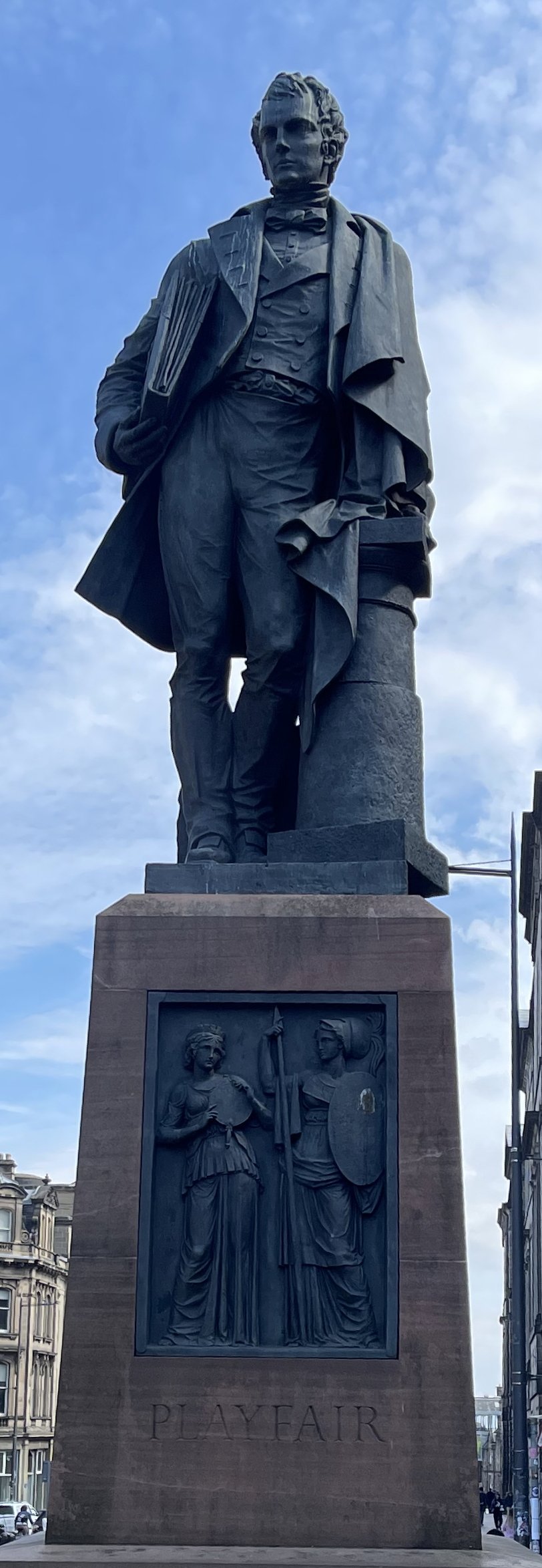
Edinburgh’s distinguished neoclassical skyline owes much to William Henry Playfair (1790–1857), a visionary architect whose works helped shape the city’s global reputation as the “Athens of the North.” The Statue of William Henry Playfair, prominently located outside the National Museum of Scotland on Chambers Street, pays tribute to his enduring influence. Sculpted by Alexander Stoddart and unveiled in 2016, the monument captures Playfair holding architectural plans, symbolizing his lifelong devotion to Edinburgh’s built heritage (Our History, University of Edinburgh; Edinburgh Expert). This guide provides detailed visiting information, historical context, accessibility, and practical tips to help you experience this essential piece of Edinburgh’s cultural landscape (Edinburgh Evening News; Edinburgh World Heritage).

William Henry Playfair: Life and Legacy
Early Life and Education
Born in London in 1790 into a family of intellectuals and architects, William Henry Playfair was deeply influenced by his father, James Playfair, and his uncle, Professor John Playfair—key figures of the Scottish Enlightenment (Wikipedia; Our History, University of Edinburgh). After his father’s death, William was raised in Edinburgh by his uncle, immersing him in the city that would become his creative canvas. He attended the University of Edinburgh, graduating in 1809, and apprenticed under architect William Stark before establishing his own practice (Dickins Edinburgh).
Architectural Achievements and Influence
Playfair’s career gained momentum with his 1815 commission to design part of Edinburgh’s New Town (Edinburgh Architecture). He famously completed the University of Edinburgh’s Old College, transforming the project into a neoclassical masterpiece. His notable works include:
- The National Monument and Dugald Stewart Monument on Calton Hill
- The Royal Scottish Academy and National Gallery of Scotland
- Donaldson’s College
- St Stephen’s Church
- Royal College of Surgeons
- City Observatory
- New College on the Mound
Playfair’s vision, characterized by Greek Revival elements and harmonious proportions, fundamentally shaped Edinburgh’s modern urban identity and contributed to its 1995 UNESCO World Heritage status (2Edinburgh).
Legacy
A mentor to younger architects and a member of Scottish Freemasonry, Playfair’s impact extended into Edinburgh’s intellectual circles. His architectural drawings are preserved at the University of Edinburgh, ensuring his legacy endures (Dickins Edinburgh). He died in 1857 and is buried in Dean Cemetery.
The Playfair Statue: Location, Design, and Symbolism
Location
The Statue of William Henry Playfair stands on Chambers Street, outside the National Museum of Scotland and near the University of Edinburgh’s Old College—a testament to his direct influence on the area (Edinburgh Expert; 2Edinburgh). The statue is easily accessible, forming a central point in Edinburgh’s historic Old Town.
Design and Symbolism
Sculpted by Alexander Stoddart, the statue shows Playfair in dignified attire, holding architectural plans, and gazing towards the city’s neoclassical landmarks. This neoclassical design underscores his role as a visionary and his deep ties to Edinburgh’s transformation (Edinburgh World Heritage). The location also places him among his architectural creations, reinforcing his enduring legacy.
Visiting Information: Hours, Admission, and Accessibility
Location Details
- Address: Chambers Street, Edinburgh, EH1 1JF, Scotland
- Nearest Landmarks: National Museum of Scotland, University of Edinburgh Old College
- Public Transport:
- Buses: Lothian Buses 3, 7, 8, 23, 27, 35, 41
- Train: Edinburgh Waverley Station (10-minute walk)
- Tram: St Andrew Square (15-minute walk)
- Parking: Limited on-street, metered parking. Closest car park: NCP Edinburgh Holyrood Road (7-minute walk).
Visiting Hours and Admission
- Statue Access: Open 24/7, no admission fee—accessible at all times.
- Nearby Museum Hours: The National Museum of Scotland is typically open 10:00–17:00; check the official website for current hours.
Accessibility
- Physical Accessibility:
- Chambers Street and the plaza are wheelchair accessible with smooth, level surfaces and dropped kerbs.
- Tactile paving and clear signage assist visitors with visual impairments.
- Nearby bike racks and pedestrian-friendly access.
- Family/Group Accessibility:
- Stroller-friendly pathways.
- Benches and seating nearby.
- Museum facilities (toilets, café, shop) are accessible during museum hours.
- Additional Support:
- The National Museum offers accessible toilets and additional support for visitors (National Museum of Scotland Accessibility).
Travel Tips and Nearby Attractions
Guided Tours and Events
- Many walking tours of Edinburgh’s architectural heritage include the Playfair statue, Old College, and Calton Hill. Annual events like Doors Open Days provide special access to Playfair buildings (2Edinburgh).
- The plaza may host public events and performances, especially during major festivals (Edinburgh Evening News).
Best Times to Visit
- For photography and quieter experiences, visit early mornings or late afternoons.
- Daytime visits are ideal for exploring the statue and museum; the plaza is well-lit at night.
Nearby Attractions
- National Museum of Scotland: Adjacent, with extensive cultural exhibits and family-friendly facilities.
- University of Edinburgh Old College: A prime example of Playfair’s architectural genius.
- Calton Hill: Home to Playfair’s National Monument and panoramic views.
- Princes Street Gardens: A short stroll for relaxation and city vistas.
- Royal Mile and Edinburgh Castle: Walkable, offering further immersion in the city’s history.
Frequently Asked Questions (FAQ)
Is the statue open to the public?
Yes, it is accessible 24/7 in a public outdoor space with no admission fee.
Are there guided tours of the statue?
While not statue-specific, many city tours include it as part of broader architectural or historical itineraries.
Is the area wheelchair accessible?
Yes, the plaza features level surfaces, dropped kerbs, and tactile paving.
What are the best times for photography?
Daytime, especially early morning and late afternoon, offers the best light and fewer crowds.
Are family amenities available?
Yes, the surrounding area and museum provide toilets, cafés, and stroller-friendly paths.
Listen to the full story in the app
The whole Statue Of William Henry Playfair,
told well.
Audio guides for 1,100+ cities across 96 countries. History, stories, and local insight — offline ready.
Verified, and shown.
Researched and written by the Audiala editorial team from historical records, architectural archives, and local expertise.
Researched from Wikidata, Wikipedia & official sources · fact-checked · How we make our guides →