Plan and listen to Ross Fountain with Audiala.
Audio guide in your pocket, itinerary in your browser. Built for the way you actually visit.
Introduction to Ross Fountain
Nestled within the picturesque Princes Street Gardens in Edinburgh, the Ross Fountain stands as a testament to Victorian cast-iron artistry and historical significance. Originally created by the French foundry of Antoine Durenne and showcased at the Great Exhibition of 1862, this ornate fountain has captured the attention and admiration of countless visitors over the years. Daniel Ross, a local gunmaker, recognized the fountain's artistic merit and purchased it for £2,000, gifting it to the city of Edinburgh (Wikipedia). Transported in 122 pieces and reassembled under the supervision of John Steell, the Ross Fountain has since become an iconic landmark within the gardens, complementing the breathtaking backdrop of Edinburgh Castle (Explorial). This comprehensive guide will delve into the fountain's history, artistic features, and practical information for visitors, ensuring an enriching experience for all who come to admire this cultural gem.
Origins and Acquisition
The Ross Fountain, an exquisite example of Victorian cast-iron craftsmanship, was originally produced at the iron foundry of Antoine Durenne in Sommevoire, France. This ornate structure was first exhibited at the Great Exhibition of 1862 in London, where it garnered significant attention for its intricate design and artistic merit (Wikipedia). The fountain caught the eye of Daniel Ross, a local gunmaker from Edinburgh, who was so impressed by its beauty that he decided to purchase it for £2,000. Ross intended to gift this magnificent piece to the city of Edinburgh, a gesture that would significantly enhance the city's public spaces (Explorial).
Transportation and Installation
Transporting the Ross Fountain from London to Edinburgh was a monumental task due to its considerable weight, approximately six tons. The fountain was disassembled into 122 separate pieces for easier transportation. These pieces were shipped to Leith, the port district of Edinburgh, in 1869. From there, they were transported to Princes Street Gardens, where the fountain was reassembled under the supervision of local craftsmen and engineer John Steell (Ross Bandstand).
The reassembly process was meticulous, ensuring that each piece was correctly positioned to restore the fountain to its original grandeur. The fountain was finally installed in its current location in West Princes Street Gardens in 1872, becoming an immediate landmark and a beloved feature of the gardens (Public Art Around the World).
Design and Artistic Features
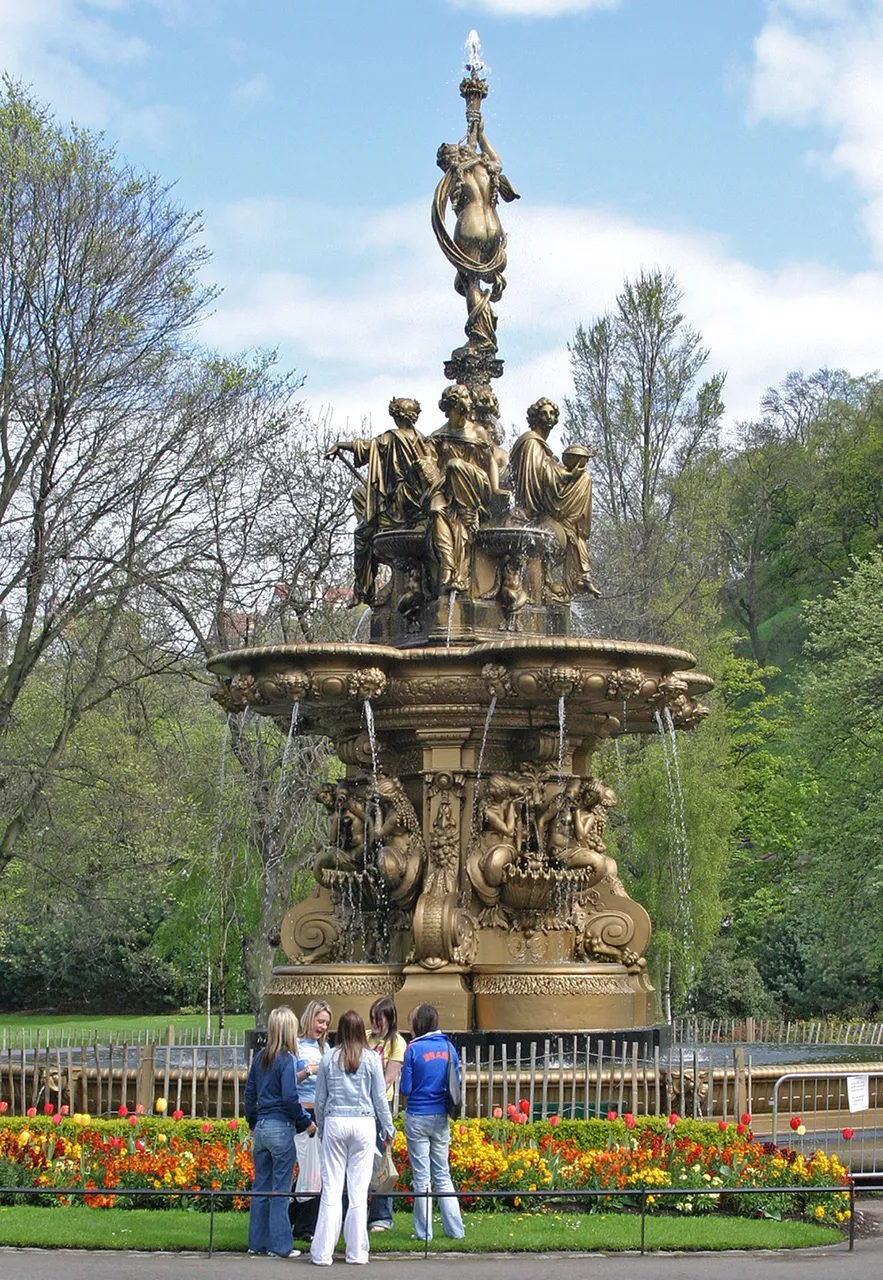
The Ross Fountain is celebrated for its intricate design, which reflects the opulence and artistry of the Victorian era. Sculpted by Jean-Baptiste Jules Klagmann, the fountain features a variety of classical motifs. At the top of the fountain are four female figures representing the arts, science, poetry, and industry. The base of the fountain is adorned with cast-iron mermaids, cherubs, and heads of lions and walruses, all painted in vibrant colors of turquoise, brown, and gold following its restoration (VisitScotland).
Restoration Efforts
Over the years, the Ross Fountain suffered from natural weathering and a lack of maintenance, leading to significant deterioration. The water was turned off in 2008 due to structural concerns, and the fountain remained dry for nearly a decade. Recognizing the cultural and historical significance of the fountain, Edinburgh World Heritage, The Ross Development Trust, and the City of Edinburgh Council collaborated on a major restoration project in 2017 (EWH).
The restoration, undertaken by Lost Art Limited of Wigan, was a comprehensive effort costing approximately £1.9 million. The project involved deconstructing the fountain once again into its 122 pieces, repairing structural damage, replacing missing parts, and repainting the entire structure based on historical research to match its original color scheme. The restoration aimed not only to repair the fountain but also to revive its vibrant colors, including golds, greens, and blues (Explorial).
On July 8, 2018, the Ross Fountain was re-inaugurated in a ceremony attended by Lord Provost Frank Ross and Emmanuel Cocher, the Head of Mission at the French Consulate in Edinburgh. The fountain's restoration was celebrated as a significant achievement in preserving Edinburgh's cultural heritage (Wikipedia).
Cultural Significance
The Ross Fountain holds a special place in Edinburgh's cultural and historical landscape. Its installation in the 19th century marked a pivotal moment in the city's civic development, reflecting a commitment to enhancing public spaces for the enjoyment of residents and visitors alike. The fountain's intricate design and classical motifs exemplify the Victorian era's fascination with art and beauty, making it a cultural gem in the heart of Edinburgh (EWH).
The fountain's presence in Princes Street Gardens, with Edinburgh Castle as its backdrop, adds to its visual and cultural appeal. It stands as a symbol of the city's dedication to blending art and functionality, providing a picturesque setting for relaxation and reflection. The Ross Fountain continues to be a popular attraction, drawing tourists and locals who marvel at its beauty and historical significance (Third Eye Traveller).
Visitor Information
Visiting Hours - The Ross Fountain is located in West Princes Street Gardens, which are open from 7 am, with closing times varying throughout the year depending on the season.
Tickets - Visiting the Ross Fountain is free of charge.
Best Times to Visit - The fountain is particularly stunning during the spring and summer months when the gardens are in full bloom and the weather is more favorable for outdoor activities.
Travel Tips - The gardens are centrally located and easily accessible by public transport. The nearest train station is Edinburgh Waverley, and several bus routes service Princes Street. For those driving, parking can be limited, so public transport is recommended.
Nearby Attractions
In addition to the Ross Fountain, Princes Street Gardens offers a variety of attractions and activities. Visitors can explore the beautifully landscaped gardens, visit the nearby Scott Monument, or take a stroll to St. Cuthbert's Church, which lies just behind the fountain. The gardens also host numerous public events throughout the year, including the Fringe Festival, Christmas celebrations, and Hogmanay (Out About Scotland).
For those looking to relax, there are several cafés nearby where visitors can enjoy a coffee while taking in the views. The gardens provide a tranquil oasis in the heart of the city, perfect for a leisurely stroll or a family picnic. Whether you're a history enthusiast, an art lover, or simply looking for a peaceful spot to unwind, the Ross Fountain and Princes Street Gardens offer something for everyone (VisitScotland).
FAQ
Q - What are the visiting hours for the Ross Fountain?
A - The Ross Fountain is located in West Princes Street Gardens, which are open from 7 am with varying closing times throughout the year.
Q - Do I need tickets to visit the Ross Fountain?
A - No, visiting the Ross Fountain is free of charge.
Q - What is the best time to visit the Ross Fountain?
A - The best times to visit are during the spring and summer months when the gardens are in full bloom.
Q - Is the Ross Fountain accessible by public transport?
A - Yes, the gardens are centrally located and easily accessible by public transport, with the nearest train station being Edinburgh Waverley.
Listen to the full story in the app
The whole Ross Fountain,
told well.
Audio guides for 1,100+ cities across 96 countries. History, stories, and local insight — offline ready.
Verified, and shown.
Researched and written by the Audiala editorial team from historical records, architectural archives, and local expertise.
Researched from Wikidata, Wikipedia & official sources · fact-checked · How we make our guides →