Plan and listen to Portcullis Gate And Argyle Tower, Edinburgh Castle with Audiala.
Audio guide in your pocket, itinerary in your browser. Built for the way you actually visit.
Introduction
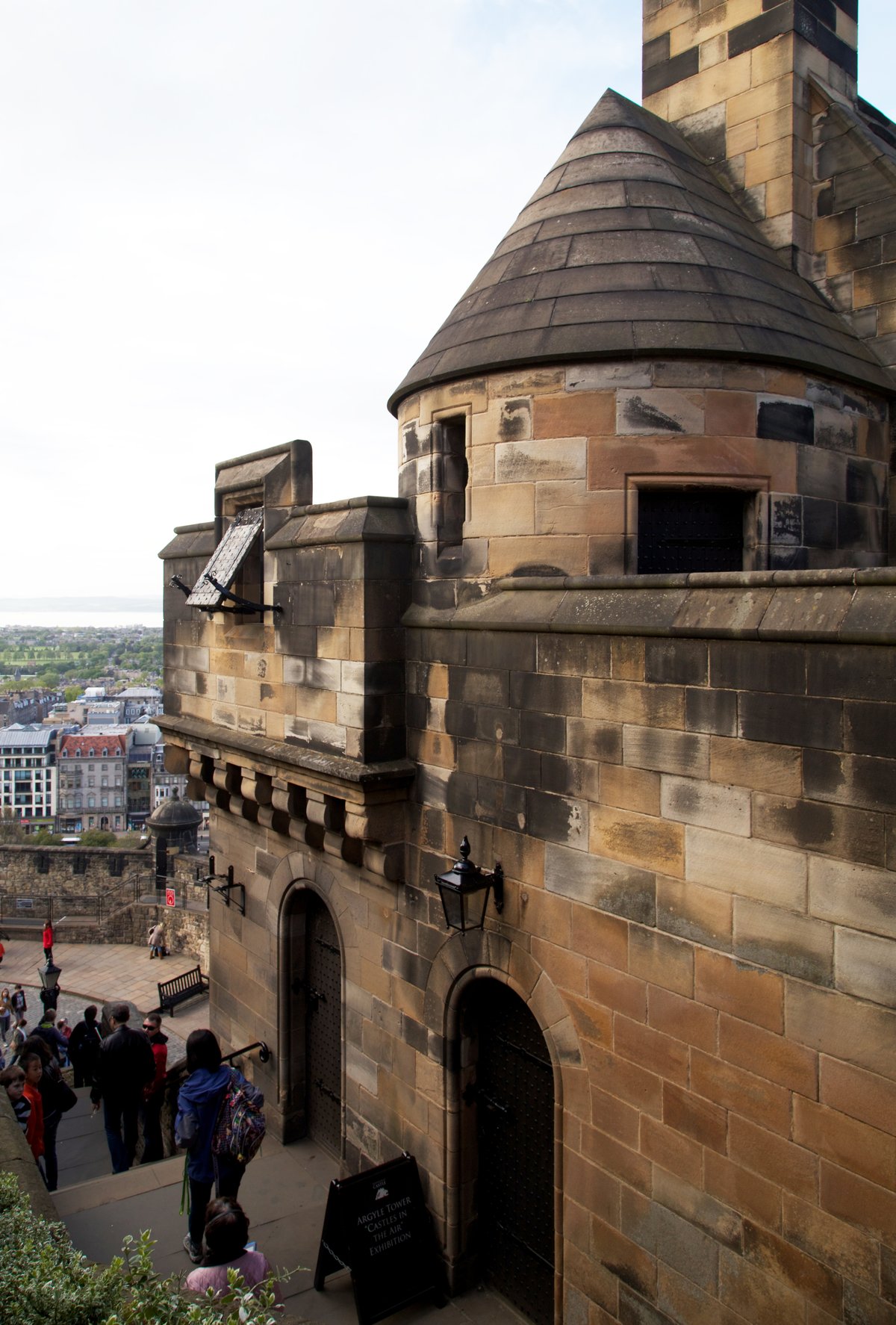
Edinburgh Castle, perched atop Castle Rock, is one of Scotland’s most iconic landmarks—an enduring symbol of national identity and resilience. Central to the castle’s dramatic silhouette and defensive might are the Portcullis Gate and Argyle Tower. The Portcullis Gate, built in the late 16th century following the Lang Siege, is a masterpiece of military engineering, while the 19th-century Argyle Tower—named for the 9th Earl of Argyll—adds a layer of romantic Scottish Baronial architecture and historical intrigue.
This guide provides a detailed exploration of the historical context, architectural features, and cultural significance of these structures. You’ll also find practical information on tickets, visiting hours, accessibility, tours, and tips for making the most of your experience at Edinburgh Castle.
For further reading or planning, consult the official resources: Edinburgh Castle Official, Historic Environment Scotland, and Ancient Origins.

Origins and Construction of the Portcullis Gate
The Portcullis Gate, the principal entrance to Edinburgh Castle, was constructed between 1573 and 1574 following the destruction wrought by the Lang Siege. This conflict, a key episode of the Marian civil war, left earlier fortifications in ruins and demanded stronger defenses (Undiscovered Scotland). The new gatehouse featured advanced defensive elements for its time, including a heavy iron portcullis, three sets of wooden doors, and murder holes from which defenders could repel attackers.
The formidable structure was not only a tactical necessity but also a statement of royal authority, underscoring the castle’s continued importance as a military stronghold and royal residence (Edinburgh Castle Official).
Architectural Features
Defensive Design and Construction
The Portcullis Gate exemplifies late 16th-century military engineering. Its layered defenses—three wooden doors and a spiked iron portcullis—could withstand direct assaults and deter covert entry (PlanetWare). The iron portcullis, still visible today, could be swiftly dropped in emergencies. The passageway is flanked by thick stone walls with defensive positions for guards, and murder holes above for pouring boiling liquids or dropping stones on invaders (Historic Environment Scotland).
The gatehouse’s local sandstone construction, up to three meters thick, made it nearly impervious to siege engines. The segmental-arched recesses and stone window seats provided vantage points for defenders. William McDowell and William Schaw, notable architects of the era, oversaw the original and upper-story construction (Wikipedia).
The Argyle Tower: History and Significance
Directly above the Portcullis Gate stands the Argyle Tower, a Victorian-era addition built in 1887–1888. Designed by Hippolyte Blanc, it was named after the 9th Earl of Argyll, Archibald Campbell, who was imprisoned in the castle before his execution in 1685 (Ancient Origins). The tower’s Scots Baronial style—with crenellations, corbelled turrets, and decorative stonework—embodies the romantic revival of Scottish architecture.
Although a 19th-century creation, the Argyle Tower was carefully integrated with the castle’s medieval defenses and now hosts exhibitions and interpretive displays. Decorative elements, such as lion rampant motifs and armorial carvings, reinforce the site’s royal associations and historical symbolism (Historic Environment Scotland).
Role in Castle Defense
The Portcullis Gate was the main entry point and first line of defense for Edinburgh Castle. Its strategic location at the head of the Esplanade and Lower Ward made it a choke point during sieges—forcing attackers into a confined space easily defended from above. The adjacent Lang Stairs, with 70 steep steps, provided a challenging secondary route to the upper levels, further complicating assault tactics (Edinburgh Castle Official).
The area beyond the gate, the Middle Ward, functioned as a killing ground in times of conflict, demonstrating the comprehensive defensive strategy employed throughout the castle complex.
Notable Historical Events
The Portcullis Gate has witnessed centuries of dramatic events:
- Wars of Independence: The castle changed hands repeatedly; in 1296, it fell to Edward I of England, and in 1314, Robert the Bruce’s supporters recaptured it in a daring night raid (Ancient Origins).
- Lang Siege: The gate was central during the 1571–73 siege, when Mary, Queen of Scots’ supporters held out against government forces. Its subsequent reconstruction created the structure seen today.
- Imprisonment: In later centuries, the gatehouse and Argyle Tower were used as prisons, most famously for Archibald Campbell, 9th Earl of Argyll (Ancient Origins).
Visiting Information
Hours & Tickets
- Opening Hours: Typically 9:30 AM to 6:00 PM (last entry 5:00 PM); hours may vary seasonally.
- Tickets: Adults £17–£19; discounts for children, seniors, and families. Online purchase recommended for best prices and to avoid queues. Book here.
Accessibility
- The historic nature of the castle means some areas (including the Lang Stairs and Argyle Tower) have limited accessibility.
- Wheelchair access is available to some sections, with assistance and accessible toilets provided. Check the access guide for details.
Tours & Events
- Guided Tours: Offered regularly, covering the Portcullis Gate, Argyle Tower, and other highlights. Audio guides are also available (Edinburgh Castle Tours & Guides).
- Special Exhibitions: The Argyle Tower often hosts displays on castle history and Scottish heritage.
- Events: Seasonal programs, reenactments, and the Royal Edinburgh Military Tattoo take place on the Esplanade.
Nearby Attractions
- Old Town: Explore the Royal Mile, St Giles’ Cathedral, and the National Museum of Scotland.
- Facilities: Restrooms, cafés, and gift shops are located within the castle. The Redcoat Café offers exceptional views.
Frequently Asked Questions (FAQs)
Q: What are the visiting hours for Edinburgh Castle?
A: 9:30 AM to 6:00 PM (last entry 5:00 PM), with seasonal variation.
Q: How do I buy tickets?
A: Online via the official website or at the gate. Advance booking is recommended.
Q: Is the Argyle Tower accessible?
A: Access to the Argyle Tower is via a narrow stairway, making it unsuitable for wheelchair users.
Q: Are guided tours available?
A: Yes, official tours and audio guides are offered daily.
Q: Can I take photos?
A: Photography is allowed throughout most of the castle, but flash may be restricted in exhibition areas.
Tips for Visitors
- Arrive early to avoid peak crowds and enjoy a more relaxed experience.
- Wear comfortable footwear—the castle grounds are cobbled and uneven.
- Check for maintenance closures on the official website.
- Engage with staff and guides for richer historical context.
- Download the Audiala app for audio tours and up-to-date information.
- Respect barriers and guidelines to help preserve this historic site.
Listen to the full story in the app
The whole Portcullis Gate And Argyle Tower, Edinburgh Castle,
told well.
Audio guides for 1,100+ cities across 96 countries. History, stories, and local insight — offline ready.
Verified, and shown.
Researched and written by the Audiala editorial team from historical records, architectural archives, and local expertise.
Researched from Wikidata, Wikipedia & official sources · fact-checked · How we make our guides →