An introduction.
Researched by the Audiala editorial team from historical records, architectural archives, and local expertise.
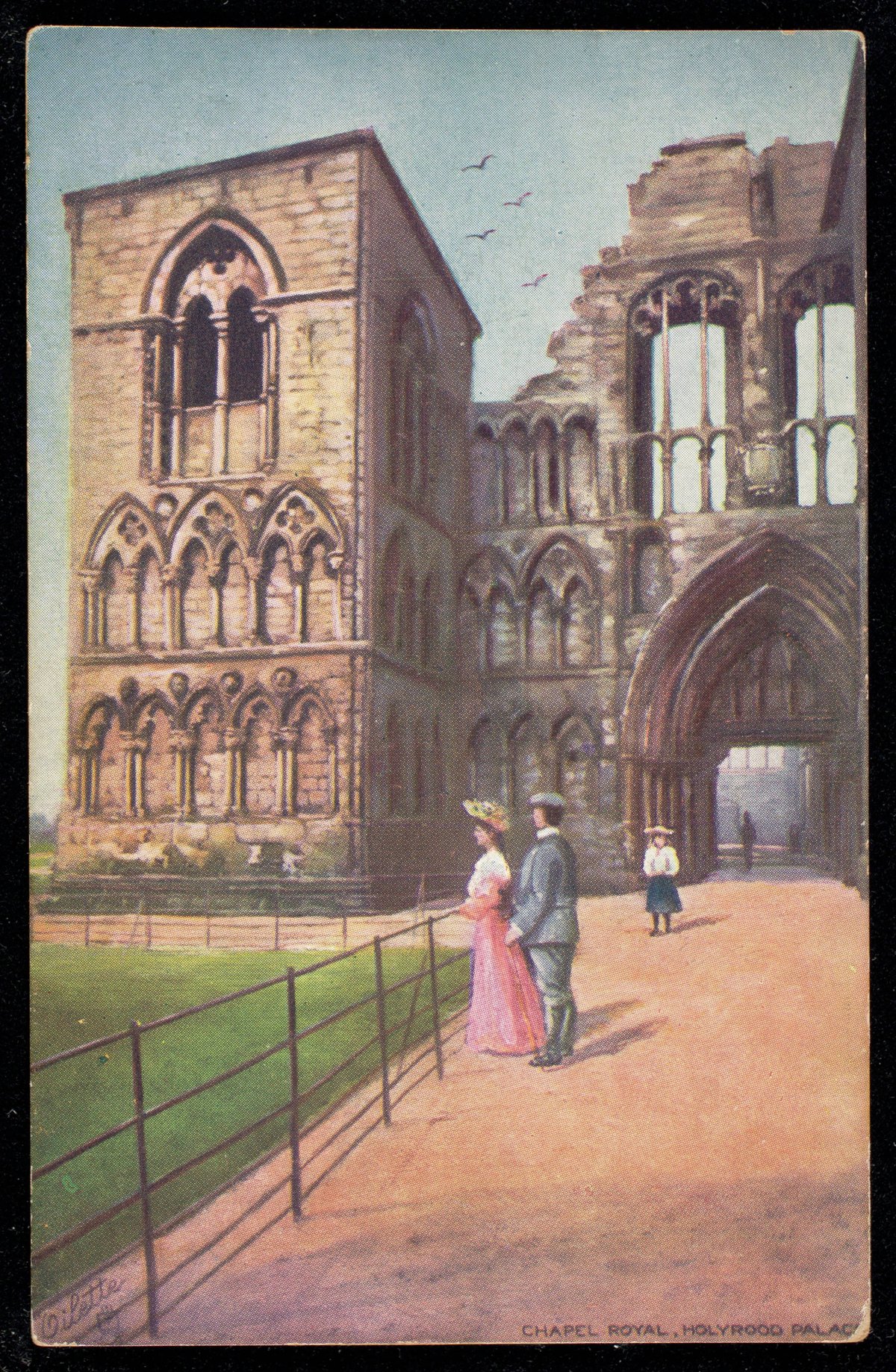
WWhy does Scotland's royal palace feel less like a polished court and more like a crime scene, a ruin, and a constitutional argument sharing one address? Holyrood Palace in Edinburgh, United Kingdom, earns the visit because nowhere else in the city turns power into something this physical: abbey stones open to the weather, painted ceilings built for dynastic propaganda, and rooms where a queen's private supper became public catastrophe. Today you approach from the foot of the Royal Mile and see the neat Baroque front, the dark mass of Arthur's Seat behind it, and beside the palace the broken ribs of Holyrood Abbey standing in the cold Edinburgh light.
Most visitors come for Mary, Queen of Scots. Fair enough. Her rooms still hold the hush of a place where people lower their voices without being asked, and the murder attached to them has done brisk business for centuries.
But Holyrood is bigger than Mary's tragedy. Records show this precinct has hosted an abbey founded by David I in 1128, a peace agreement that recognized Scottish independence in 1328, a Jacobite court in 1745, and the modern monarch's official residence in Scotland, all on the same strip of ground at the eastern end of Edinburgh.
Look up as often as you look around. The surviving ceilings in Mary's apartments, dense with heraldry and painted emblems, matter as much as the famous doorway where guides used to point out doubtful bloodstains; one is evidence, the other mostly performance.
01 What to see.
The Ceremonial Palace
Mary, Queen of Scots’ Chambers
Abbey Ruins and the Park Edge Walk
02 In pictures.


Plan and listen to Holyrood Palace with Audiala.
Audio guide in your pocket, itinerary in your browser. Built for the way you actually visit.
03 Visitor logistics.
The practical scaffolding for a good visit — kept short.
Getting There
Holyrood Palace stands at the foot of the Royal Mile on Canongate, EH8 8DX. From Edinburgh Waverley, walk 15 minutes downhill along the Canongate; bus 35 stops near the Palace, buses 6 and 35 stop by the King’s Gallery side, and the nearest tram stop is Picardy Place, about 20 minutes on foot. If you drive, Broad Pavement car park beside Holyrood Park is the practical choice at £1 per hour, and accessible bays sit on Horse Wynd outside the Palace.
Opening Hours
As of 2026, the Palace usually opens Thursday to Monday, with daily opening from 21 May to 7 September. Hours run 09:30-16:30 in the winter pattern and 09:30-18:00 in the longer spring and summer pattern; last admission is earlier, usually 15:15 or 16:30, and the Palace is a working royal residence, so closures can appear at short notice.
Time Needed
Give it 60 to 75 minutes if you want the State Apartments and Abbey at a brisk pace with the multimedia guide, which itself lasts about an hour. Most people need 90 minutes, and 2 hours feels better if you want the gardens, the Abbey ruins, and time to let the place settle into you.
Accessibility
Step-free help exists through much of the Palace, and free manual wheelchairs or rollators can be borrowed, but Mary, Queen of Scots’ Chambers remain the hard limit: access is by a steep spiral stair with 25 steps. The Great Staircase has 27 steps with staff-assisted alternatives, accessible toilets are in the café area, assistance dogs are welcome, and the guide comes in BSL with subtitles plus audio description.
Cost & Tickets
As of 2026, standard admission costs £22 in advance or £26 on the day for adults, with young person, child, disabled, and companion rates below that; under-5s enter free. Book direct if you want the 1-Year Pass, look at the £1 ticket scheme if you receive eligible UK benefits, and note that no general free-entry days are advertised for 2026.
04 Tips for visitors.
Small things that change the day.
Photos Outside Only
Cameras go quiet once you enter the State Apartments: no photography or filming is allowed inside, including wearable devices. Save your shots for the forecourt, the Abbey ruins, and the gardens, and leave the drone at home because Palace grounds ban it outright.
Mind Your Bag
The bigger nuisance here is not palace security but the Royal Mile outside it, where phone snatching and distracted bag opening do happen in busy stretches. Keep your phone away from the street edge, zip your bag, and skip the souvenir shops selling tartan tat unless irony is the whole plan.
Eat Nearby Smartly
For a fast budget lunch, Oink Canongate does hog roast rolls near the Palace; Clarinda’s Tearoom at 69 Canongate works for scones and tea at budget to low mid-range; Wedgwood at 267 Canongate is the polished splurge. Holyrood 9A on Holyrood Road is the solid mid-range fallback if you want a burger and a pint after the portraits and plaster ceilings.
Go Early
The first entry slot is the one to chase, especially on Monday or Thursday outside the summer daily-opening period. Morning light sharpens the Abbey stone like chalk after rain, and the rooms feel less like a queue with chandeliers.
Read The District
Don’t treat the Palace as a sealed royal box. Pair it with the Scottish Parliament across the road and a walk into Holyrood Park, because this corner of Edinburgh makes more sense when crown, government, ruined abbey, and crags all sit in one frame.
Pack Light
No cloakroom means big bags become your problem fast: anything larger than 45 x 20 x 30 cm is not allowed inside, and Waverley Station is the suggested storage option. Shoes matter more than formality here, because the Abbey has gravel underfoot and some floors inside are uneven in the old, honest way.
Where to Eat
Don't Leave Without Trying
Makars Mash Bar
local favoriteOrder: The haggis, neeps & tatties starter is a must, followed by the slow-cooked beef shoulder with horseradish-infused gravy.
This local favorite turns the humble potato into an art form. It’s the perfect spot to experience authentic, hearty Scottish ingredients in an unfussy, welcoming setting.
The Black Grape
local favoriteOrder: The beef carpaccio with crispy shallots and the oyster with plum spice.
A hidden gem near the palace that excels in creative, flavour-packed small plates. The staff are incredibly knowledgeable, making it a stellar choice for a sophisticated evening out.
Dishoom Edinburgh
local favoriteOrder: The bacon naan roll for breakfast or the Murgh Malai and gunpowder potatoes for dinner.
While a popular destination, the atmosphere and quality are undeniable. It offers a unique fusion of Bombay cafe culture that feels both vibrant and deeply comfortable.
Calton View Cafe (Royal Mile)
cafeOrder: The fresh, well-cooked breakfast waffles and a warm chai tea.
A cozy, intimate spot perfect for a quick morning refuel. The staff are exceptionally warm, making it feel like a local sanctuary in the middle of a busy day of sightseeing.
Dining Tips
- check Tipping is optional but 10% is customary for good service in restaurants.
- check Always check your bill for an automatic service charge before adding a tip.
- check Scotland is highly card-friendly; contactless and mobile payments are accepted almost everywhere.
- check Tipping is not expected when ordering drinks at a pub bar.
- check For the most popular spots, book your reservation as early as possible to avoid long waits.
- check If you want to sound like a local, ask for 'salt 'n' sauce' instead of vinegar with your fish supper.
Restaurant data powered by Google
05 Where Scottish Power Kept Changing Its Costume
Holyrood began as an abbey before it learned the habits of a palace. Documented sources show David I founded the Augustinian house in 1128, and over the next four centuries the precinct kept expanding until prayer, politics, lodging, and royal theater all occupied the same ground.
That mixed identity never went away. One wing still serves monarchy, the abbey next door remains a roofless warning about bad decisions and worse repairs, and the whole place reads like a ledger of one recurring Scottish question: who rules here, and by what story?
Mary's Rooms and the Murder That Became Theater
At first glance, Holyrood offers the neat story tourists expect: Mary, Queen of Scots lived here, David Rizzio was murdered here on 9 March 1566, and the palace preserved the scene like a royal wound that never healed. You can almost feel the script working on you as the rooms tighten, the ceilings press lower, and every guidebook edges toward the same terrible supper.
Then doubt creeps in. Royal Collection Trust interpretation notes that visitors were already being shown these apartments in grisly fashion by the 1700s, and some furnishings long presented as Mary's were later arrivals, including a red damask bed made for the Duke of Hamilton in the 1680s; the famous frozen crime scene was partly staged because horror drew crowds.
The documented turning point came that Saturday night in 1566 when Henry Stewart, Lord Darnley, Mary's jealous husband, forced his way into her supper room with armed nobles. What was at stake for Mary was not gossip but her crown, her authority, and the safety of the child she was carrying; what was at stake for Darnley was influence slipping from his hands as Rizzio gained the queen's confidence. Rizzio was dragged from her side and stabbed repeatedly, and later generations turned that political terror into a marketable relic.
Knowing that changes the way you look. The room stops being a waxwork of tragedy and starts reading as a stage where power, fear, and later myth-making all piled on top of each other, while the real survivors are above your head: the painted ceilings completed in Mary's lifetime, still insisting that this was once a Franco-Scottish dynastic project, not just a murder story.
The Abbey Before the Palace
Fire, Rebuilding, and Reinvention
Listen to the full story in the app
The whole Holyrood Palace,
told well.
Audio guides for 1,100+ cities across 96 countries. History, stories, and local insight — offline ready.
06 Frequently asked.
The questions travellers send us most about Holyrood Palace.
Is Holyrood Palace worth visiting?
Yes, especially if you want Edinburgh in one tight frame: monarchy, murder, ruined abbey, and Salisbury Crags looming behind the walls. The palace gives you three moods in one visit, from the ceremonial State Apartments to Mary, Queen of Scots' darker private rooms and then the roofless abbey where gravel crunches underfoot and the sky replaces the ceiling. Few places in Edinburgh change scale and atmosphere this fast.
How long do you need at Holyrood Palace?
Most people need about 1.5 hours. The official multimedia guide runs about 1 hour, but 90 minutes gives you time for the State Apartments, Mary, Queen of Scots' rooms, and the abbey without marching through like you're late for a train. Give it 2 hours if you want the gardens or tend to stop and stare upward at plaster ceilings.
How do I get to Holyrood Palace from Edinburgh city centre?
The easiest route is to walk from Edinburgh Waverley in about 15 minutes. Head east along the Royal Mile to Canongate and keep going downhill until the palace appears at the foot of the street, with the Scottish Parliament beside it and Holyrood Park opening out behind. Bus 35 also stops nearby if you want to save your legs for the 25-step spiral stair to Mary's chambers.
What is the best time to visit Holyrood Palace?
Go at opening time on a Thursday, Monday, or another non-summer weekday if you want the calmest visit. Early light and thinner crowds suit Holyrood because this place works through atmosphere: dim rooms, slow-looking ceilings, and the abrupt shift into the open abbey ruin. Summer gives you daily opening from 21 May to 7 September 2026, but it also brings the biggest crowds.
Can you visit Holyrood Palace for free?
Usually no, unless you qualify for a free or near-free category. Under-5s and access companions enter free, and Royal Collection Trust offers £1 tickets for people on Universal Credit and certain other UK benefits; everyone else should expect paid admission, with adult tickets listed at £22 in advance or £26 on the day in 2026. The abbey is included with palace admission, so you are not paying twice for the ruin.
What should I not miss at Holyrood Palace?
Do not miss Mary, Queen of Scots' chambers, the Great Gallery, and Holyrood Abbey. Mary's rooms are the emotional core, reached by a steep spiral stair that feels more defensive tower than palace, while the Great Gallery stretches out as a long parade of painted kings, some still scarred by sword cuts from 1746. Then step into the abbey, where the silence opens up and the whole visit stops being court theater and starts feeling older than the monarchy itself.
Verified, and shown.
Researched and written by the Audiala editorial team from historical records, architectural archives, and local expertise.
Used for the main visitor experience, key rooms, Mary, Queen of Scots' chambers, Great Gallery details, abbey atmosphere, and what not to miss.
Used for the multimedia guide length, current visitor advice, photography rules context, and general practical planning.
Used for 2026 admission pricing and booking-related visitor information.
Used for the official 1-hour visit baseline.
Used for the palace address, Edinburgh Waverley walking time, and nearby bus information.
Used for the 2026 opening pattern, summer daily opening dates, and the usual Tuesday-Wednesday closure pattern.
Used for standard 2026 ticket prices, the palace's working-royal-residence status, and general visitor framing.
Researched from Wikidata, Wikipedia & official sources · fact-checked · How we make our guides →