Plan and listen to Equestrian Statue Of Charles Ii with Audiala.
Audio guide in your pocket, itinerary in your browser. Built for the way you actually visit.
Introduction
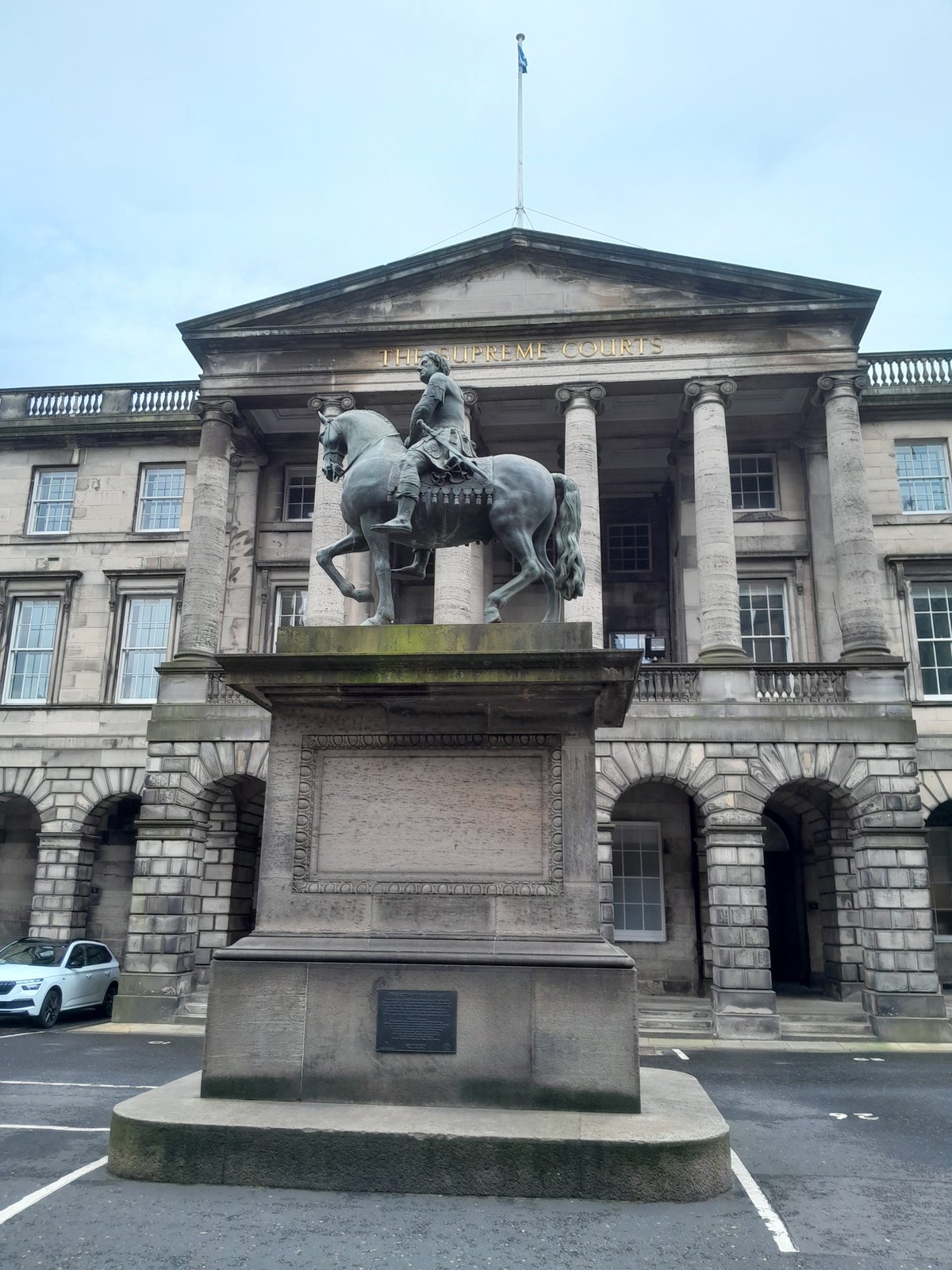
The Equestrian Statue of Charles II, located in Edinburgh’s Parliament Square, is not only the city’s oldest public monument but also the oldest surviving lead equestrian statue in the United Kingdom. Commissioned in 1685 to commemorate the restoration of the monarchy after the English Civil War and Interregnum, the statue stands as a testament to Scotland’s 17th-century political and artistic heritage. Its classical Roman iconography and Baroque style symbolize royal authority and the intertwining of monarchy with Edinburgh’s civic identity. This travel guide provides a detailed overview of the statue’s history, artistic features, restoration, visiting information, nearby attractions, and practical tips to enhance your visit (Historic Environment Scotland; National Galleries Scotland).

Historical Background
Commissioning and Artistic Attribution
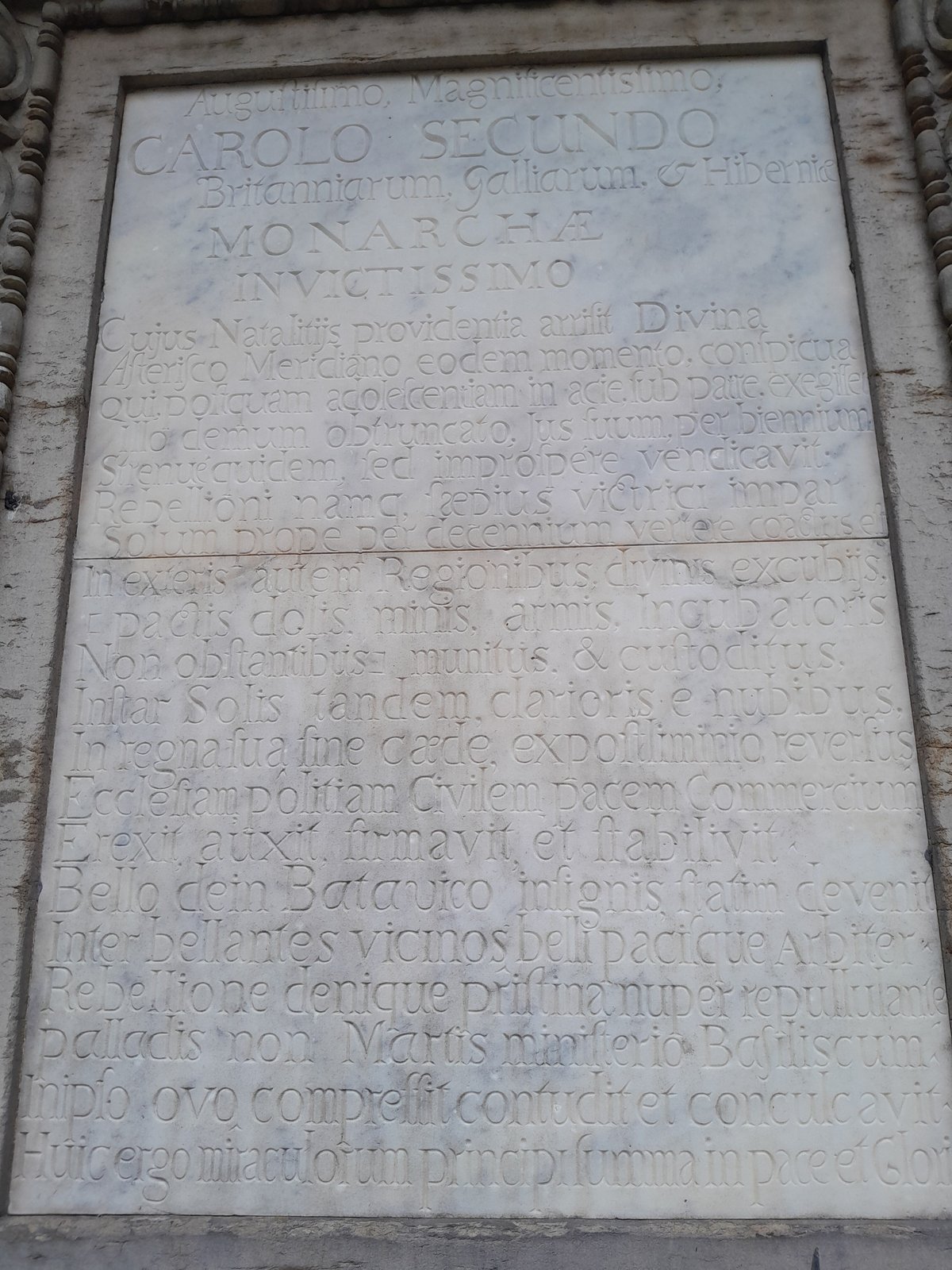
Erected in 1685 by order of the Edinburgh Town Council, the statue was intended to honor Charles II, the “Merry Monarch,” whose reign marked the restoration of the monarchy after a period of upheaval (Edinburgh World Heritage). While the design is attributed to the celebrated sculptor Grinling Gibbons or his workshop, the actual casting may have involved other artisans under Gibbons’ direction. The statue’s Craigleith stone pedestal was crafted by Robert Mylne, King’s Master Mason (English 18th Century Portrait Sculpture).
Artistic Features and Symbolism
Charles II is portrayed in Roman military dress, bareheaded but crowned with a laurel wreath, signifying classical virtues of leadership and legitimacy. His pose astride a dynamically modeled horse—reminiscent of the ancient Roman statue of Marcus Aurelius—emphasizes movement and imperial authority. The absence of stirrups and spurs further aligns the king with mythological representations rather than contemporary military reality. The Baroque style of the statue is evident in its dramatic posture and detailed drapery (National Galleries Scotland; Royal Collection Trust).
Political and Urban Significance
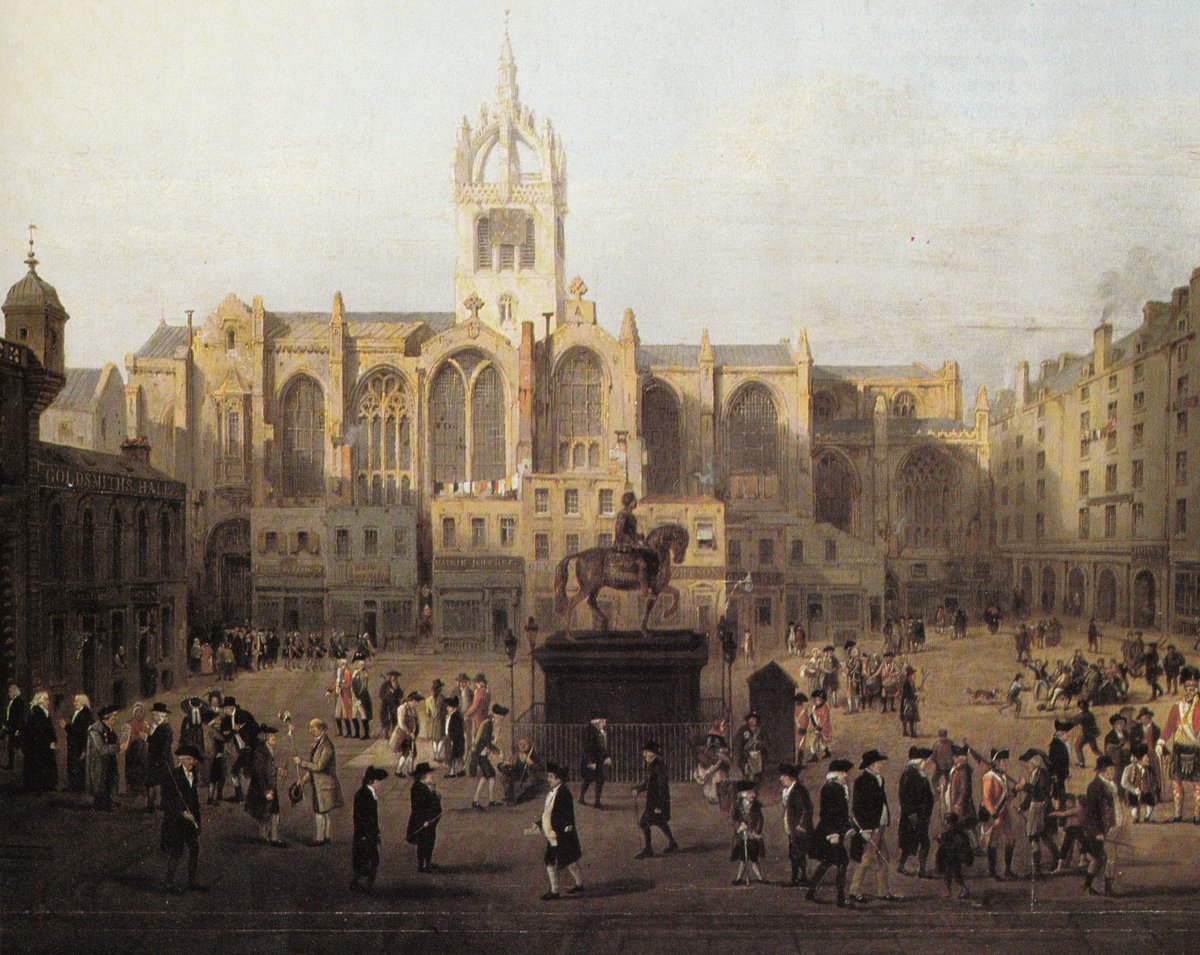
Positioned in Parliament Square, adjacent to both St Giles’ Cathedral and Parliament House (the historic seat of the Scottish Parliament), the statue’s location underscores the restoration of royal authority and the monarchy’s central role in Scotland’s governance during the late 17th century. Its public placement marked Edinburgh’s status as a capital city and served as a focal point for royalist sentiment and civic ceremonies (Edinburgh World Heritage).
Materials, Construction, and Restoration
Construction Techniques
The statue is cast entirely in lead, chosen for its malleability and cost-effectiveness compared to bronze, which was scarce and expensive in Scotland at the time. Internally, the sculpture was originally supported by an oak frame, later supplemented with steel reinforcements as part of ongoing restorations. The original gilded finish has mostly worn away, but traces reveal its former brilliance (Canmore).
Major Conservation Milestones
Lead statues are particularly vulnerable to cracking and corrosion, especially in Scotland’s climate. Early repairs were documented as far back as 1835, when significant restoration and reinforcement took place (EdinburghGuide.com). In 2010–2011, the statue underwent a comprehensive restoration as part of the Twelve Monuments Restoration Project. The process included:
- Careful removal and transport to a specialist conservation facility
- Replacement of deteriorated internal supports with stainless steel
- Lead surface cleaning and recreation of missing elements (sword and scabbard) using historical references
- Application of a protective wax coating to shield the statue from pollutants and moisture (BBC News)
Today, the statue is regularly inspected and maintained as part of Edinburgh’s heritage conservation strategy.
Visiting Information
Location and Access
- Address: Parliament Square, Edinburgh, EH1 1RF
- Nearest Landmarks: St Giles’ Cathedral, Parliament House, Royal Mile
- Transport: Short walk from Waverley Station; accessible by bus and tram; nearby parking available
Opening Hours and Admission
- The statue is outdoors in Parliament Square and is accessible 24/7, all year round.
- There is no admission fee or ticket required.
Accessibility
- Parliament Square is pedestrian-friendly and wheelchair accessible, though some cobblestone surfaces may require caution.
Guided Tours
- Many local tour operators and heritage organizations include the statue as part of Old Town and Royal Mile walking tours. Special events and heritage open days may offer talks and activities related to the statue’s history.
Photography Tips
- Best lighting is in early morning or late afternoon.
- The statue can be photographed from multiple angles, with Parliament House and St Giles’ Cathedral as dramatic backdrops.
Nearby Attractions
- St Giles’ Cathedral: Renowned for its architecture and historical significance.
- Parliament House: Former Scottish Parliament, now home to the supreme civil court.
- The Royal Mile: Edinburgh’s iconic historic street, lined with shops, museums, and eateries.
- The Scottish Storytelling Centre: Offers exhibitions and events celebrating Scottish culture.
- Palace of Holyroodhouse and National Museum of Scotland: Both within walking distance.
Interpretations and Contemporary Perspectives
While originally erected as a symbol of royal authority and unity, the statue’s meaning has evolved over time. Contemporary discussions often highlight Charles II’s complex legacy, including his involvement in the British slave trade through the Royal Africa Company. Locally, the statue is sometimes called the “Two-faced Monarch,” reflecting mixed Scottish views of his reign. Calls for contextualization and educational initiatives have arisen, aiming to foster nuanced public engagement with historical monuments (The Scotsman).
Restoration Timeline: Key Conservation Interventions
- 1835: Early repairs and oak reinforcement
- 2010–2011: Comprehensive restoration (removal, cleaning, stainless steel reinforcement, recreation of missing elements, wax protection)
- Ongoing: Regular maintenance and monitoring (BBC News; EdinburghGuide.com)
Frequently Asked Questions (FAQ)
Q: What are the visiting hours for the Equestrian Statue of Charles II?
A: The statue is accessible at all times, year-round.
Q: Do I need a ticket to see the statue?
A: No, it is free to visit; no ticket required.
Q: Is the statue accessible for wheelchair users?
A: Yes, although some cobblestones may present minor challenges.
Q: Are guided tours available?
A: Yes, many walking tours of the Royal Mile and Old Town include the statue.
Q: What is the best time to visit?
A: Weekday mornings or late afternoons, particularly in spring or summer.
Q: Can I take photographs?
A: Yes, photography is encouraged.
Visuals and Media
- View high-quality images and virtual tours via Historic Environment Scotland and Canmore.
- Interactive maps and digital resources are available for planning your visit.
Final Tips and Recommendations
- Combine your visit to the statue with nearby historic sites for a fuller experience of Edinburgh’s Old Town.
- Use the Audiala app for guided tours and up-to-date information on heritage events.
- For accessible travel, check local visitor center resources for the latest on tours and mobility support.
Summary
The Equestrian Statue of Charles II remains a vital link to Scotland’s royal and urban history, combining Baroque artistry with complex political symbolism. Its survival and careful restoration reflect the community’s commitment to heritage preservation. Accessible, free, and surrounded by other major attractions, the statue is an essential stop for anyone exploring Edinburgh’s historic core (Historic Environment Scotland; VisitScotland).
Listen to the full story in the app
The whole Equestrian Statue Of Charles Ii,
told well.
Audio guides for 1,100+ cities across 96 countries. History, stories, and local insight — offline ready.
Verified, and shown.
Researched and written by the Audiala editorial team from historical records, architectural archives, and local expertise.
Researched from Wikidata, Wikipedia & official sources · fact-checked · How we make our guides →