Plan and listen to Edinburgh Festival Theatre with Audiala.
Audio guide in your pocket, itinerary in your browser. Built for the way you actually visit.
Introduction
Nestled in Edinburgh’s vibrant cultural heart, the Edinburgh Festival Theatre stands as a living testament to nearly two centuries of theatrical heritage and architectural innovation. From its 19th-century roots as a circus and music hall site to its present role as one of Scotland’s leading venues for opera, ballet, music, and theatre, this landmark reflects the city’s enduring commitment to the performing arts. The theatre’s dramatic transformations—including its Frank Matcham-designed Empire Palace, the 1911 fire, and the radical 1994 redevelopment—have shaped it into a modern hub that harmoniously blends historic grandeur with contemporary design. Today, visitors marvel at its iconic glass façade and the meticulously restored 1928 Milburn auditorium, which houses one of the largest stages in the UK. As a key venue in Edinburgh’s international festivals, the Festival Theatre hosts world-class performances that draw audiences from around the globe. This comprehensive guide provides essential information on visiting hours, tickets, accessibility, nearby attractions, and insider tips to ensure you fully experience the magic of the Edinburgh Festival Theatre (Theatres Trust, Edinburgh Architecture, Capital Theatres).

Historical Evolution
Early Origins: From Circuses to Music Halls (1820s–1892)
The Festival Theatre’s site has been a cornerstone of Edinburgh entertainment since the early 19th century. Beginning as Ducrow’s Circus in the 1820s, the location evolved into music halls like the Alhambra and the Queen’s by the 1860s, mirroring Victorian tastes for variety entertainment. These venues served as gathering places for Edinburgers from all walks of life, laying the foundation for the site’s future as a premier cultural destination (Theatres Trust).
The Empire Palace Theatre: Matcham’s Masterpiece (1892–1910)
In 1892, renowned architect Frank Matcham designed the Empire Palace Theatre, heralding a new era for the site. As the first Moss Empires theatre, Matcham’s design was lauded for its opulent “circus-theatre interior” and cutting-edge stage technology. The Empire Palace became a top venue for vaudeville, opera, ballet, and musicals, establishing Edinburgh as a major centre for live entertainment (Theatres Trust).
Fire and Rebirth: The 1911 Disaster
A tragic fire in 1911 during a performance led to loss of life and significant damage, highlighting the risks of early stage technology. Frank Matcham oversaw the rebuild, restoring much of the original grandeur while integrating new safety features. The Empire Palace continued to thrive, adapting to the 20th century’s evolving tastes.
The Milburn Era: The 1928 Empire Theatre
By 1928, the theatre was rebuilt by W & T R Milburn, renowned theatre architects. Their elegant, restrained design—especially the auditorium, preserved to this day—remains a highlight of interwar theatre architecture. The Empire Theatre continued as a hub for major touring productions and variety shows (Theatres Trust).
Opera House Ambitions and Decline (1950s–1980s)
Post-World War II brought decline, as cinema and television drew audiences away. Multiple opera house proposals failed, but in 1975, the Empire was identified as the best candidate for transformation. It took nearly two decades for the vision to be realized (Theatres Trust).
Festival Theatre Transformation (1994)
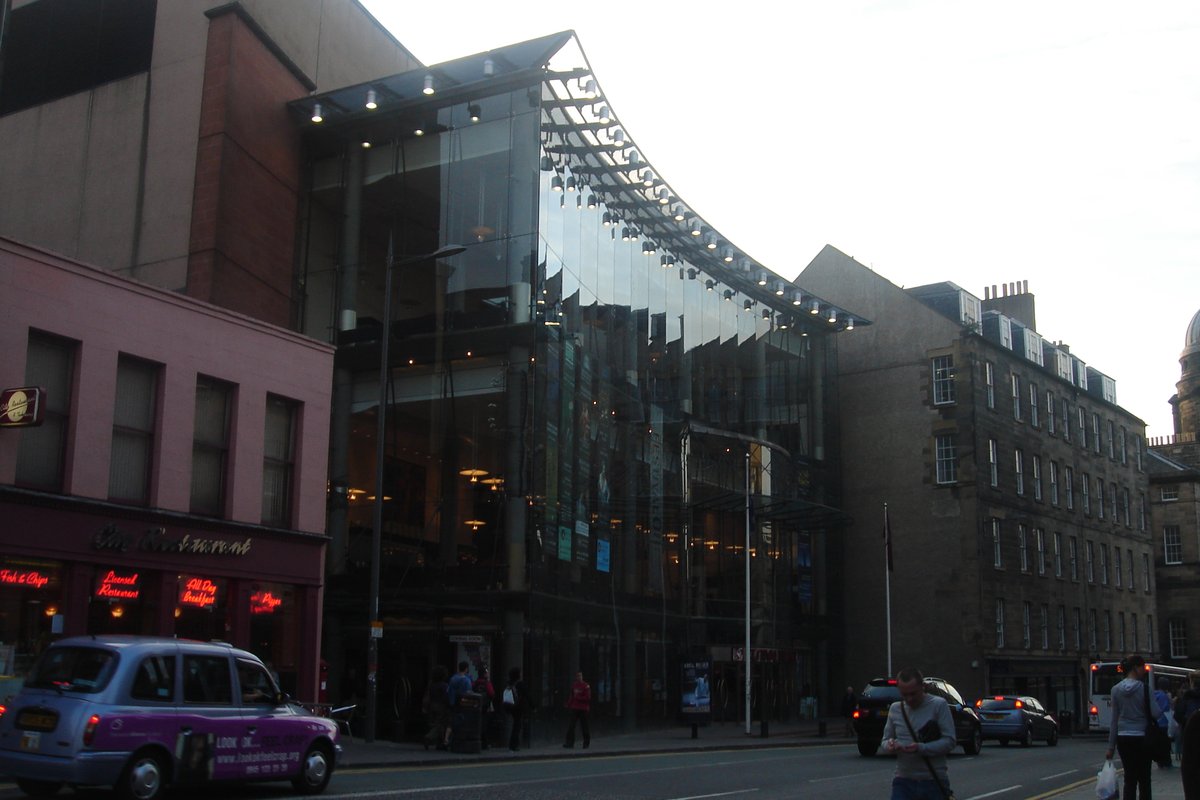
A landmark redevelopment in the early 1990s led by Law & Dunbar-Nasmith and LDN Architects resulted in the Festival Theatre’s 1994 opening. The project preserved the 1928 auditorium, demolished the old façade, and introduced the now-iconic curved glass atrium, creating a dramatic blend of old and new (Edinburgh Architecture). The £15 million project gave Edinburgh a world-class venue with the UK’s largest stage.
Architectural Features
Glass Façade & Foyer
The Festival Theatre’s transparent glass façade, completed in the 1990s, is a city landmark. By day, it reflects Nicolson Street’s historic surroundings; by night, it glows, inviting the public into its vibrant interior. The light-filled foyer behind the glass offers café and bar spaces, designed for accessibility and openness (Historic Theatre Photos).
Historic Auditorium
Behind the modern exterior lies the 1928 Milburn-designed auditorium, renowned for its ornate plasterwork, horseshoe layout, rich red and gold décor, and grand proscenium arch. Seating 1,915, the auditorium offers excellent sightlines and a sense of historic grandeur (Arthur Lloyd).
Stage & Backstage
The Festival Theatre boasts Scotland’s largest stage and extensive backstage facilities, rebuilt in the 1991–94 redevelopment. The new stage accommodates large opera and ballet productions, with ample wing space, scene dock, modern dressing rooms, rehearsal spaces, and a “vertical green room” staircase (Time Out).
Accessibility
Theatre design prioritizes inclusivity: step-free access, lifts to all levels, accessible restrooms, hearing enhancement systems, and designated wheelchair seating. Guide dogs are welcome, and staff are trained in accessibility support (Capital Theatres).
Lighting & Acoustics
Restored 1920s lighting and modern systems ensure atmospheric and practical illumination, while the auditorium’s acoustics suit both spoken word and music. The glass façade’s nighttime glow is a visual highlight of Nicolson Street.
Visiting the Festival Theatre
Hours & Ticketing
- Box Office Hours: Monday–Saturday, 10:00 AM–6:00 PM (extended on show days)
- Performance Entry: Doors open 30–45 minutes before shows
- Tickets: Prices vary by event (£15–£70+); discounts for students, seniors, and groups
- Booking: Online via Capital Theatres, by phone, or in person
Tours & Special Events
Monthly architectural and backstage tours are available, plus special events and workshops. Check the official website for schedules. Year-round, the theatre hosts world-class opera, ballet, musicals, and touring productions.
Accessibility Services
Step-free access, lifts, accessible restrooms, and hearing enhancement systems are standard. Notify the box office in advance for specific needs or accessible bookings (VisitScotland - Accessibility).
Nearby Attractions
Located at 13–29 Nicolson Street, the theatre is close to the Royal Mile, University of Edinburgh, Greyfriars Kirkyard, and Southside dining. Walking, bus, and tram options are plentiful; parking is limited (best use NCP Holyrood Road or Niddry Street car parks for drivers) (Edinburgh Musicals).
Festival Theatre in Edinburgh’s Cultural Life
A Flagship for Major Festivals
As a key venue for the Edinburgh International Festival and Edinburgh Festival Fringe, the Festival Theatre hosts headline opera, ballet, and theatre experiences. In 2025, major premieres and international acts highlight its programming (Edinburgh International Festival, Edinburgh Festival Fringe).
Artistic Diversity and Community Engagement
Programming spans classical ballet, contemporary dance, opera, musicals, and experimental theatre. The Learning and Engagement department runs workshops, relaxed performances, and school partnerships, ensuring accessibility and broad community involvement (Festival Theatre - Capital Theatres).
Economic & Social Impact
Theatre audiences help drive Edinburgh’s festival tourism, supporting hotels, restaurants, and shops. The venue acts as a social and cultural hub, promoting dialogue and the arts’ unifying role (Edinburgh Business School, Full Suitcase).
Literary and International Collaborations
Close ties with the Edinburgh International Book Festival and other literary venues reinforce Edinburgh’s UNESCO City of Literature status (Edinburgh International Book Festival). The Festival Theatre’s international touring productions foster cultural exchange and artistic innovation.
Practical Tips for Visitors
Getting There & Parking
- Train: Edinburgh Waverley (10–15 min walk)
- Bus: Lothian routes 3, 3A, 5, 7, 8, 14, 29, 30, 31, 33, 37, 47, 49
- Car: Limited parking at Niddry Street and NCP Holyrood Road (Edinburgh Musicals)
Facilities & Dining
- Café and foyer bars serve drinks and light meals
- Accessible restrooms on every level
- Cloakroom services during major events
- Numerous restaurants and pubs in the Southside neighborhood
Visitor Tips
- Arrive Early: For best seating, ticket collection, and to enjoy the foyer and exhibitions
- Dress Code: Smart-casual is typical; Edinburgh weather is unpredictable—bring a jacket
- Photography: Allowed in public spaces, but restricted during performances
- Luggage: Use city centre services if needed (Edinburgh.org)
Frequently Asked Questions (FAQ)
Q: What are the Edinburgh Festival Theatre visiting hours?
A: Box office open Monday–Saturday, 10:00 AM–6:00 PM, with extended hours on performance days.
Q: How do I buy tickets?
A: Online, by phone, or at the box office. Early booking is recommended for major events.
Q: Is the theatre accessible?
A: Yes—step-free access, lifts, accessible restrooms, hearing enhancement, and wheelchair seating.
Q: Are guided tours available?
A: Yes, monthly backstage and architectural tours are on offer. Check the website for details.
Q: Where is the Festival Theatre located?
A: 13–29 Nicolson Street, Edinburgh EH8 9FT—close to the Royal Mile and University of Edinburgh.
Visual Highlights


- Explore the theatre’s interactive map and virtual tour on the official website.
Listen to the full story in the app
The whole Edinburgh Festival Theatre,
told well.
Audio guides for 1,100+ cities across 96 countries. History, stories, and local insight — offline ready.
Verified, and shown.
Researched and written by the Audiala editorial team from historical records, architectural archives, and local expertise.
Researched from Wikidata, Wikipedia & official sources · fact-checked · How we make our guides →