Plan and listen to Donaldson'S Hospital with Audiala.
Audio guide in your pocket, itinerary in your browser. Built for the way you actually visit.
Introduction
Donaldson’s Hospital is one of Edinburgh’s most striking historical and architectural landmarks, representing a powerful intersection of 19th-century philanthropy, educational innovation, and cultural heritage. Originally established through the bequest of James Donaldson, the institution began as a charitable asylum for disadvantaged children and evolved into a pioneering school for deaf education in Scotland. Its iconic building, completed in 1851 by the celebrated architect William Henry Playfair, is a masterpiece of Jacobethan style and a lasting symbol of Edinburgh’s commitment to social welfare and architectural excellence.
Today, while the original West Coates site has been sensitively transformed into exclusive residential apartments with protected heritage status, Donaldson’s legacy thrives through its modern Linlithgow campus and the ongoing work of the Donaldson Trust. Visitors can admire the building’s exterior grandeur, delve into its historical context, and participate in occasional heritage events and guided tours. Conveniently located in Edinburgh’s West End, the site is surrounded by other notable attractions, making it an essential stop for anyone interested in Scottish history, architecture, or education.
This guide provides comprehensive, up-to-date information for visitors, including details on visiting hours, ticketing, accessibility, nearby attractions, and travel tips to ensure a rewarding and respectful experience at this unique Edinburgh landmark. For official updates, consult the Donaldson’s School website, Historic Environment Scotland, and Wikipedia.
Historical Background
Donaldson’s Hospital was founded in the early 19th century through the philanthropy of James Donaldson, a prominent Edinburgh publisher. His substantial bequest enabled the creation of an institution dedicated initially to the care and education of disadvantaged children, later expanding its mission to become a leading center for deaf education. The original hospital’s purpose-built site at West Coates became a model for inclusive, progressive education in Scotland and beyond. Over time, Donaldson’s merged with other institutions, refining its focus on deaf education and influencing practices nationwide (Historic Environment Scotland).
Architectural Style and Design
Jacobethan Splendor
The West Coates building, designed by William Henry Playfair and completed in 1851, stands as a prime example of the Jacobethan architectural style. Playfair’s design blends Elizabethan and Jacobean motifs—such as battlemented parapets, gabled roofs, and ornate stonework—with neoclassical symmetry. Queen Victoria, who opened the building in 1850, reportedly described it as “more impressive than many of her own palaces.”
Quadrangle Layout
The institution is arranged around an expansive quadrangle, reminiscent of collegiate architecture at Oxford and Cambridge. This layout provided a secure and uplifting environment for students, with ample natural light and ventilation.
Towers and Turrets
Four grand corner towers, each with multiple turrets, lend the building a castle-like silhouette and house staircases and ancillary rooms. These features contribute to the building’s iconic presence on the Edinburgh skyline.
Jacobethan Detailing
Distinctive details include mullioned windows, heraldic shields, string courses, and elaborate stone carvings, reflecting a rich blend of Renaissance and medieval motifs.
Interior Spaces
Although the interiors have been adapted for residential use, historical records describe airy classrooms, dormitories, and communal halls designed to foster healthy learning and living environments.
Evolution and Current Use
The West Coates building served as Donaldson’s main campus for over 150 years, nurturing generations of deaf and hearing children in a bilingual environment that celebrated British Sign Language (BSL) and inclusivity. In 2008, the institution relocated to a purpose-built campus in Linlithgow, where the Donaldson Trust continues its mission today. The original building’s conversion into luxury apartments has preserved its key architectural features—including the grand staircases, original windows, and distinctive towers—through a highly praised adaptive reuse project (Wikipedia).
Visiting Donaldson’s Hospital
Location and Access
The historic Donaldson’s Hospital building is located on West Coates in Edinburgh’s West End, a short walk from Haymarket Station and close to other major city attractions. The building’s exterior can be admired year-round from public pavements and nearby streets.
Visiting Hours and Tickets
- Exterior Viewing: The outside of the West Coates building is visible at any time from public areas; no ticket is required.
- Linlithgow Campus: Visits to the active Donaldson’s School in Linlithgow are by appointment only. Contact the school’s administration for tour arrangements or to attend special events (Donaldson’s School).
- Special Events and Guided Tours: Occasionally, heritage organizations and the Donaldson Trust offer guided tours or open days at both sites. Check their websites and local tourism platforms for current schedules.
Guided Tours and Special Access
Although regular guided tours of the interior are not available, some walking tours of Edinburgh’s West End and New Town include detailed commentary on Donaldson’s Hospital's architecture and history. During special heritage events, limited access may be possible by prior arrangement.
Accessibility
The West Coates site, now a residential complex, offers only exterior viewing from public areas, which are generally accessible, though visitors should be mindful of uneven pavements typical of historic districts. The Linlithgow campus is fully accessible and supports a range of communication needs, including BSL.
Best Times to Visit
The exterior can be enjoyed year-round, but late spring and early autumn offer the most pleasant weather and best lighting for photography. Edinburgh is busiest during the Fringe Festival (August) and Hogmanay (New Year), so plan accordingly for a more tranquil experience (UK Travel Planning).
Photography and Etiquette
The grand façade, towers, and landscaped grounds provide excellent photographic opportunities, especially during golden hour. Please respect the privacy of residents and the school community; interior photography is not permitted.
Cultural and Educational Legacy
Donaldson’s Hospital was at the forefront of inclusive education, fostering a bilingual environment where BSL and English were equally valued. Its alumni—deaf and hearing alike—have gone on to become educators, interpreters, and advocates within the Deaf community. The institution’s support for social mobility and empowerment, alongside its architectural significance, makes it a touchstone of Scottish educational and social history (Donaldson’s School).
During WWII, the building’s adaptability was evident as it served as a prisoner of war camp. Its archives, preserved by the Donaldson Trust and the National Library of Scotland, offer rich insights into the evolution of Deaf education and social advocacy.
Nearby Attractions and Travel Tips
While exploring the West End, consider visiting:
- Royal Botanic Garden Edinburgh: Lush gardens and glasshouses nearby.
- Edinburgh Castle: Scotland’s most famous fortress.
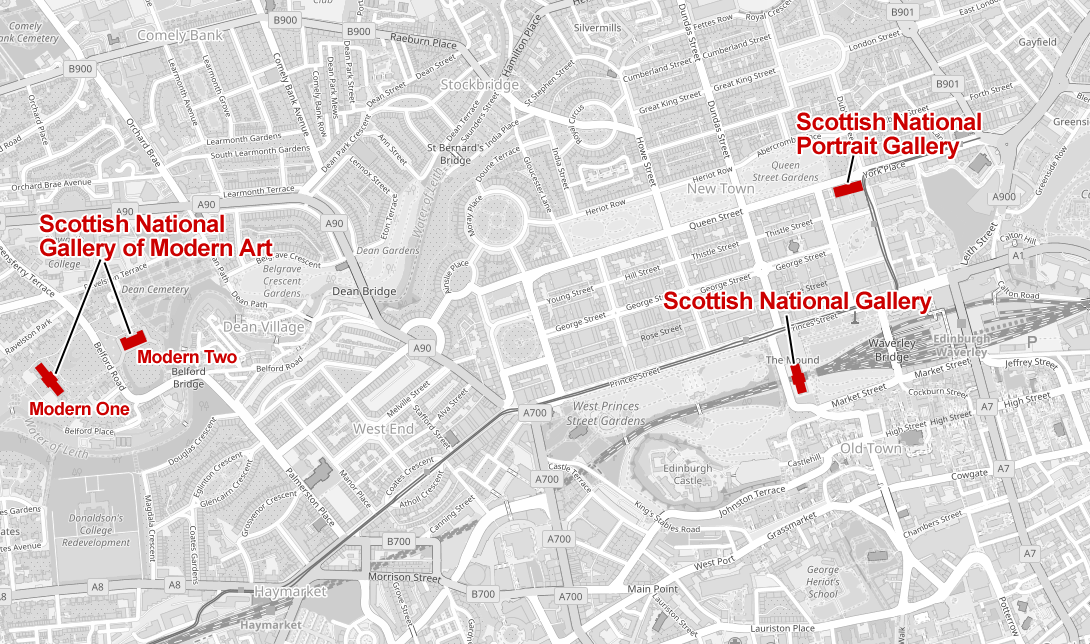
- Scottish National Gallery of Modern Art: Contemporary works in a striking setting.
- Princes Street Gardens and New Town: UNESCO World Heritage sites with Georgian architecture.
Public transport (bus, tram, and train) provides easy access. Wear comfortable footwear, and consider combining your visit with nearby landmarks for a full day of cultural discovery.
Frequently Asked Questions (FAQ)
Can I enter the original Donaldson’s Hospital building?
No, the building is now private residences and is not open to the public. Exterior viewing is possible from public streets.
Does the Donaldson Trust offer tours?
Yes, guided tours of the Linlithgow campus and special events at the historic site are occasionally available. Check their website for updates.
Is the site wheelchair accessible?
Public viewing points around the West Coates building are generally accessible, but some uneven pavements may be encountered. The Linlithgow campus is fully accessible.
Are tickets required?
No tickets are needed for exterior viewing. Tickets may be required for special tours or events—book in advance.
Can I take photographs?
Yes, photography of the exterior is encouraged from public areas. Interior photography is not permitted.
What nearby attractions can I visit?
Edinburgh Castle, Royal Botanic Garden, Princes Street Gardens, and the Scottish National Gallery of Modern Art are all within easy reach.
Listen to the full story in the app
The whole Donaldson'S Hospital,
told well.
Audio guides for 1,100+ cities across 96 countries. History, stories, and local insight — offline ready.

Verified, and shown.
Researched and written by the Audiala editorial team from historical records, architectural archives, and local expertise.
Researched from Wikidata, Wikipedia & official sources · fact-checked · How we make our guides →