Cardiff
United Kingdom Updated Apr 2026
Salt hangs in the air at Cardiff Bay while a rugby crowd roars under a steel roof a few streets inland, and that contrast tells you almost everything about Cardiff, United Kingdom. This is a capital that still feels close to the dock wall, the market stall, the pub door flung open on Westgate Street. Cardiff can look modest on first glance. Then the city starts slipping you its better stories.
 Photo: Balazs Bezeczky / Pexels
- Attractions
- 14
- Trip length
- 2-3 days
- Best season
- Late spring to early autumn (May-September)
Why Cardiff
Built from cited sources · see the method · How we make our guides →
The centre is built for wandering on foot, but not in the usual grand-capital way. Cardiff reveals itself in fragments: a Roman fort inside Cardiff Castle, a Victorian fantasy interior commissioned by the Bute family, seven glass-roofed arcades packed with more than 100 independent shops and cafes, and a market where Welsh cakes hit the counter still warm from the bakestone. Even the small details stick. William Burges's Animal Wall, lined with stone beasts beside the castle, feels exactly like the sort of eccentric flourish this city would keep and love.
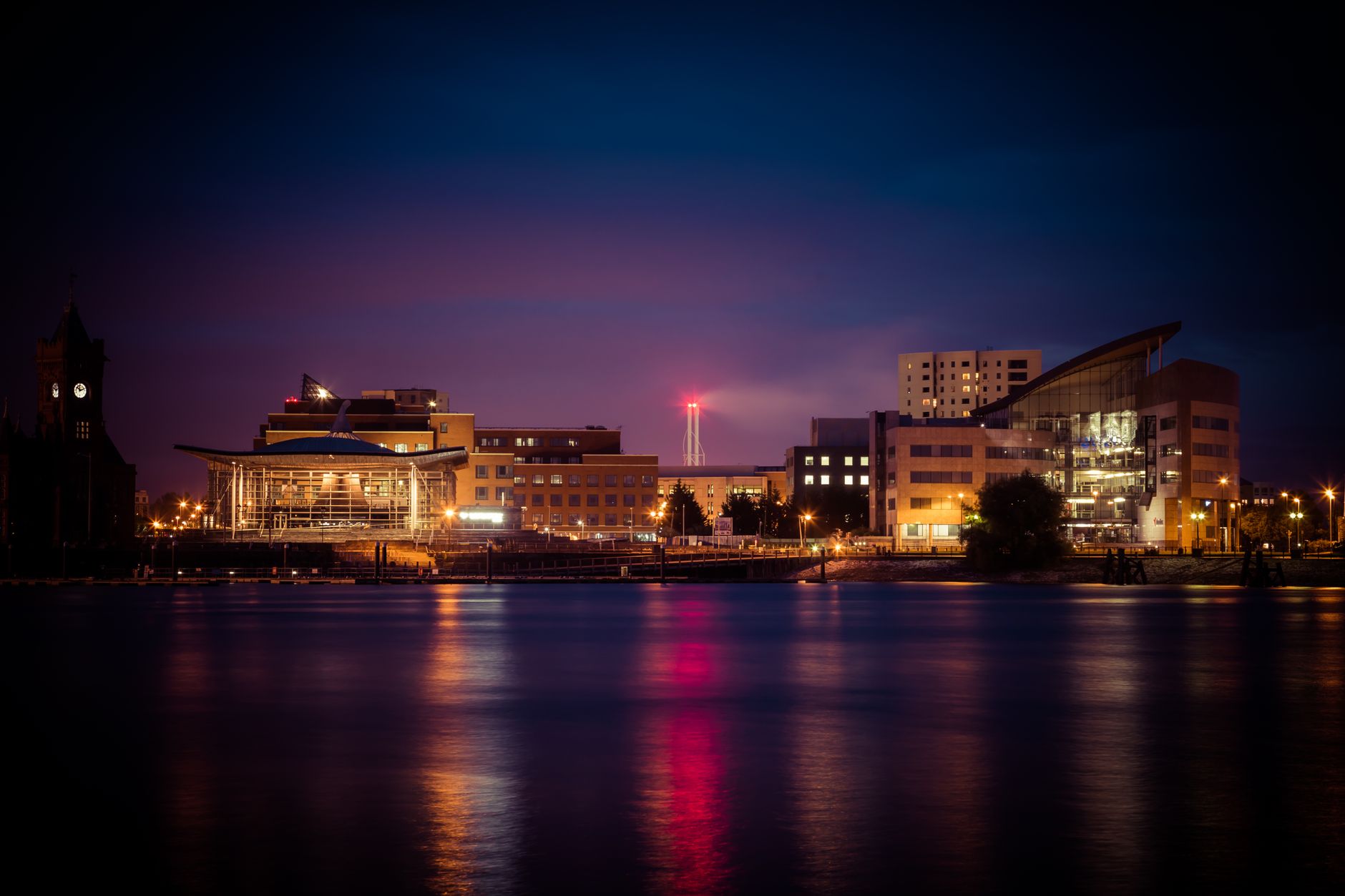
Water shaped Cardiff long before politicians did. Coal once made these docks one of the busiest export points in the world, and you can still read that rise and reinvention in the Bay, where the Gothic Pierhead faces Richard Rogers's Senedd across the water like two arguments about Wales held in brick and glass. Walk the 1.1-kilometre Barrage when the wind is up and the estuary turns silver. The city suddenly feels bigger than its map.
Cardiff's real charm lies in how quickly it changes register. One hour you're standing under Jacob Epstein's huge Christ in Majesty in Llandaff Cathedral, with cold stone and candle wax in the air; the next you're in Pontcanna eating well without ceremony, or on Womanby Street heading downstairs for a loud, sticky-floored live set at Clwb Ifor Bach. That's the trick Cardiff pulls better than larger capitals. It keeps history close to everyday life, and neither side seems embarrassed by the other.
A Castle With Layers
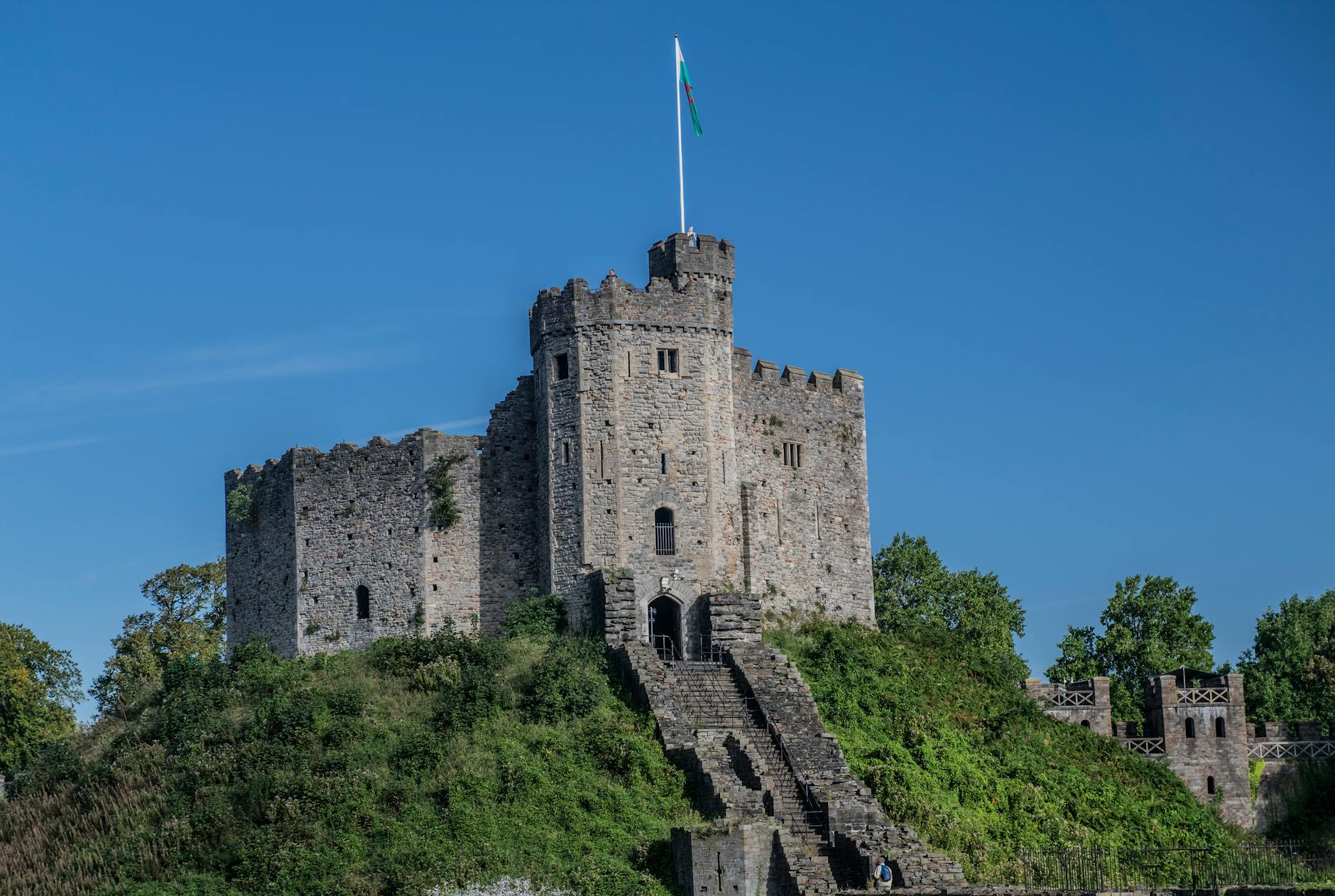
Cardiff Castle compresses nearly 2,000 years into one site: Roman walls, a Norman keep, and William Burges's Victorian interiors that feel half medieval dream, half aristocratic fever vision. Climb the keep if you can; the view explains how tightly the old town still grips the modern city.The City of Arcades
Central Cardiff hides in plain sight behind glass roofs and cast-iron galleries. The seven Victorian and Edwardian arcades hold more than 100 independent shops, cafes, bars, and Spillers in Morgan Arcade, which claims the title of the world's oldest record shop.From Coal Port to Capital
Cardiff Bay tells the city's sharpest story: dockland wealth, industrial decline, then reinvention beside the water. Walk from the red-brick Pierhead to Richard Rogers's Senedd and you can feel Wales changing shape in stone, brick, and glass.Green Space With Real Weight
Bute Park is not a token city lawn but 56 hectares of riverbank, formal planting, and more than 2,000 trees behind the castle walls. A few minutes from the shopping streets, the air changes: damp earth, leaf smell, gulls overhead, the Taff moving past without fuss.
Neighborhoods
Where to wander, by quarter — each with its own rhythm.
City Centre
Central Cardiff is compact, loud on event days, and better layered than many visitors expect. High Street, St Mary Street, Womanby Street, the Victorian arcades, Cardiff Market, the castle, and Principality Stadium all sit close enough to cover on foot, which means a day can swing from Roman walls to record shops to late pints without much planning. Skip chain-food autopilot if you can. The arcades and market are where the city speaks in its own voice.Cardiff Bay
Cardiff Bay is the city's great reinvention project, but the place works best when you read its old dock bones beneath the polished waterfront. The Pierhead, the Senedd, the Norwegian Church, Techniquest, Mermaid Quay, and the Barrage all sit within easy reach, with gulls overhead and that open-water light bouncing off steel and brick. Some restaurants here are more convenient than memorable. Come for the long walk, the big sky, and the sense of a port city rewriting itself in public.Llandaff
Llandaff feels like Cardiff keeping a second historic self slightly out of sight. The cathedral is the draw, and rightly so: medieval stone, wartime damage, and George Pace's modern restoration all meet beneath Epstein's suspended Christ in Majesty, which still lands with force. But the district matters beyond the building. Quiet lanes, old walls, local pubs, and nearby Insole Court give this part of the city a calm that the centre rarely offers.Pontcanna
Pontcanna is where Cardiff goes when it wants a very good dinner without a lot of noise about it. Tree-lined streets west of Bute Park hold some of the city's strongest restaurants and cafe culture, including the sort of places where Welsh produce is handled with confidence rather than ceremony. The mood is polished but not stiff. Come hungry, then walk it off back through the park.Canton
Canton has a broader, scruffier energy than Pontcanna next door, and that is part of its appeal. Chapter Arts Centre anchors the area's cultural life with cinema, gallery, performance, and a cafe that actually fills with locals, while the surrounding streets mix long-running independents, casual places to eat, and a lived-in feel that never reads as stage set. Cardiff starts to feel less like a weekend destination here. More like a city people genuinely use.Roath
Roath gives you the greener, more residential version of Cardiff, with Roath Park at its heart and a strong independent streak running through nearby streets. The 30-acre lake and Scott Memorial Lighthouse draw locals for boating and long loops by the water, while cafes, pubs, and small venues give the district enough life after dark. This is a good area when the centre starts feeling too compressed. It breathes better.Cathays
Cathays runs on student energy, cheap meals, and a schedule that drifts later into the night than genteel guidebooks admit. Around Cathays and nearby City Road, you'll find some of Cardiff's best-value international food, plus the Sherman Theatre and easy access to the grand Edwardian civic set piece of Cathays Park. The area can look a little worn at the edges. That is not a flaw.Grangetown
Grangetown sits between the centre and the Bay and often gets treated as a place to pass through, which is a mistake. Its mix of communities gives it some of the city's strongest everyday food, and its position near the river, the Barrage routes, and venues like Tramshed makes it more useful than glamorous. Riverside Market is close at hand on Sundays. So is a version of Cardiff that feels less edited for visitors.
Plan your trip
Before you go
- Getting There
- For 2026, Cardiff Airport (CWL) is the closest airport, linked by Transport for Wales train to Rhoose Cardiff International Airport station and the 905 shuttle bus; the journey from Cardiff Central takes about 42 minutes. Bristol Airport is often easier for wider flight choice, with direct National Express coaches to Cardiff in about 1 hour 20 minutes, while Heathrow has direct coaches in about 2 hours 50 minutes. Main rail gateways are Cardiff Central and Cardiff Queen Street, and the city sits on the M4 corridor with direct road links west to Swansea and east toward Newport, Bristol, and London.
- Getting Around
- Cardiff has no underground; in 2026 the backbone is the South Wales Metro and wider TfW rail network, with 20 rail stations across the city and useful stops at Cardiff Central, Queen Street, and Cardiff Bay. Cardiff Bus runs the main urban network, including bus 6 for the city centre to Cardiff Bay, with adult singles at £2.50 and a Day to Go ticket at £5; the Cardiff Bus Interchange beside Cardiff Central is about a 50-metre walk from the station. For rail, TfW Pay As You Go uses contactless tap-in and tap-out with Zone 1 caps of £5.90 daily and £17.70 weekly, and the flat, largely pedestrianised centre makes walking the default between many sights.
- Climate & Best Time
- Cardiff stays mild but wet, and 2026 visitors should pack for quick weather changes rather than dramatic heat or cold. Spring runs roughly 11 to 17C, summer 20 to 22C, autumn 12 to 19C, and winter 8 to 9C, with the driest stretch usually from April to July and the wettest from October to December. May to July is the sweet spot for long days and lower rainfall, while early September works well if you want fewer people after the summer peak.
- Language & Currency
- English is what you'll use everywhere, but Welsh is visible across the city on signs, station boards, and public buildings; 'Croeso' means welcome and 'Diolch' means thank you. Currency is pound sterling (£), and in 2026 card and contactless payment are standard across transport, museums, and most restaurants, though exact cash still helps on some buses. Free public Wi-Fi appears in city-centre and bay hotspots under CardiffFreeWifi.
- Safety
- Cardiff is manageable on foot, but the practical trouble spots are late-night drinking zones in the centre and heavy event crowds around Principality Stadium. On match or concert days, streets such as Westgate Street, St Mary Street, Castle Street, and Wood Street can close or become slow-moving funnels, so check bus diversions and expect rail queues after the event. Use official taxi ranks or pre-booked cars, and avoid counting on park cut-throughs after dark since Bute Park closes 30 minutes before sunset.
From Roman Rampart to Welsh Capital
Cardiff grew from a frontier fort on the Taff into the political stage and tidal heart of modern Wales.
- c. 75
Romans Raise the First Fort
Roman troops built a fort beside the River Taff during the campaign against the Silures, planting military order in wet estuarine ground that could smell of mud and salt on a windy day. The site mattered because roads, river, and sea met here. Cardiff begins, in other words, as a piece of hard military logic.
- 383
The Legions Pull Back
By the late 4th century, Roman power in Britain was thinning, and the Cardiff fort was abandoned soon after. Walls remained, but authority drained away. The old enclosure did not vanish; it became the stone memory later rulers would reuse.
- c. 850
Vikings Test the River Mouth
According to later accounts, Viking raiders used Cardiff's coast and river access as a base, which tells you how exposed this place was long before it became a city. The Taff was no gentle backdrop then. It was an open door.
- 1081
Normans Seize the High Ground
After the Norman push into south Wales, a new castle rose inside the Roman footprint, first in earth and timber. The choice was blunt and sensible: keep the old walls, command the crossing, watch the river. Medieval Cardiff grew in the shadow of that decision.
- 1126
A Town Learns to Govern
Ralph Prepositus de Kardi appears in the record as Cardiff's first known mayor, proof that the settlement outside the castle had become more than a garrison appendage. Markets, tolls, disputes, shipping: someone had to keep score. Borough life had started to harden into civic habit.
- 1158
Ifor Bach Scales the Walls
Ifor Bach, lord of Senghenydd, attacked Cardiff Castle and carried off William of Gloucester and his family in one of the great acts of medieval Welsh defiance. Local tradition loves the image of men climbing the walls at night. Fair enough. It turns Cardiff from a passive stronghold into a stage for audacity.
Show the full timeline (27 moments)
- c. 1180
St John's Begins to Rise
St John the Baptist Church took shape as Cardiff's parish church, its stone tower eventually becoming one of the town's fixed verticals above the market streets. Bells and trade went together here. Faith was never far from commerce in medieval Cardiff.
- 1327
Staple Port, Growing Ambition
Cardiff was declared a Port of the Staple, a status that tied it to the regulated export trade of medieval England and Wales. That sounds dry on paper. In practice it meant cargo, customs, and a louder waterfront where wealth arrived in sacks, bales, and arguments.
- 1349
Plague Reaches the Borough
The Black Death reached Wales in 1349, and Cardiff, one of the country's busiest boroughs, would have felt the blow with particular force. Streets that lived by trade suddenly carried fear. Ports bring riches, but they also bring whatever the ships carry.
- 1404
Owain Glyndwr Burns the Castle
During the Welsh rising against English rule, Owain Glyndwr captured Cardiff Castle and burned much of the town. Smoke, panic, timber, shouting. The attack left a scar deeper than the ash, because it fixed Cardiff inside the story of Welsh resistance.
- 1536
Cardiff Becomes County Town
The Laws in Wales Acts folded Welsh administration into the English state, and Cardiff became the county town of Glamorgan. Power now came with paperwork as much as stone. Courts, officials, and civic rank pulled the town into a new political order.
- 1595
The First Coal Leaves
The first recorded shipment of coal left Cardiff in 1595, a small departure with enormous hindsight. Nobody standing on the quay could yet see the future black mountain of exports. Still, the city's destiny had begun to smell faintly of coal dust.
- 1648
Battle of St Fagans
Just west of Cardiff, Parliamentarian troops shattered a larger Royalist force at the Battle of St Fagans, often described as the last major battle fought in Wales. The fighting was sharp and short. Two hours settled what speeches could not.
- 1793
Birth of the Builder Marquess
John Crichton-Stuart, later the 2nd Marquess of Bute, was born in 1793 and would do more than anyone to turn Cardiff into an industrial port of global scale. He did not invent coal, ambition, or geography. He joined them with docks, money, and timing.
- 1794
The Canal Opens the Valleys
The Glamorganshire Canal linked Merthyr Tydfil's ironworks to Cardiff's sea outlet, pulling the town into the machinery of the Industrial Revolution. Water did the heavy work before railways took over. Cardiff's waterfront was no longer provincial.
- 1839
Bute West Dock Changes Everything
The opening of Bute West Dock gave Cardiff the infrastructure it needed to handle coal at industrial scale, and the town's growth turned ferocious. Ships crowded the quays. Coal blackened clothes, lungs, fortunes, and the city's very sense of itself.
- 1865
William Burges Reimagines the Castle
Architect William Burges began transforming Cardiff Castle for the 3rd Marquess of Bute into a feverish Gothic Revival dream of murals, clockwork detail, painted ceilings, and animal carvings that refuse to behave. The place is half scholarship, half fantasy. Cardiff gained a monument that tells the truth about Victorian wealth by being gloriously excessive.
- 1905
A Town Becomes a City
Edward VII granted Cardiff city status in 1905, recognizing what trade figures had already made plain. Coal had swollen the place beyond its old borough frame. Civic confidence now had a royal stamp on it.
- 1913
Coal Exports Reach Their Peak
Cardiff hit its high-water mark as a coal-exporting port in 1913, when South Wales steam coal left for navies, railways, and furnaces across the world. The docks then were deafening: winches, hooves, whistles, chains, men shouting through soot. This was wealth at full volume, just before the long decline.
- 1941
The Blitz Tears Through Cardiff
German bombing hit Cardiff hard during the Second World War, and the raid of 2 January 1941 left Llandaff Cathedral badly damaged. Glass broke, roofs failed, and whole districts learned what strategic geography can cost. Ports make targets as well as fortunes.
- 1955
Capital at Last
On 20 December 1955, Cardiff was officially named the capital of Wales. The choice was political, symbolic, and overdue. A coal port that had often looked outward to empire was now asked to speak for a nation.
- 1999
The Bay Is Remade
The Cardiff Bay Barrage was completed in 1999, turning tidal mudflats into a freshwater bay and opening more than 13 kilometers of waterfront to new use. Old dockland harshness gave way to a different city edge of promenades, glass, and wind off the water. Regeneration always edits memory; here, the edit was huge.
- 1999
Devolution Comes to Cardiff
The National Assembly for Wales first met in Cardiff in 1999, placing the machinery of devolved government in the city. That mattered far beyond committee rooms. Cardiff stopped being only the capital in name and became the working chamber of Welsh political life.
- 1999
A Stadium in the City Core
The Millennium Stadium, now Principality Stadium, opened in the city center for the Rugby World Cup. Most cities push an arena to the edge. Cardiff put one in its bloodstream, which means match days still spill straight into streets, pubs, and train platforms.
- 2004
The Wales Millennium Centre Opens
The Wales Millennium Centre opened in Cardiff Bay with bronze cladding, slate, and a facade line that has become one of the city's best-known modern signatures. This was not ornamental civic tidying. It announced that post-industrial Cardiff intended to make culture as visible as commerce.
- 2006
The Senedd Finds Its Home
Richard Rogers's Senedd building opened in Cardiff Bay in 2006, giving Welsh democracy a permanent chamber of timber, glass, and broad public space. Light moves differently there than in older seats of power. It feels deliberate: government on display, not hidden behind stone corridors.
- 2017
Cardiff Hosts Europe
When Cardiff staged the UEFA Champions League Final in 2017, the city briefly became a continental broadcast set as much as a football venue. The cameras loved the castle, the river, the stadium roofline. But the deeper point was scale: Cardiff could now host events once reserved for much larger capitals.
Who lived here
-
Writer · 1916–1990
Roald Dahl
Born here
Roald Dahl was born in Cardiff to Norwegian parents when the docks still made the city feel plugged into half the world. He'd probably recognize the Bay's salt air at once, then raise an eyebrow at seeing his name fixed to a public square.
-
Singer · born 1937
Shirley Bassey
Born here
Shirley Bassey grew up in Tiger Bay, the old docklands district where Cardiff sounded tougher, rougher, and far more international than many outsiders expected. Her voice carries some of that force: glamour, yes, but steel underneath.
-
Composer and actor · 1893–1951
Ivor Novello
Born here
Ivor Novello was born in Cardiff when the city was still rising on coal wealth and civic ambition. He made a career out of polish and melody, and he would have understood why Cardiff still likes a bit of theatre in its architecture.
-
Footballer · born 1989
Gareth Bale
Born here
Gareth Bale came out of Cardiff before becoming one of Wales's defining modern athletes, a local boy turned global star with a left foot that caused trouble in several countries. On a big match day, with scarves out and the stadium singing, the city still speaks his language.
-
Paralympian and peer · born 1969
Tanni Grey-Thompson
Born here
Tanni Grey-Thompson was born in Cardiff and went on to become one of Britain's great Paralympians, then a public voice on disability rights and access. She would look hard at ramps, crossings, and station design here, because pride in a city means asking more of it.
Insider tips
Small things that change how the city treats you.
Check match days
Principality Stadium sits in the city centre, so rugby and concert days change Cardiff fast: trains fill, pub queues lengthen, and central streets can close. Check the stadium calendar before you book dinner or plan an airport run.Use the free museums
National Museum Cardiff and St Fagans are free, and both earn real time in your schedule. Use them to balance out paid sights like Cardiff Castle without ending up in filler attractions.Eat in arcades
For a first snack, skip chain-heavy strips and head into Castle Arcade, Royal Arcade, or Cardiff Market. Warm Welsh cakes from Cardiff Bakestones or Fabulous Welshcakes taste better when they come off a griddle, not a souvenir shelf.Walk the bay properly
Mermaid Quay gives you the postcard version of Cardiff Bay, but the fuller experience is the 10 km Bay Trail over the Barrage and across Pont y Werin toward Penarth. Wind can be sharp out there, even on bright days.Tip like locals
Cardiff follows normal UK habits: tipping is optional, and 10-15% is enough for good table service if a service charge has not already been added. Nobody expects a tip when you order drinks at the pub bar.Use neighborhoods wisely
The city centre works for markets, arcades, and late trains, but better-value meals often sit out in Roath, City Road, Canton, and Pontcanna. Go to the Bay for waterfront air and evening walks, not for your cheapest dinner.
Gallery
The city, as it actually looks.





Frequently asked
Is Cardiff worth visiting?
Yes, especially if you like cities that change character every 15 minutes. Cardiff gives you a Roman-and-Norman castle site, elegant Victorian arcades, a serious docklands story, and free museums without the sprawl or price tag of London.
How many days in Cardiff?
Two to three days works well for most visitors. That gives you time for the castle, the arcades and market, one major museum, Cardiff Bay, and either Llandaff, St Fagans, or a park afternoon at Roath or Bute Park.
Can you see Cardiff without a car?
Yes. Central Cardiff is highly walkable, and the main visitor areas between the castle, arcades, market, civic centre, and stadium sit close together; Cardiff Bay is easy by bus, train, or a longer walk.
How do I get from Cardiff Airport to the city centre?
The usual route is bus or rail connection via Rhoose, then into Cardiff Central. Build in extra time on event days, because stadium crowds can turn a simple arrival into a slow one.
Is Cardiff safe at night?
Generally yes in the main central areas, but use the usual city sense after midnight. St Mary Street, Mill Lane, and the streets around the stadium get louder and drunker on big event weekends, so solo walkers may prefer a taxi back late.
Is Cardiff expensive for tourists?
By UK capital standards, no. Free entry at National Museum Cardiff and St Fagans helps a lot, and you can eat well at Cardiff Market, Riverside Market, or on City Road without paying Bay-front prices.
What is the best area to stay in Cardiff?
The city centre is the easiest base for first-time visitors because you can walk to the castle, arcades, market, and Cardiff Central station. Cardiff Bay suits travelers who want water views and evening promenades, but it is less convenient for quick old-city wandering.
What local food should I try in Cardiff?
Start with warm Welsh cakes, then look for cawl, Welsh rarebit, bara brith, and a breakfast with laverbread and cockles if you want the full Welsh angle. Cardiff Market, Blue Bell, Caffi Cymru, and The Welsh House are better bets than generic pub menus.
Pick up where you left off
Saved and recently read places — kept on this device only.
Photo credits (9)
- Balazs Bezeczky — Pexels License (https://www.pexels.com/license/) — Source: https://www.pexels.com/photo/5743996/
- Balazs Bezeczky — Pexels License (https://www.pexels.com/license/) — Source: https://www.pexels.com/photo/5743990/
- Jake Fox — Pexels License (https://www.pexels.com/license/) — Source: https://www.pexels.com/photo/12071213/
- Duncan Richardson — Pexels License (https://www.pexels.com/license/) — Source: https://www.pexels.com/photo/16510048/
- David Atkins — Pexels License (https://www.pexels.com/license/) — Source: https://www.pexels.com/photo/6241160/
- Balazs Bezeczky — Pexels License (https://www.pexels.com/license/) — Source: https://www.pexels.com/photo/5743994/
- Frans van Heerden — Pexels License (https://www.pexels.com/license/) — Source: https://www.pexels.com/photo/19825429/
- Vladislav Lolenko — Pexels License (https://www.pexels.com/license/) — Source: https://www.pexels.com/photo/33986342/
- Howard Senton — Pexels License (https://www.pexels.com/license/) — Source: https://www.pexels.com/photo/31184605/
Photos may have been resized or cropped.