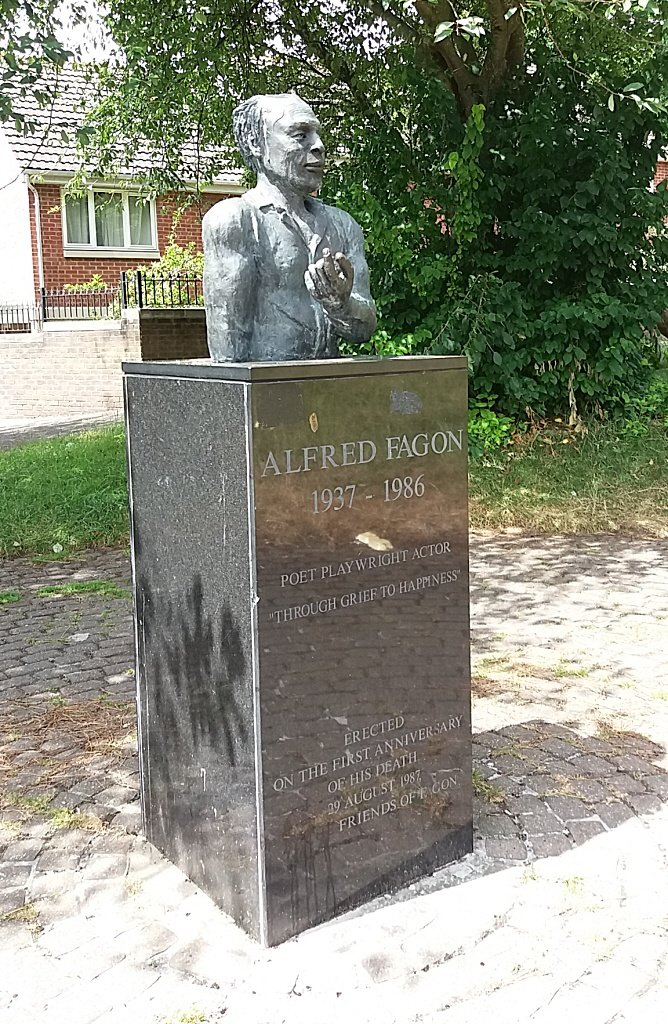
Plan and listen to Statue Of Alfred Fagon with Audiala.
Audio guide in your pocket, itinerary in your browser. Built for the way you actually visit.
Introduction
The Statue of Alfred Fagon in Bristol, United Kingdom, stands as a profound tribute to one of the most influential Black British playwrights, poets, and actors of the 20th century. Situated at the heart of St Pauls—a neighborhood celebrated for its rich Caribbean heritage—the statue not only commemorates Fagon’s artistic legacy but also serves as a powerful symbol of representation, resilience, and community pride. This comprehensive guide explores Alfred Fagon’s life, the creation and significance of his memorial, practical visitor details, and its enduring role in Bristol’s cultural landscape (Historic England; Bristol Post).

Alfred Fagon: Life and Legacy
Early Life and Migration
Alfred Fagon was born in Clarendon, Jamaica, in 1937, one of eleven children. He migrated to England in 1955, joining the Windrush Generation. Settling first in Nottingham, Fagon worked for British Rail and then joined the Royal Corps of Signals, becoming the Middleweight Boxing Champion in 1962. After leaving the army, he moved to Bristol and began his career in the performing arts (Wikipedia).
Artistic Contributions
Fagon rapidly established himself as a leading voice in Black British theatre during the 1970s and 1980s. His plays, including "No Soldiers in St Pauls," "11 Josephine House," "Death of a Blackman," and "Four Hundred Pounds," explored themes of migration, identity, and social justice, with a particular focus on the Black British experience (Discovering Bristol). His work was performed at major venues such as the Royal Court Theatre and Hampstead Theatre and broadcast on national television.
Untimely Death and Community Response
Fagon died suddenly of a heart attack in 1986 at the age of 49. At the time, he was not immediately identified by authorities and received a pauper’s funeral. His friends and supporters, galvanized by this injustice, formed the Friends of Fagon Committee, which led to the commissioning of a public statue in his honor (Discovering Bristol).
The Statue of Alfred Fagon
Creation and Unveiling
Unveiled on 29 August 1987, the statue was the first in Bristol dedicated to a Black individual. Zimbabwean artist David Mutasa sculpted the bronze bust, which stands atop a polished black marble pedestal at the intersection of Ashley Road and Grosvenor Road in St Pauls, near Fagon’s former home. The statue’s lifelike depiction of Fagon, with his left hand raised and index finger pointing upwards, symbolizes hope and determination (Historic England).
ALFRED FAGON
1937 – 1986
POET PLAYWRIGHT ACTOR
“THROUGH GRIEF TO HAPPINESS”
ERECTED ON THE FIRST ANNIVERSARY OF HIS DEATH,
29 AUGUST 1987,
BY THE FRIENDS OF FAGON
Artistic Features and Symbolism
Mutasa’s work is noted for its realism and emotional depth. The statue’s style invites personal engagement, while its public placement in a landscaped green space reinforces its accessibility and community connection (BBC News).
Heritage Status and Conservation
In 2022, the statue was granted Grade II listed status, recognizing its special architectural and historic interest and ensuring its long-term protection (Historic England). The listing highlights its significance as a monument to Black British history and as a work of public art.
Visiting Information
Location
- Address: Grosvenor Road Triangle, St Pauls, Bristol, BS2 8YA
- Setting: The statue is located in a small, landscaped public park at the corner of Ashley Road and Grosvenor Road (Bristol Post).
Opening Hours and Tickets
- Hours: Open 24 hours a day, 7 days a week, year-round; best visited during daylight for safety and optimal viewing.
- Admission: Free; no tickets required.
Accessibility
- Mobility: The site features paved paths and is wheelchair accessible.
- Transport: Easily reached by bus from Bristol city center; Bristol Temple Meads train station is approximately 1.5 miles away. Limited on-street parking and good cycling access.
Facilities
- Restrooms: Not on-site; available in nearby cafes and community centers.
- Food & Drink: Numerous independent cafes and Caribbean eateries are within walking distance.
- Shops: Local stores and markets for snacks and refreshments.
Community and Cultural Significance
Context and Meaning
The Alfred Fagon statue is a focal point for Bristol’s Black community and the St Pauls neighborhood, which has long been a center of Caribbean culture, activism, and migration. The statue plays a vital role in annual events such as St Pauls Carnival and Black History Month, and is used for commemorations like the Alfred Fagon Memorial Lecture (Discovering Bristol).
Educational and Social Impact
Local schools and organizations use the statue as an educational resource on migration, multiculturalism, and Black British history. The site is included in Bristol’s Black History Trail and features in guided tours and community walks (Visit Bristol).
Heritage and Challenges
The statue has faced vandalism, most notably during the 2020 Black Lives Matter protests. These incidents have sparked important discussions about representation and the protection of monuments dedicated to minority histories (BBC News). The community’s swift restoration efforts underscore the statue’s significance.
The Alfred Fagon Award
Established in 1997, the Alfred Fagon Award is the UK’s leading prize for Black British playwrights of Caribbean or African descent. Its annual ceremonies and community gatherings often center around the statue, further cementing Fagon’s enduring legacy (Alfred Fagon Award).
Frequently Asked Questions (FAQ)
Where is the statue located?
At the corner of Ashley Road and Grosvenor Road, St Pauls, Bristol, BS2 8YA.
Are tickets or entry fees required?
No, access to the statue is free and open to the public at all times.
Is the statue wheelchair accessible?
Yes, paved paths provide direct wheelchair access.
What are the best times to visit?
Daylight hours (8:00 AM – 6:00 PM) are recommended for safety and optimal viewing, though the statue is accessible 24/7.
Are guided tours available?
Yes, several organizations offer guided walks focusing on Bristol’s Black heritage and public art (Visit Bristol).
Is parking available?
Limited on-street parking is available; public transport is recommended.
Are there restrooms nearby?
Not on-site, but facilities are available in neighboring cafes and community centers.
Tips for Visitors
- Learn About Fagon: Familiarize yourself with his life and works before visiting.
- Respect the Site: Refrain from climbing on the plinth or leaving litter.
- Support Local Businesses: Engage with nearby Black-owned shops and restaurants.
- Safety: Daytime visits are safest, especially for solo visitors.
- Photography: Allowed and encouraged—early morning or late afternoon provides the best natural light.
Nearby Attractions
- St Pauls Carnival: Annual celebration of Afro-Caribbean culture, typically in July.
- Montpelier and Stokes Croft: Nearby neighborhoods known for street art and independent venues.
- City Centre: Museums, galleries, and historic landmarks such as Bristol Museum & Art Gallery and the M Shed.
- Black History Trail: Includes the statue and other significant sites (Bristol Post; GPSmyCity).
Listen to the full story in the app
The whole Statue Of Alfred Fagon,
told well.
Audio guides for 1,100+ cities across 96 countries. History, stories, and local insight — offline ready.
Verified, and shown.
Researched and written by the Audiala editorial team from historical records, architectural archives, and local expertise.
Researched from Wikidata, Wikipedia & official sources · fact-checked · How we make our guides →