Plan and listen to Former Leadworks In Bristol with Audiala.
Audio guide in your pocket, itinerary in your browser. Built for the way you actually visit.
Introduction
Bristol’s industrial legacy is vividly embodied in its historic lead industry sites, including the Blackswarth Leadworks, the Former Leadworks at Canons Marsh, and Rowes Leadworks in the Harbourside. These sites not only reflect Bristol’s pivotal role in global lead manufacturing from the 18th century onward but also stand as enduring markers of architectural innovation and urban regeneration. This guide provides an in-depth exploration of these notable sites, practical visitor information, and insights into Bristol’s lead industry heritage.

The Early Lead Industry in Bristol
Bristol’s association with leadworking dates back to pre-Roman times, with local mines in the Mendip Hills supplying ore to nearby smelting operations. By the 18th century, the city had emerged as a hub for the import, processing, and export of lead products, leveraging its strategic location along the River Avon and established international trade routes (Troopers Hill History).
Blackswarth Leadworks: History and Legacy
Established in the Crews Hole area near Troopers Hill, the Blackswarth Leadworks became one of Bristol’s largest and most influential industrial sites. First documented in 1769, the site expanded rapidly throughout the 19th century, with prominent features such as a 200-foot chimney and an inclined tramway connecting to the River Avon for transportation. Ownership records show a division between Dr. Benjamin Somers and the Patent Shot Company, reflecting its strategic and economic importance (Troopers Hill History).
Industrial Processes and Economic Significance
Blackswarth Leadworks processed imported lead and silver ores from Australia, Wales, and the Isle of Man. The facility produced lead pipes, sheet lead, and patent shot, and was notable for exporting its products to Canada and British colonies. The Patent Shot Company, which operated at Blackswarth, pioneered shot tower technology, later exemplified at the Redcliffe Shot Tower. However, by the late 19th century, competition from cheaper foreign lead sources challenged the industry’s viability (Troopers Hill History).
Architectural Features and Surviving Structures
While the original Blackswarth Leadworks no longer stands, other lead industry landmarks endure in Bristol:
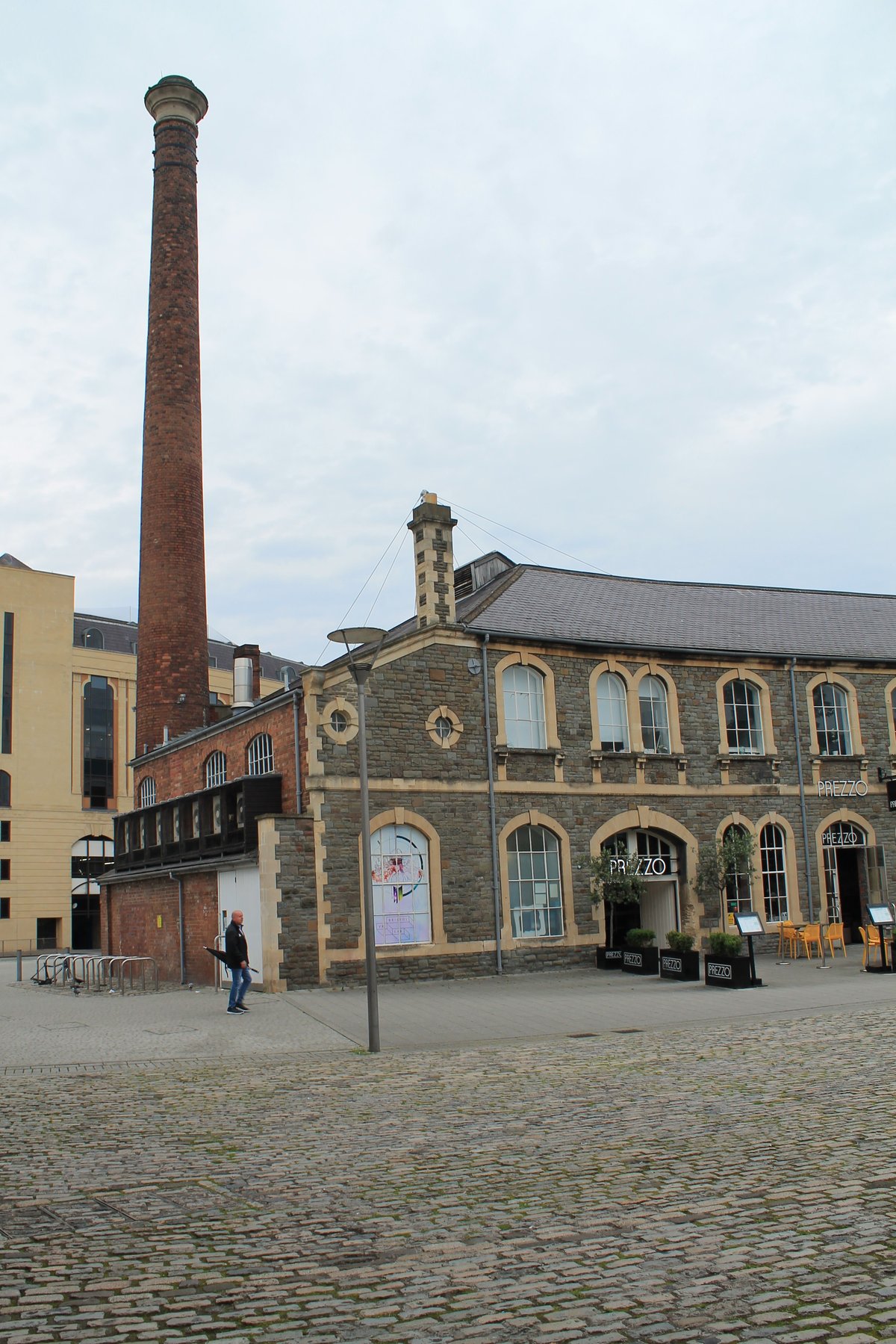
- Former Leadworks at Canons Marsh: This Grade II listed building is celebrated for its mid-19th-century industrial design, circular chimney, and use of local Pennant stone and Bath stone dressings (Historic England Listing).
- Redcliffe Shot Tower: An iconic structure demonstrating the technological innovations pioneered by the local lead industry.
These sites collectively illustrate Bristol’s industrial architecture and its adaptation through urban regeneration.
Decline and Redevelopment
Blackswarth Leadworks declined in the face of foreign competition and changing industrial needs, becoming derelict by the mid-20th century. The site was eventually cleared and redeveloped into the Satellite Business Park and residential areas. However, its legacy persists through nearby heritage landmarks and public interpretation (Troopers Hill History).
Visiting Bristol’s Lead Industry Heritage Sites
Is Blackswarth Leadworks Open to Visitors?
The original site is not open to the public, having been fully redeveloped. However, its history is commemorated through walking trails, interpretive panels, and adjacent heritage sites.
Key Sites to Visit
- Canons Marsh Leadworks: Exterior viewing of the Grade II listed building and chimney.
- Redcliffe Shot Tower: Exterior viewing; public access is limited.
- M Shed Museum: Open Tuesday to Sunday, 10am–5pm; free admission; features exhibits on Bristol’s industrial past (M Shed).
- Troopers Hill Nature Reserve: Features historical markers and trails.
Getting There
- All sites are accessible by public transport from Bristol city centre.
- Walking tours are available through local tourism offices.
Former Leadworks at Canons Marsh
Architectural and Historical Significance
Constructed in the mid-19th century, the Former Leadworks at Canons Marsh is a rare survivor of Bristol’s industrial epoch. Built from regional Pennant stone and Bath stone, the building features a rectangular plan, prominent windowed façades, and a distinctive circular chimney added in the 1880s (Historic England Listing). Its proximity to the railway goods station underscores its role in the city’s industrial infrastructure.
Adaptive Reuse
The building has been sensitively conserved and adapted as part of Bristol’s Wildscreen@Bristol development, integrating contemporary amenities while maintaining its historic character (Architects’ Journal).
Visitor Information
- Visiting Hours: Interior access is typically limited to special events or exhibitions. Exterior viewing is always available.
- Tickets: Events or exhibitions may charge admission; otherwise, exterior viewing is free.
- Accessibility: The surrounding area is pedestrian-friendly and accessible by public transport.
Cultural Importance
The Canons Marsh Leadworks stands as a symbol of both Bristol’s industrial past and its successful urban regeneration. Interpretive programs and occasional guided tours offer deeper insight into its architectural and social history.
Rowes Leadworks in the Harbourside
Historical Ambience and Architecture
Built in the 19th century, Rowes Leadworks is recognized for its robust brickwork, distinctive chimney, and preserved industrial interiors. The adaptive reuse of the facility as a restaurant and bar provides visitors with a unique opportunity to experience Bristol’s industrial legacy in a modern setting (Rowes Leadworks).
Visiting Hours and Admission
- Opening Hours: Late morning to late evening; check the official website for details.
- Admission: Free entry; charges apply for dining or special events.
On-Site Experiences
- Dining: Enjoy local cuisine in a historic setting.
- Nearby Attractions: Wildscreen at Bristol, botanical house, cinema, and M Shed Museum.
- Events: Themed events, live music, and historical tours often coincide with major city festivals (The Travelling Tedaldi).
Accessibility and Transport
- Accessibility: Step-free entrance and accessible restrooms; some areas may have uneven surfaces.
- Getting There: Easily reached by foot, bike, or public transport from Bristol city centre (Nomadic Matt).
FAQs
Q: Can I visit the inside of the Former Leadworks at Canons Marsh?
A: The interior is open only during special events or by arrangement.
Q: Are tickets required for these sites?
A: Most sites are free to view externally; event or exhibition entry may require a ticket.
Q: Are the sites accessible for visitors with disabilities?
A: Efforts have been made to improve accessibility, but some areas may be challenging due to historic structures; contact the venue in advance for details.
Q: Are guided tours available?
A: Yes, especially during heritage festivals and through local tourism organizations.
Q: What are the best nearby attractions to combine with a visit?
A: M Shed Museum, SS Great Britain, Wildscreen at Bristol, and Troopers Hill Nature Reserve.
Summary and Visitor Recommendations
Bristol’s Former Leadworks—spanning the legacy of Blackswarth, the preserved Canons Marsh site, and lively Rowes Leadworks—offer unparalleled insights into the city’s industrial history and architectural evolution. While the original Blackswarth site is gone, visitors can engage with its legacy through nearby preserved sites, walking trails, and interpretive programs (Troopers Hill History; Historic England Listing; Rowes Leadworks). Planning ahead—checking opening hours, ticket requirements, and event schedules—will help you make the most of your visit. For enhanced exploration, download the Audiala app for guided tours and up-to-date content on Bristol’s industrial heritage.
Listen to the full story in the app
The whole Former Leadworks In Bristol,
told well.
Audio guides for 1,100+ cities across 96 countries. History, stories, and local insight — offline ready.
Verified, and shown.
Researched and written by the Audiala editorial team from historical records, architectural archives, and local expertise.
Researched from Wikidata, Wikipedia & official sources · fact-checked · How we make our guides →