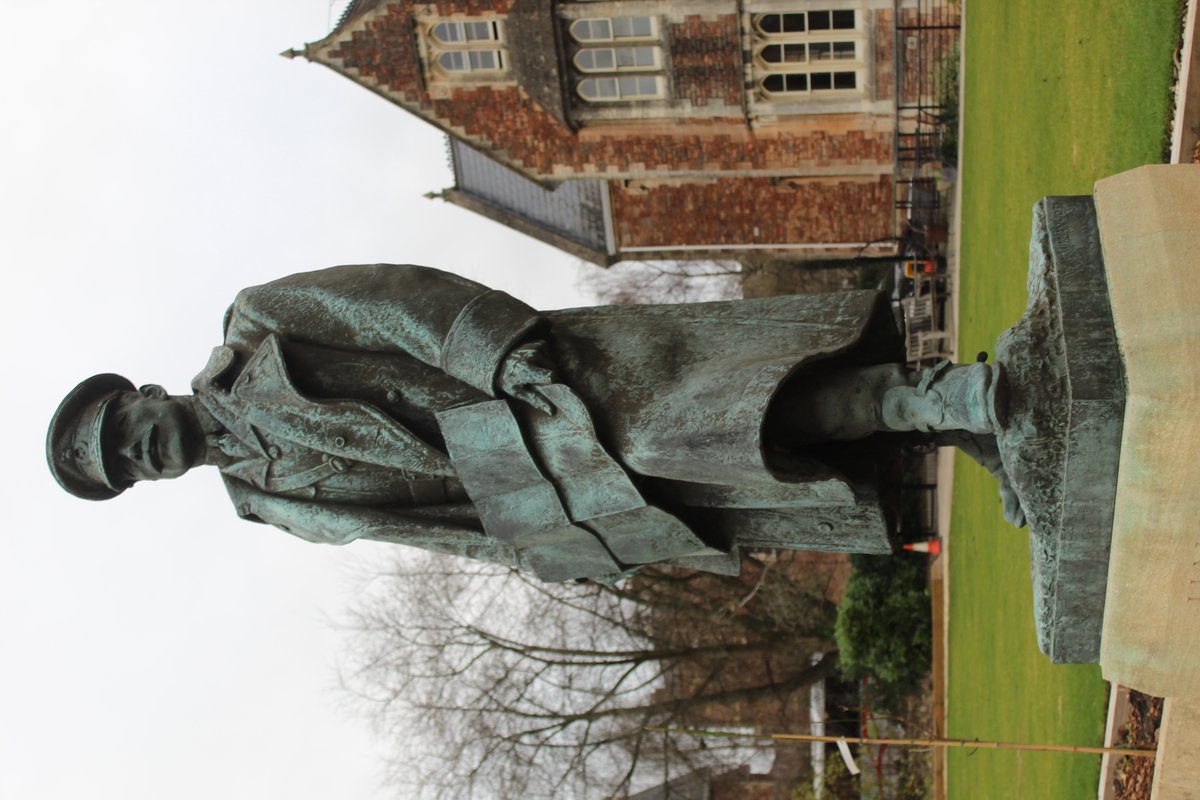
Plan and listen to Clifton College, Statue Of Earl Haig with Audiala.
Audio guide in your pocket, itinerary in your browser. Built for the way you actually visit.
Introduction
Clifton College, set within the charming suburb of Clifton in Bristol, is a distinguished institution renowned for its Victorian heritage, architectural splendor, and educational innovation. Established in 1862 by Dr. John Percival, the college was groundbreaking for its progressive curriculum, inclusive ethos, and commitment to both academic excellence and character development (Clifton College History). The campus, with its Grade II listed Collegiate Tudor Gothic Revival buildings, offers a unique opportunity for visitors to connect with British educational and cultural history.
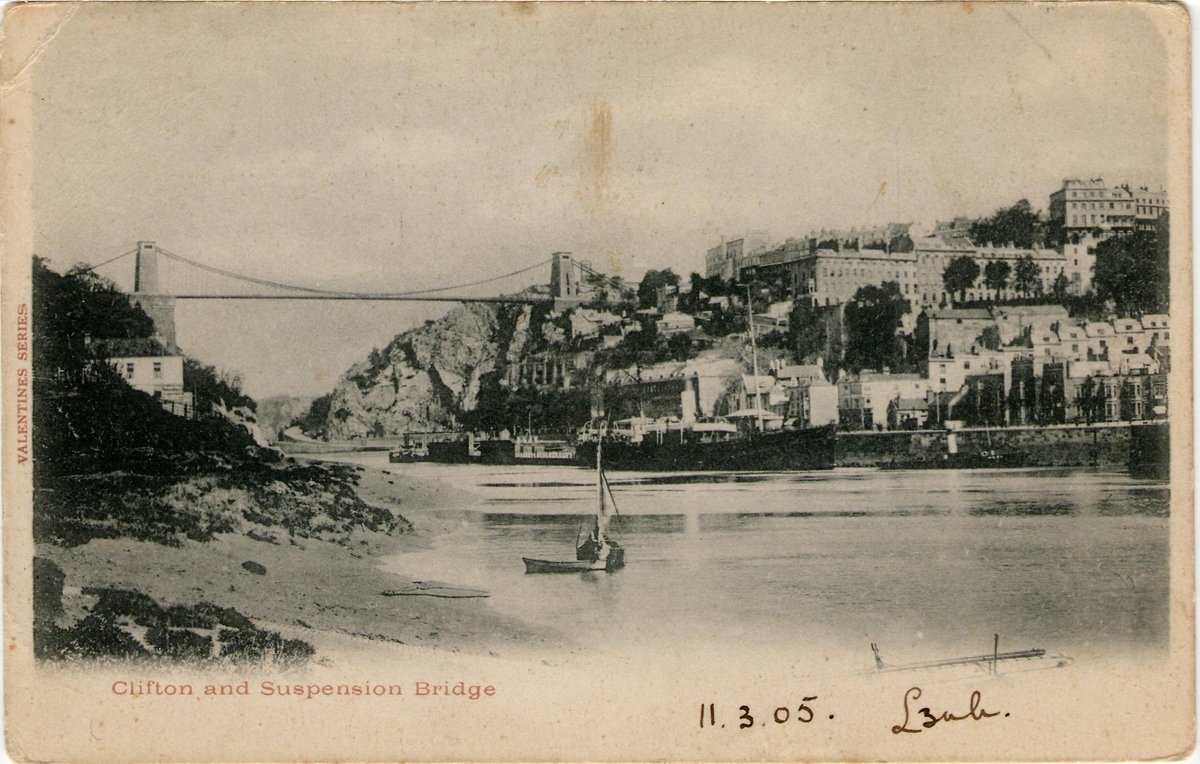
A central feature of the college grounds is the Statue of Field Marshal Douglas Haig, 1st Earl Haig, a notable alumnus and influential military leader during World War I. Unveiled in 1931 and sculpted by William McMillan, this Grade II listed bronze monument stands as a poignant memorial to Haig's legacy and the sacrifices of Cliftonians in the Great War (Historic England Listing). Visitors to Clifton College and the Haig statue are not only invited to explore these historic landmarks but also to immerse themselves in the broader context of Bristol’s heritage, with nearby attractions such as the Clifton Suspension Bridge and Clifton Arcade (Go South West England).
This comprehensive guide provides essential information on visiting hours, ticketing, accessibility, guided tours, and travel tips, while offering historical and architectural insights to ensure a rewarding visit to two of Bristol’s most iconic sites.

Founding Vision and Educational Ethos
Clifton College was founded in 1862 with the goal of providing a forward-thinking education that balanced classical and scientific studies. Dr. John Percival, the college’s first headmaster, championed progressive values such as the inclusion of science in the curriculum, the education of women, and racial tolerance—principles that were exceptional for the Victorian era. The college aimed to cultivate well-rounded individuals, emphasizing personal responsibility, empathy, and intellectual curiosity (Clifton College History).
Clifton’s inclusive approach attracted boarders from across the UK and abroad, as well as day students from Bristol’s diverse communities, fostering a dynamic and cosmopolitan school environment (Clifton College Welcome).
Architectural Heritage of Clifton College
The main School House, designed by Charles Hansom and completed in 1862, is a hallmark of Collegiate Tudor Gothic Revival architecture. Constructed from Brandon Hill Grit and limestone, the building features asymmetrical elevations, ornate two-storey bay windows, mullioned and transomed windows, and decorative barge-boards (Historic England Listing).
The campus is further enriched by other historic buildings, all contributing to the college’s enduring sense of tradition and academic excellence.
Notable Alumni and Legacy
Clifton College’s alumni have made significant contributions to British and international society, including:
- Field Marshal Douglas Haig: Commander-in-Chief of British forces during World War I, commemorated by the on-site statue (Local History Videos).
- John Cleese: Celebrated actor and comedian.
- Sir Michael Redgrave, Trevor Howard, Simon Russell-Beale: Prominent actors.
- Leslie Hore-Belisha: Road safety innovator.
- Sir John Kendrew, Sir John Hicks, Sir Nevill Francis Mott: Nobel laureates.
- Lily Owsley: Olympic gold medalist in hockey.
These individuals reflect the college’s commitment to nurturing talent across diverse fields (Clifton College History).
The House System and Pastoral Care
A defining feature of Clifton College is its House system. Each student is assigned to a House, fostering a sense of belonging, peer support, and engagement in a wide range of co-curricular activities such as sports, music, and clubs (Clifton College Welcome).
Clifton College and Bristol’s Heritage
Clifton College is situated in one of Bristol’s most historic districts, surrounded by elegant Georgian and Victorian architecture. The college enhances the area’s reputation as a “little Bath,” and is within easy reach of major Bristol attractions, including the Clifton Suspension Bridge and Observatory (Go South West England).
Visiting Clifton College: Practical Information
- Visiting Hours: As an active school, public access is restricted. Visits are permitted during special events, open days, and prearranged heritage tours. Check the official website for the latest details.
- Tickets and Entry: Admission is generally free during public events. Some tours require advance booking; consult the college’s website for ticket information.
- Guided Tours: Periodic guided tours offer in-depth historical and architectural insights.
- Accessibility: The campus is partially accessible; contact the college ahead to discuss specific needs.
- Travel and Parking: Located at 32 College Road, Clifton, Bristol BS8 3JH. Accessible by public transport; parking is limited.
- Photography: Permitted in outdoor areas, but respect student privacy.
For appointments, contact the Old Cliftonian Society at +44 (0)117 315 7000 or email [email protected].
The Statue of Earl Haig: History and Features
Historical Context
Field Marshal Douglas Haig (1861–1928) was a pivotal British commander during World War I, and his statue at Clifton College was commissioned to honor both his leadership and the sacrifices of Cliftonians in the conflict (Historic England Listing). Unveiled in 1931, the bronze figure, sculpted by W. McMillan, stands on a limestone plinth at the college’s main entrance.
Artistic and Architectural Features
The statue depicts Haig in full military regalia, exuding both gravitas and dignity. Its strategic position—visible from College Road and framed by the Memorial Arch—reinforces its role as a focal point for remembrance and reflection (Wikipedia: Clifton College).
Visitor Information for the Statue of Earl Haig
- Location: College Road, Clifton, Bristol (NGR: ST5695973818).
- Access: The statue is visible from the public road; closer access within the college grounds requires prior arrangement.
- Visiting Hours: The statue is outdoors and viewable year-round from public areas.
- Admission: No fee to view the statue from the street. Guided tours may include the statue as part of the itinerary.
- Accessibility: The site is on level ground; contact the college for further assistance if required.
- Etiquette: When passing under the Memorial Arch, remove headgear and keep hands out of pockets, in line with college tradition.
Educational and Cultural Significance
The Statue of Earl Haig is more than a commemorative monument; it plays an active role in the educational life of Clifton College. Its presence encourages reflection on leadership, sacrifice, and the consequences of war. The statue, together with the Memorial Arch, forms the centerpiece of annual remembrance ceremonies and is an integral part of the student experience (Historic England Listing).
Nearby Points of Interest
- Clifton Suspension Bridge: Iconic Bristol landmark.
- Clifton Arcade: Historic shopping destination.
- Bristol Zoo Gardens: One of the world’s oldest zoos.
- Victoria Rooms: Neoclassical building of the University of Bristol.
- Whiteladies Road: Lively area with shops and restaurants.
Combine your visit to Clifton College with these attractions for a full day of exploration.
Visitor Experience: Tips and FAQs
Tips for a Memorable Visit
- Arrange in Advance: Visits to the college grounds require prior appointment.
- Respect Traditions: Observe the custom of passing under the Memorial Arch bareheaded.
- Dress Appropriately: Smart-casual attire is recommended.
- Check for Events: Open days and Remembrance ceremonies offer unique insights.
- Accessibility: Notify the college ahead of time for any special requirements.
Frequently Asked Questions
Q: Do I need tickets to visit Clifton College or the statue?
A: General viewing from the street is free. Access to college grounds requires advance arrangement.
Q: Are there guided tours?
A: Yes, available during special events or by prior booking.
Q: Is the site accessible for visitors with disabilities?
A: Some areas are step-free; contact the college ahead for support.
Q: When is the best time to visit?
A: During school holidays, open days, or Remembrance events.
Summary and Visitor Recommendations
Clifton College and the Statue of Earl Haig offer a compelling blend of educational tradition, architectural beauty, and commemorative significance. Their stories are interwoven with Bristol’s broader historical landscape, making them essential stops for those interested in British heritage. To ensure a smooth visit, plan ahead, respect college customs, and take advantage of guided tours and nearby attractions. For the latest information, consult the college’s official website and the Old Cliftonian Society.
Listen to the full story in the app
The whole Clifton College, Statue Of Earl Haig,
told well.
Audio guides for 1,100+ cities across 96 countries. History, stories, and local insight — offline ready.
Verified, and shown.
Researched and written by the Audiala editorial team from historical records, architectural archives, and local expertise.
Researched from Wikidata, Wikipedia & official sources · fact-checked · How we make our guides →