Plan and listen to Clifton Cathedral with Audiala.
Audio guide in your pocket, itinerary in your browser. Built for the way you actually visit.
Introduction
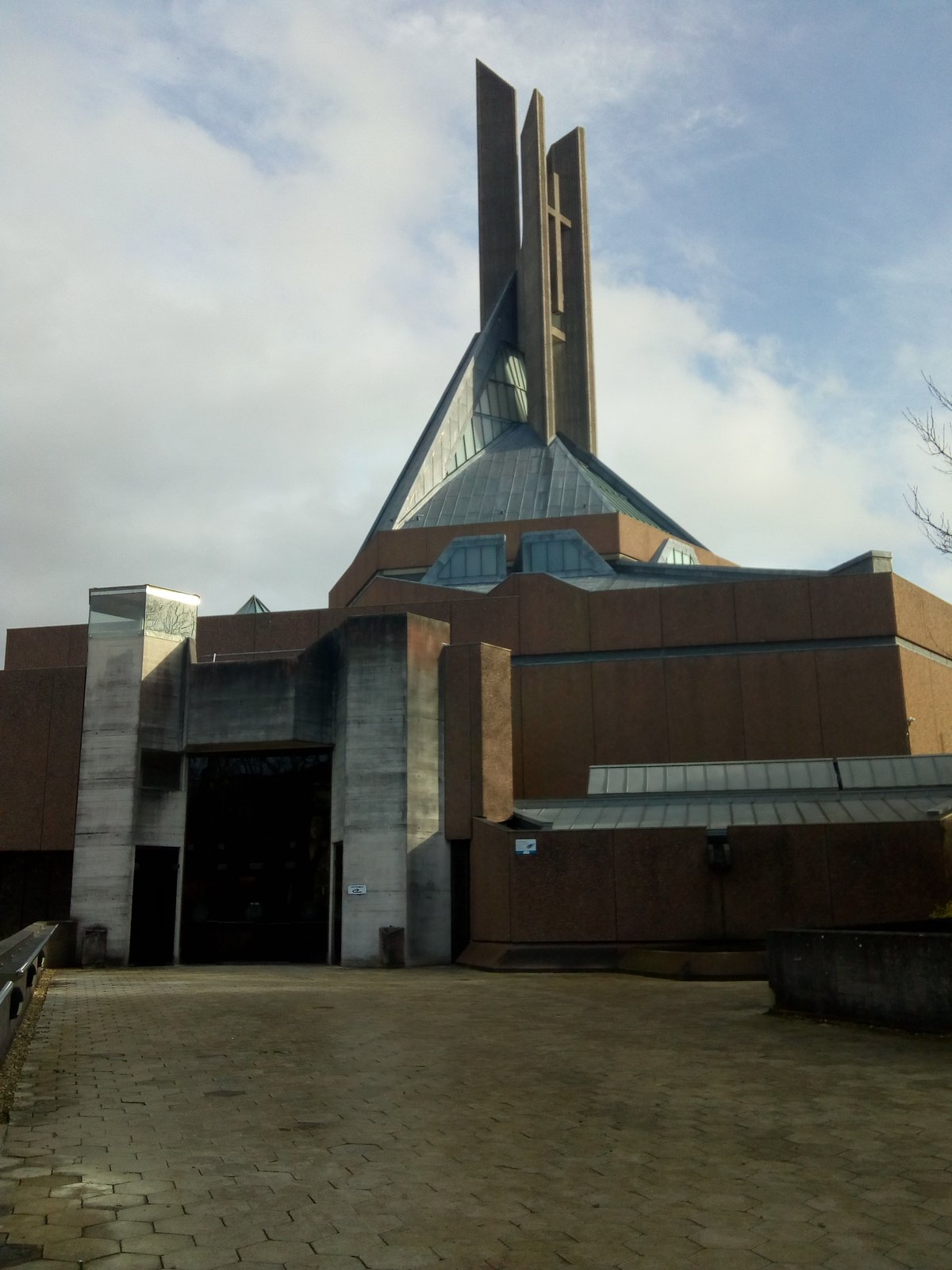
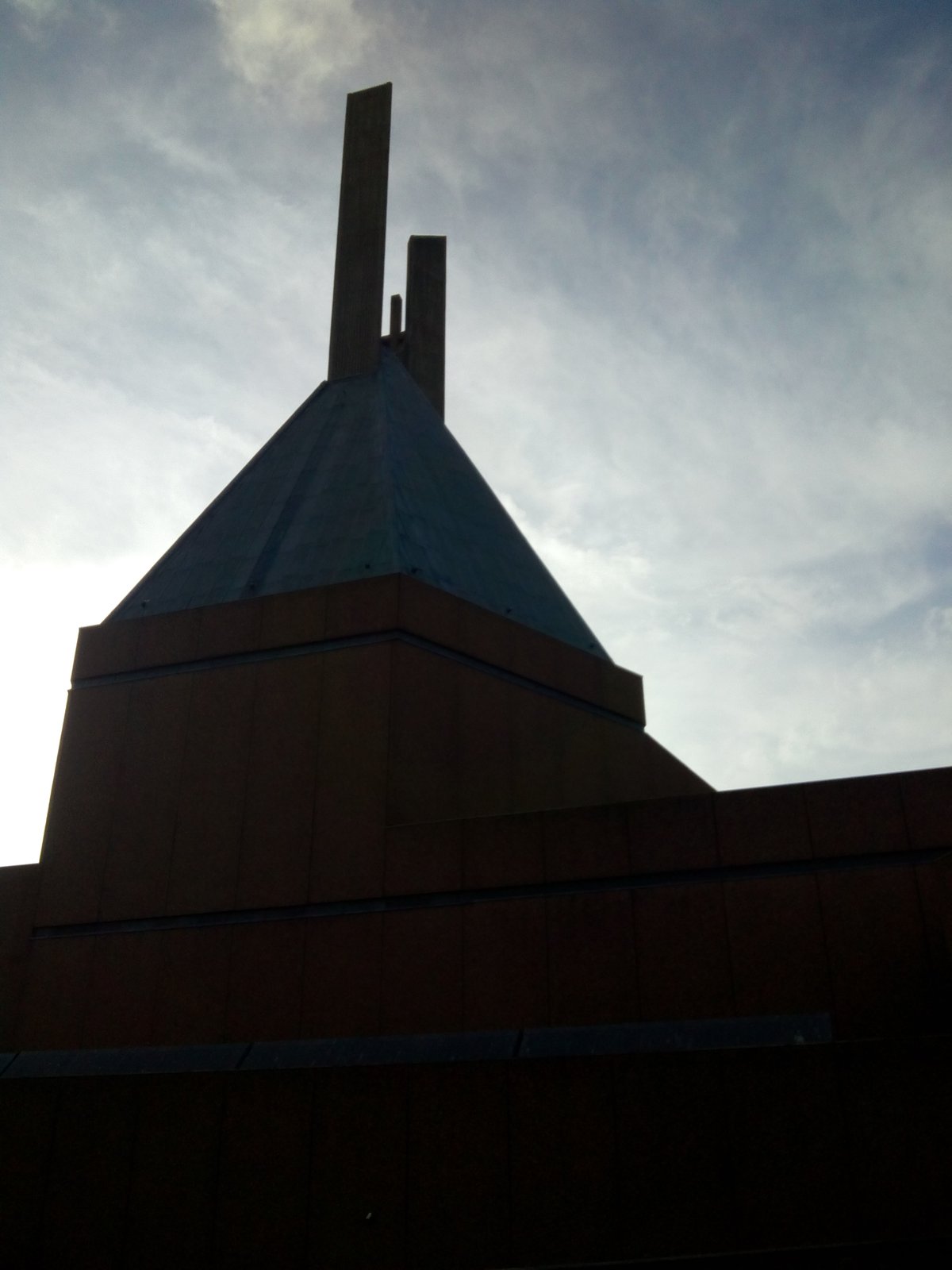
Clifton Cathedral, officially the Cathedral Church of SS. Peter and Paul, is one of Bristol’s most striking landmarks—a fusion of modernist architectural vision and deep-rooted Catholic heritage. Completed in 1973, it stands as the first UK cathedral built in response to the Second Vatican Council’s liturgical reforms, with an innovative hexagonal layout and Brutalist design that emphasize inclusivity and community participation. The cathedral is celebrated for its vibrant dalle de verre stained glass by Henry Haig, its remarkable acoustic qualities, and its ongoing role as both a place of worship and a cultural hub for Bristol.
This guide provides a comprehensive overview of Clifton Cathedral’s history, architecture, and visitor information, including opening hours, accessibility, travel tips, and nearby attractions. Whether you’re an architecture enthusiast, history buff, or a spiritual seeker, this detailed guide will help you plan a memorable visit to one of Bristol’s most iconic historical sites. For updates and further details, consult the official Clifton Cathedral website, and explore the references at the end for additional reading. (Wikipedia: Clifton Cathedral; Gethin Thomas Blog; Purcell UK)

Historical Context
Early Catholicism and the Pro-Cathedral Era
Before the Catholic Emancipation Act of 1829, Catholics in Bristol, as in much of England, faced significant legal restrictions and social prejudice (Wikipedia: Pro-Cathedral of the Holy Apostles). Early Catholic worship in Bristol was clandestine, taking place in private homes or discreet venues. The establishment of the Pro-Cathedral of the Holy Apostles in the 1830s was a turning point, providing a dedicated space for worship but facing persistent structural and financial challenges. After a series of delays, the Pro-Cathedral became, in 1850, the seat of the Bishop of Clifton and the mother church for the region (What’s On In Bristol).
The Need for a New Cathedral
By the mid-20th century, the old Pro-Cathedral was suffering from severe structural issues due to unstable ground. The construction of a nearby multi-storey car park in the 1960s further compromised the building’s integrity. With mounting safety concerns, the decision was made to construct a new cathedral on a different site. An anonymous donation helped fund the new project, resulting in a design brief centered on the liturgical reforms of Vatican II—placing the congregation around the altar, fostering community, and using modern materials (Gethin Thomas Blog).
Second Vatican Council Influence
The Second Vatican Council (1962–1965) encouraged a shift in church architecture: active lay participation, use of local languages in liturgy, and a focus on community. Clifton Cathedral was the UK's first cathedral designed entirely in accordance with these guidelines. The design by Percy Thomas Partnership, led by Ronald Weeks, yielded a functional, inclusive space with lasting durability (Wikipedia: Clifton Cathedral).
Construction and Consecration
Construction began in 1970 using in-situ cast reinforced Portland concrete and granite composite panels. The building’s surfaces still bear the imprint of the timber formwork, a hallmark of Brutalist design. Clifton Cathedral was consecrated on June 29, 1973, and immediately assumed its role as the seat of the Bishop of Clifton (Wikipedia: Clifton Cathedral).
Architectural Significance
Clifton Cathedral is a rare example of post-Vatican II ecclesiastical architecture in the UK, characterized by its hexagonal plan and Brutalist style. The seating arrangement encircles the altar to enable closer participation, and the building’s exposed concrete and geometric forms distinguish it from traditional cathedrals (Looking at Buildings).
Notable features include:
- Stained Glass Windows: Over 8,000 pieces of colored glass, designed by Henry Haig, fill the interior with vibrant light.
- Altar and Font: The Portland stone altar and the Purbeck stone font are focal points designed for both visual appeal and symbolic meaning.
- Stations of the Cross: Low-relief concrete works by William Mitchell.
- Organ: Built by Rieger of Austria, renowned for its acoustics and visual presence.
- Other Artworks: Bronze Madonna by Terry Jones and a decorative screen by Brother Patrick of Prinknash Abbey.
A major restoration (2015–2018) led by Purcell addressed previous water ingress issues and preserved the original intent and materials of the cathedral (ArchDaily; Wallpaper*). In 2000, the cathedral was designated a Grade II* Listed Building for its architectural and historic importance (Purcell UK).
Visitor Information
Visiting Hours
- Monday to Saturday: 8:00 AM – 6:00 PM
- Sunday: 9:00 AM – 5:00 PM
Hours may vary on feast days or during special events. Always check the official Clifton Cathedral website for up-to-date opening times.
Admission and Tickets
Admission is free. No tickets are required, though donations are welcomed to support the cathedral’s maintenance and programs.
Guided Tours
Guided tours are available by appointment and explore the cathedral’s architecture, history, and liturgical innovations. For group or educational tours, contact the cathedral office in advance. Self-guided audio tours may also be available.
Accessibility
The cathedral is fully wheelchair accessible, with ramps, lifts, accessible restrooms, and designated parking. Assistance dogs are welcome.
Travel Tips
- Getting There: Located in Clifton Park, BS8 3BX, the cathedral is accessible by bus, taxi, or on foot. Limited on-street parking is available; public parking can be found nearby.
- Transportation: Several bus routes connect Clifton with Bristol city centre and Temple Meads station (Travalour).
- Photography: Permitted without flash or tripods during non-service times.
Community and Cultural Role
Clifton Cathedral is more than a place of worship. Its superb acoustics make it a sought-after venue for concerts, including the Clifton International Festival of Music. The cathedral regularly hosts art exhibitions, talks, and interfaith events, engaging the wider Bristol community and fostering cultural dialogue. Restoration efforts have ensured ongoing accessibility and expansion of visitor facilities (Purcell UK).
Unique Features and Experiences
- Stained Glass: Henry Haig’s dalle de verre windows are a highlight for art and photography enthusiasts.
- Hexagonal Layout: Experience the unique spatial design that brings the congregation closer to the altar.
- Peaceful Gardens: Adjacent gardens offer a quiet spot for reflection.
- Art and Sculpture: Explore the cathedral’s collection of contemporary religious art.
- Music: Attend one of the cathedral’s renowned organ recitals or choral concerts.
Nearby Attractions
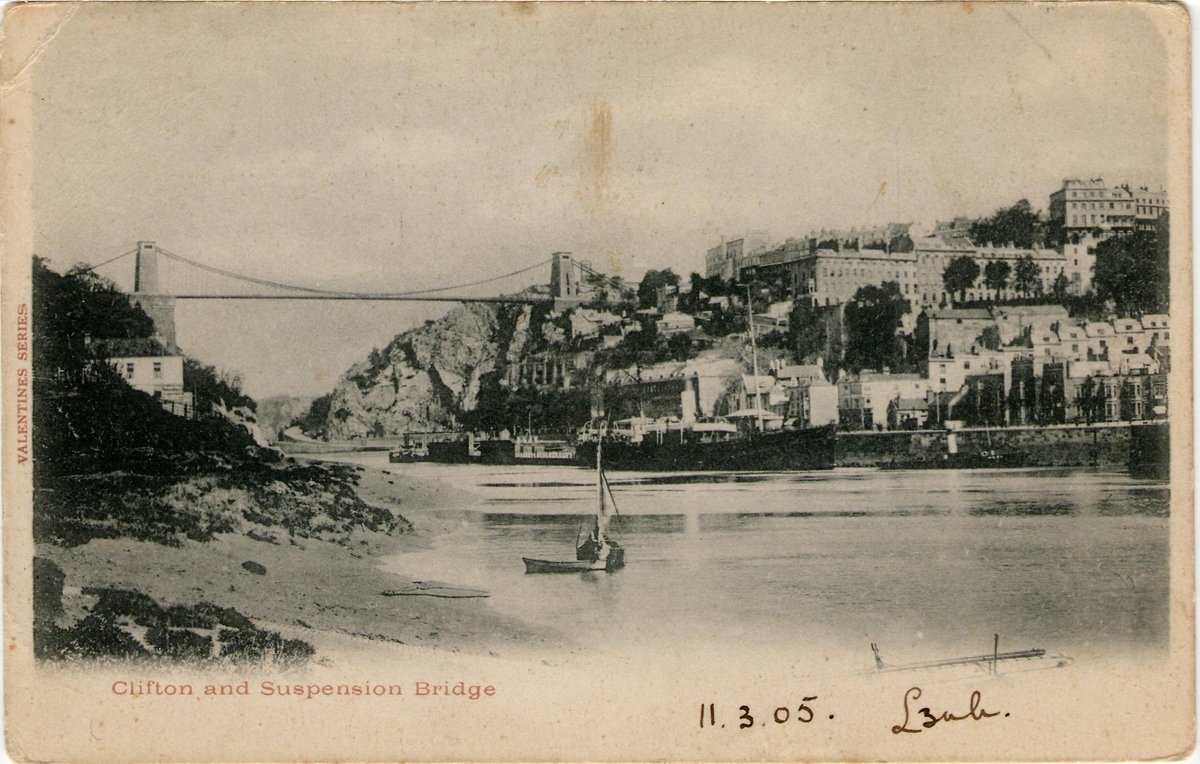
- Clifton Suspension Bridge: A world-famous engineering feat spanning the Avon Gorge (Adventures of Alice).
- Clifton Observatory and Giant’s Cave: Offering panoramic views of Bristol.
- Clifton Village: Known for its Georgian architecture, independent shops, and vibrant café culture.
- The Downs: Expansive parkland for leisure and walks (Nomadic Matt).
Suggested itinerary: Begin your day at Clifton Cathedral, explore Clifton Village, and finish with a walk across the Suspension Bridge.
Frequently Asked Questions (FAQ)
Q: What are Clifton Cathedral’s visiting hours?
A: Typically 8:00 AM – 6:00 PM Monday to Saturday, 9:00 AM – 5:00 PM Sunday. Check the official website for updates.
Q: Is there an admission fee or are tickets required?
A: No, entry is free. Donations are appreciated.
Q: Are guided tours available?
A: Yes, by appointment. See the website for details.
Q: Is the cathedral accessible for people with disabilities?
A: Yes, with step-free access, ramps, lifts, and accessible restrooms.
Q: Can I take photos inside?
A: Yes, but flash and tripods are not permitted during services.
Q: Are there parking facilities?
A: Limited parking is available nearby; public transport is recommended during busy periods.
Plan Your Visit
- Check the official website for the latest information on hours, events, and tours.
- Arrive early to secure parking and enjoy the peaceful atmosphere.
- Consider combining your visit with a stroll through nearby Clifton Village or a walk across the Clifton Suspension Bridge.
- Download the Audiala app for immersive, expert-led audio tours of Clifton Cathedral and other Bristol attractions.
Visuals and Interactive Elements


Insert additional high-quality images of the stained glass, altar area, and organ. Include an interactive map pinpointing the cathedral and nearby sites. If available, embed a virtual tour from the official website.
Summary and Visitor Tips
Clifton Cathedral is a testament to the bold spirit of post-war ecclesiastical design and the resilience of Bristol’s Catholic community. Its hexagonal layout, luminous stained glass, and inclusive atmosphere make it a standout destination for architecture lovers and spiritual seekers alike. With free admission, accessible facilities, and a welcoming community, the cathedral invites visitors to experience its unique blend of history, faith, and modern artistry. For the best experience, plan your visit in advance, explore surrounding attractions, and enhance your tour with the Audiala app.
Listen to the full story in the app
The whole Clifton Cathedral,
told well.
Audio guides for 1,100+ cities across 96 countries. History, stories, and local insight — offline ready.
Verified, and shown.
Researched and written by the Audiala editorial team from historical records, architectural archives, and local expertise.
Clifton Cathedral
Clifton Cathedral
Brutalist Clifton Cathedral Bristol Purcell Renovation
Clifton Cathedral Purcell
Clifton Cathedral
Clifton Cathedral Project
Clifton Cathedral Bristol
Clifton Cathedral
Researched from Wikidata, Wikipedia & official sources · fact-checked · How we make our guides →