Introduction
St James The Less Church in Ashted, Birmingham, stands as a testament to the city’s dynamic history, reflecting its transformation from rural outskirts to an industrial powerhouse. Though the original church no longer stands, its story and the preserved churchyard continue to draw interest from historians, locals, and visitors seeking to connect with Birmingham’s heritage. This guide provides a comprehensive overview of the church’s origins, architectural evolution, spiritual and social legacy, as well as practical information for visiting the churchyard and engaging with Birmingham’s historical sites.
Origins and Early Development
The story of St James The Less Church begins in the late 18th century, closely linked to Dr. John Ash, after whom the Ashted area is named. In 1771, Dr. Ash leased land from Lister Holte MP and built a Georgian house near Barrack Street and Great Brook Street. Although Ash never lived there, selling it instead to attorney John Brooke, the residence soon became a focal point for the area’s development (Bill Dargue’s Place Names Gazetteer).
Brooke envisioned Ashted as a prestigious suburb for Birmingham’s emerging middle class, and in 1789, Dr. Ash’s former home was transformed into a chapel of ease for Aston Parish. The chapel opened its doors for worship on 9 October 1791, serving both the spiritual and communal needs of the growing district (WikiTree; Everything Explained Today).
Architectural Evolution
From Georgian House to Parish Church
-
Initial Conversion: The original brick residence, approximately 56 feet square, was minimally altered for its new ecclesiastical function. However, the expanding congregation quickly outgrew the space (Wikipedia).
-
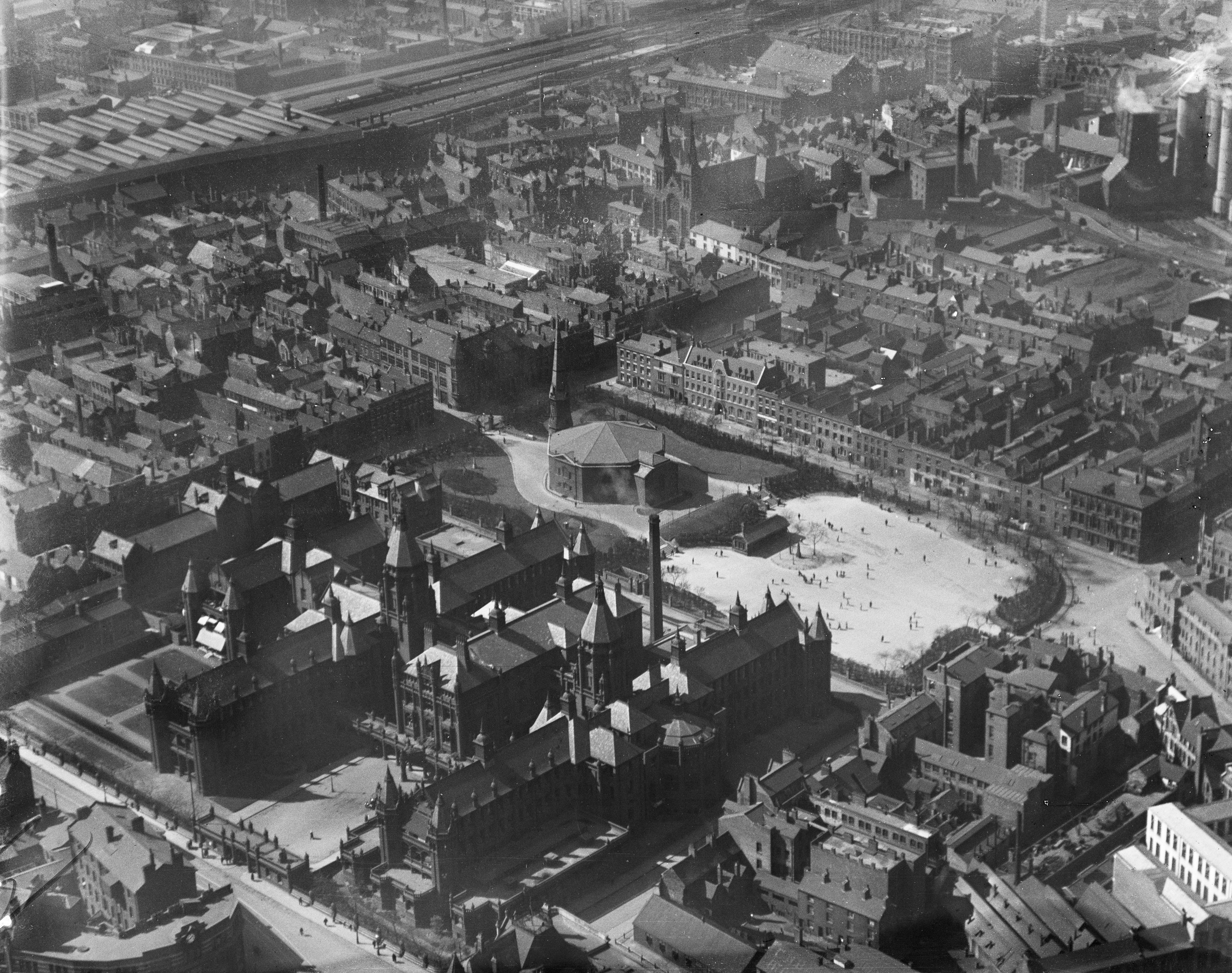
Major Rebuilding (1809–1810): In 1809, George Simcox and J.L. Green purchased and rebuilt the chapel, adding a nave, chancel, vestries, and a distinctive cupola-tower with eight tubular bells. The consecration as a parish church in 1810 solidified its role in the community (WikiTree; Wikipedia).
-
19th-Century Expansions:
- 1829–1830: Restoration under Revd. Josiah Allport included 150 free seats for the poor.
- 1835: Enlargement by architect Edward Welch increased capacity to 850, marking the church’s growing service to working-class residents.
- Mid-19th Century: The tower and spire replaced the original cupola, symbolizing architectural ambition.
- 1887–1888: Further restoration addressed structural issues and reconfigured the interior.
- 1891: Installation of new tubular bells by Harrison, Latham & Co. (Warwickshire Bells).
Parish Status and Community Role
St James The Less became a parish church in 1853, reflecting Ashted’s urbanization and demographic shift toward a working-class population. The church played a pivotal role in community life, offering free seating, hosting religious rites, and serving as a burial ground for generations (WikiTree; Find A Grave).
Its proximity to the Ashted Barracks, established after the Priestley Riots in 1791, further emphasized its importance in both spiritual and civic life (Wikipedia: Ashted).
Decline, War Damage, and Demolition
Environmental and Social Changes
With the rise of factories and infrastructure such as the Birmingham & Fazeley Canal and Grand Junction Railway, Ashted became densely populated and industrialized, leading to widespread slum conditions by the late 19th century.
Wartime Destruction and Final Years
The church suffered severe bomb damage during World War II (November 1940). Restoration was deemed unfeasible, and the building was ultimately demolished in 1956 (Warwickshire Bells; Wikipedia).
The Surviving Churchyard
While the church is gone, the churchyard remains as a green space, with gravestones laid flat as enduring markers of the site’s history (Find A Grave).
Visiting St James The Less Churchyard Today
Visiting Hours and Access
- Churchyard Park: Open year-round during daylight hours. No admission fee.
- Location: Near the junction of Barrack Street and Great Brook Street, Ashted, Birmingham.
Travel Tips
- Public Transport: Easily accessible by bus (routes serving Digbeth area) or train (Duddeston station).
- Parking: Limited on-street parking nearby; public car parks available in the city centre.
What Remains
- Physical Features: No surviving church structures; churchyard has some gravestones embedded in the park landscape.
- Commemorative Markers: No official plaques currently mark the site (Ashtead.org).
Accessibility
- The churchyard is accessible by foot and public transport; however, there are no on-site amenities or interpretive facilities.
Notable Features and Artifacts
- Bells: Eight tubular bells installed in 1891 were a unique feature (Warwickshire Bells).
- Organ: Banfield organ, listed in the National Pipe Organ Register.
- Architecture: Evolved from Georgian residence to a classically influenced church with a notable spire.
Nearby Historical Sites
- St. Martin in the Bull Ring: Medieval parish church in Birmingham’s city centre.
- Birmingham Back to Backs: Preserved 19th-century courtyard houses.
- Aston Hall: Jacobean mansion with extensive gardens.
- Ashted Locks: Part of Birmingham’s canal heritage (Ashtead.org).
- Thinktank Birmingham Science Museum: Family-friendly science and industry exhibits (Thinktank).
Visitor Guide: St James The Less Church (Current Location)
While the original church is gone, the present-day St James The Less community is active at a new location and welcomes visitors:
- Opening Hours: 9 am to 5 pm weekdays for private prayer and community activities (St James the Less Official Website).
- Admission: Free; donations appreciated. No tickets required.
- Accessibility: Wheelchair accessible; facilities for visitors with disabilities.
- Events: Regular services, community meals, “Messy Church” sessions, and special events.
- Guided Tours: Not routinely available, but local heritage groups offer tours occasionally.
Practical Tips for Visitors
- Plan Ahead: Check the church’s website for up-to-date hours and events.
- Combine Visits: Explore other Birmingham historical sites nearby for a richer experience.
- Respect the Space: Dress modestly, maintain silence during services, and seek permission before photography.
- Support Preservation: Donations help sustain ongoing community and heritage efforts.
- Consult Local Resources: Visit Birmingham Central Library or contact history societies for archives and deeper research (Birmingham Central Library).
Frequently Asked Questions (FAQ)
Q: Can I visit the original St James The Less Church?
A: The original building was demolished in 1956, but the churchyard is open as a public park.
Q: Is there an entry fee?
A: No, both the churchyard and current church location welcome visitors free of charge.
Q: Are there guided tours?
A: Occasional heritage walks and events are organized by local groups.
Q: Is the site accessible for those with disabilities?
A: The current church building is accessible; the churchyard is open, but has no special facilities.
Q: Where can I find burial records?
A: Parish registers are available via FreeREG and local archives.
Summary: Key Points and Travel Tips
- Legacy: St James The Less Church reflects Birmingham’s journey from affluent suburb to industrial hub, wartime loss, and modern renewal.
- Visiting: The churchyard is open and free to visit; the active parish welcomes all.
- Nearby Attractions: Enrich your visit by exploring other nearby historical sites.
- Plan Ahead: Use official websites and local resources for current details.
- Support and Learn: Donations and participation help sustain the church’s ongoing mission.
Listen to the full story in the app
Your Personal Curator, in Your Pocket.
Audio guides for 1,100+ cities across 96 countries. History, stories, and local insight — offline ready.
Audiala App
Available on iOS & Android
Join 50k+ Curators
Sources
- verified
- verified
- verified
- verified
- verified
-
verified
Find A Grave: St
James The Less Churchyard, Birmingham
- verified
- verified
- verified
Last reviewed: