Introduction
Nestled in the leafy suburb of Hall Green, Birmingham, the Church of the Ascension is an enduring testament to more than three centuries of religious heritage, architectural innovation, and vibrant community life. Founded in 1704 as Job Marston Chapel, this site has evolved from a modest rural worship space into a vital parish church, reflecting the dynamic spiritual and social landscape of Hall Green. With origins in the early 18th century, 19th-century architectural enhancements, and a striking 20th-century modernist reconstruction post-fire, the church blends tradition with contemporary design.
Strategically located at the junction of Fox Hollies Road and School Road, the Church of the Ascension is easily accessible by car, bus, and rail. Open throughout the week with free admission, the church welcomes both worshippers and tourists, offering guided tours, community events, and access to its Parish Hall—a bustling center for social, educational, and interfaith activities. This guide provides essential information on visiting hours, accessibility, transportation, and nearby attractions, and explores the church’s architectural and artistic significance. Whether you are an architecture enthusiast, history buff, genealogist, or a visitor seeking spiritual respite, the Church of the Ascension Hall Green promises an enriching experience (Church Heritage Record, A Church Near You, Birmingham Heritage Week).
Photo Gallery
Explore Church of the Ascension, Hall Green in Pictures

Photograph of Church of the Ascension on Fox Hollies Road, Hall Green, Birmingham, recognized as a listed building with Historic England listing number 1076183

Photo of the Church of the Ascension, a listed building (NHLE Code 1076183) located on Fox Hollies Road in Hall Green, Birmingham, taken in April 2025.

Photograph of the Church of the Ascension on Fox Hollies Road in Hall Green, Birmingham, a historic listed building (Entry 1076183) known for its architectural significance

Photo of the listed building Church of the Ascension at Fox Hollies Road, Hall Green, Birmingham, with Historic England listing number 1076183

Photograph of the Church of the Ascension, a historic listed building number 1076183 located on Fox Hollies Road, Hall Green, Birmingham, taken in April 2025.

Photo of the Church of the Ascension, a listed building number 1076183 located on Fox Hollies Road in Hall Green, Birmingham, taken in April 2025.

Exterior view of the Church of the Ascension, a listed building (NHLE Code 1076183), located on Fox Hollies Road, Hall Green, Birmingham, featuring the churchyard and architectural details in April 2025.

Photo of the Church of the Ascension located on Fox Hollies Road, Hall Green, Birmingham, registered as listed building number 1076183 in England.
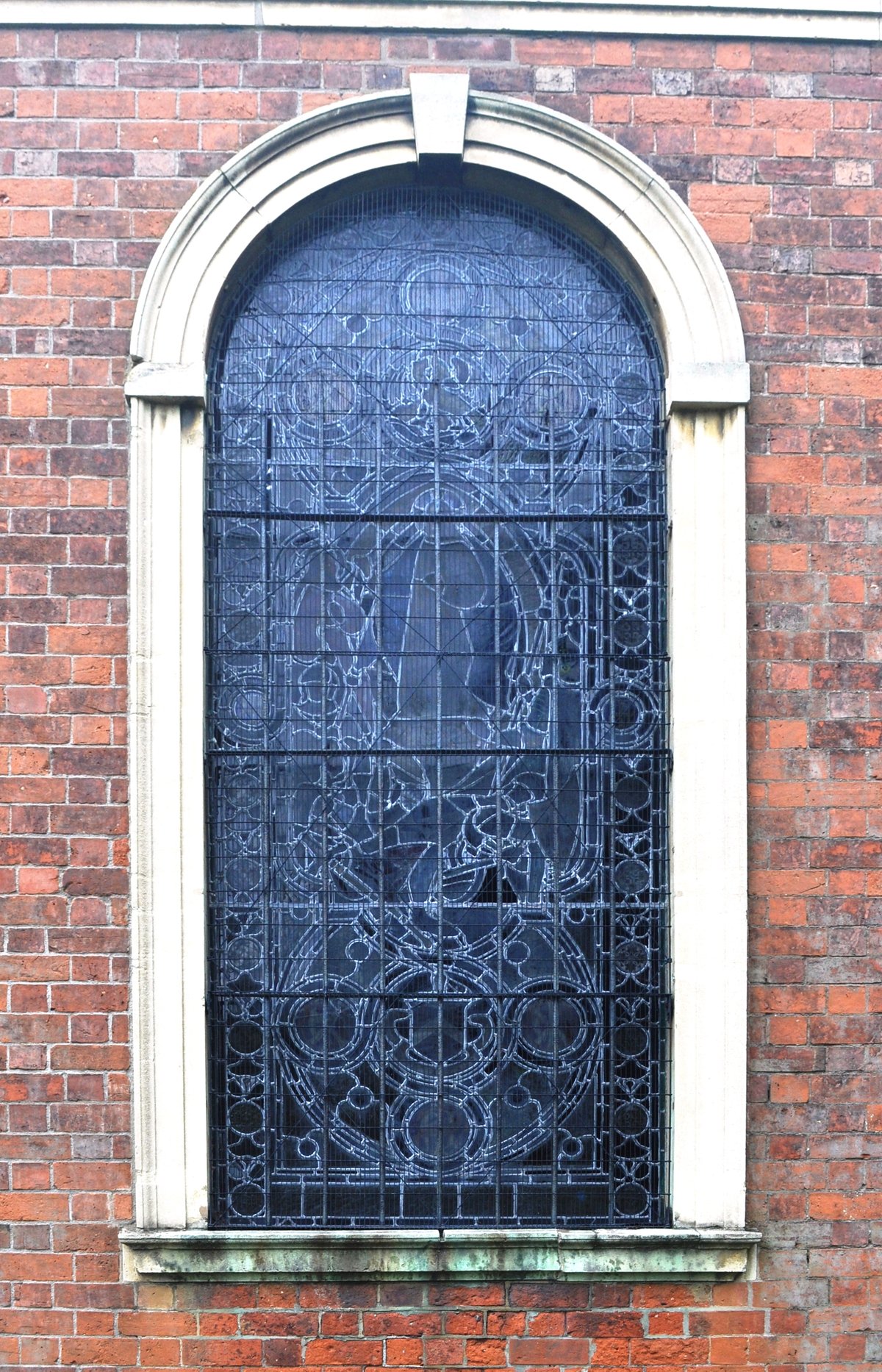
Close-up photo of a stained glass window in the Church of the Ascension, a listed building (NHLE Code 1076183) located on Fox Hollies Road, Hall Green, Birmingham, captured in April 2025.
Origins and Foundation
The Church of the Ascension, originally Job Marston Chapel, is Hall Green’s oldest church. Its foundation was made possible by Job Marston (1636–1701), whose will provided for a chapel to serve the rural hamlet of Hall Green, then part of Yardley Parish. The chapel opened for worship in 1704, marking the beginning of its long-standing presence in the community (source).
Architectural Evolution
Early Structure
Constructed in 1704, the original building was a modest, rectangular chapel, embodying early 18th-century English ecclesiastical architecture. Its unadorned nave and simple design met the needs of a small rural congregation.
19th-Century Expansion
The 1860s brought significant enhancements: transepts and a chancel were added, creating a cruciform (cross-shaped) layout. This expansion increased capacity and improved the church’s liturgical function and visual prominence (source).
20th-Century Developments
In 1907, the chapel became a parish church with the creation of the Diocese of Birmingham, establishing Hall Green as an independent ecclesiastical parish (source). The church was dedicated as “The Church of the Ascension” in 1954, during its 250th anniversary. After a destructive fire in the mid-20th century, a modernist reconstruction was completed and consecrated in 1973, blending contemporary design with tradition.
Visiting the Church of the Ascension Hall Green
Opening Hours and Admission
- Monday to Friday: 9:00 AM – 5:00 PM
- Saturday: 10:00 AM – 4:00 PM
- Sunday: Open to visitors after services at 9:30 AM and 11:00 AM
Admission is free; no advance tickets required. Donations are appreciated for ongoing maintenance.
Accessibility
The church is wheelchair accessible via a ramp at the main entrance. Accessible restrooms are available. Assistance can be arranged for visitors with special needs—contact the church office in advance.
Getting There and Parking
- By Car: Limited on-site parking accessed from School Road (fills quickly during events). On-street parking available on School Road and Fox Hollies Road.
- Public Transport: Served by several bus routes and Hall Green railway station (about a 10-minute walk).
- Cycling: Secure bike storage is provided (National Churches Trust).
Nearby Attractions and Amenities
Explore Fox Hollies Park, Sarehole Mill, Moseley Bog Nature Reserve, and local shops and cafés. The church’s proximity to other historic sites makes it an excellent starting point for cultural exploration (Town and Village Guide).
Guided Tours and Special Events
Guided tours are available by appointment and during special open days (such as Birmingham Heritage Week), offering insights into the church’s history and art (Birmingham Heritage Week). Self-guided exploration is encouraged, with interpretive materials and informative booklets on-site.
Photographic Spots
The church’s cruciform layout, stained glass windows, and historic churchyard provide excellent photographic opportunities. Photography is permitted; please respect ongoing services and ask permission before photographing individuals.
Ecclesiastical and Community Significance
For over 300 years, the Church of the Ascension has served as a spiritual and social hub for Hall Green. Its parish registers, dating to 1704, are invaluable for genealogists and historians. Today, it remains active in worship, rites of passage, and a wide range of community events (source).
Heritage and Conservation
The church’s layered architectural history—spanning 18th-century origins, 19th-century expansions, and 20th-century modernism—makes it a significant cultural landmark. While its official heritage listing grade is unspecified, the church is recognized for its historical and archaeological value (source).
Visitor Information and Tips
- Dress modestly, especially during services.
- Photography is allowed (except during services or private events).
- Quiet reflection is encouraged.
- Children and families are welcome—supervision is advised near historic features.
- Assistance dogs are welcome.
Architectural and Artistic Significance
Style and Historical Context
The Church of the Ascension’s post-1973 building exemplifies restrained modernism, with clean lines and functional spaces. Its architecture respects Anglican tradition while embracing the openness and accessibility characteristic of post-war church design (A Church Near You).
Exterior Features
The exterior features red brick, a broad nave, and a modest tower or bellcote. Wide entrances and minimal ornamentation convey a sense of welcome and inclusivity. Fenestration maximizes natural light, enhancing the spiritual ambiance.
Interior Layout and Spatial Organization
Inside, a spacious nave and clearly defined chancel foster community and participation. Flexible seating arrangements and large windows create an airy, uplifting atmosphere suitable for both traditional and contemporary worship.
Artistic Elements: Stained Glass and Liturgical Art
The church’s modern stained glass, installed in the 1970s, features vibrant, abstracted biblical scenes, especially the Ascension. Additional liturgical art includes a contemporary altar cross, banners, and carved wooden furnishings, blending aesthetic quality with symbolism.
Community Focus and Innovations
Ancillary spaces such as meeting rooms and the Parish Hall enable the church to function as a community hub, hosting events, outreach programs, and language-specific services (A Church Near You - Services and Events).
Symbolism and Theology
Architectural choices evoke ascension and spiritual elevation: the upward sweep of the roof, the placement of the altar beneath a prominent window, and the use of light throughout. The minimalist aesthetic embodies Anglican values of reverence, order, and inclusivity.
Parish Hall: Community Hub
Visiting Hours and Ticketing
Open daily from 9:00 AM to 9:00 PM. Entry is generally free; some workshops or special events may have a nominal fee (Church of the Ascension Hall Green).
Location and Accessibility
Centrally located in Hall Green, the hall is accessible by public transport and is wheelchair-friendly. Limited parking is available on-site.
Activities and Events
The Parish Hall hosts fitness classes, youth clubs, arts workshops, seasonal fairs, and charity events, fostering community engagement and well-being. It is available for private hire—contact the parish office for details.
Frequently Asked Questions (FAQ)
What are the church’s visiting hours?
Monday–Friday 9:00 AM–5:00 PM, Saturday 10:00 AM–4:00 PM, Sunday after services.
Is there an admission fee or tickets required?
No, admission is free and tickets are not required for general visits.
Are guided tours available?
Yes, by arrangement or during special events.
Is the church wheelchair accessible?
Yes, with step-free access and accessible facilities.
Is photography permitted?
Yes, except during services or private events.
Can I host an event at the Parish Hall?
Yes, it’s available for private hire—contact the office for details.
Listen to the full story in the app
Your Personal Curator, in Your Pocket.
Audio guides for 1,100+ cities across 96 countries. History, stories, and local insight — offline ready.
Audiala App
Available on iOS & Android
Join 50k+ Curators
Sources
- verified
- verified
- verified
- verified
- verified
- verified
- verified
- verified
- verified
Last reviewed: