Belfast
United Kingdom Updated Apr 2026
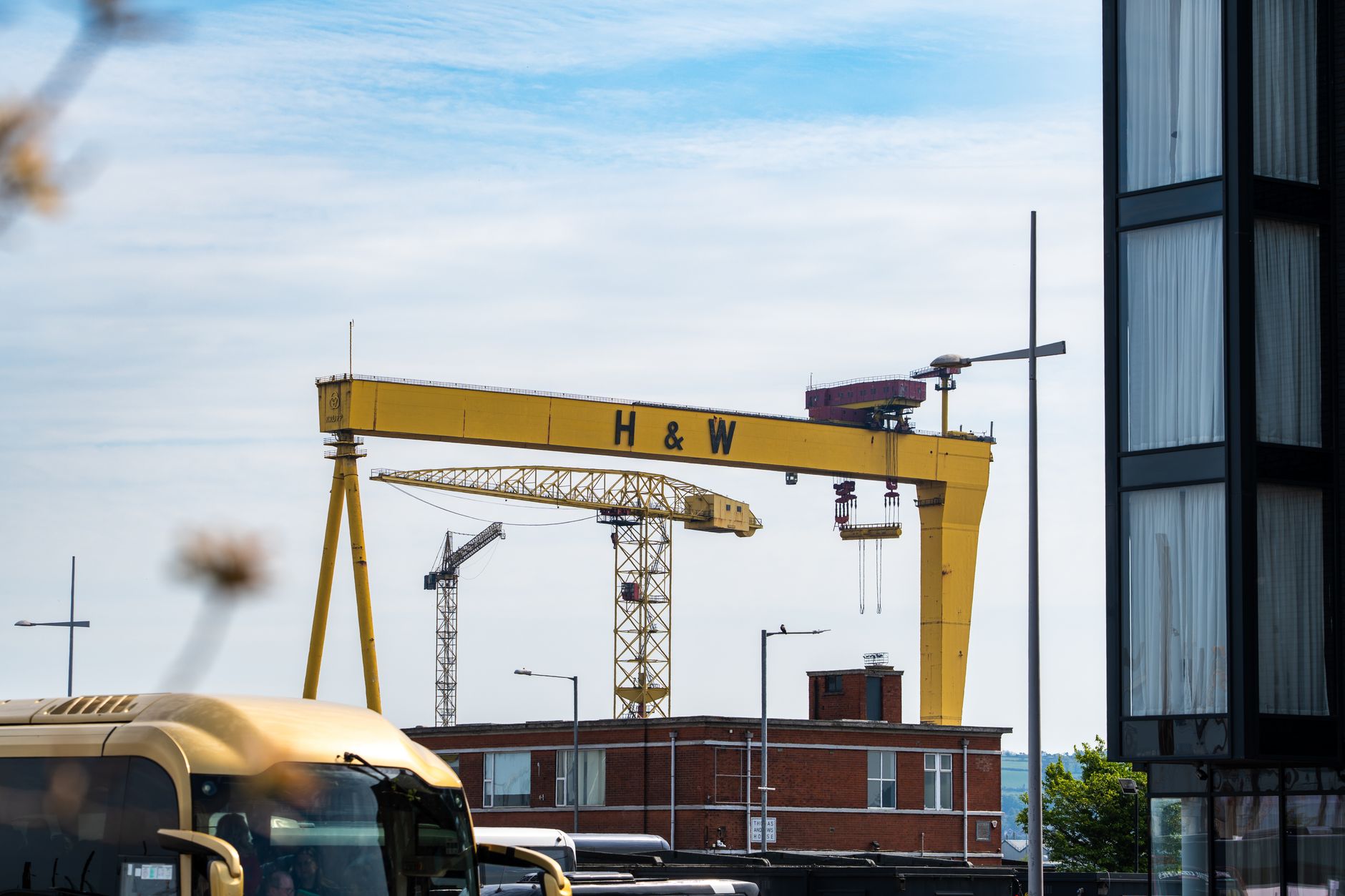
Salt hangs in the air near the old slipways, and two yellow Harland & Wolff cranes still boss the horizon like industrial punctuation marks. Belfast, in the United Kingdom, surprises people because its scale feels intimate while its history lands hard: linen fortunes, shipyard pride, prison walls, painted gables, and one very determined arts scene packed into a city you can cross on foot. The place doesn't smooth out its contradictions. That's why it stays with you.
 Photo: Daniel Smyth / Pexels
- Attractions
- 8
- Trip length
- 2-3 days
- Best season
- Late spring to early autumn (May-September)
Why Belfast
Built from cited sources · see the method · How we make our guides →
Central Belfast works best when you read it as a set of tight, walkable worlds rather than a grand capital spread. City Hall, opened in 1906, still tells the story of civic swagger; three streets away, St George's Market folds Friday-to-Sunday trade, hot food, and live music under an iron-and-glass roof whose present form dates from the 1890s. Brass, stone, frying bread, fiddle tunes. All of it within minutes.
The city’s emotional center sits east at the Maritime Mile, where Titanic Belfast rises on the old Harland & Wolff site and the surviving SS Nomadic makes the story feel less abstract. But Belfast is just as convincing in smaller rooms: the Linen Hall Library, founded in 1788; the Ulster Museum beside Botanic Gardens; the dark corridors of Crumlin Road Gaol. Big history, then human scale.
What changes your understanding of Belfast is how quickly memory turns into daily life. Students spill out along Botanic Avenue, trad sessions kick up in Cathedral Quarter, and murals in the west are still part of living neighborhoods rather than sealed museum pieces. Come expecting a city defined by its past and you'll miss the more interesting truth: Belfast keeps arguing with itself, and that argument gives it energy.
Shipyard Memory
Titanic Quarter works best when you treat it as an industrial shoreline, not a single museum stop. Slipways, Thompson Dry Dock, SS Nomadic, and the yellow Harland & Wolff cranes turn Belfast's shipbuilding past into something you can actually walk through.Victorian Confidence
Belfast City Hall, the Albert Memorial Clock, the Crown Liquor Saloon, and Queen's Lanyon Building all come from the city's late-19th-century money rush. Linen and shipbuilding paid for a lot of carved stone, stained glass, and swagger.History With Nerves
Few cities place conflict memory so close to everyday life. Crumlin Road Gaol, the Peace Wall, and guided walks along Falls Road and Shankill show a place still arguing with its own past, often in public.Market-Fed Eating
Belfast eats well when it stops pretending to be polished. St George's Market brings the smell of frying soda bread, oysters, coffee, and warm traybakes under one Victorian roof, and the city's better restaurants build from that same produce-first instinct.
Neighborhoods
Where to wander, by quarter — each with its own rhythm.
Cathedral Quarter
Cathedral Quarter is Belfast at its most sociable: cobbled lanes, brick warehouses, pub doors swinging open, and St Anne's Cathedral holding the center with more gravity than the nightlife around it first suggests. Visitors come for live music on Hill Street and Commercial Court, but stay for the layers: the MAC, Belfast Exposed, the Oh Yeah Music Centre, and old façades that still look like they remember when this was a trading district rather than a bar crawl.Titanic Quarter
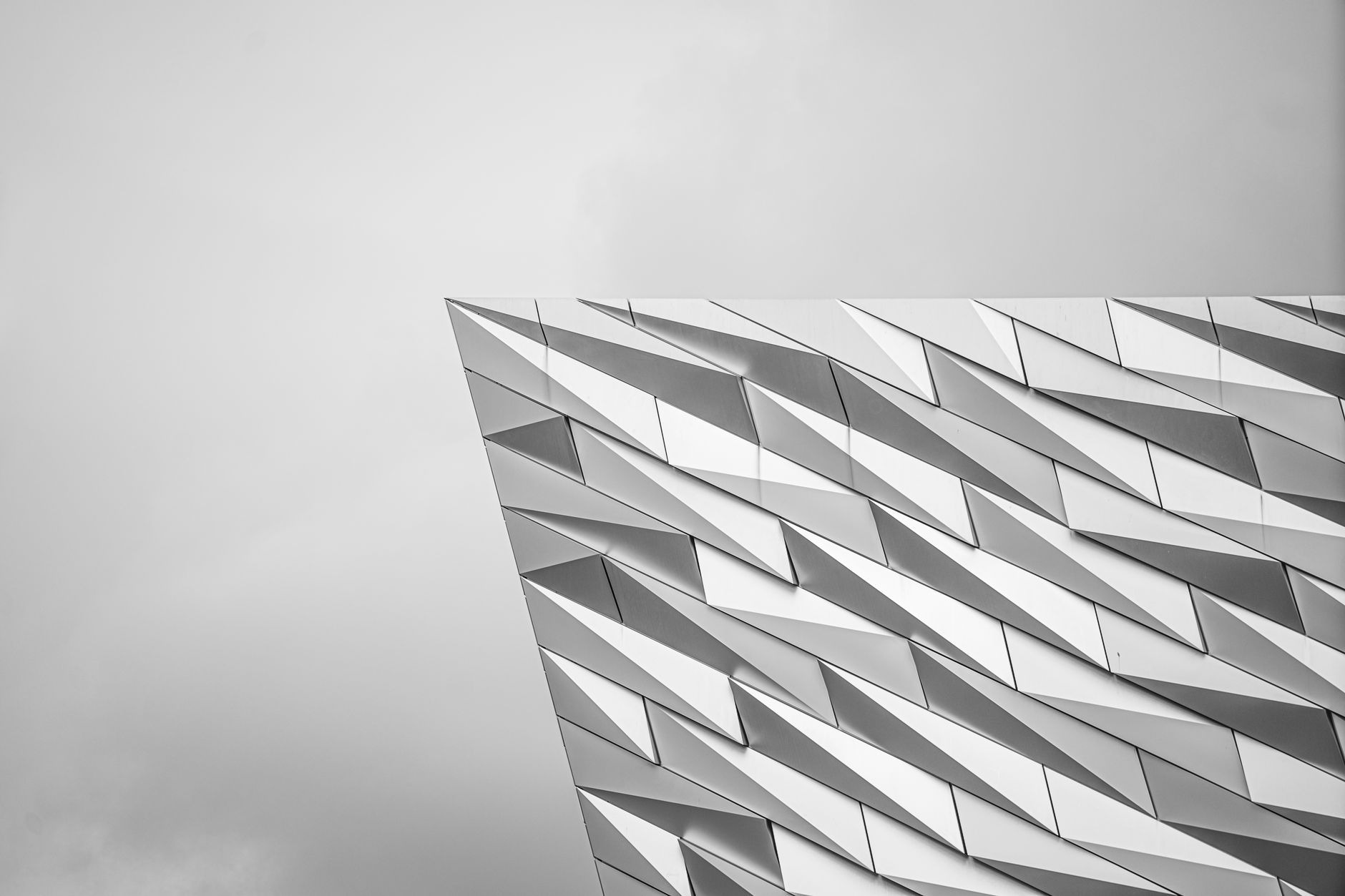
Titanic Quarter trades in steel, water, and scale. The slipways, dock edges, restored cranes, Titanic Belfast, SS Nomadic, and HMS Caroline turn east Belfast into an open-air lesson in industrial ambition, with enough surviving infrastructure to keep it from feeling like a polished reenactment. Come in bad weather if you can. The wind off Belfast Lough suits the place.Queen's Quarter
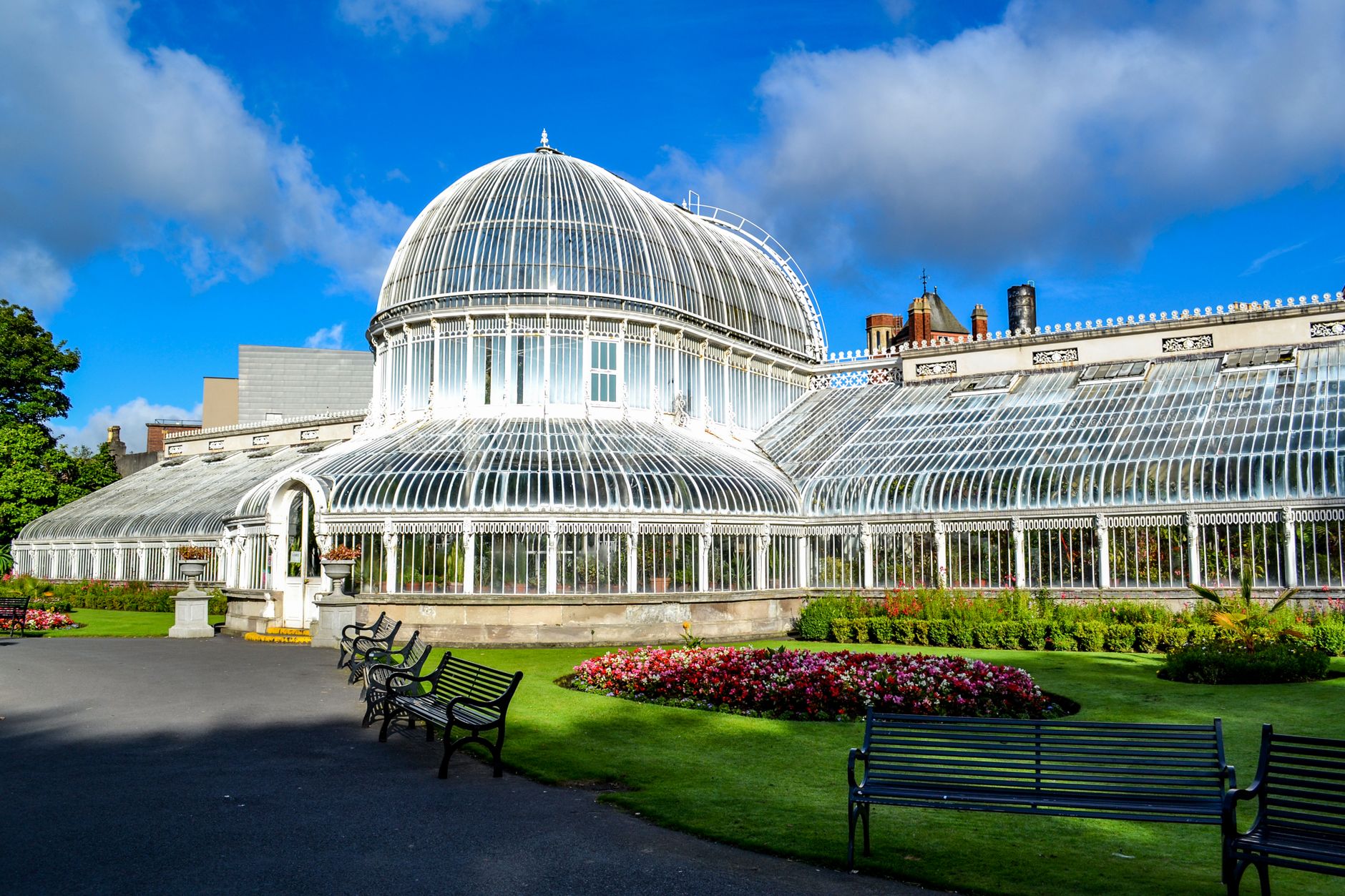
Queen's Quarter is where Belfast loosens its collar. The red-brick Lanyon Building at Queen's University, completed in 1849, gives the district its formal face, but the real pleasure is the mix of Botanic Gardens, the Ulster Museum, Queen's Film Theatre, cafés, cheap student lunches, and long conversations that start at noon and end after dark. It feels lived in. That's the point.City Centre
The city centre is more than an orientation stop around City Hall. This is where Belfast's commercial confidence still shows in stone and copper domes, where the Albert Memorial Clock leans slightly as if the ground beneath it has shifted one too many times, and where the Linen Hall Library offers one of the quickest ways to understand the city's political and literary depth. Walk it slowly. The details reward that.Linen Quarter
Linen Quarter carries the name of the industry that helped make Belfast rich, though these days visitors notice the Grand Opera House, Ulster Hall, hotel bars, and the steady churn of pre-show dinners first. It is one of the easier districts for an evening that needs no planning: a decent meal, a concert, maybe a late pint at the Crown Liquor Saloon, whose carved snugs and stained glass still make modern bars look underdressed.West Belfast
West Belfast asks for attention rather than speed. Falls Road, the Peace Wall, Cultúrlann McAdam Ó Fiaich, and the Gaeltacht Quarter carry language, politics, grief, and wit in very close quarters, and this is one part of the city where a guided tour usually earns its keep. Murals here are not decoration. They are argument, memory, and sometimes warning.North Belfast
North Belfast has a rougher edge and some of the city's most revealing history stops. Crumlin Road Gaol gives you Victorian punishment and later conflict memory in one grim sequence, while Clifton House, opened in 1774 as Belfast's poor house, shows a very different story about poverty, philanthropy, and who got looked after. Less polished, more telling.Smithfield and Union
Smithfield and Union feels like the city centre before branding teams arrived. Independent shops, market energy, older commercial buildings, and a slightly frayed texture make it a good district for visitors who prefer places that still have a few sharp corners. You won't come here for postcard Belfast. You'll come because cities need districts that haven't been sanded smooth.
Plan your trip
Before you go
- Getting There
- In 2026 most visitors arrive through George Best Belfast City Airport (BHD), about 3 miles from the centre, or Belfast International Airport (BFS), about 18 miles northwest of town. The Airport Express 600 links BHD with Belfast Grand Central Station in about 10 minutes, while the Airport Express 300 runs from BFS to the city in roughly 30 to 40 minutes; Belfast Grand Central Station and Lanyon Place are the main rail hubs, and the city sits on the M1 from Dublin, the M2 toward Antrim and Derry~Londonderry, and the A2 along Belfast Lough.
- Getting Around
- Belfast has no metro and no working tram system in 2026, so daily transport runs on Translink's Metro buses, the two-line Glider network (G1 and G2), and NI Railways. G2 is the easy run for Titanic Quarter, while an mLink Metro/Glider day ticket costs £4.00, a Belfast Visitor Pass costs £7, £13, or £17 for 1, 2, or 3 days, and an iLink Zone 1 day pass is £6 for bus-and-rail travel across the city zone.
- Climate & Best Time
- Belfast stays mild and damp rather than dramatic: spring usually sits around 10 to 16C, summer around 18 to 20C, autumn around 11 to 17C, and winter around 8 to 9C by day. Rain falls year-round, with drier odds in April to June and September, while October to December turn wetter and darker; for 2026 trip planning, late May, June, and September give the cleanest mix of long light, manageable crowds, and decent walking weather.
- Language & Currency
- English is the working language everywhere, though you'll spot Irish and Ulster-Scots on signs, murals, and cultural venues depending on the district. Currency is pound sterling (£); Visa and Mastercard are widely accepted in 2026, some businesses still refuse American Express, and Northern Ireland banknotes are legal sterling but can puzzle cashiers outside the region.
- Safety
- Belfast's day-to-day risk level is ordinary UK city fare: watch your bag in busy nightlife streets, don't leave valuables in cars, and keep an eye on your phone around taxi ranks after midnight. One local wrinkle matters more than crime statistics: parades and demonstrations can disrupt central routes with little warning, so check Translink and PSNI updates on weekends or politically charged dates; emergency numbers are 999 and 112, and non-emergency police is 101.
From Sandbar Ford to Shipyard Skyline
Belfast grew out of a muddy river crossing and learned to live with empire, industry, fire, bombs, and reinvention.
- c. 3000 BCE
The Giant's Ring Rises
A huge earthwork henge took shape south of modern Belfast, a circle nearly 200 meters across with a dolmen-like tomb at its heart. Five thousand years later, the grass still holds the geometry, and the city begins to look less young than it first seems.
- 665
Battle at the Ford
Records describe a clash at the ford where the River Farset met the Lagan, the muddy crossing that gave Belfast its name. This was no city yet, just a strategic pinch point of water, silt, and argument.
- 1177
John de Courcy Arrives
Norman knight John de Courcy pushed into eastern Ulster and established control over the district. Timber fortifications followed, and Belfast began shifting from Gaelic river crossing to contested colonial foothold.
- 1315
Bruce Burns the Castle
Edward Bruce invaded Ulster and the early Belfast Castle was destroyed in the fighting. Power in the town remained fragile, the kind that could go up in smoke with one campaign season.
- 1552
A Castle Built Again
Sir James Croft ordered Belfast Castle rebuilt and fortified during the Tudor drive to tighten English control. Stone walls mattered here because every claim to authority still had to survive a raid, a rebellion, or a bad winter.
- 1607
Plantation Changes the Town
The Flight of the Earls cleared the way for the Plantation of Ulster, and Belfast's population, property, and religion began to change fast. Scottish and English settlers arrived with new trades, new churches, and a new political order that would mark the city for centuries.
Show the full timeline (25 moments)
- 1613
Belfast Gets Its Charter
James I granted Belfast a charter of incorporation, turning it into an official borough with its own governing structure. On paper it was a small town; in ambition it had already started leaning toward the sea.
- 1640
The Port Takes Command
Thomas Wentworth shifted key customs privileges from Carrickfergus to Belfast, helping the town become the main port of the district. Trade changed the smell of the place: tar, wet rope, salt water, raw hides, and money.
- 1685
Huguenots Bring Linen Skill
French Protestant refugees arrived carrying weaving knowledge that Belfast knew how to turn into profit. Linen would not make the city graceful, exactly, but it made it rich.
- 1708
Belfast Castle Burns
The old castle was destroyed by fire, one more reminder that Belfast's built history has often vanished just when it seemed settled. The city kept rebuilding anyway. That habit matters.
- 1737
A Newspaper Finds Its Voice
The Belfast News Letter began publication and became one of the oldest continuously published newspapers in the English-speaking world. A town with a press is a town arguing with itself in public, which suited Belfast perfectly.
- 1856
John Lavery Is Born
Painter John Lavery was born in Belfast before building a career in portraiture and wartime art. His later gift of paintings to the Ulster Museum gave the city a way to see itself reflected in oil, not just in brick dust and shipyard smoke.
- 1859
Harland Buys the Yard
Edward James Harland bought the Queen's Island shipyard, and within two years Gustav Wolff joined him. From that partnership came a shipbuilding empire whose cranes would dominate Belfast's horizon like steel cathedral towers.
- 1888
Queen Victoria Makes a City
Belfast received official city status in 1888 after a century of explosive industrial growth. Linen mills rattled, ship rivets rang like hammer blows on church bells, and a town of merchants had become an urban power.
- 1898
C. S. Lewis Begins Here
Clive Staples Lewis was born in east Belfast, in a city of rain, gaslight, churchgoing, and uneasy certainties. The wardrobes and lampposts came later, but Belfast gave him the weather of imagination early.
- 1906
City Hall Opens Its Doors
Belfast City Hall opened in white Portland stone at the center of a city flush with industrial wealth. Its great dome looked confident to the point of swagger, which was fair enough in a place building ships for the world.
- 1907
John Hewitt's Belfast Eye
Poet John Hewitt was born in Belfast and would spend a lifetime writing against sentimental versions of place. He saw the city's sectarian habits clearly, and still found language for its streets, weather, and stubborn dignity.
- 1911
Titanic Takes Shape
RMS Titanic stood on the slips at Harland & Wolff, immense even by Belfast standards, its hull rising above the yard like a black cliff. When people call the ship the city's pride and wound in the same breath, they are not exaggerating.
- 1921
Capital of Northern Ireland
Partition made Belfast the capital of the new state of Northern Ireland. Government buildings, parades, police power, and political tension all concentrated here, which is another way of saying history moved into town and stayed.
- 1941
The Belfast Blitz
German bombs hit the city in April and May 1941, killing around 1,000 people and leaving tens of thousands homeless. The docks burned, whole streets were smashed open, and the night air filled with brick dust, fire, and the sharp smell of ruptured gas mains.
- 1945
Van Morrison Hears the Streets
Van Morrison was born in east Belfast, where American records, shipyard talk, and church music all traveled through the same terraces. Few artists have carried the city's rhythm so well: half bruise, half hymn.
- 1946
George Best Arrives
George Best was born in east Belfast and grew into the kind of footballer people still describe with a grin before they finish the sentence. His brilliance gave the city a glamour it rarely allowed itself.
- 1969
The Troubles Erupt
Violence on Belfast's streets hardened into decades of conflict involving republicans, loyalists, the British Army, and civilians trapped between them. Peace walls went up, murals became public memory boards, and ordinary geography turned loaded: this road, that corner, those six houses.
- 1998
Agreement Signed in Belfast
The Good Friday Agreement created a framework for power-sharing and gave the city a chance to breathe differently. Peace did not arrive like sunlight through clouds. It came as paperwork, fatigue, compromise, and then, slowly, a new habit of life.
- 2012
Titanic Quarter Reclaims the Docks
Titanic Belfast opened on the old Harland & Wolff site, turning a landscape of cranes, drawing offices, and dry docks into a place of interpretation and argument. The building glitters. The history inside still has rough edges.
Who lived here
-
Writer · 1898–1963
C.S. Lewis
Born here
Lewis was born in Belfast on 29 November 1898, and the city's east side still claims him with a kind of quiet pride. Walk through CS Lewis Square today and you can imagine him approving the odd mixture of myth, industry and weather; Belfast never had trouble producing dramatic scenery for a child with a large imagination.
-
Singer-songwriter · born 1945
Van Morrison
Born here
Van Morrison's Belfast is not postcard Belfast; it's east Belfast streets, half-heard songs and the grain of ordinary life. The city around him has polished up, but he'd probably still trust the corners where conversation beats branding and a pub singer can hush a room without trying.
-
Actor and director · born 1960
Kenneth Branagh
Born here; grew up in North Belfast
Branagh was born in North Belfast and spent his early childhood in Tiger's Bay before his family left for England. Belfast keeps returning in his work because the city leaves marks like that: row houses, family tension, sudden tenderness, the sound of adults carrying history in their voices.
-
Actor · born 1953
Ciarán Hinds
Born here; studied at Queen's University Belfast
Hinds came out of North Belfast, then passed through Queen's before building the kind of acting career that can make menace and sorrow share the same face. He'd recognise the city still: formal in places, funny in self-defense, and always a little more emotionally crowded than it first appears.
-
Painter · 1856–1941
John Lavery
Born here
Lavery was born in inner North Belfast and later sent work back to the city, where the Ulster Museum still holds part of that relationship in public view. He left young, but Belfast never fully left him; the city's ambition, class theater and appetite for display were made for a portrait painter.
-
Poet · 1907–1987
John Hewitt
Born here
Hewitt was born on Cliftonpark Avenue and educated across Belfast before becoming one of the city's defining poetic voices. He wrote with the patience of someone who knew that place is never just scenery; Belfast, for him, was argument, inheritance and the stubborn fact of where your feet first learned the streets.
Where to Eat
Where locals actually book dinner — not the tourist menus.
-
Ulster Fry
This is Belfast's full-throttle breakfast: bacon, sausage, eggs, black pudding, soda bread, and potato bread, usually with beans or tomato trying to keep up. Order it early, then walk it off through Botanic or along the river.
-
Soda Bread and Potato Bread
These are the quiet essentials of a Belfast table, not side notes. Good soda bread has a tight crumb and slight tang; potato bread hits the pan, takes on brown edges, and smells like breakfast before you even sit down.
-
St George's Market
Go hungry and circle once before buying anything. The better stalls serve Belfast in edible form: oysters from the coast, local cheeses, coffee, traybakes, fresh bread, and hot street-food plates eaten with one eye on the buskers.
-
Belfast Oysters
The city has easy access to excellent shellfish, and oysters are the cleanest way to taste the cold water around the north coast and Strangford Lough. Briny, metallic, and almost shockingly fresh when done right.
-
Irish Stew
A proper bowl still earns its place, especially on wet afternoons when the city turns silver and the pavements shine. Look for lamb, root vegetables, and broth with depth rather than a thick, floury shortcut.
-
Traybakes
Belfast does not treat sweets as decoration. Fifteens, caramel squares, and top-heavy brownies show up in cafes and market counters, usually beside strong tea and with very little interest in restraint.
-
Seafood from Strangford and the Antrim Coast
Menus around Belfast often pull in mussels, crab, langoustines, and day-boat fish from nearby waters rather than pretending the city lives apart from its coast. When a restaurant offers simple grilled fish with local potatoes, take the hint.
-
Modern Belfast Restaurants
The city's stronger kitchens lean on Northern Irish produce without turning dinner into a lecture on terroir. Expect menus built around beef, lamb, garden vegetables, and coastal seafood, with enough confidence to keep the plate clean and the room informal.
Insider tips
Small things that change how the city treats you.
Walk the core
Belfast city centre is compact, so do the middle of town on foot and save your transport budget for longer hops. Pair City Hall, Cathedral Quarter and St George's Market in one easy sweep.Market timing
St George's Market runs Friday to Sunday, and Saturday is the fullest food day. Go early if you want Belfast baps, bread and coffee before the queues thicken under the iron roof.Book dinner early
Better-known rooms like OX and The Muddlers Club fill fast on Friday and Saturday. Reserve ahead or eat earlier in south Belfast if you don't want your night decided by what still has a table at 8:30pm.Pay in sterling
Belfast uses pound sterling, not euro. In restaurants, around 10% is normal for good service, but check the bill first because some places add a service charge for groups.Mind pub etiquette
Many pubs still expect you to order at the bar unless staff seat and serve you. Know your round before you step up; Belfast bartenders appreciate decisiveness more than theatrical waving.Treat history carefully
Political murals and conflict sites are part of lived memory here, not stage sets. Ask questions, listen well, and don't turn the Troubles into pub banter.
Gallery
The city, as it actually looks.


Frequently asked
Is Belfast worth visiting?
Yes, especially if you like cities with rough edges left visible. Belfast gives you shipbuilding history, sharp political memory, a strong food scene and one of the easiest city centres in the UK to cover on foot over a short break.
How many days in Belfast?
Two to three days works well for most visitors. That gives you time for Titanic Quarter and the Maritime Mile, the City Hall and market core, then the Queen's Quarter museums, gardens and a proper evening in Cathedral Quarter.
Is Belfast safe for tourists?
Generally yes, with the usual city precautions. The more specific rule is cultural rather than physical: be respectful around murals, memorials and conversations about the Troubles, because those subjects still sit close to the surface.
Can you walk around Belfast city centre?
Yes, the centre is compact and very walkable. City Hall, Cathedral Quarter, St George's Market and much of the shopping core sit close enough to link on foot without much effort.
Is Belfast expensive to visit?
Less punishing than London, but the good tables and polished cocktail spots aren't cheap. You can keep costs down by building days around St George's Market, museum time in the Queen's Quarter and pub meals outside the flashiest addresses.
What area should I stay in Belfast for nightlife?
Cathedral Quarter is the easiest base if you want dinner, pubs and live music within a few streets. Linen Quarter works well if you care more about transport links, larger venues and late bars around Dublin Road.
Is Titanic Belfast worth it?
Yes, if you want the clearest single entry point into Belfast's industrial story. The better move is to treat it as part of the wider Maritime Mile, so the museum, SS Nomadic and dockside walks start talking to each other.
What is the best time of year to visit Belfast?
Late spring through early autumn is the sweet spot for walking the waterfront and lingering in market and pub districts. August is especially lively because Belfast Mela lands then, while autumn brings the Belfast International Arts Festival.
Pick up where you left off
Saved and recently read places — kept on this device only.
Photo credits (11)
- Daniel Smyth — Pexels License (https://www.pexels.com/license/) — Source: https://www.pexels.com/photo/19045507/
- Donovan Kelly — Pexels License (https://www.pexels.com/license/) — Source: https://www.pexels.com/photo/36709131/
- Jonathan Borba — Pexels License (https://www.pexels.com/license/) — Source: https://www.pexels.com/photo/33749591/
- Jonathan Borba — Pexels License (https://www.pexels.com/license/) — Source: https://www.pexels.com/photo/33749613/
- Phil Evenden — Pexels License (https://www.pexels.com/license/) — Source: https://www.pexels.com/photo/32623783/
- Peter Steele — Pexels License (https://www.pexels.com/license/) — Source: https://www.pexels.com/photo/15955120/
- Daniel Smyth — Pexels License (https://www.pexels.com/license/) — Source: https://www.pexels.com/photo/19045508/
- John Nail — Pexels License (https://www.pexels.com/license/) — Source: https://www.pexels.com/photo/5061921/
- Jonathan Borba — Pexels License (https://www.pexels.com/license/) — Source: https://www.pexels.com/photo/33749594/
- Jonathan Borba — Pexels License (https://www.pexels.com/license/) — Source: https://www.pexels.com/photo/33840403/
- Daniel Smyth — Pexels License (https://www.pexels.com/license/) — Source: https://www.pexels.com/photo/19045506/
Photos may have been resized or cropped.