Lickleyhead Castle
AuchlevenUnited Kingdom 57° N · 2° W Updated Aug 2026
A Game of Thrones star grew up in this half-hidden 16th-century castle, where a 1629 lintel and bitter clan feuds still linger beside the quiet Gadie Burn.
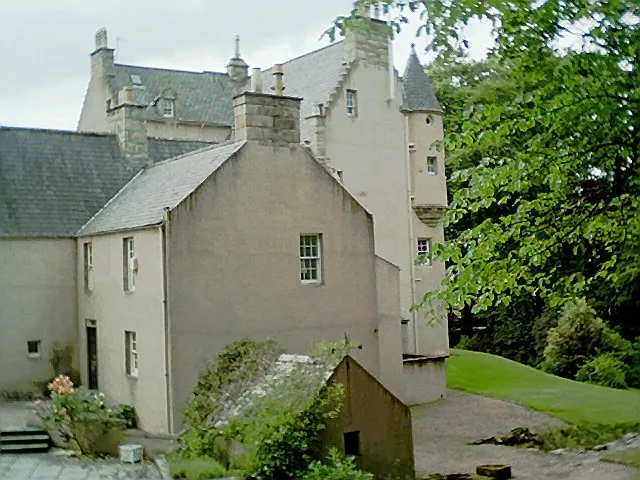 Photo: Stanley Howe · CC BY-SA 2.0
- Time needed
- 15–30 minutes (external view)
- Entry
- Free (no public entry)
- Access
- Roadside viewing only
- Best season
- May–September
Twelve narrow shot-holes pierce the harled walls of Lickleyhead Castle near Auchleven, Aberdeenshire, in the United Kingdom—enough for a raid, never enough for an army. You come to this L-plan tower house on the Gadie Burn not for grand battlements but for the blood feud that followed a 3,000-mark bounty, and for the 1629 lintel that marks the moment a fortified keep turned into a Jacobean home.
What looks like a castle from the road is really a laird's house with a gun at the door. Squat harled walls rise three and a half storeys, corner turrets peer toward Bennachie, and crow-stepped gables step against Aberdeenshire weather. The base is pierced by twelve shot-holes—enough to hold off a raiding party, useless against an army.
Inside, the scale is intimate, not heroic. A turnpike stair coils past the 1629 marriage lintel and into rooms that have hosted eight dynasties in five centuries. It remains a family home, so access is limited.
Come for the curious cast of owners, from a twice-provost of Aberdeen to a post-revolutionary Mexican aristocrat. Stay for the feeling that the house has kept secrets for four hundred years and is not finished telling them.
What to see
-
The Great Hall
The fireplace alone could roast a roe deer—and probably has. Before you say hello to the portraits, look up: moulded plasterwork curls across the ceiling in 17th-century heraldic rosettes and floral motifs. Light tunnels through window embrasures cut into walls over four feet thick—deep enough to sit sideways with your legs stretched out—then dies in corners the chandeliers never reach. Stand near the hearth as birch logs pop. The Gadie Burn hisses through the stone, two centuries competing for the same silence. -
The South Lawn and the Gadie Burn
Walk fifty metres out onto the south lawn—half a football pitch—and the castle finally explains itself. Crow-stepped gables, conical-roofed bartizans, and chimneys tall enough to give a roofer vertigo stack up in one view. Then the Gadie Burn cuts in from behind the beeches, the same clear water that runs through the old folk song. Red squirrels work the branches above you; roe deer pick their way along the far bank at dusk. This is still a private house, so that view comes with a booking or a rare heritage open day—plan around it. -
Quiet Details: A Turnpike Stair and a 1629 Signature
Climb the turnpike stair and look down. The treads are scooped into shallow bowls, worn since the early 1600s by lairds' boots, servants carrying coal, and the claws of dogs nobody remembered to mention. At the landings, narrow shot-holes angle downward—less window, more argument. Above the 1629 doorway, John Forbes and Margaret Skene left their initials carved into stone like a signature written with a chisel. Up in the Forbes Room, a wooden box bed hides behind a panelled door like a cupboard for sleeping. This was never a show castle. It was a house built to keep its people alive and its feuds outside.
Plan your visit
- Getting There
- From Aberdeen, take the A96 to the B9002 turnoff at Oyne, continue 2 miles, then follow Kirkton Road and the B992 through Auchleven to the stone gateposts on the village's western edge. The drive forks after 100 yards; keep right. By rail, use Insch on the Aberdeen–Inverness line and take a 10-minute taxi, or use bus 422 from Alford to Auchleven and walk 0.6–1.0 km west.
- Opening Hours
- Lickleyhead is not a walk-in attraction. As of 2026, castle and grounds are open only to booked residential guests, event attendees, and visits arranged in advance. Guest check-in begins at 16:00 and checkout ends at 10:00; exclusive-use bookings run year-round, including holidays.
- Time Needed
- Wedding or event guests should plan 2–4 hours on site. Booked visitors staying overnight typically reserve 2–3-night weekends or a full week. If you only want a roadside look at the tower, allow 15 minutes, but you cannot enter the grounds without a booking.
- Accessibility
- There are no lifts; upper bedrooms sit above narrow spiral stone stairs, and floors carry raised thresholds and uneven 16th-century surfaces. Wheelchair access inside is very limited. The 10–11-acre grounds mix grass, gravel, and woodland paths, so expect rough terrain and allow extra time.
- Cost/Tickets
- Day tickets do not exist. As of 2026, the whole castle is hired exclusively, sleeping up to 16–18 guests, with rates varying by season and minimum stays (often 3 nights for micro-weddings). Enquire via the official website or verified booking agents; there are no free-entry days or skip-the-line options.
Photo Gallery

History
Blood on the Hearthstone
Lickleyhead Castle began as a late-sixteenth- or early-seventeenth-century house for people who expected trouble but wanted light in the hall. Its story is not a single clan's unbroken hold but a relay of Leiths, Forbeses, Hays, Duffs, Lumsdens, Leslies and Davies—eight transfers in five hundred years.
Archaeologists generally date the main block to about 1600, though some records push construction toward 1560. What is not argued is the 1629 work: John Forbes of Leslie raised the keep, added a west wing, and fixed his initials with his wife's above the door.
The turning point
The Bounty Hunter's Hand
William Forbes wanted money, not glory. In 1644 the natural son of Laird John Forbes hunted down Alexander Irvine of Kingcausie, a Royalist ally of the Marquess of Montrose, and killed him for a Covenanter bounty of 3,000 Scots marks. The killing bought ready cash and a blood debt.
A year later, in the winter of 1645, Forbes sat inside Lickleyhead handling a wheel-lock pistol. According to records, the weapon discharged point-blank into his own hand, destroying it. To seventeenth-century Aberdeenshire, this was not an accident; chroniclers read it as divine retribution for Irvine's blood.
The turning point came after the 1660 Restoration of Charles II. With Royalists back in power, Forbes was outlawed for the killing and later executed. Lickleyhead remained standing, but the Forbes hold on it never recovered.
Leith Intrigue and the Queen's Cause (c. 1560–1625)
Jacobean Rebuilding and Civil War (1625–1660s)
Clearance, Restoration and a Mexican Return (1723–1922)
Tips for visitors
Book Only Direct
High-profile castle listings attract holiday rental scams, so reserve through the official Lickleyhead site, Savills, or verified agents—never by wire transfer to unknown third parties.Drones Need Permission
Still photos from the public B992 and rights of way are fine, but flying a drone over the occupied house or grounds without owner consent breaks UK Civil Aviation Authority rules. Commercial shoots also need prior clearance.Respect the Curtilage
Scotland's right-to-roam law excludes private residential gardens and immediate castle grounds, so don't stroll the lawn or peer into windows uninvited, even if the gate stands open.Ticks on Bennachie
Bracken and heather around the Gadie Burn and Bennachie carry sheep ticks in spring and summer; wear long trousers and do a tick check after walks.Wedding Wasn't Here
Rose Leslie grew up in this house, but the 2018 Kit Harington wedding reception took place at nearby Wardhill Castle, with the ceremony at Rayne Church. Don't show up expecting filming locations or a public attraction.
Frequently asked
Is Lickleyhead Castle worth visiting?
Only if you've booked a stay or event, because the castle is a private holiday rental rather than a walk-in attraction. Guests get a stone tower house with eight bedrooms, open fires and a hot tub, all at the foot of Bennachie. Casual tourists can see the crow-stepped silhouette from the road, but not the grounds or interiors.
How long do you need at Lickleyhead Castle?
For an event or micro-wedding, two to four hours covers arrival, ceremony, drinks and departure. Residential bookings normally run a weekend or a full week, which is long enough to explore the 10-acre estate and nearby Bennachie trails. The castle sleeps 16 to 18 guests, so most groups settle in for at least two nights.
How do I get to Lickleyhead Castle from Aberdeen?
Drive north-west on the A96, then take the B9002 toward Oyne, continue about two miles, and turn left toward Auchleven on Kirkton Road; from the B992 look for stone gateposts on the left. The closest rail station is Insch, roughly a 10-minute taxi from the castle. Bus route 422 links Alford and Auchleven village.
What is the best time to visit Lickleyhead Castle?
Book in June for up to 18 hours of daylight and the most comfortable walking weather. December through February delivers frost on the crow-stepped gables and log fires indoors, though access to the estate is still by private booking. Spring brings snowdrops, daffodils and bluebells along the Gadie Burn.
Can you visit Lickleyhead Castle for free?
No. There is no free walk-in access, day ticket or public museum. Ownership is private, and Scotland's right to roam excludes domestic castle gardens and curtilage. You can view the tower from public roads, but photography inside the grounds is limited to booked guests and authorised events.
What should I not miss at Lickleyhead Castle?
Inside, look for the carved 1629 lintel above the original entrance with John Forbes and Margaret Skene's initials, and the concave hollows worn into the spiral stair treads. At ground level there are twelve shot holes for musket defence, not heavy cannon loops. The oval turret windows are a rare French-influenced flourish in rural Aberdeenshire.
Did Rose Leslie and Kit Harington get married at Lickleyhead Castle?
No. Their 2018 ceremony took place at Rayne Church, with the reception at nearby Wardhill Castle. Lickleyhead was Rose Leslie's childhood home, and her father Sebastian Leslie lost the property in a repossession dispute the same year.
Sources & attribution 12
- Lickleyhead Castle Heritage — Ownership history, 1629 Forbes remodelling, 1645 pistol accident and 1850s Bennachie land evictions.
- Historic Environment Scotland: LB16234 — Category A listing, L-plan tower house architecture, carved 1629 lintel and oval turret windows.
- Clan Rising: Lickleyhead Castle — Castle history, twelve defensive shot holes, William Forbes pistol accident and ownership timeline.
- Wikipedia: Lickleyhead Castle — Construction dates for the core tower, sale to Forbes in 1625 and variant spellings.
- Lickleyhead Castle Contact — Driving directions from Aberdeen and Inverness, bus route 422, Ready2Go and rail details.
- Celtic Castles: Lickleyhead Castle — Eight-bedroom rental layout, 10-acre estate, Gardener's Cottage, pet policy and self-catering facilities.
- VisitAberdeenshire (trade) — Confirms the castle is closed to general walk-in visitors and access is by booking only.
- The Herald — Rose Leslie childhood home and 2018 repossession from Sebastian Leslie.
- Homes and Interiors Scotland — Clarifies Rose Leslie and Kit Harington married at Rayne Church with the reception at Wardhill Castle.
- Lickleyhead Halloween History — Ghost legends, the 1644 murder of Alexander Irvine and the 1645 pistol accident at Lickleyhead.
- Hitched: Lickleyhead Castle — Micro-wedding capacity, 2 to 30 guests, 10-acre estate and outdoor event spaces.
- Booking.com: Lickleyhead Castle — Check-in from 16:00 and check-out by 10:00 for private rentals.
Built from cited sources · see the method · How we make our guides →
Pick up where you left off
Saved and recently read places — kept on this device only.
Photo credits (1)
- Licklyhead Castle, Auchleven - geograph.org.uk - 254419 — Stanley Howe — CC BY-SA 2.0 (https://creativecommons.org/licenses/by-sa/2.0/) — Source: https://commons.wikimedia.org/wiki/File:Licklyhead_Castle,_Auchleven_-_geograph.org.uk_-_254419.jpg
Photos may have been resized or cropped.