

Place
United Kingdom Updated Jul 2026
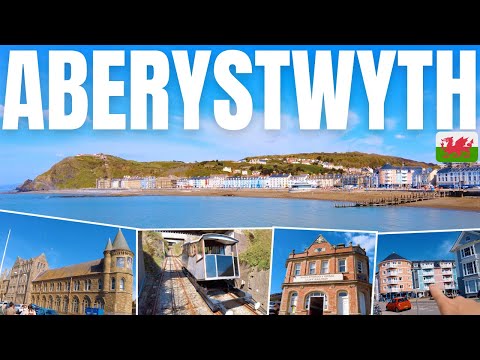
Salt hangs in the air before Aberystwyth, United Kingdom, fully comes into view, and then the whole place appears at once: a curving Victorian promenade, the dark stump of a 13th-century castle, and hills rising behind the rooftops as if the town has been pressed between sea and green stone. Few British seaside towns keep their layers this close together. You can hear arcade noise from the pier, turn a corner, and end up in front of one of Wales's great libraries within minutes.
 Photo: O Emmanuel / Pexels
Built from cited sources · see the method · How we make our guides →
Aberystwyth works because it refuses to be only one thing. Students from Aberystwyth University keep the cafes and pubs loose around the edges, while the National Library of Wales gives the town an almost improbable intellectual weight; manuscripts, films, paintings, and oddities like the world's smallest book sit a short uphill walk from fish-and-chips on the front.
The sea shapes the mood here. On the mile-long promenade, wind pushes spray across the railings and evening light turns Cardigan Bay a flat sheet of silver; in autumn and winter, starling murmurations can twist over the waterfront like smoke changing its mind. Then the town shifts again: the Vale of Rheidol steam railway heads inland through wooded valley country, and Constitution Hill lifts you 430 feet above the bay in carriages that have been climbing since the 1890s.
History in Aberystwyth rarely stays behind glass. Edward I's castle still grips the headland between North and South Beach, Pen Dinas keeps the earthworks of an Iron Age hillfort above the town, and the Royal Pier has been taking the weather since 1864. That's the trick of the place: it looks at first like a compact Welsh resort, then keeps revealing how much Wales has stored here.
Not every monument, just the ones we'd walk you past ourselves.
Before you go
Education reformer · 1804–1881
Led the campaign that founded the university here
Hugh Owen spent the 1850s and 1860s raising money and stubborn hope for a Welsh university, and Aberystwyth got it first. When the college opened in the half-finished Old College in 1872, the seafront town became the place where Welsh higher education stopped being an idea and turned into bricks, lectures and rent bills.
Cleric and academic · 1837–1900
First principal of University College Wales, Aberystwyth
On 16 October 1872, Thomas Charles Edwards welcomed the first 25 students into a converted hotel on the seafront. He would probably recognize the argument that still runs through Aberystwyth today: part salt-air resort, part serious place of study, each side making the other sharper.
Physician and book collector · 1840–1926
Secured the National Library of Wales for Aberystwyth
Sir John Williams made a collector's move with national consequences: he promised his library to the new National Library if it was built in Aberystwyth. That bargain helped tilt the decision in the town's favor, and Penglais Hill has been heavier with manuscripts ever since.
Historian and international relations scholar · 1892–1982
Professor of International Politics here from 1936
E. H. Carr wrote 'The Twenty Years' Crisis' while teaching in Aberystwyth, turning this damp edge-of-Wales town into one of the birthplaces of international relations as a discipline. He might raise an eyebrow at the selfie traffic on the promenade, then retreat uphill and ask whether the world has learned much since 1939.
Botanist · 1882–1967
Professor of Botany in Aberystwyth from 1930; Acting Principal in 1952
Lily Newton built Aberystwyth's botany department into a place with real scientific weight, then became Acting Principal in 1952, which tells you something about her force of mind. In a town where sea wind batters everything, she made patient attention to algae and plant life feel like central business.
Monarch · born 1948
Studied Welsh and Welsh History here in 1969
Before he was king, Charles spent a term in Aberystwyth studying Welsh ahead of his investiture as Prince of Wales. The image still has a faintly odd glamour to it: a future monarch in a rain-swept university town, learning a language that has always carried more politics than grammar.
Where locals actually book dinner — not the tourist menus.
Order it when the weather turns damp, which in Aberystwyth can be at short notice. Good rarebit arrives blistered and sharp with mustard and ale, the cheese smelling faintly of the dairy rather than a factory packet.
This is the bowl to look for after a windswept walk on the promenade. The Welsh broth, usually built around lamb, potatoes, carrots and leeks, suits Aberystwyth's climate so perfectly that anything more elaborate can feel beside the point.
Aberystwyth sits on a bay that rewards anyone who orders from the day's catch rather than the laminated safe option. Look for mackerel, crab, mussels and battered fish that still tastes of clean salt water instead of fryer oil alone.
West Wales still knows what to do with the old coastal staples. Cockles bring briny bite, laverbread adds a dark mineral depth, and together they taste like the tide came indoors and found a frying pan.
Ceredigion's hills are sheep country, so lamb is more than a menu cliché here. Choose it roasted, braised or folded into cawl; the flavour tends to be sweet, grassy and built for cold evenings.
Aberystwyth does sweet things best when they stay modest. Bara brith is tea-soaked fruit loaf made for a rainy afternoon, while Welsh cakes are the sort of warm, griddled snack you eat while walking and regret not buying six more.
A Spanish deli-restaurant in a Welsh university town should feel improbable, but in Aberystwyth it doesn't. Go for jamon, tortilla and a glass of something dry after too much sea air; the shelves of tins, cheese and sherry make the place half lunch stop, half edible souvenir shop.
Some evenings call for linen napkins. Others call for fish and chips eaten before the wind steals the heat, or a pint in a pub where walkers, students and retired regulars all seem to know the room's rhythm better than you do.
Small things that change how the city treats you.
The city, as it actually looks.


Yes, especially if you like seaside towns with brains and weather of their own. Few places in Britain pack a medieval castle ruin, Wales's oldest pier, a university founded in 1872 and Britain's longest electric cliff railway into such a walkable stretch of coast.
Two to three days works well. One day covers the promenade, castle, pier and Constitution Hill; a second gives you time for the National Library or the Vale of Rheidol Railway to Devil's Bridge.
Quite easily. The town centre, castle, pier and promenade sit within walking distance of the station, and TrawsCymru buses connect Aberystwyth with other Mid Wales towns for £7 on a day ticket.
No, not by UK seaside standards. The castle, beaches and promenade are free, council long-stay parking starts at £5 for 24 hours in some Aberystwyth car parks, and the regional TrawsCymru day bus ticket is £7.
Generally yes, but the weather is the thing that bites first. The exposed seafront and hilltop viewpoints can feel much rougher than they look, so treat wind, spray and slippery surfaces with more respect than you would in a sheltered resort.
Late spring through early autumn is easiest for long daylight and train rides into the hills. But autumn and winter have their own reward: sunset light over Cardigan Bay and the starling murmurations around the pier.
Yes, but not freely all summer. Dogs are restricted on North and South Beach from 1 May to 30 September, while the promenade stays open to dogs on a lead year-round.
No. A car helps for rural beaches and small villages, but Aberystwyth itself is compact, the rail station is central, and buses plus the Vale of Rheidol Railway cover the classic visitor routes.
Saved and recently read places — kept on this device only.
Photos may have been resized or cropped.