train
Short distances, sharp contrasts
Few countries let you move this fast between such different worlds. London, York, Edinburgh, Bath, and Cardiff sit on practical rail lines, but each speaks in a different architectural and cultural voice.
The United Kingdom makes sense once you stop calling it one thing: it is London and the Highlands, Welsh valleys and university courts, all packed close enough that a train ride can feel like a border crossing.
 United Kingdom
EntryETA required for many non-visa visitors
UA United Kingdom travel guide starts with one useful correction: this is not one country in one mood, but four nations stitched together by rail, rain, and argument.
Most trips begin in London, and that makes sense. You land in a city that can give you the British Museum in the morning, Brick Lane by lunch, and a pub older than your home country by night. But the point of the United Kingdom is contrast, not scale. Two hours on a train can take you from Oxford quads to Birmingham canals, from Bath crescents to Bristol warehouses, from York walls to Edinburgh closes. Distances look modest on a map. The changes in accent, architecture, and appetite do not.
This is a country where history sits in plain view and keeps interrupting the present. You feel it in Canterbury, where a murder at the altar turned a cathedral into medieval Europe’s great pilgrimage magnet, and in Cardiff, where the castle walls hold Roman, Norman, and Victorian ambitions in one frame. Then the landscape takes over. Inverness opens the Highlands; Glasgow gives industrial muscle and hard-edged wit; Cambridge still runs on bicycles and old stone. Fish and chips by the coast, a Sunday roast in a village inn, haggis in Edinburgh: the United Kingdom rewards travelers who stop treating it as a checklist and start reading it region by region.
Britons and Romans, c. 2500 BCE-410 CE
Dawn on Salisbury Plain: chalk dust, wet grass, and men hauling bluestones from west Wales over distances that still sound faintly unreasonable. Stonehenge was not a single act of genius but a long obsession, rebuilt and reimagined across centuries. What people often miss is that the monument already had an ancient past when Rome itself was young.
Then came the empire, with its roads, baths, taxes, and paperwork. Londinium rose on the Thames as a trading port of timber quays and warehouses, but in 60 or 61 CE Queen Boudicca turned it into a furnace after Roman officials seized her lands and humiliated her family. Archaeologists still find the red-black burn layer beneath modern London. Her anger has a geological signature.
Hadrian's Wall, begun in 122 CE, tells a different story: not Roman confidence, but Roman nerves. At Housesteads and Vindolanda, soldiers from Syria, North Africa, and the Rhine stood guard in cold rain, writing home on thin wooden tablets while the empire drew a hard line across the north. One of those tablets is a birthday invitation from Claudia Severa to her friend Sulpicia Lepidina, written around 100 CE. The oldest surviving handwriting by a woman in Britain is not a decree or a prayer. It is a note about a party.
When Rome withdrew in the early 5th century, it left behind more than broken rule. It left streets, walls, habits of administration, and the idea that this island could be ordered from a center. That memory would not die. It would simply change costume.
Boudicca survives in bronze outside Westminster, but the woman herself was a mother, a ruler stripped of dignity, and a rebel whose revenge still lies under London in a seam of ash.
At Vindolanda near Hadrian's Wall, a birthday invitation written around 100 CE preserves the earliest known handwriting by a woman in Britain.
Kingdoms, Conquest, and Pilgrims, 410-1485
A kingdom can be conquered in an afternoon; ruling it takes account books. After 1066, William of Normandy did not stop at Hastings. He ordered a survey so exact that the Domesday Book of 1086 counted manors, mills, plough teams, and livestock village by village, as if judgment day had acquired clerks and ink.
In Canterbury, power met holiness in the most theatrical way possible. On 29 December 1170, four knights burst into the cathedral and murdered Thomas Becket near the altar after Henry II's furious outburst about his troublesome archbishop. The king then had to perform public penance, walking barefoot through Canterbury and submitting to a whipping by monks. What people often miss is the speed of the transformation: within three years, Becket was a saint and Canterbury one of Europe's great pilgrimage cities.
The 14th century brought the Black Death, which arrived in 1348 and tore through the country with terrible arithmetic. Whole villages thinned out; labor became scarce; peasants who had once been trapped by custom began to demand wages and terms. Out of that strain came revolt. In 1381, when Wat Tyler marched on London, the boy-king Richard II rode out to face the crowd and promised more than he meant to keep.
These were not only years of kings and bishops. They were years in which England learned that murder at an altar could redraw maps of devotion, and that plague could shift the balance between lord and laborer. The Wars of the Roses would turn those lessons savage, until a new dynasty appeared, battered and watchful, on Bosworth Field.
Thomas Becket was not born for martyrdom; he liked fine clothes, royal favor, and the comforts of office before conscience and power drove him into fatal collision with his king.
Henry II did penance for Becket's murder by walking barefoot through Canterbury and allowing monks to flog him, a scene of royal humiliation almost unimaginable in later England.
Tudors, Stuarts, and the Making of Britain, 1485-1714
Start in a private chamber at Whitehall: wax drips from a candle, a secretary sands a letter, and the king waits for an answer he has already decided to reject. Henry VIII wanted an annulment; Europe offered delay; England got a religious revolution instead. The break with Rome in the 1530s did not happen in the clouds of theology alone. It happened in abbey kitchens, chapter houses, and treasuries as the Dissolution of the Monasteries stripped the old church of land, plate, and daily authority.
The Tudor court never lacked drama, but Elizabeth I gave it style. She turned hesitation into method, courtship into diplomacy, and survival into spectacle. What people often miss is how precarious her rule felt from inside the palace: Catholic plots, questions over succession, the execution of Mary, Queen of Scots in 1587, and the constant fear that one wrong move could bring civil war or foreign invasion. When the Spanish Armada came in 1588, England won not only with ships but with weather, logistics, and luck.
Then the crowns met before the states did. In 1603 James VI of Scotland inherited the English throne as James I, carrying the Stuart line south from Edinburgh to London and binding the island through a single monarch. The marriage was uneasy. Charles I's belief in divine right ended on a scaffold outside Banqueting House in 1649, the blade falling in public before a stunned crowd.
By 1707, after civil war, republic, restoration, and one more revolution, the Acts of Union formally joined England and Scotland into the Kingdom of Great Britain. This was not a romantic fusion. It was negotiation, debt, fear, ambition, and calculation. Yet from that bargain came a new state, ready to project itself far beyond its coasts.
Elizabeth I mastered the art of seeming unshakable while living year after year with assassination plots, diplomatic traps, and the knowledge that her unmarried body was treated as a constitutional problem.
Charles I was executed on 30 January 1649 outside Banqueting House in London, and witnesses reported that many in the crowd wore two shirts against the cold so their shivering would not be mistaken for fear.
Empire, Industry, and Reform, 1714-1914
Listen first to the sound: hammers in Birmingham, looms in Manchester, shipyards on the Clyde, station whistles in London. The 18th and 19th centuries remade Britain through industry so completely that time itself seemed to accelerate. Coal fed furnaces, furnaces fed railways, and railways shrank the kingdom into timetables.
This was the age in which Britain became both workshop and empire. Wealth flowed through ports like Bristol, Liverpool, and London, not all of it clean. Sugar, cotton, insurance, shipping, and banking were tied to the Atlantic slave economy long before Parliament abolished the slave trade in 1807 and slavery across most of the empire in 1833. What people often miss is the moral contradiction: the same country that congratulated itself on reform had grown rich on coercion.
Victorian confidence loved facades, but the people behind them were rarely serene. Queen Victoria, widowed in 1861, spent decades in grief so visible that it shaped court ritual and public memory alike. Charles Dickens walked London at night, collecting its debtors, clerks, foundlings, and frauds into fiction that still feels uncomfortably close. And in factory districts, workers organized, struck, read, and insisted on being counted as citizens rather than hands.
By the eve of 1914, Britain looked invincible from a distance: imperial maps in red, financial muscle in the City, fleets guarding sea lanes from Portsmouth to Singapore. Underneath sat fault lines of class, Ireland, suffrage, and labor. The great imperial century had built astonishing power. It had also built the anxieties that the next war would expose.
Queen Victoria became the face of an age named for certainty, yet much of her reign was marked by private mourning, political dependence, and an almost domestic fear of public emotion.
When the Great Exhibition opened in Hyde Park in 1851, more than six million people visited the Crystal Palace, a number equal to roughly a third of Britain's population at the time.
Wars, Welfare, and Four Nations in Debate, 1914-Present
A generation entered the First World War in pressed uniforms and schoolboy phrases about honor; many came back broken, if they came back at all. On the first day of the Somme, 1 July 1916, the British Army suffered nearly 57,000 casualties. Numbers like that change a country. They settle into family albums, empty chairs, and town memorials from Yorkshire to the Highlands.
The Second World War gave Britain one of its defining modern myths, but the lived texture was less simple than the speeches. In London during the Blitz, people slept in Underground stations with blankets, tea flasks, and children curled beside them while incendiaries fell overhead. Churchill found the words. Ordinary people lived the nights.
After 1945, the country rebuilt itself with institutions as much as with bricks. The National Health Service began in 1948, promising care not as charity but as a right, and the postwar state widened education, housing, and social provision. At the same time, the empire unraveled, migrants from the Caribbean, South Asia, and Africa reshaped British life, and old certainties about who the country belonged to became impossible to sustain.
What people often miss is that the United Kingdom is still unfinished. Devolution in the late 1990s gave new political weight to Edinburgh, Cardiff, and Belfast. Brexit reopened questions many thought half asleep: sovereignty, borders, trade, and the pull between London and the nations around it. This island has always argued with itself. That argument is part of its genius, and part of its fatigue.
Winston Churchill stands in memory as granite and cigar smoke, but the man himself was impulsive, depressive, extravagant with words, and capable of inspiring courage while making costly misjudgments.
During the Blitz, some London Underground stations became nightly dormitories, with bunks, canteens, and improvised communities forming beside the tracks.
In the United Kingdom, speech wears gloves. A Briton says "sorry" when you step on his shoe, when he needs you to move on the Tube in London, when he has not heard a word you said, and sometimes when he is preparing to disagree with you so completely that only tea can save the friendship. One word, six meanings, no blood on the carpet.
Then come the smaller miracles. "Not bad" may mean excellent. "Interesting" may mean catastrophic. "Quite" changes species according to class and postcode. In Birmingham, in Glasgow, in Cardiff, in Edinburgh, the ear learns fast that accent is biography spoken aloud: school, family, weather, pride, old injuries. A country is a table set for strangers; here, the cutlery is irony.
Listen on a train platform at York or Oxford and you will hear the kingdom arguing with itself through vowels. Received Pronunciation still floats through certain hotels and radio programs like inherited silver, but the life of the language now crackles elsewhere: Scouse wit, Glaswegian velocity, the generous drag of northern English, Welsh cadences turning English into something more musical than it deserves to be. The British do not always tell the truth. They do tell the weather with religious precision.
British cuisine suffers from its reputation with the patience of a saint and the appetite of a docker. The slander usually comes from people who have never eaten fish and chips on a windy seafront, the paper softening under vinegar while a gull calculates your weakness from a lamppost. Salt first. Then malt vinegar. Any other order feels constitutional.
The national genius lies in ritual more than display. Sunday roast appears at one or two in the afternoon with roast potatoes the color of polished mahogany, Yorkshire puddings risen like proud accidents, and gravy poured with the seriousness of a legal act. Families gather because the food requires witnesses. Love is not always tender; sometimes it is a bowl of extra roast potatoes pushed toward you without comment.
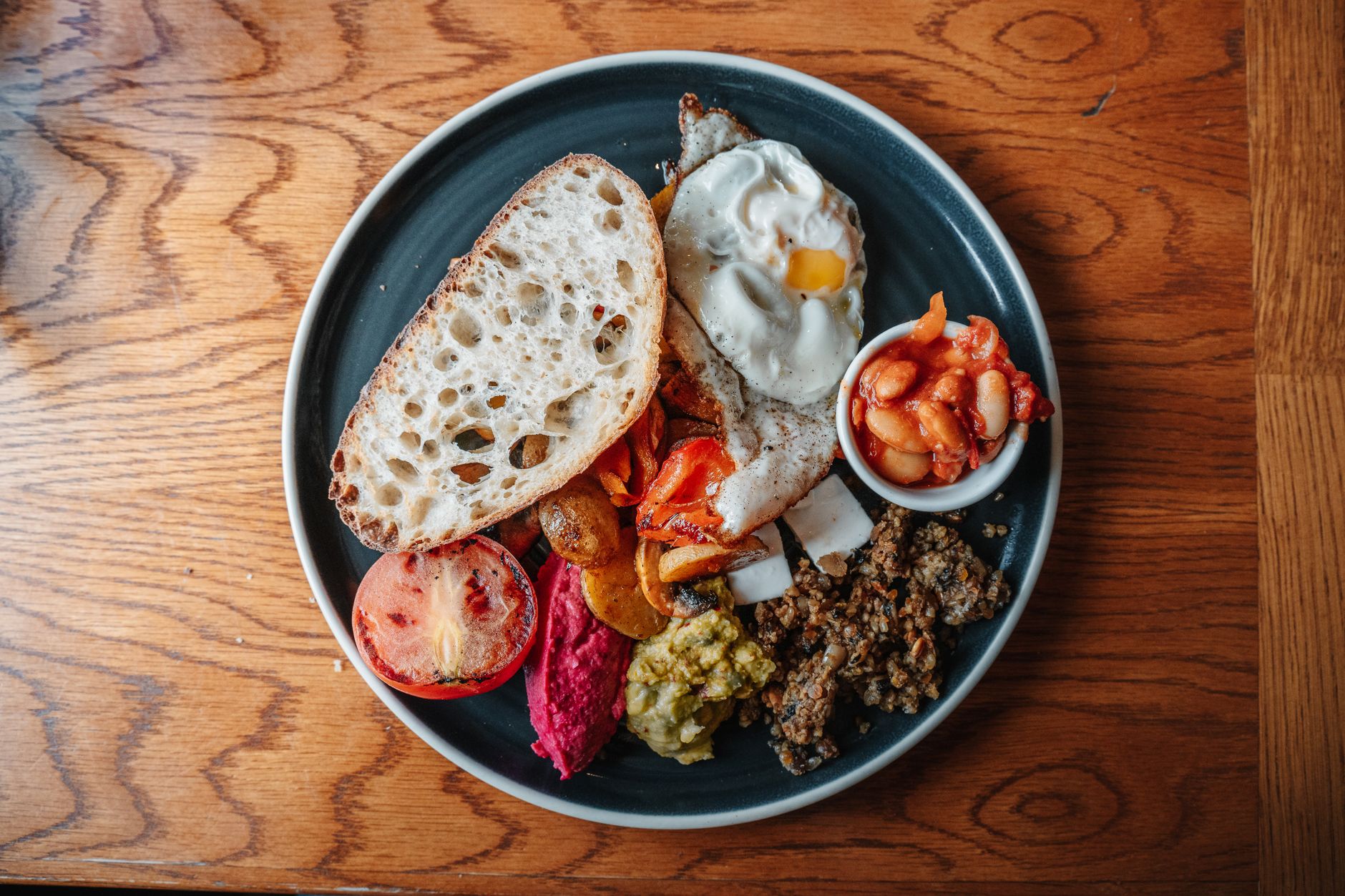
And breakfast. The full English is not a meal but a coalition: egg, bacon, sausage, beans, mushrooms, tomato, black pudding, toast, all touching, all incompatible, all somehow right. In London it arrives as weekend therapy. In smaller towns it arrives at 8:15 with builders, taxi drivers, widowers reading tabloids, and one traveler who understands at last that beans at breakfast were never madness. They were grammar.
Even dessert refuses discretion. Sticky toffee pudding is a hot sponge drowned under hot sauce, which is what a cold climate would invent if it had a soul and a spoon. The British distrust luxury in speech. They permit it in custard.
The United Kingdom reads its own walls. In London, Virginia Woolf taught whole neighborhoods to shimmer from within; after her, Bloomsbury is never merely a district but a nervous system. Dickens performed the inverse trick: he gave fog, debt, clerks, law courts, and orphaned ambition such muscular life that parts of the city still seem to be acting him out for tourists who do not know they are in the cast.
Elsewhere, literature keeps house with geography. The Edinburgh of Stevenson and Muriel Spark is a city with two faces and excellent manners about both. Oxford carries Philip Pullman in one pocket and Waugh in the other, while the meadows pretend innocence. In Bath, Jane Austen remains the patron saint of rooms in which everyone is polite and nobody is safe.
The British literary instinct is rarely to confess directly. It circles, sharpens, arranges the teacups, then inserts the knife. Think of Orwell dissecting class with plain words that leave bruises. Think of Shakespeare, who understood that power speaks in rhetoric until fear strips it to monosyllables. This literature loves language, but not innocently. It knows every sentence is a social act.
That is why reading here changes travel. Canterbury ceases to be only cathedral stone once Chaucer's pilgrims begin jostling through your head. The road to Cambridge grows crowded with ghosts in gowns. A library is never silent in this country. It merely speaks in perfect indoor voices.
British etiquette is a choreography designed to prevent strangers from becoming a problem. The queue is its purest form: invisible at first, then suddenly exact, morally charged, almost tender. Cut the line at a bus stop in Bristol or at a bakery in Cambridge and you will not be shouted at. Far worse. You will be observed.
Tea is the domestic version of the same pact. Somebody asks, "Fancy a cuppa?" and the room changes constitution. Conflict pauses. Grief sits down. Contractors, grandmothers, students, and divorce lawyers all accept that boiling water can restore a degree of civilization, even when civilization has plainly failed elsewhere. Milk goes in according to tribe. Biscuits disappear according to rank and speed.
British politeness is not softness. It is containment. Voices stay low in public because self-command remains a national vanity, one maintained on railway platforms, in pub gardens, and in crowded museums from London to Edinburgh with heroic inconsistency after the third pint. The phrase "you all right?" is often a greeting, not an inquiry. Answering it with a medical history would be barbaric.
And yet kindness leaks through the seams. Someone will explain the ticket machine before you ask. Someone will warn you that the last train from Paddington is delayed again. Someone in York will apologize because it is raining, as if they had arranged the cloud personally. A society reveals itself by the way it handles inconvenience. Britain handles it with murmured liturgy.
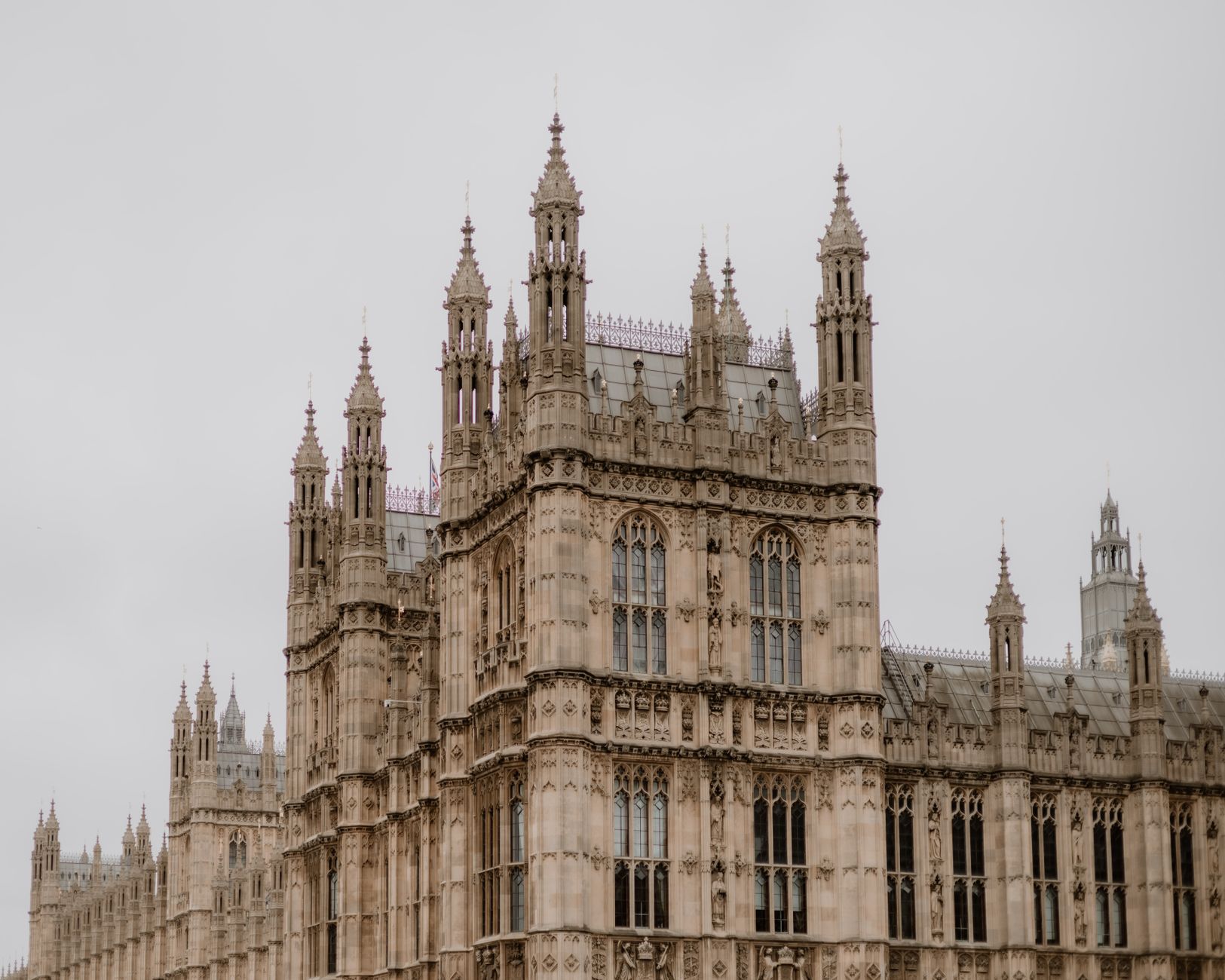
British architecture never forgot that climate is the senior partner. Rain, soot, coal smoke, sea wind, and low winter light have edited the buildings for centuries, giving Bath stone its softened gold, darkening brick in London to the color of old tea, and teaching Gothic towers from Canterbury to York Minster that vertical ambition looks better under clouds. Sunshine flatters. Weather reveals character.
The country loves contrast without admitting it. A Norman nave plants its feet like a conqueror; a Georgian terrace in Bath glides past with measured syntax; a Victorian railway hotel arrives in red brick and confidence, determined to prove that industry can wear ornament like jewelry. Then Glasgow, with Charles Rennie Mackintosh, takes a line for a walk and turns severity into seduction.
Walk through Edinburgh and the argument becomes physical. The Old Town climbs and broods. The New Town reasons and aligns. Same city, two temperaments, both convinced of their superiority. London performs a harsher collage: Wren dome, glass shard, Tudor remnant, council estate, stucco crescent, all within a taxi ride that feels like changing centuries at traffic lights.
What moves me most is the national respect for odd survival. A medieval lane escapes redevelopment by a miracle of neglect. A pub keeps a crooked floor because straightness would be vulgar. An industrial warehouse in Birmingham becomes a gallery and carries its scars without embarrassment. Buildings age here the way aristocrats sometimes do: badly in parts, magnificently overall.
Few countries let you move this fast between such different worlds. London, York, Edinburgh, Bath, and Cardiff sit on practical rail lines, but each speaks in a different architectural and cultural voice.
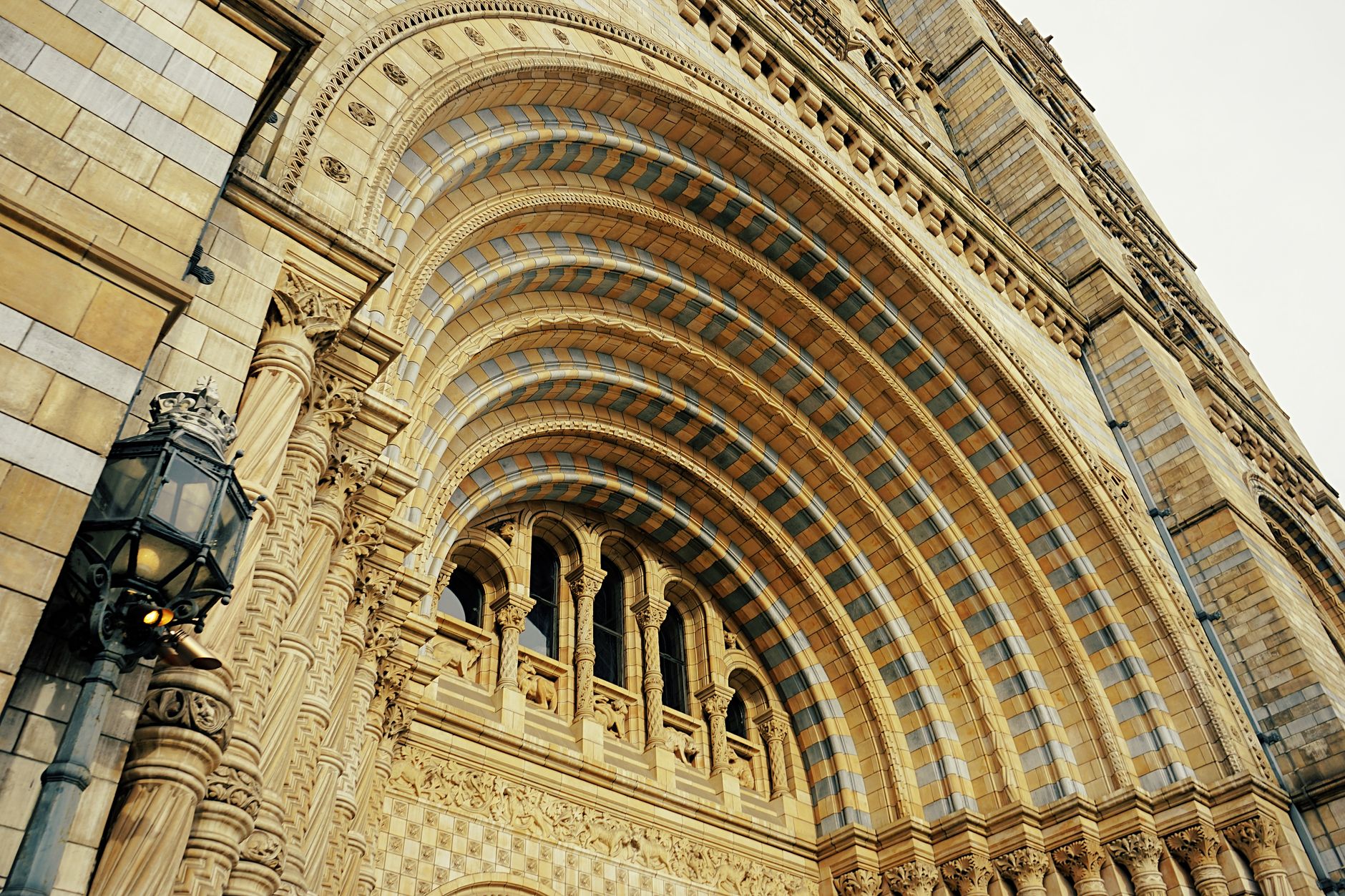
Roman walls, Norman keeps, Georgian crescents, and Victorian stations are not museum pieces here. They still shape the streets, prices, politics, and the way each city tells its story.
The clichés miss the point. A proper Sunday roast, Cornish pasty, Welsh rarebit, Glasgow curry house, and London bakery queue show a country that eats by region, class, and habit.
You can spend the morning in a gallery and the afternoon on a cliff path or moor. The United Kingdom’s compact scale makes coast, highland, and cathedral city trips easy to combine.
England, Scotland, Wales, and Northern Ireland do not flatten into a single national mood. The accents, public symbols, legal traditions, and even humor change as soon as you cross the border.
Spring gardens, long June evenings, autumn color in university towns, winter lights in major cities: timing matters here. Weather is rarely perfect, but it often makes the place more itself.
11 cities — start with the ones we'd send you to first.
A city where a Roman ash layer from Boudicca's revenge sits 50 cm below the pavement of a Pret A Manger.
Birmingham doesn’t try to charm you. It hands you a pint, shows you where the steam engines were born, then dares you to find the poetry hidden in its brickwork.
Every August, the population doubles overnight as the Fringe turns tenement closes and church halls into the world's most anarchic theatre circuit.
Thirty-nine colleges, nine centuries of accumulated argument, and a high street where a student in a gown can cycle past a Westgate shopping centre without anyone blinking.
The Romans built their thermal baths here in 60 AD; you can still see the original lead pipes, and the Georgian terraces above them were built by one architect — John Wood the Elder — in a single obsessive campaign to re
The medieval walls are intact enough to walk their full circuit, and the Shambles — a 14th-century butchers' lane — still leans so far inward that neighbours could shake hands from opposite upper windows.
Scotland's largest city spent the 1980s reinventing itself around art and music, and the result is a gallery culture and live-venue density that Edinburgh, for all its festival prestige, quietly envies.
Punt a flat-bottomed boat under the Bridge of Sighs on the Cam and you are looking at a skyline that has changed less since 1600 than almost any other city in England.
Banksy grew up here, Brunel launched the SS Great Britain from its harbour, and the city's Caribbean community gave British music jungle and trip-hop — the physical and sonic evidence of all three is still visible within
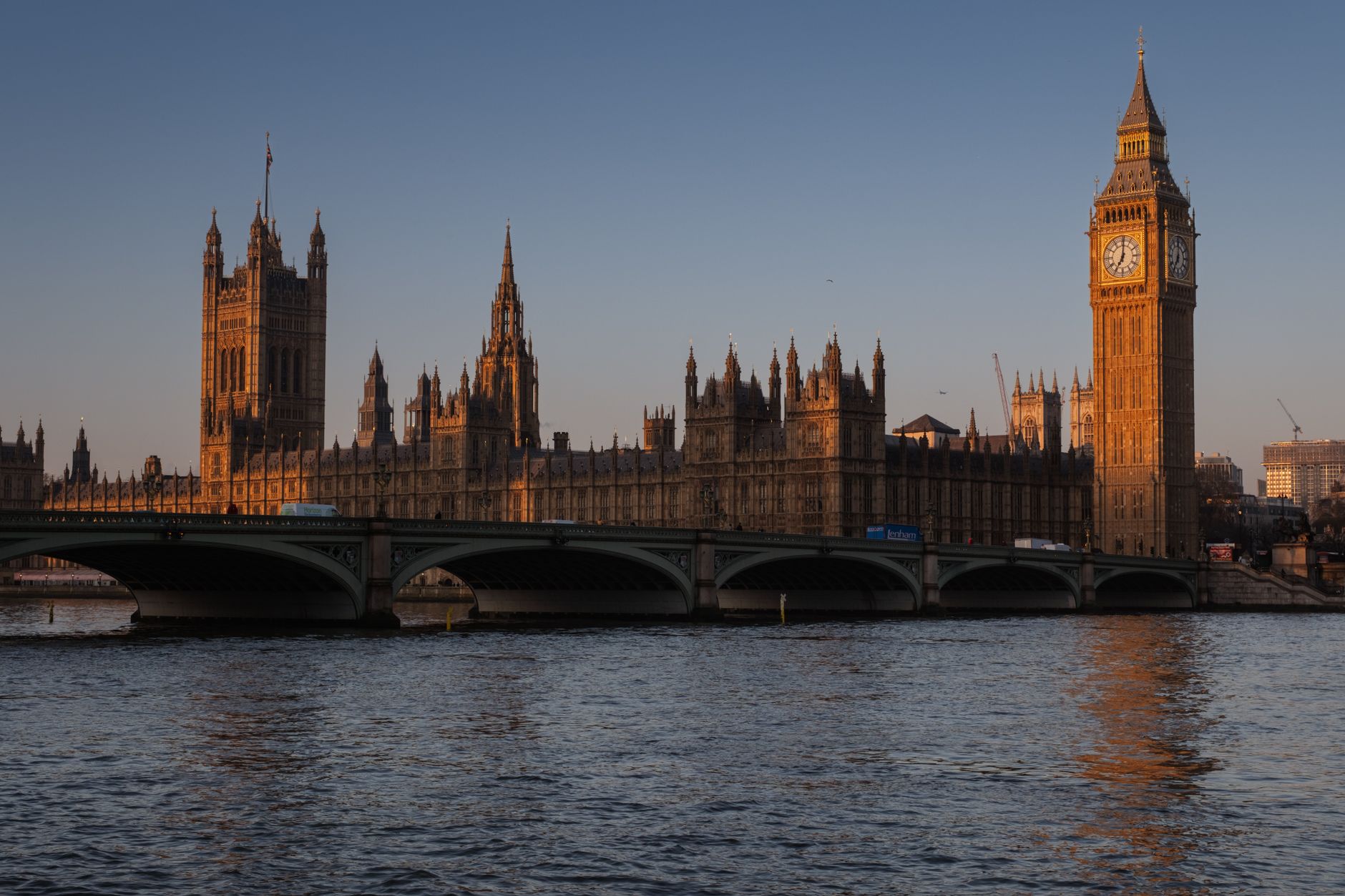
London is where most trips begin, but it should not be treated as a warm-up act. You get Roman walls under office blocks, Wren churches wedged between glass towers, and entire neighborhoods that feel like separate cities; after two days here, the jump to Oxford or Canterbury makes more sense because you can see what the rest of the country is arguing with.
Southern England is the country's easiest cultural corridor: London for scale, Oxford and Cambridge for ritualized intelligence, Bath for Georgian order, Canterbury for pilgrimage and stone. Distances are short, trains are frequent, and the reward is variety without logistical punishment.
Northern England has a different social temperature and a heavier industrial memory. York gives you walls, Minster, and medieval street patterns, while Birmingham shows what happens when canals, workshops, and migration make a city far more layered than its old stereotypes.
Scotland moves quickly between registers: Edinburgh is all volcanic drama and Enlightenment geometry, Glasgow is louder and funnier, and Inverness opens the door to the Highlands where distances stretch and weather starts dictating the day. This is the region for travelers who want city museums one morning and moorland silence the next.
Cardiff and Bristol make a strong paired entry to the west: one shaped by Welsh civic identity, the other by docks, engineering, and stubborn creativity. Move outward and the tone changes again, from South Wales valleys to Pembrokeshire cliffs and the mountain country of Eryri, where the weather can turn a simple walk into a planning exercise.
Built to rival the Parthenon, abandoned in 1829 when the money ran out — Edinburgh's 'disgrace' is now its most beloved skyline icon.
A Wren steeple that survived both the Great Fire of 1666 and the Blitz now stands over an ivy-clad ruin turned secret public garden in London's Square Mile.
Built in 1675 for just £520, this hilltop observatory set the time for the entire world — and still drops a red ball at 1pm every single day.
Only 12 executions ever took place inside the Tower walls.
St Paul's dome is built from three hidden shells — including a secret brick cone no visitor ever sees.
Secret tunnels run beneath the Palm House, suffragettes burned a pavilion here in 1913, and two Kew gardeners sailed on the Bounty.
Home to 40 monarchs over 1,000 years, Windsor Castle is the world's oldest inhabited castle — and still an active royal residence today.
From prehistoric ritual to a modern state still arguing with itself
Builders on Salisbury Plain raised the great sarsen stones and rearranged earlier sacred ground into the monument now known around the world. Britain begins, in part, with a place whose exact purpose still resists certainty.
Emperor Claudius launched the conquest that tied much of Britain to the Roman world. Roads, forts, baths, taxes, and towns followed, along with the habit of centralized rule.
After Roman abuses against her family and kingdom, Boudicca led a revolt that destroyed Roman settlements including Londinium. The city still keeps the memory in a layer of scorched earth under its streets.
Across northern England, Rome built a frontier of stone, forts, gates, and bureaucracy. It was a border, but also a statement that empire had reached the edge of its patience.
Imperial authority faded and Britain entered a fractured age of local rulers, migrations, and competing kingdoms. The old order did not vanish at once; it broke into pieces and lingered.
William of Normandy defeated Harold II at Hastings and claimed the English crown. Few dates in British history changed more at once: landholding, language, law, architecture, and the shape of power all shifted.
The new regime counted land, mills, livestock, and taxable wealth with extraordinary detail. Conquest became paperwork, and paperwork became control.
Four knights killed the archbishop inside Canterbury Cathedral after conflict with Henry II. The scandal made Becket a saint and Canterbury one of Europe's great pilgrimage destinations.
Plague tore through England, killing a vast share of the population and disrupting every social bond that seemed fixed. Labor shortages then altered wages, expectations, and the balance between lord and worker.
Tax anger and post-plague tensions drove rebels into London under Wat Tyler. The rising was crushed, but the old assumption of unquestioned deference had taken a blow.
Henry Tudor defeated Richard III at Bosworth and founded a new royal line. The long dynastic feuding of the Wars of the Roses gave way to a monarchy obsessed with stability.
Henry VIII's Act of Supremacy made the English monarch head of the Church of England. A marital dispute became a national religious rupture with enormous political and financial consequences.
Elizabeth I's England survived Spain's attempted invasion through seamanship, weather, and hard fighting. The victory became one of the great patriotic legends of the age.
James VI of Scotland inherited the English throne as James I, joining the two kingdoms under one monarch. Political union would take longer, but the dynastic bridge was now in place.
For a brief, shocking moment, monarchy gave way to regicide and republic. The execution in London announced that even a king could be judged by his own people.
England and Scotland entered formal political union and became the Kingdom of Great Britain. The deal was born of strategy, finance, and mutual anxiety rather than sentimental unity.
Parliament ended the British transatlantic slave trade after decades of activism and testimony. It was a moral turning point, though one shadowed by the fact that British wealth had long profited from the trade.
An 18-year-old queen began a reign that would come to symbolize industry, empire, morality, and spectacle. Victorian Britain expanded fast, worked hard, judged loudly, and doubted more than it liked to admit.
The Crystal Palace in Hyde Park displayed machinery, raw materials, luxury goods, and imperial reach under sheets of glass. Britain presented itself as the workshop of the world.
The British Army suffered catastrophic losses on a single summer day in northern France. The shock entered family memory across the kingdom and marked a generation for life.
The NHS opened with a promise that medical care would be available to all, funded through the state rather than private charity. Few institutions became more central to modern British identity.
The agreement helped end most of the violence known as the Troubles in Northern Ireland. It remains one of the most delicate and important political settlements in modern British history.
New political institutions in Edinburgh and Cardiff changed the internal balance of the United Kingdom. Westminster remained powerful, but the state had become more openly plural.
The United Kingdom left the European Union after years of argument, delay, and division. The decision reopened old questions about sovereignty, trade, borders, and the future of the union itself.
Britons and Romans
Boudicca survives in bronze outside Westminster, but the woman herself was a mother, a ruler stripped of dignity, and a rebel whose revenge still lies under London in a seam of ash.
Dawn on Salisbury Plain: chalk dust, wet grass, and men hauling bluestones from west Wales over distances that still sound faintly unreasonable. Stonehenge was not a single act of genius but a long obsession, rebuilt and reimagined across centuries. What people often miss is that the monument already had an ancient past when Rome itself was young.
Then came the empire, with its roads, baths, taxes, and paperwork. Londinium rose on the Thames as a trading port of timber quays and warehouses, but in 60 or 61 CE Queen Boudicca turned it into a furnace after Roman officials seized her lands and humiliated her family. Archaeologists still find the red-black burn layer beneath modern London. Her anger has a geological signature.
Hadrian's Wall, begun in 122 CE, tells a different story: not Roman confidence, but Roman nerves. At Housesteads and Vindolanda, soldiers from Syria, North Africa, and the Rhine stood guard in cold rain, writing home on thin wooden tablets while the empire drew a hard line across the north. One of those tablets is a birthday invitation from Claudia Severa to her friend Sulpicia Lepidina, written around 100 CE. The oldest surviving handwriting by a woman in Britain is not a decree or a prayer. It is a note about a party.
When Rome withdrew in the early 5th century, it left behind more than broken rule. It left streets, walls, habits of administration, and the idea that this island could be ordered from a center. That memory would not die. It would simply change costume.
At Vindolanda near Hadrian's Wall, a birthday invitation written around 100 CE preserves the earliest known handwriting by a woman in Britain.
Kingdoms, Conquest, and Pilgrims
Thomas Becket was not born for martyrdom; he liked fine clothes, royal favor, and the comforts of office before conscience and power drove him into fatal collision with his king.
A kingdom can be conquered in an afternoon; ruling it takes account books. After 1066, William of Normandy did not stop at Hastings. He ordered a survey so exact that the Domesday Book of 1086 counted manors, mills, plough teams, and livestock village by village, as if judgment day had acquired clerks and ink.
In Canterbury, power met holiness in the most theatrical way possible. On 29 December 1170, four knights burst into the cathedral and murdered Thomas Becket near the altar after Henry II's furious outburst about his troublesome archbishop. The king then had to perform public penance, walking barefoot through Canterbury and submitting to a whipping by monks. What people often miss is the speed of the transformation: within three years, Becket was a saint and Canterbury one of Europe's great pilgrimage cities.
The 14th century brought the Black Death, which arrived in 1348 and tore through the country with terrible arithmetic. Whole villages thinned out; labor became scarce; peasants who had once been trapped by custom began to demand wages and terms. Out of that strain came revolt. In 1381, when Wat Tyler marched on London, the boy-king Richard II rode out to face the crowd and promised more than he meant to keep.
These were not only years of kings and bishops. They were years in which England learned that murder at an altar could redraw maps of devotion, and that plague could shift the balance between lord and laborer. The Wars of the Roses would turn those lessons savage, until a new dynasty appeared, battered and watchful, on Bosworth Field.
Henry II did penance for Becket's murder by walking barefoot through Canterbury and allowing monks to flog him, a scene of royal humiliation almost unimaginable in later England.
Tudors, Stuarts, and the Making of Britain
Elizabeth I mastered the art of seeming unshakable while living year after year with assassination plots, diplomatic traps, and the knowledge that her unmarried body was treated as a constitutional problem.
Start in a private chamber at Whitehall: wax drips from a candle, a secretary sands a letter, and the king waits for an answer he has already decided to reject. Henry VIII wanted an annulment; Europe offered delay; England got a religious revolution instead. The break with Rome in the 1530s did not happen in the clouds of theology alone. It happened in abbey kitchens, chapter houses, and treasuries as the Dissolution of the Monasteries stripped the old church of land, plate, and daily authority.
The Tudor court never lacked drama, but Elizabeth I gave it style. She turned hesitation into method, courtship into diplomacy, and survival into spectacle. What people often miss is how precarious her rule felt from inside the palace: Catholic plots, questions over succession, the execution of Mary, Queen of Scots in 1587, and the constant fear that one wrong move could bring civil war or foreign invasion. When the Spanish Armada came in 1588, England won not only with ships but with weather, logistics, and luck.
Then the crowns met before the states did. In 1603 James VI of Scotland inherited the English throne as James I, carrying the Stuart line south from Edinburgh to London and binding the island through a single monarch. The marriage was uneasy. Charles I's belief in divine right ended on a scaffold outside Banqueting House in 1649, the blade falling in public before a stunned crowd.
By 1707, after civil war, republic, restoration, and one more revolution, the Acts of Union formally joined England and Scotland into the Kingdom of Great Britain. This was not a romantic fusion. It was negotiation, debt, fear, ambition, and calculation. Yet from that bargain came a new state, ready to project itself far beyond its coasts.
Charles I was executed on 30 January 1649 outside Banqueting House in London, and witnesses reported that many in the crowd wore two shirts against the cold so their shivering would not be mistaken for fear.
Empire, Industry, and Reform
Queen Victoria became the face of an age named for certainty, yet much of her reign was marked by private mourning, political dependence, and an almost domestic fear of public emotion.
Listen first to the sound: hammers in Birmingham, looms in Manchester, shipyards on the Clyde, station whistles in London. The 18th and 19th centuries remade Britain through industry so completely that time itself seemed to accelerate. Coal fed furnaces, furnaces fed railways, and railways shrank the kingdom into timetables.
This was the age in which Britain became both workshop and empire. Wealth flowed through ports like Bristol, Liverpool, and London, not all of it clean. Sugar, cotton, insurance, shipping, and banking were tied to the Atlantic slave economy long before Parliament abolished the slave trade in 1807 and slavery across most of the empire in 1833. What people often miss is the moral contradiction: the same country that congratulated itself on reform had grown rich on coercion.
Victorian confidence loved facades, but the people behind them were rarely serene. Queen Victoria, widowed in 1861, spent decades in grief so visible that it shaped court ritual and public memory alike. Charles Dickens walked London at night, collecting its debtors, clerks, foundlings, and frauds into fiction that still feels uncomfortably close. And in factory districts, workers organized, struck, read, and insisted on being counted as citizens rather than hands.
By the eve of 1914, Britain looked invincible from a distance: imperial maps in red, financial muscle in the City, fleets guarding sea lanes from Portsmouth to Singapore. Underneath sat fault lines of class, Ireland, suffrage, and labor. The great imperial century had built astonishing power. It had also built the anxieties that the next war would expose.
When the Great Exhibition opened in Hyde Park in 1851, more than six million people visited the Crystal Palace, a number equal to roughly a third of Britain's population at the time.
Wars, Welfare, and Four Nations in Debate
Winston Churchill stands in memory as granite and cigar smoke, but the man himself was impulsive, depressive, extravagant with words, and capable of inspiring courage while making costly misjudgments.
A generation entered the First World War in pressed uniforms and schoolboy phrases about honor; many came back broken, if they came back at all. On the first day of the Somme, 1 July 1916, the British Army suffered nearly 57,000 casualties. Numbers like that change a country. They settle into family albums, empty chairs, and town memorials from Yorkshire to the Highlands.
The Second World War gave Britain one of its defining modern myths, but the lived texture was less simple than the speeches. In London during the Blitz, people slept in Underground stations with blankets, tea flasks, and children curled beside them while incendiaries fell overhead. Churchill found the words. Ordinary people lived the nights.
After 1945, the country rebuilt itself with institutions as much as with bricks. The National Health Service began in 1948, promising care not as charity but as a right, and the postwar state widened education, housing, and social provision. At the same time, the empire unraveled, migrants from the Caribbean, South Asia, and Africa reshaped British life, and old certainties about who the country belonged to became impossible to sustain.
What people often miss is that the United Kingdom is still unfinished. Devolution in the late 1990s gave new political weight to Edinburgh, Cardiff, and Belfast. Brexit reopened questions many thought half asleep: sovereignty, borders, trade, and the pull between London and the nations around it. This island has always argued with itself. That argument is part of its genius, and part of its fatigue.
During the Blitz, some London Underground stations became nightly dormitories, with bunks, canteens, and improvised communities forming beside the tracks.
In the United Kingdom, speech wears gloves. A Briton says "sorry" when you step on his shoe, when he needs you to move on the Tube in London, when he has not heard a word you said, and sometimes when he is preparing to disagree with you so completely that only tea can save the friendship. One word, six meanings, no blood on the carpet.
Then come the smaller miracles. "Not bad" may mean excellent. "Interesting" may mean catastrophic. "Quite" changes species according to class and postcode. In Birmingham, in Glasgow, in Cardiff, in Edinburgh, the ear learns fast that accent is biography spoken aloud: school, family, weather, pride, old injuries. A country is a table set for strangers; here, the cutlery is irony.
Listen on a train platform at York or Oxford and you will hear the kingdom arguing with itself through vowels. Received Pronunciation still floats through certain hotels and radio programs like inherited silver, but the life of the language now crackles elsewhere: Scouse wit, Glaswegian velocity, the generous drag of northern English, Welsh cadences turning English into something more musical than it deserves to be. The British do not always tell the truth. They do tell the weather with religious precision.
British cuisine suffers from its reputation with the patience of a saint and the appetite of a docker. The slander usually comes from people who have never eaten fish and chips on a windy seafront, the paper softening under vinegar while a gull calculates your weakness from a lamppost. Salt first. Then malt vinegar. Any other order feels constitutional.
The national genius lies in ritual more than display. Sunday roast appears at one or two in the afternoon with roast potatoes the color of polished mahogany, Yorkshire puddings risen like proud accidents, and gravy poured with the seriousness of a legal act. Families gather because the food requires witnesses. Love is not always tender; sometimes it is a bowl of extra roast potatoes pushed toward you without comment.
And breakfast. The full English is not a meal but a coalition: egg, bacon, sausage, beans, mushrooms, tomato, black pudding, toast, all touching, all incompatible, all somehow right. In London it arrives as weekend therapy. In smaller towns it arrives at 8:15 with builders, taxi drivers, widowers reading tabloids, and one traveler who understands at last that beans at breakfast were never madness. They were grammar.
Even dessert refuses discretion. Sticky toffee pudding is a hot sponge drowned under hot sauce, which is what a cold climate would invent if it had a soul and a spoon. The British distrust luxury in speech. They permit it in custard.
The United Kingdom reads its own walls. In London, Virginia Woolf taught whole neighborhoods to shimmer from within; after her, Bloomsbury is never merely a district but a nervous system. Dickens performed the inverse trick: he gave fog, debt, clerks, law courts, and orphaned ambition such muscular life that parts of the city still seem to be acting him out for tourists who do not know they are in the cast.
Elsewhere, literature keeps house with geography. The Edinburgh of Stevenson and Muriel Spark is a city with two faces and excellent manners about both. Oxford carries Philip Pullman in one pocket and Waugh in the other, while the meadows pretend innocence. In Bath, Jane Austen remains the patron saint of rooms in which everyone is polite and nobody is safe.
The British literary instinct is rarely to confess directly. It circles, sharpens, arranges the teacups, then inserts the knife. Think of Orwell dissecting class with plain words that leave bruises. Think of Shakespeare, who understood that power speaks in rhetoric until fear strips it to monosyllables. This literature loves language, but not innocently. It knows every sentence is a social act.
That is why reading here changes travel. Canterbury ceases to be only cathedral stone once Chaucer's pilgrims begin jostling through your head. The road to Cambridge grows crowded with ghosts in gowns. A library is never silent in this country. It merely speaks in perfect indoor voices.
British etiquette is a choreography designed to prevent strangers from becoming a problem. The queue is its purest form: invisible at first, then suddenly exact, morally charged, almost tender. Cut the line at a bus stop in Bristol or at a bakery in Cambridge and you will not be shouted at. Far worse. You will be observed.
Tea is the domestic version of the same pact. Somebody asks, "Fancy a cuppa?" and the room changes constitution. Conflict pauses. Grief sits down. Contractors, grandmothers, students, and divorce lawyers all accept that boiling water can restore a degree of civilization, even when civilization has plainly failed elsewhere. Milk goes in according to tribe. Biscuits disappear according to rank and speed.
British politeness is not softness. It is containment. Voices stay low in public because self-command remains a national vanity, one maintained on railway platforms, in pub gardens, and in crowded museums from London to Edinburgh with heroic inconsistency after the third pint. The phrase "you all right?" is often a greeting, not an inquiry. Answering it with a medical history would be barbaric.
And yet kindness leaks through the seams. Someone will explain the ticket machine before you ask. Someone will warn you that the last train from Paddington is delayed again. Someone in York will apologize because it is raining, as if they had arranged the cloud personally. A society reveals itself by the way it handles inconvenience. Britain handles it with murmured liturgy.
British architecture never forgot that climate is the senior partner. Rain, soot, coal smoke, sea wind, and low winter light have edited the buildings for centuries, giving Bath stone its softened gold, darkening brick in London to the color of old tea, and teaching Gothic towers from Canterbury to York Minster that vertical ambition looks better under clouds. Sunshine flatters. Weather reveals character.
The country loves contrast without admitting it. A Norman nave plants its feet like a conqueror; a Georgian terrace in Bath glides past with measured syntax; a Victorian railway hotel arrives in red brick and confidence, determined to prove that industry can wear ornament like jewelry. Then Glasgow, with Charles Rennie Mackintosh, takes a line for a walk and turns severity into seduction.
Walk through Edinburgh and the argument becomes physical. The Old Town climbs and broods. The New Town reasons and aligns. Same city, two temperaments, both convinced of their superiority. London performs a harsher collage: Wren dome, glass shard, Tudor remnant, council estate, stucco crescent, all within a taxi ride that feels like changing centuries at traffic lights.
What moves me most is the national respect for odd survival. A medieval lane escapes redevelopment by a miracle of neglect. A pub keeps a crooked floor because straightness would be vulgar. An industrial warehouse in Birmingham becomes a gallery and carries its scars without embarrassment. Buildings age here the way aristocrats sometimes do: badly in parts, magnificently overall.
She enters British memory in a chariot and in a fury. After Roman officials flogged her and violated her family, she burned Londinium, Colchester, and St Albans, leaving behind an ash layer that still turns up beneath London streets.
William did not merely defeat Harold at Hastings; he changed how power worked in England. Castles rose, land changed hands, and the Domesday Book turned conquest into administration with cold, almost modern precision.
She was queen of France, then queen of England, then prisoner of her own husband, and still managed to outplay most of the men around her. Through Eleanor, the Plantagenet world stretched from the Scottish border to the Pyrenees, and court politics acquired intelligence, taste, and danger.
Elizabeth turned delay into an art form and spectacle into statecraft. Her reign gave England a durable myth of poise under pressure, though behind the pearls stood a ruler managing plots, debt, faction, and the execution of a fellow queen.
He brought the crowns together by inheritance, moving from Edinburgh to London and forcing the island to imagine itself as a larger political whole. The union was incomplete, awkward, and hugely important, which is often how lasting constitutional changes begin.
Victoria is often remembered as a symbol rather than a woman, which is unfair because her widowhood, moods, loyalties, and family dramas shaped public life for decades. The empire wrapped itself in her image even while factory cities, colonial subjects, and reformers kept changing the country under her feet.
Dickens gave Victorian Britain its most vivid mirror, and he did not polish it. Read him before walking London and the city gains a second population: clerks in fog, children in workhouses, lawyers feeding on delay, and dinner tables pretending all is well.
Churchill spoke in sentences built to survive catastrophe, and in 1940 Britain needed exactly that. He remains admired for defiance in wartime, though the rest of his record is far less tidy, full of imperial reflexes, strategic errors, and a temperament that could inspire one room while exhausting the next.
Pankhurst understood that polite requests were going nowhere. Her movement broke windows, endured prison, and forced the political class to admit that half the nation could not remain ornamental forever.
This is the compact southern England route for first-timers who want one major city and two polished historic counterpoints. Start in London for scale, move to Oxford for colleges and river light, then finish in Bath where the streets still feel designed for promenades rather than traffic.
This Scottish week trades checklist tourism for contrast: Edinburgh's theatrical skyline, Glasgow's hard-edged cultural confidence, then Inverness as the gateway to Highland landscapes and loch country. The route is clean by rail until the north, and every stop feels like a different version of Britain.
This western and central route works well for travelers who want fewer long transfers and more texture: Welsh capital politics in Cardiff, maritime reinvention in Bristol, industrial ambition in Birmingham, then the market-town calm of Ludlow. It is a trip about food, rail history, canals, border-country castles, and cities that never needed London to be interesting.
This east-and-north England route follows old lines of power: pilgrimage in Canterbury, scholarship in Cambridge, and medieval muscle in York. It suits travelers who like cathedrals, libraries, walls, and long walks through cities where the street plan still remembers the 12th century.
Morning plate, café table, builders, students, one newspaper. Bacon, egg, sausage, beans, mushrooms, tomato, black pudding, toast. Tea follows.
Cod or haddock, batter, chips, paper wrap, sea wall, cold wind. Salt first, malt vinegar after. Fingers, napkins, gull vigilance.
Midday table, family assembly, roast beef or chicken, potatoes, Yorkshire pudding, gravy boat. Arguments pause. Seconds arrive.
Hot sponge, date sweetness, hot sauce, spoon, silence. Pub dining room, winter evening, shared surrender.
Scone halves, clotted cream, jam, teapot, low afternoon light. Devon and Cornwall continue the old war over order. You choose a side and eat.
Burns Night, whisky glass, poem recital, pipe music, laughter. Spoon breaks the haggis. Swede and potato wait.
Toast, molten cheddar, ale, mustard, grill heat. Supper dish, kitchen standing room, immediate consumption.





The United Kingdom is not in Schengen, so time here does not count toward the EU 90-days-in-180 rule. As of February 25, 2026, most non-visa nationals including travelers from the EU, United States, Canada, and Australia need a UK ETA before boarding; it costs £16, is usually valid for 2 years or until your passport expires, and allows visits of up to 6 months.
The local currency is pound sterling (£, GBP). Cards and contactless work almost everywhere from London to Inverness, but a little cash still helps for market stalls, rural pubs, and the occasional small cafe that sets a minimum card spend.
Most long-haul visitors arrive through London Heathrow, with strong international alternatives at Gatwick, Manchester, Edinburgh, Birmingham, Glasgow, and Bristol. Eurostar is the cleanest rail entry from mainland Europe, linking London directly with Paris, Brussels, Amsterdam, Rotterdam, and Lille.
Trains are the fastest way to move between major cities such as London, York, Edinburgh, Cardiff, and Bath, but last-minute fares can be ugly. Book long-distance rail early, use coaches for the cheapest intercity hops, and rent a car only when you head into the Highlands, Cornwall, rural Wales, or the Lake District.
Weather changes fast and rarely asks permission. Southern England is usually milder and a bit drier, while western coasts, Wales, and the Scottish Highlands are wetter, windier, and more exposed; June through September is the safest bet for long daylight and easier transport.
Mobile coverage is strong in cities and along main rail corridors, and free Wi-Fi is common in hotels, cafes, museums, and larger stations. Signal can weaken sharply in parts of the Highlands, Snowdonia, and coastal rural Wales, so download tickets, maps, and Audiala guides before you leave town.
The UK is an easy country for independent travel, with the usual big-city cautions around pickpocketing in busy parts of London and nightlife districts in larger cities. The bigger practical risk is transport disruption from weather, strikes, or weekend engineering works, so check rail status the night before and keep a charged phone and backup route.
Advance train tickets on routes like London to Edinburgh or London to York can cost far less than same-day fares. For long intercity trips, booking two to eight weeks ahead usually saves the most money.
Hotel prices in London, Bath, and Edinburgh often jump on Fridays and Saturdays. If your schedule is flexible, put expensive cities in the middle of the week and save weekends for smaller places such as York, Cardiff, or Ludlow.
Look at the bill before you tip. Many restaurants, especially in London, already add an optional service charge of around 12.5 percent; if it is there, you do not need to add more unless service was unusually good.
Do not assume full signal in the Highlands, parts of Wales, or coastal back roads. Save rail tickets, offline maps, and Audiala guides while you still have reliable data in Edinburgh, Cardiff, or Inverness.
National Express and Megabus are often the cheapest way to cross England and Wales, especially for Birmingham, Bristol, Cardiff, and London. They are slower than trains, but on a tight budget the price gap is often worth it.
Carry a compact waterproof layer, not just an umbrella. Wind can shred umbrellas on Edinburgh closes, Cardiff bayfront paths, and exposed station platforms long before the rain becomes the real problem.
Book ahead for Sunday roasts, famous fish-and-chip shops in seaside towns, and dinner in smaller cities where the best rooms fill early. In Bath, York, and Oxford, the good places are often full before the mediocre ones even look busy.
Explore United Kingdom with a personal guide in your pocket
Listen to sourced travel stories with local history and practical context — ready offline.
Probably yes if you are a non-visa national. Since February 25, 2026, travelers from countries including the EU, United States, Canada, and Australia need a UK ETA before boarding; it costs £16, usually lasts 2 years or until passport expiry, and does not replace a work or marriage visa.
No. The United Kingdom is outside the Schengen Area, so days spent in London, Edinburgh, Cardiff, or elsewhere in the UK do not use up your Schengen allowance.
Yes, but the price swing between styles of travel is wide. A careful traveler can manage on about £70 to £110 a day, mid-range usually lands around £150 to £250, and London can climb well beyond that if you book late or stay central.
Yes for most classic routes. Trains and coaches cover the main city network well, including London, Bath, Oxford, York, Edinburgh, Glasgow, Bristol, Birmingham, Cambridge, and Cardiff; a car becomes useful when you head into rural Wales, Cornwall, or the Highlands.
Coaches are usually cheapest, especially for longer intercity rides booked ahead. Trains are faster and often more pleasant, but the UK rail system punishes late booking with fares that can feel absurd.
Card is enough for most trips, especially in cities. Still, carry a little cash for market traders, rural pubs, small cafes, and the occasional place that imposes a minimum spend for cards.
June to September is the easiest window for long daylight, better odds of dry weather, and simpler transport planning. Spring and early autumn can be excellent for London, Bath, York, and Cambridge, but western coasts and Highland routes get less forgiving as weather shifts.
Not automatically. In restaurants, check whether a service charge has already been added; if not, 10 to 15 percent is normal for good table service, while taxis usually just get rounded up or tipped lightly.
Last reviewed