FFew royal residences in the world sit behind peacocks and palm trees while a 21st-century megacity races around them, but Zabeel Palace in Dubai, United Arab Emirates, does exactly that. Visit Zabeel Palace for the view it gives you into Dubai’s real center of gravity: not the spectacle of steel and glass, but the guarded, still place where power lives and receives the world. From the gates, with white walls glaring in the heat and date palms barely moving, you see a version of Dubai that predates the performance.
Most visitors come for the outside, because that is all you are meant to see. Fair enough. The approach matters: floral roundabouts, clipped hedges, the occasional peacock strutting across the forecourt as if security were someone else’s problem, and beyond the walls a compound that feels less like fantasy than restraint.
That surprise is the point. Zabeel Palace is not an ancient fort dressed up as monarchy; records show it belongs to Dubai’s modern heritage, with roots in the 1950s and a defining rebuild between 1963 and 1965, when Sheikh Rashid bin Saeed Al Maktoum was dragging the emirate out of its creek-bound past and into a road-built future.
Seen after Burj Khalifa, the palace lands differently. You come here to understand Dubai, not just to admire it: the city’s glitter makes more sense once you’ve stood outside the quiet compound where that wager on the future was made.
01 What to See
The Horse-Topped Gates and Ceremonial Approach
The Lawns, Trees, and Peacocks
A Short Royal-Dubai Contrast Route
02 Explore Zabeel Palace in pictures.
Videos
Watch & Explore Zabeel Palace
Zabeel Palace Dubai Ka Sab Se Costley And Largest Palace - Zabeel Palace Inside View
ZABEEL PALACE DUBAI || MOHAMMED BIN RASHID AL MAKTOUM PALACE || DUBAI RULER RESIDENCE
Zabeel Palace Dubai | Top Tourist Attractions of Dubai |Dubai Ruler Palace #Zabeelpalace #Dubai #UAE
Plan and listen to Zabeel Palace with Audiala
Audio guide in your pocket, itinerary in your browser. Built for the way you actually visit.
03 Visitor logistics.
The practical scaffolding for a good visit — kept short.
Getting There
The easiest route is a taxi or Careem to the outer gate or the signed Zabeel Palace Visitors Car Park at plus code 6873+W3G in Za'abeel 1. By public transport, take the Dubai Metro Red Line to Max Station, still often called Al Jafiliya, then use a short taxi ride for the last stretch; walking from the Dubai Frame side is possible in cool weather but the roads are broad, hot, and not built as a pleasant promenade.
Opening Hours
As of 2026, Zabeel Palace has no published official visitor hours because the palace itself is an active royal residence and working government site, not a museum. Visitors generally make a brief exterior stop at the gate during daylight or early evening, but access can tighten without notice around official events, security activity, or state receptions.
Time Needed
Give it 20 to 30 minutes if you arrive by car, take a look at the gate, watch for peacocks, and leave. Stretch that to 30 to 45 minutes if you want photos and a slower stop, but anything longer starts to feel padded because the visit is outside-only.
Accessibility
The exterior approach is mostly flat, and recent visitor reports describe level access from the large car park to the usual photo area, which makes the stop manageable for many wheelchair users. Heat is the real obstacle: shade is thin, and I found no official statement about accessible toilets, wheelchairs, or indoor facilities at the palace itself.
Cost & Tickets
As of 2026, there is no entry ticket, booking system, or official guided visit for Zabeel Palace because the public does not enter the palace grounds in any museum-style way. The outer stop is generally treated as free, so save your money for the taxi and for a proper follow-up stop nearby.
05 Tips for visitors.
Small things that change the day.
Dress Quietly
Treat this like a formal government-facing site, not a casual photo backdrop. Cover shoulders and knees, skip beachwear, and keep the mood low-key around guards, barriers, and official vehicles.
Shoot The Gate
Phone photos from the normal public stopping point are common, but keep your lens pointed at the frontage rather than guards, cameras, or anything that looks operational. Tripods, long lenses, and drones are a bad idea here; in Dubai, that can turn a two-minute photo into a conversation you do not want.
Go Early
Aim for early morning or late afternoon, especially between November and March, because this is mostly an exposed outdoor stop with little shade. Midday sun in Dubai hits like a hair dryer pointed at your face, and the palace does not reward endurance.
Facilities Elsewhere
Do not count on toilets, coffee, or even a bench at the palace stop. Pair it with the Burj Khalifa only if you are already crossing the city, but the smarter nearby pairing is Dubai Frame or Zabeel Park for restrooms, air-conditioning, and food.
Peacocks First
Locals talk about the peacocks almost as much as the palace, and for good reason: they wander, pose, and occasionally stop traffic like they own the district. Drive slowly near the approach road and do not crowd them for photos; the birds are part of the folklore here.
Eat Afterward
Skip the idea of a palace café because none is reliably available to visitors. For food after your stop, Ravi Restaurant in Satwa is the budget move at about AED 25 to 50 per person, The Sum of Us near Trade Centre works well for mid-range coffee or lunch at about AED 60 to 120, and Zuma in DIFC is the polished splurge at AED 250 and up.
04 Historical Context
When Dubai’s Ruler Moved Into the Sand
Zabeel Palace matters because it is modern. Records show Dubai Municipality classifies Sheikh Rashid Bin Saeed Al Maktoum Palace at Zabeel as a 1950s site, which means the building belongs to the era when Dubai stopped thinking of itself only as a creek settlement and began imagining roads, cars, ministries, and distance.
That shift still clings to the place. Older creek-side sites in Dubai carry trade stories and weathered coral stone; Zabeel carried a different smell from the start, more cut grass and hot asphalt than salt and dhow timber, because the palace rose out of open desert and announced that rule could move inland before the city fully had.
A Palace, Not a Museum
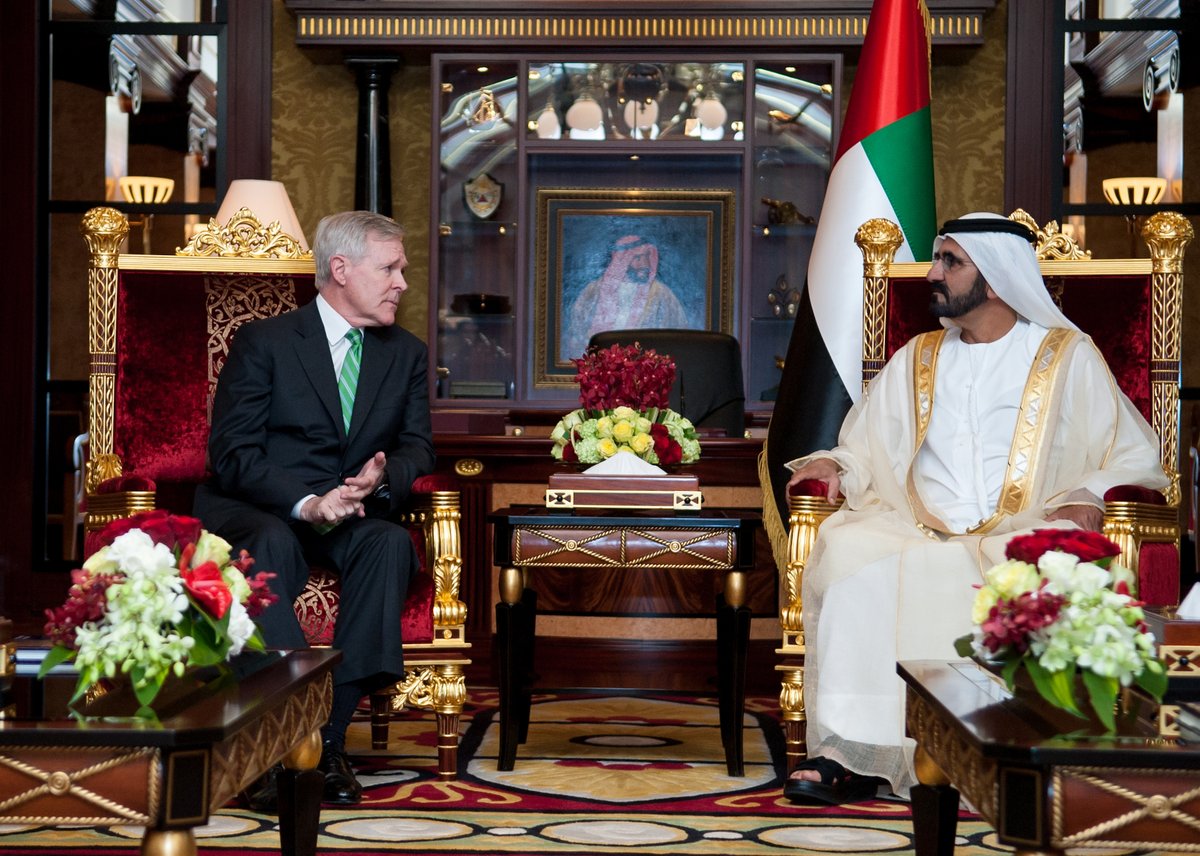
Official releases from January 2026 show Sheikh Mohammed bin Rashid receiving foreign leaders and presiding over state ceremonies at Zabeel Palace, so the compound is documented as a working political venue, not a staged relic. That changes how you read the walls. You are looking at a place whose authority is current, which explains the distance, the guards, and the sense that even the landscaped approach is doing diplomatic work.
Modern Heritage, Still Being Sorted
Dubai approved Zabeel Palace for inclusion in the second phase of its heritage architecture preservation project in May 2024, placing it inside the emirate’s growing category of modern heritage. The label matters because people often misread the palace as timeless royal scenery, when the better story is sharper and more interesting: a mid-20th-century compound, built in the 1950s and remade in 1963-1965, now preserved as the architecture of Dubai’s leap into modern statehood.
Listen to the full story in the app
06 Frequently asked.
Is Zabeel Palace worth visiting?
Yes, but only if you treat it as a 20-minute exterior stop rather than a palace tour. You can't visit the interiors, and the real appeal is the odd contrast: a live royal compound with peacocks, horse-topped gates, clipped lawns, and central Dubai's skyline pressing in around it. Pair it with Dubai Frame or Zabeel Park if you want the outing to feel complete.
How long do you need at Zabeel Palace?
Most visitors need 20 to 30 minutes. That's enough time to reach the allowed viewing area, take photos, watch for peacocks, and leave without feeling short-changed. If you linger for light, birds, and the surrounding views, 45 minutes is usually the upper limit.
How do I get to Zabeel Palace from Dubai?
The easiest way is by taxi or Careem. If you're using public transport, take the Dubai Metro Red Line to Max Metro Station, formerly Al Jafiliya, then finish the last stretch by taxi because the palace is a security-sensitive site and not set up like a normal walk-up attraction.
What is the best time to visit Zabeel Palace?
Early morning or late afternoon is best. The stop is mostly outdoors with limited shade, so midday heat can make a brief visit feel longer than it is, especially from May through September. Cooler months between late autumn and early spring suit the place much better.
Can you visit Zabeel Palace for free?
Yes, the exterior stop is generally free. No public ticketing system or official booking page exists because Zabeel Palace is an active royal residence and administrative venue, not a museum. What visitors usually access is the outer approach and photo area, and security conditions can change without notice.
What should I not miss at Zabeel Palace?
Look up at the main gates first. The horse statues on top, the rows of UAE flags, the palm-lined approach, and the peacocks on the lawns are the details people remember, more than the building itself. Also pay attention to the mood: this place is all about controlled distance, not grand access.
Can tourists go inside Zabeel Palace?
No, regular tourists cannot visit the interior. Recent official government releases show the palace still hosting judicial ceremonies, majlis gatherings, and meetings with foreign leaders in January and February 2026, which tells you exactly what it is: a working seat of rule, not a public heritage house.
Researched and written by the Audiala editorial team from historical records, architectural archives, and local expertise.
Confirmed that Zabeel Palace remained an active political venue in January 2026 through a state meeting with Italy's president.
Verified that Zabeel Palace was used for an official judicial swearing-in ceremony on January 6, 2026.
Confirmed Zabeel Palace's inclusion in Dubai's heritage architecture preservation project in May 2024.
Official modern-heritage listing identifying Sheikh Rashid Bin Saeed Al Maktoum Palace – Zabeel as a 1950s site.
Provided secondary details on the palace's three-building origin, 1963 rebuild, visitor experience, gates, peacocks, parking, and exterior-only access.
Secondary support for the palace's early history, including the 1963 rebuild and 1965 completion.
Secondary reporting on Zabeel Palace as part of Dubai's newly highlighted historic and modern-heritage places, including 1963-1965 rebuilding.
Local-history source used for the palace chronology, Otto Bulart attribution, and the transition from desert-edge compound to royal seat.
Provided official background on Sheikh Rashid bin Saeed Al Maktoum and Dubai's modern development context.
Confirmed Sheikh Rashid's death on October 7, 1990, after years of seclusion in the palace.
Used for remembrance context around Sheikh Rashid and his death anniversary.
Confirmed an official January 3, 2026 gathering at Zabeel Palace with business leaders and dignitaries.
Secondary official confirmation of the late-January 2026 meeting with Italy's president at the palace.
Provided background on Otto Bulart, the Austrian engineer and adviser linked to Zabeel Palace and other Dubai landmarks.
Documented a 2008 public procession ending at Zabeel Palace.
Recent visitor reviews and attraction summary used for visit duration, exterior-only access, and practical expectations.
Recent reviews used for accessibility impressions, gate-area experience, and visitor expectations.
Aggregated visitor-facing information used for access patterns and exterior stop details.
Used for nearby transport context, especially Max Metro Station and the Dubai Frame as a practical companion stop.
Provided metro and feeder-bus context for reaching the Zabeel area from elsewhere in Dubai.
Used for neighborhood context, walkability impressions, and visitor-facing summaries of the palace area.
Referenced for feeder bus F09 serving the Zabeel and Dubai Frame area.
Referenced for feeder bus F12 serving the Zabeel and Dubai Frame area.
Used as a nearby landmark reference on the same broad corridor as the palace.
Provided evidence for visitor parking, flat access from the car park, limited facilities, and lack of public toilets.
Used for pairing the palace with Zabeel Park and for nearby amenities such as food kiosks and park facilities.
Used for nearby accessibility and restroom information at Dubai Frame, the nearest reliable services base.
Provided confirmation of on-site coffee and visitor amenities at Dubai Frame.
Used for nearby restaurant options commonly listed around the palace area.
Alternate regional Tripadvisor page used for nearby restaurant references and visitor comments.
Confirmed Zabeel Palace's continuing role as a majlis and meeting place in January 2026.
Used as evidence that sightseeing tours treat the palace as a brief photo stop rather than a public interior attraction.
Secondary visitor-facing description of the gate, lighting, and visual approach.
Official evidence for the palace's majlis function and ongoing role in receptions.
Official evidence for judicial ceremonies held at Zabeel Palace.
Official evidence for formal receptions and honours ceremonies at the palace.
Visual reference used to support external architectural description and the palace's visible appearance.
Provided contextual nearby landmark information and skyline pairing with the palace district.
Used for seasonal advice and why cooler months suit an outdoor palace stop.
Supported seasonal recommendations for outdoor sightseeing in Dubai.
Used for wider area context and nearby seasonal evening attractions.
Evidence that city tours include Zabeel Palace as a short exterior stop.
Resident chatter used for local attitudes, security awareness, and the idea that most people see only the gate.
Resident chatter used for peacock behavior and local perceptions of the site.
Resident chatter used for local shorthand around peacocks and quick exterior visits.
Referenced for informal visitor shorthand around the palace's peacocks.
Resident comments used for local expectations and how brief the stop usually is.
Confirmed that official judicial functions continued at Zabeel Palace in February 2026.
Official evidence of Ramadan greeting receptions and ceremonial hospitality at the palace.
Used for the palace's role in Eid greeting receptions.
Used for the palace's role in Eid al-Adha well-wisher receptions and majlis culture.
Neighborhood guide used for wider Zabeel district context.
Neighborhood guide used for Zabeel 2 context, access, and the district's mixture of royal grounds and city infrastructure.
Used for broader district character and geographic context near DIFC, Downtown, and World Trade Centre.
Official Dubai transport guidance used for taxi and practical mobility context.
Official guidance used for behavior, modest dress, photography caution, and social expectations in public places.
Used for a nearby food recommendation after a short palace stop.
Provided added context on Ravi Restaurant as a long-standing Dubai favorite.
Used for a nearby cafe and breakfast recommendation in the Trade Centre area.
Used for a higher-end dining option in nearby DIFC.
Used for an Emirati-food option after visiting the palace.
Used for wider cultural context around Emirati hospitality and festive food traditions.
Official parallel confirmation of the 2024 heritage-preservation approval affecting Zabeel Palace.
Used for up-to-date caution around filming security-sensitive sites in Dubai.
Official Dubai guidance referenced for modest clothing expectations in public places.
Supplementary dress-code guidance for visitors in Dubai.
Used for privacy-law context around photography in the UAE.
Official drone-registration guidance used to support the advice that drones are a bad idea near the palace.
Official no-fly-zone reference used for drone restrictions near sensitive compounds.
Official taxi information used for transport recommendations to the palace.
Used for current scam-awareness context related to transport and official payment links in Dubai.
Used for scam-awareness context around transport and official accounts in Dubai.
Used for a design-district cafe recommendation after a palace visit.
Supplementary source on Al Mashowa as an Emirati-food recommendation near the broader central Dubai area.
Last reviewed