Dubai.

25° N · 55° E United Arab Emirates

The first surprise in Dubai is how quickly the air changes: cardamom steam from a AED 2 karak stand in Deira, then cold perfume and polished marble under the Burj Khalifa an hour later. In Dubai, United Arab Emirates, a wooden abra still crosses Dubai Creek for AED 1 while driverless Metro trains slide past museum-grade architecture on Sheikh Zayed Road. The city is often described in headlines as spectacle, but on the ground it feels more like layers—trading port, migrant metropolis, design laboratory—pressed tightly together.

Listen to the guide — 47 min Open the map
Dubai, United Arab Emirates
Dubai · United Arab Emirates
35
attractions
4-5 days
days suggested
November-March
best season
EN · EN
narration

03 Top tickets in Dubai.

Book ahead

Curated from places in this city. Same price as official sites.

Burj Khalifa: At The Top Level 124/125 Ticket
Burj Khalifa
Burj Khalifa: At The Top Level 124/125 Ticket
4.4 from €44.16
Dubai Aladdin Tour: Souks, Creek, Old Dubai and Tastings
Al Bastakiya
Dubai Aladdin Tour: Souks, Creek, Old Dubai and Tastings
4.9 from €19
Dubai: Old Town, Souks, Street Food, Guided Tour & Abra Ride
Dubai Creek
Dubai: Old Town, Souks, Street Food, Guided Tour & Abra Ride
4.9 from €15.54
Big Bus Dubai Hop-On, Hop-Off Sightseeing Tour by Open-Top Bus
Burj Khalifa
Big Bus Dubai Hop-On, Hop-Off Sightseeing Tour by Open-Top Bus
4.4 from €41.99
Authentic Old Dubai, Souks, Tastings & local boat Guided Tour
Al Bastakiya
Authentic Old Dubai, Souks, Tastings & local boat Guided Tour
4.9 from €31
Half Day Dubai City Sightseeing Tour with Pick up
Jumeirah Mosque
Half Day Dubai City Sightseeing Tour with Pick up
4.7 from €43.17

Prices shown are indicative — final pricing and availability are confirmed at checkout. Audiala may receive a commission from bookings made via these links.

01 An introduction

synthesized from 240+ sources ·

DThe first surprise in Dubai is how quickly the air changes: cardamom steam from a AED 2 karak stand in Deira, then cold perfume and polished marble under the Burj Khalifa an hour later. In Dubai, United Arab Emirates, a wooden abra still crosses Dubai Creek for AED 1 while driverless Metro trains slide past museum-grade architecture on Sheikh Zayed Road. The city is often described in headlines as spectacle, but on the ground it feels more like layers—trading port, migrant metropolis, design laboratory—pressed tightly together.

If you want to understand Dubai, start where the wind towers are. In Al Fahidi, coral-and-gypsum lanes stay cool in late afternoon shade, and the call to prayer folds into the clink of tea glasses in courtyard cafés. Cross the water by abra and the Gold Souk flashes under fluorescent light while spice sacks breathe out saffron, loomi, and rose petals. This old Creek axis is not nostalgia; it is the original operating system of the city, still running.

Then the modern city asserts itself with almost theatrical precision: the 828-meter Burj Khalifa, the torus of the Museum of the Future, the engineered geometry of Palm Jumeirah. Yet even here, the most revealing moments are ordinary ones—families walking at Kite Beach after sunset, office workers lingering over late dinners in DIFC, artists opening warehouse doors in Alserkal Avenue. Dubai works on a late clock; serious conversation often starts after 9 pm.

Family Friendly Wheelchair Accessible Budget Friendly Photography Hotspot

02 Why Dubai.

What makes this place worth slowing down for.

Skyline as Storytelling

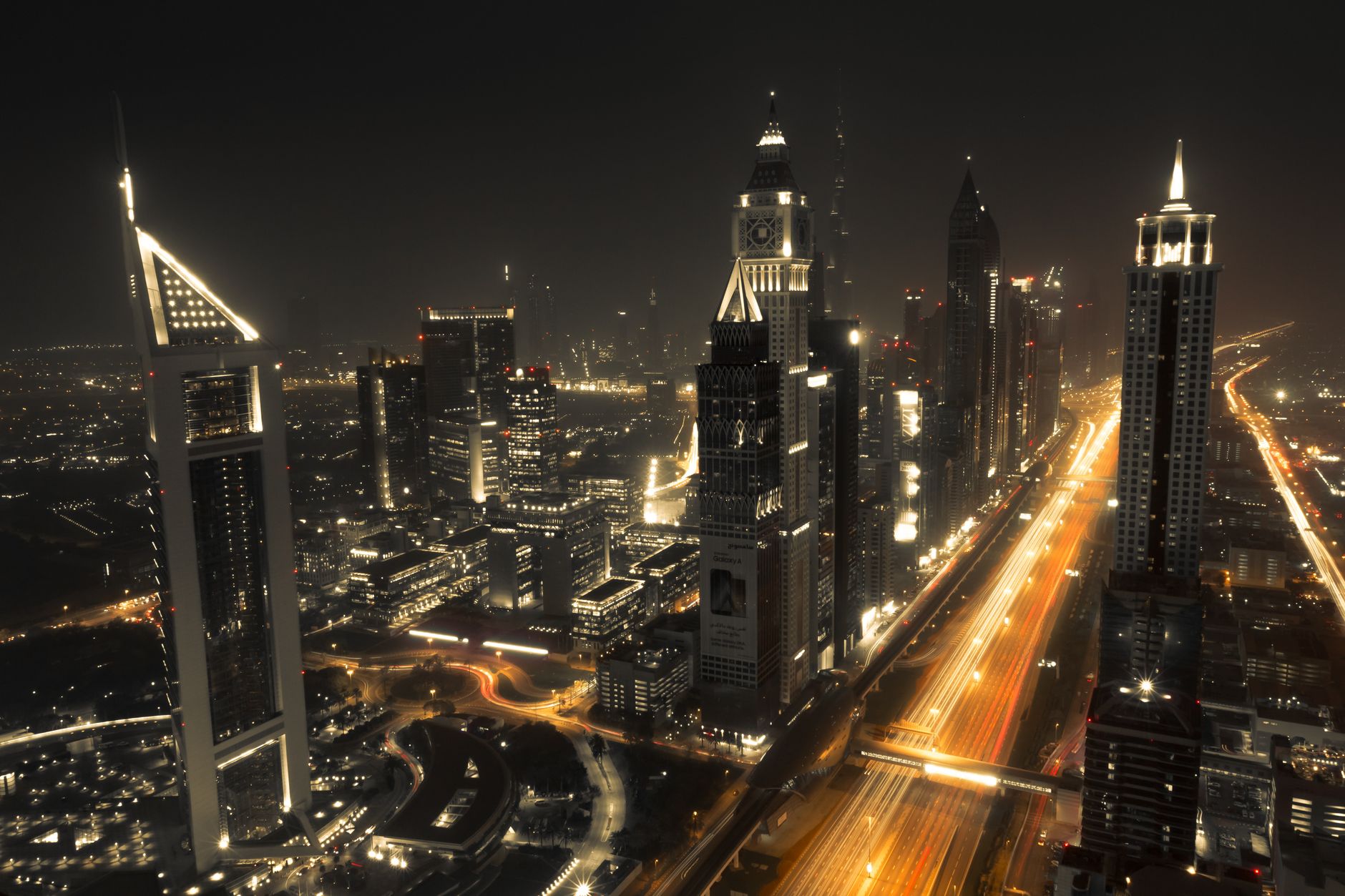
Dubai’s architecture reads like a timeline you can stand inside: wind-tower lanes in Al Fahidi, then the steel-and-glass canyon of Sheikh Zayed Road, then the 828 m Burj Khalifa rewriting the horizon. Even the Dubai Frame turns urban planning into a viewpoint, with old Deira on one side and new Downtown on the other.

Creekside Origins Still Alive

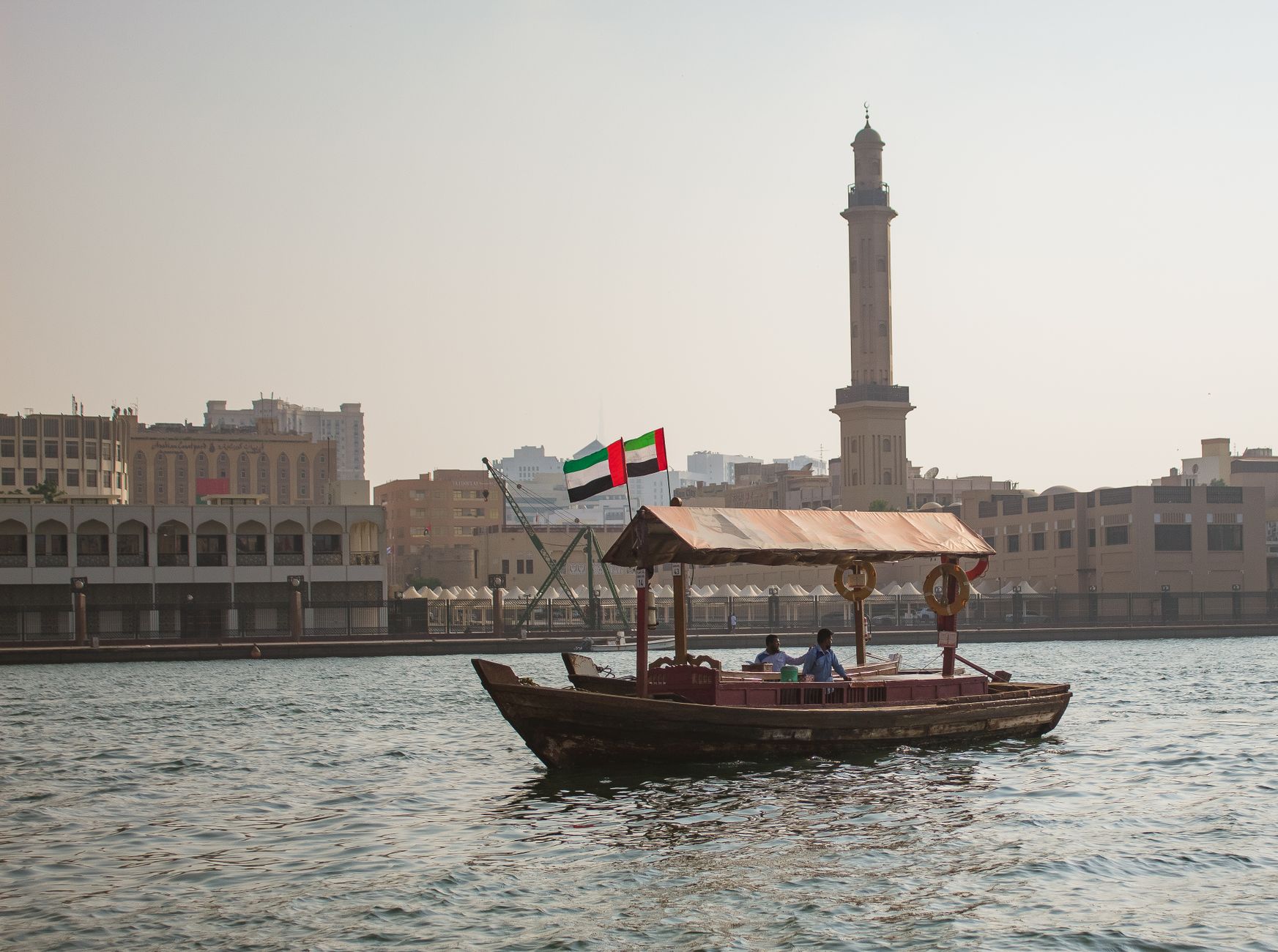
The city’s soul is still at Dubai Creek, where AED 1 abras cross between Bur Dubai and Deira and cargo dhows load goods for Iran and East Africa. Walk from Al Fahidi’s coral-and-gypsum courtyards to the Gold and Spice Souks and you feel trade, migration, and memory in real time.

A City That Eats in Many Languages

Dubai’s best meals are often far from marble dining rooms: fried fish at Bu Qtair by the harbour, Pakistani curries at Ravi in Satwa, late-night cafeteria karak in Karama. Then, in season, Global Village folds dozens of national food traditions into one open-air night market.

Nightlife Beyond Clubs

After sunset, the city shifts from heat management to spectacle: fountain shows below Burj Khalifa, Marina promenades full of light and salt air, rooftop lounges overlooking the Gulf. The surprise is how many night scenes are low-cost or free if you know where to stand.


03 Places to Visit.

Not every monument, just the ones we'd walk you past ourselves.

Burj Khalifa
Editor's pick
01 · Place

Burj Khalifa

Born as Burj Dubai and renamed in a financial crisis, this 828-meter tower is less a building than Dubai's loudest statement of ambition and image-making.

Dubai Mall
02 Place

Dubai Mall

Welcome to the Dubai Aquarium & Underwater Zoo, a fascinating attraction located in the heart of the Dubai Mall in the United Arab Emirates.

Almas Tower
03 Place

Almas Tower

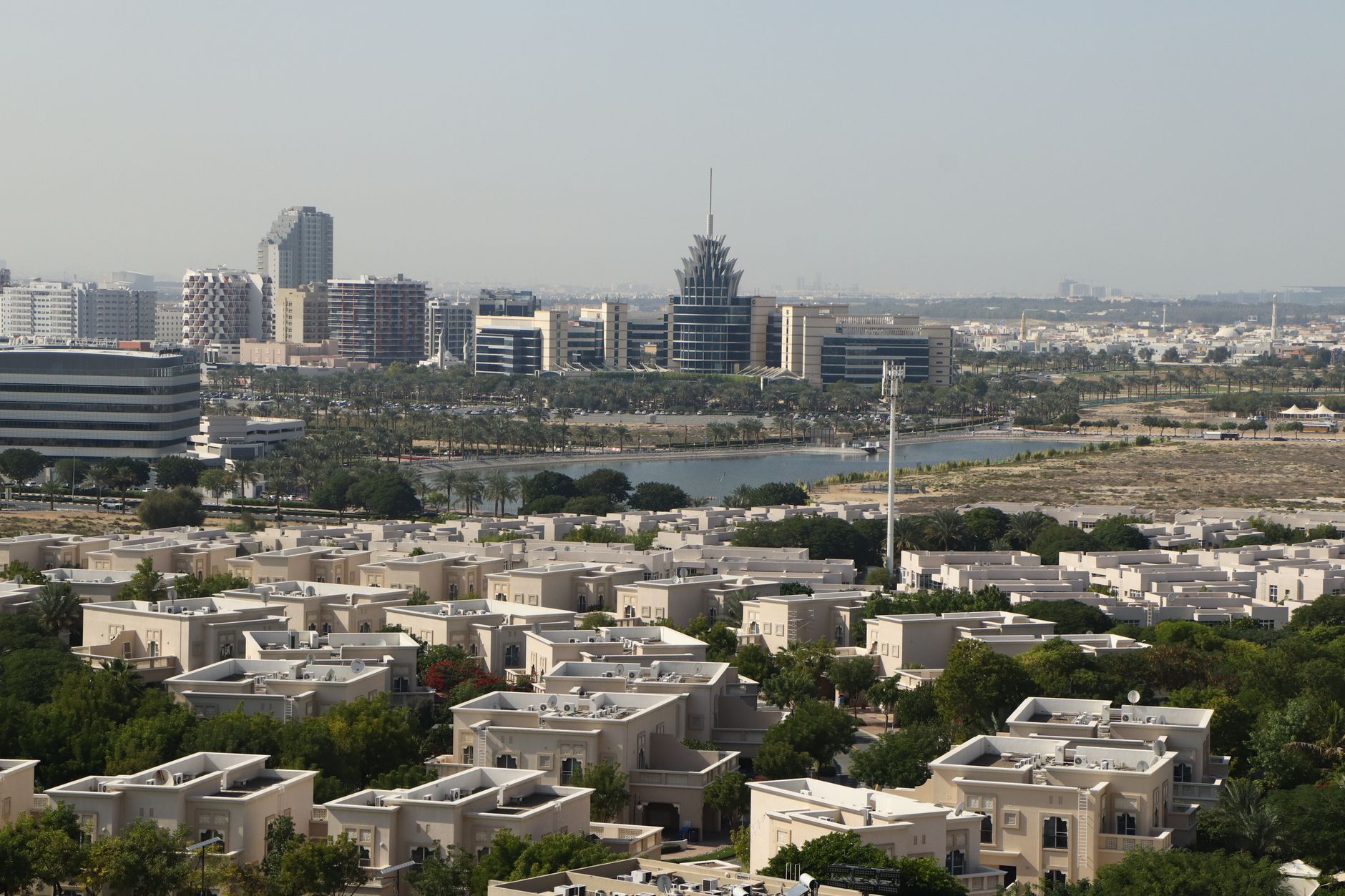
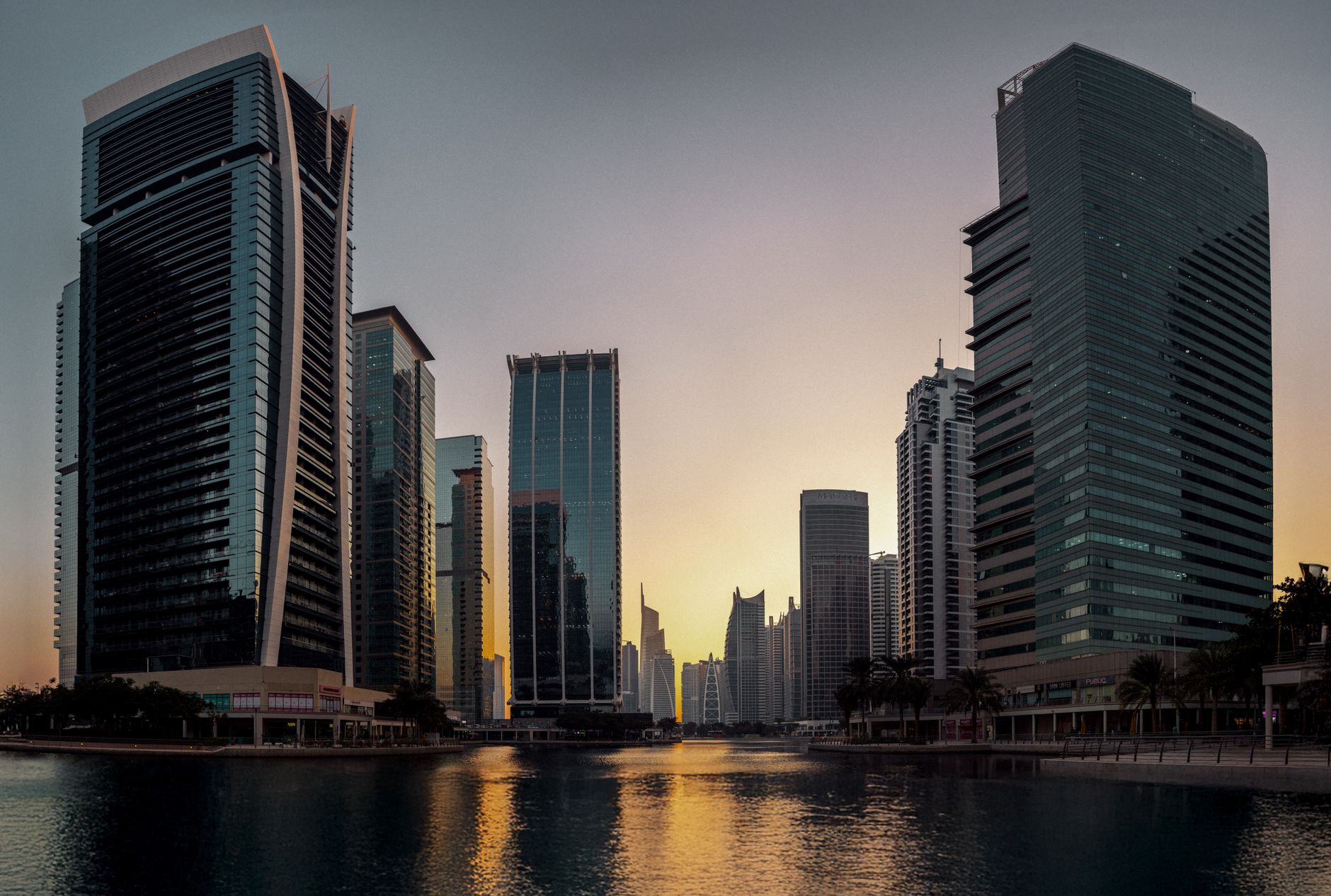
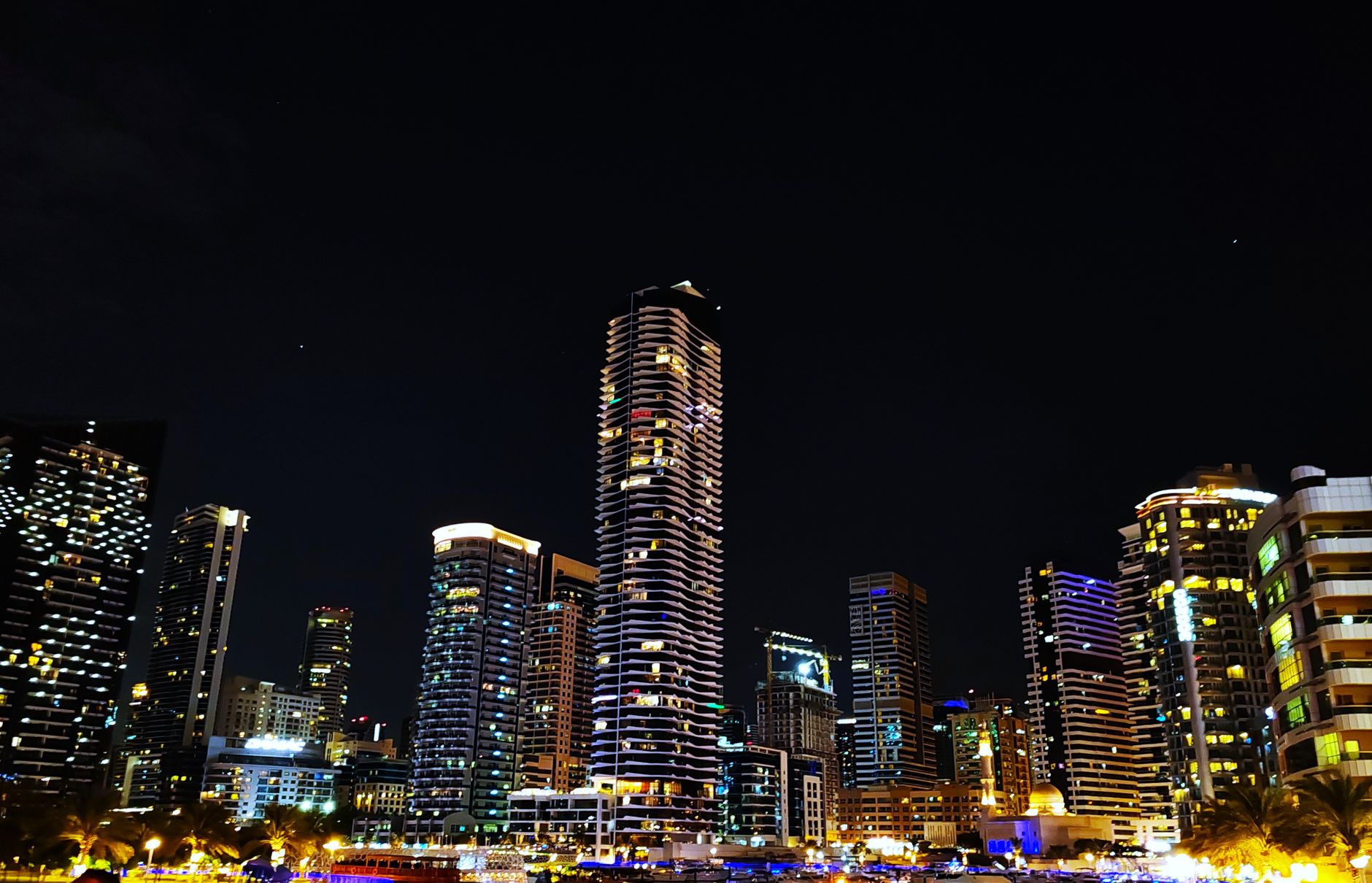
Almas Tower, a striking landmark soaring 360 meters high in Dubai's vibrant Jumeirah Lake Towers (JLT) district, stands as a testament to the city’s rapid…

Princess Tower
04 Place

Princess Tower

The Princess Tower in Dubai stands as an extraordinary symbol of the city’s architectural ambition and luxurious urban living.

05 Place

Emirates Office Tower

The Emirates Office Tower, part of the renowned Emirates Towers complex in Dubai, United Arab Emirates, stands as a striking symbol of the city's rapid…

06 Place

Al Noor Mosque

مسجد النور, also known as Al Noor Mosque, is a magnificent example of modern Islamic architecture and cultural heritage in Dubai, United Arab Emirates.

07 Place

Hhhr Tower

Dubai’s HHHR Tower, also known as the Blue Tower, stands as a remarkable testament to the city’s rapid urban transformation and architectural ambition.

All 64 places in Dubai

04 Neighborhoods.

Where to wander, by quarter — each with its own rhythm.

01

Al Fahidi & Bur Dubai

The most atmospheric entry point into old Dubai: narrow alleys, barjeel wind towers, restored courtyard houses, and small museums tucked into 19th-century architecture. Base yourself here for the Coffee Museum, Arabic Tea House, and easy Creek crossings. It is quieter at dawn and after 4 pm, when the plaster walls hold soft, honey-colored light.

02

Deira

Deira is trading-city Dubai in full volume—Gold Souk negotiations, Spice Souk aromas, all-night cafeterias, and wholesale streets where goods move fast. Take an abra from Bur Dubai for AED 1, then walk to the souks and the modern Waterfront Market. This is also where karak culture feels most alive: plastic chairs, paper cups, and conversations that run past midnight.

03

Downtown Dubai

Downtown is engineered drama: Burj Khalifa, Dubai Mall, the fountain shows from 18:00 to 23:00, and constant pedestrian flow between retail, dining, and skyline viewpoints. Yes, it is polished and expensive, but it also offers one of the city's best people-watching circuits, especially around the fountain boardwalk at dusk when heat drops and the crowd turns local.

04

Dubai Marina & JBR

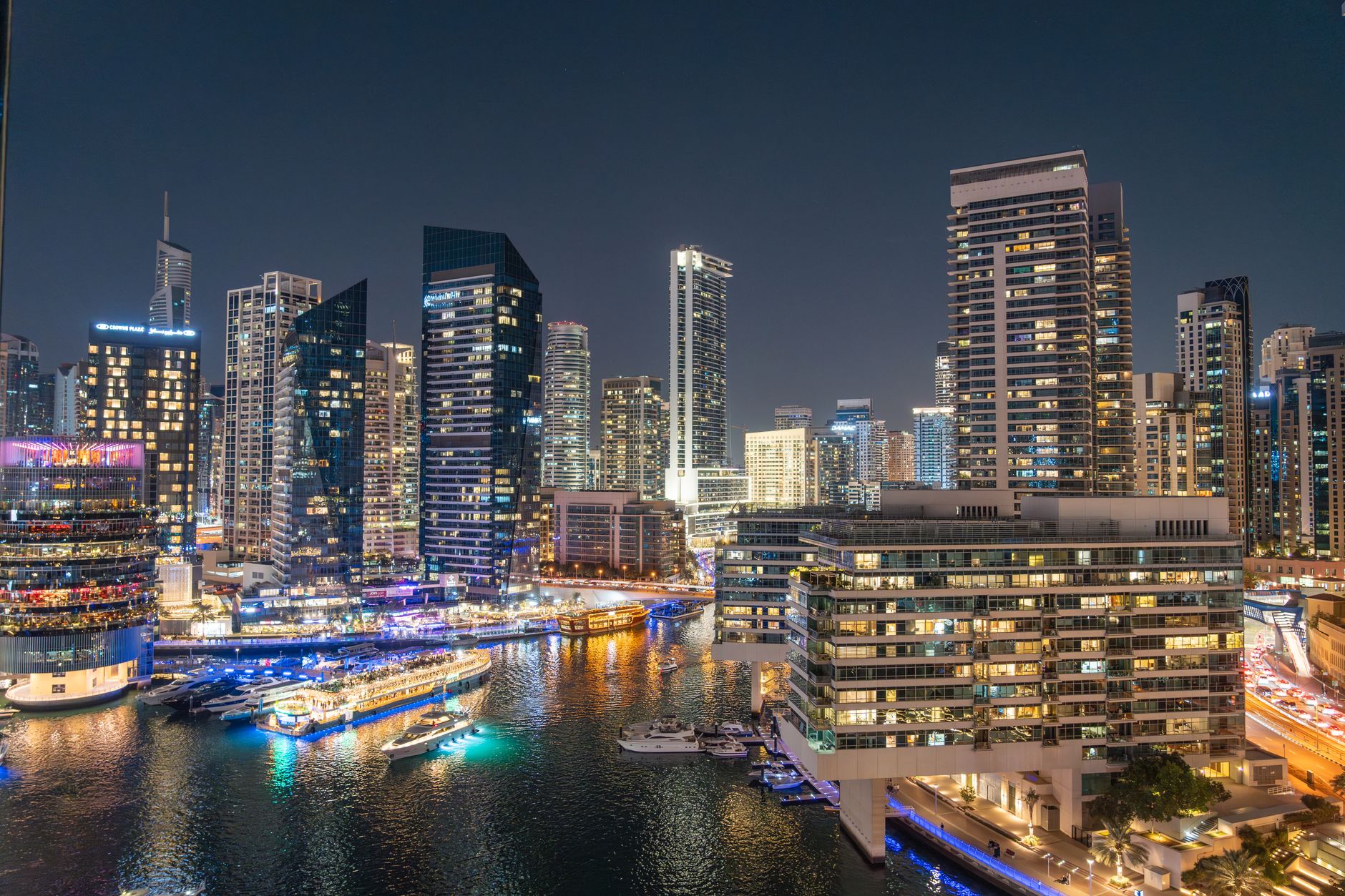
A dense canyon of residential towers wrapped around a man-made marina, with a 7 km waterfront promenade that is best at night. JBR adds beach energy, casual dining, and a steady stream of runners, cyclists, and families after work. It can feel glossy, but the urban design experiment is fascinating: a vertical neighborhood trying to behave like a walkable street city.

05

Palm Jumeirah

The Palm is Dubai's signature feat of land engineering, and it rewards visitors who explore beyond hotel lobbies. Ride the monorail for aerial views, visit The View at The Palm for orientation, then walk Palm West Beach for skyline sunsets. Atlantis anchors the crescent with big-ticket attractions, but the real pleasure is seeing how an artificial island became a lived-in district.

06

Al Quoz (Alserkal Avenue)

Warehouse district by day, serious arts neighborhood by night. Alserkal Avenue concentrates galleries, indie cinema, performance spaces, design studios, and some of Dubai's best specialty coffee in repurposed industrial units. Come Thursday to Saturday evenings for openings and events, when the area feels less like a curated destination and more like a working creative ecosystem.

07

DIFC

Dubai International Financial Centre is the city's sharpest contrast: corporate towers above, ambitious restaurants and gallery spaces at street level. Gate Village is where power lunches become cocktail hours, and where you can pair contemporary art with some of Dubai's strongest dining rooms. It is expensive, yes, but also one of the clearest windows into the city's global business identity.

08

Satwa & Karama

These neighboring low-rise districts are essential if you care about how Dubai actually eats and socializes off-camera. Satwa's Al Dhiyafah Road is lined with long-running shawarma counters and Pakistani diners; Karama brings dense South Asian food streets and budget storefront life. Less polished, more intimate, and increasingly precious as redevelopment reshapes older parts of town.

Historical Timeline

Creek, Coral, Cranes: How Dubai Reinvented Itself Again and Again

From Bronze Age shoreline camps to a high-rise trading state built on speed, risk, and reinvention.

Ancient Coastal Settlements
c. 3000 BCE

First Settlers on the Coast

Archaeological finds at Al Qusais, Al Sufouh, and Umm Suqeim show early communities living between sea and desert. People fished, herded, and buried their dead in stone-lined graves, leaving pottery and tools that still surface from the sand. Long before towers, this was already a place of adaptation.

c. 2500 BCE

Magan Joins Gulf Trade

The wider region entered the trade world known in Mesopotamian texts as Magan, linked to copper routes and maritime exchange. Small coastal communities near present-day Dubai sat along sea lanes connecting Mesopotamia, Dilmun, and the Arabian coast. Trade, not isolation, was the earliest local superpower.

Islamic Trade Coast
636 CE

Islam Reaches the Coast

As Islamic rule expanded across eastern Arabia, coastal tribes in the Dubai area entered the new religious and political order. The old fishing and boat-building settlements continued, but now under the language and legal framework of the early caliphates. The Gulf became an Islamic commercial sea.

c. 1095

Name of Dibay Recorded

A medieval Arabic geographical tradition preserves one of the earliest written references to a place called Dibay or Dibai. The settlement was small, tied to fishing and pearling rather than imperial grandeur. But the name endured, and names are often the first architecture of a city.

c. 1580

Dibai Appears on Maps

European traveler-cartographer Gasparo Balbi recorded Dibai while tracing Gulf trade geography in the Portuguese era. The coast was watched, taxed, and contested, yet Dubai remained a modest pearling village rather than a fortified imperial port. Its strength was flexibility, not walls.

Trucial Coast and Al Maktoum Founding
1820

General Treaty of Peace

After British naval campaigns against Gulf maritime powers, local rulers signed the General Treaty of Peace. This began the treaty system that would define the Trucial Coast for generations. Dubai entered a new era where diplomacy with Britain shaped survival at sea.

1833

Al Maktoum Founds Modern Dubai

Maktoum bin Butti Al Maktoum led the Al Bu Falasah branch of Bani Yas to Dubai Creek and established an independent sheikhdom. The move was political, commercial, and geographic all at once: control the creek, control the future. Dubai's ruling dynasty begins here and continues unbroken.

1833

Maktoum bin Butti

As founder of Dubai's ruling house, Maktoum bin Butti turned a creek settlement into a political center. His key act was not conquest by fortress, but strategic relocation and alliance-building. In Dubai's story, statecraft begins with movement and trade logic.

1841

Smallpox Strikes the Settlement

A smallpox outbreak hit hard, forcing many residents to shift toward Deira on the north bank of the creek. Crisis physically reshaped the town's urban pattern, reinforcing a two-bank city connected by boats. Epidemic became urban planning by necessity.

1894

Free Port Policy Announced

Sheikh Maktoum bin Hasher removed import duties and actively courted merchants. Traders from Persia, India, and Baluchistan arrived in larger numbers, bringing capital, languages, and credit networks. Dubai chose openness as state policy before oil was even a rumor.

Pearling Metropolis
c. 1902

Lingeh Merchants Relocate

Higher taxes in the Persian port of Lingeh pushed merchant families toward Dubai, especially into Deira's souks. Warehouses thickened along the creek, and the smell of spices, timber, and salt fish became the city's commercial signature. Cosmopolitan Dubai was already visible in the market streets.

1929–1932

Pearl Economy Collapses

The Great Depression and Japanese cultured pearls destroyed Gulf natural pearl prices, gutting Dubai's main livelihood. Boat owners, divers, and merchants were hit in the same downward spiral. The shock was severe enough to teach a lasting lesson: single-resource wealth is fragile.

Oil and Union Era
1955

Creek Dredging Begins

Sheikh Rashid pushed through costly dredging works so larger vessels could enter Dubai Creek. Mud and silt were transformed into economic policy, and cargo capacity rose sharply after completion. This was one of the decisive pre-oil bets that made modern Dubai possible.

1958

Rashid bin Saeed Takes Rule

On formally becoming ruler, Sheikh Rashid bin Saeed accelerated infrastructure-first governance: port works, roads, administration, and aviation. He treated concrete and dredgers as tools of sovereignty. Many Dubai residents still regard him as the architect of the city's modern DNA.

1960

Dubai Airport Opens

Dubai International Airport began with basic facilities and a simple runway, but the strategic intent was already global. In a region still defined by sea trade, Dubai invested hard in air links. The city was preparing to connect faster than its neighbors.

1966

Oil Found at Fateh Field

Offshore oil discovery at Fateh gave Dubai a revenue engine just as regional geopolitics were shifting. Production in the following years funded ports, schools, power, and administration. Crucially, oil acted as launch capital, not an endpoint.

1971

UAE Federation Is Formed

On 2 December 1971, Dubai joined Abu Dhabi and other emirates in creating the United Arab Emirates after the end of British treaty rule. Sheikh Rashid became the UAE's first Vice President and Prime Minister. Dubai gained federal stability while keeping its commercial edge.

1979

Jebel Ali Port Opens

The opening of Jebel Ali created a vast deep-water harbor that would become one of the busiest in the region. Its scale signaled a long-term wager on logistics, manufacturing, and re-export. Dubai was no longer just a creek port; it was writing a new map of global shipping.

Global Dubai
1985

Emirates Airline Takes Off

Emirates launched with two aircraft and a mandate to operate commercially rather than as a prestige vanity project. Early routes to Karachi, Mumbai, and Delhi tapped historic trade corridors with modern aircraft. Aviation became Dubai's loudest announcement to the world.

1985

Ahmed bin Saeed Builds Emirates

Appointed to lead Emirates, Sheikh Ahmed bin Saeed Al Maktoum steered a tiny carrier into a global long-haul powerhouse. Under his watch, Dubai's airport-airline model became central to the city's economy and identity. Few individuals have shaped the rhythm of daily Dubai as directly.

2006

Mohammed bin Rashid Era

After succeeding as ruler, Sheikh Mohammed bin Rashid intensified Dubai's branding as a fast, project-driven global hub. Mega-developments, free zones, and event diplomacy accelerated under his leadership. The governing style was unmistakable: build at scale, then build again.

2009

Dubai World Debt Shock

During the global financial crisis, Dubai World sought a standstill on roughly USD 26 billion of debt, rattling markets. Property values had already plunged, projects froze, and confidence thinned overnight. Abu Dhabi support prevented default and forced a tougher financial reset.

2010

Burj Khalifa Opens

At 828 meters, Burj Khalifa redefined Dubai's skyline and global image in one stroke. Its opening, shortly after the debt crisis, was read as both ambition and defiance. Steel, glass, and engineering became a public argument that the city intended to recover at full height.

2021–2022

Expo 2020 Finally Opens

Delayed by the pandemic, Expo 2020 opened in October 2021 with 192 national pavilions and about 24 million visits. The fair turned a postponed mega-event into a statement about resilience and soft power. Its legacy district, Expo City, kept the site alive beyond closing day.

2022

Museum of the Future Debuts

The torus-shaped Museum of the Future opened on Sheikh Zayed Road, wrapped in Arabic calligraphy and engineered as a cultural icon. Inside, immersive exhibits favor speculation over static collections. The building itself became the message: futurism can be architecture, not just policy.

2024

Record Floods Halt the City

In April 2024, roughly 254 mm of rain fell in 24 hours, overwhelming roads, neighborhoods, and Dubai International Airport. Cars were abandoned on flooded highways, and flight schedules unraveled for days. The storm exposed the limits of infrastructure built for heat and speed rather than extreme rainfall.

Present Day

06 Who lived here.

The people who shaped the city — and were shaped by it.

Ruler of Dubai born 1949

Sheikh Mohammed bin Rashid Al Maktoum

Lives and governs here

He is the political force behind much of modern Dubai’s speed and scale, from metro expansion to city branding built around architecture and logistics. The city’s rhythm—ambitious, polished, always under construction—carries his signature. Walk from Al Fahidi to Downtown and you can read his development philosophy block by block.

Former Ruler of Dubai 1912-1990

Sheikh Rashid bin Saeed Al Maktoum

Led Dubai’s transformation in the mid-20th century

Before the supertalls, he pushed the practical moves that made them possible: dredging Dubai Creek, expanding port capacity, and building aviation links. Older traders still describe him as the leader who thought in infrastructure, not slogans. Modern Dubai’s confidence in mega-projects starts with his era.

Architect born 1944

Adrian Smith

Designed Burj Khalifa in Dubai

Smith gave Dubai its most globally recognized silhouette with Burj Khalifa, using a spiraling, buttressed core that is both elegant and brutally technical. The tower changed how the city is photographed, navigated, and imagined. Even locals who ignore records still use it as their compass.

Architect born 1957

Tom Wright

Designed Burj Al Arab in Dubai

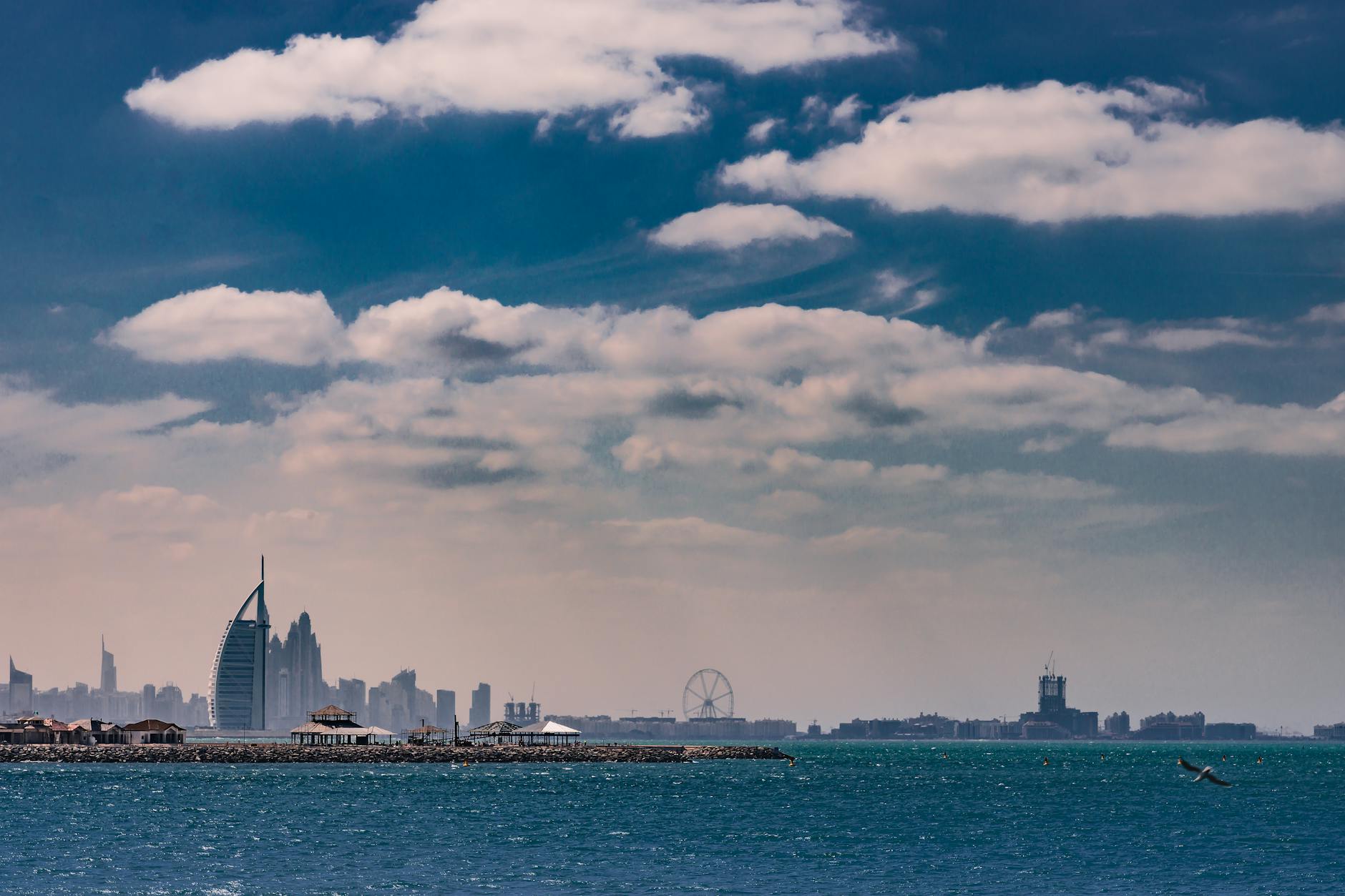
Wright’s sail-shaped Burj Al Arab turned a hotel into a symbol, proving Dubai understood the power of instantly legible design. Long before social media skylines became a genre, that white curve in sea haze was already doing the work. It helped move Dubai from regional hub to global visual icon.

Architect 1950-2016

Zaha Hadid

Designed The Opus in Dubai

Hadid’s Opus, with its void carved through a glass cube, gave Business Bay one of its most theatrical forms. It feels less like a tower and more like a sculpture someone made inhabitable. In a city of straight lines and mirrored facades, her building bends the eye on purpose.

08 Where to Eat.

Where locals actually book dinner — not the tourist menus.

Machboos (Emirati spiced rice)

Machboos (Emirati spiced rice)

Machboos is the Gulf’s answer to layered rice comfort: fragrant basmati with dried lime, saffron, and slow-cooked chicken, lamb, or fish. Try it early in your trip to calibrate what Emirati home-style spice actually tastes like—warm, deep, and not necessarily fiery.

★ local pick
Harees

Harees

A patient dish of wheat and meat cooked down to a silky, almost porridge-like texture, especially common in Ramadan and festive meals. It looks austere, then opens into butter-rich depth and gentle sweetness from long cooking.

★ local pick
Luqaimat

Luqaimat

These crisp, golden dumplings are drizzled with date syrup (dibs) and often dusted with sesame. Eat them hot when the exterior still cracks and the center stays soft; they’re one of the clearest bites of Emirati sweet tradition.

★ local pick
Bu Qtair (Jumeirah Fishing Harbour)

Bu Qtair (Jumeirah Fishing Harbour)

Choose your fish or prawns, then let the kitchen fry them in its signature red spice batter and serve with paratha and curry sauce. Plastic tables, sea breeze, and queues are part of the ritual; this is one of Dubai’s most honest meals.

★ local pick
Ravi Restaurant (Satwa)

Ravi Restaurant (Satwa)

An old-school Pakistani institution known for butter chicken, mutton peshawari, dal, and fresh naan at prices that barely seem possible in this city. Go late, listen to the room, and order more bread than you think you need.

★ local pick
Karak chai + cafeteria snacks

Karak chai + cafeteria snacks

In Satwa and Karama, tiny cafeterias pour strong, sweet, cardamom-laced karak tea beside egg parathas and club sandwiches. It’s cheap, fast, and deeply local—the kind of stop that explains daily Dubai better than any tasting menu.

★ local pick

09 Insider tips.

Small things that change how the city treats you.

Beat the Heat

Plan outdoor sightseeing before 10:30 or after 16:30, especially May to September when midday temperatures can exceed 40°C. Keep indoor blocks (museums, malls, metro hops) for noon hours.

Use Nol Smartly

Get a Silver Nol card at the airport metro station and use the AED 22 day pass if you’ll make 4+ trips. It covers metro, bus, tram, and water bus, but not the Palm Monorail.

Carry Small Cash

Bring AED 1 coins for the old Dubai abra crossing on Dubai Creek, one of the best-value rides in the city. Cards are common elsewhere, but abras and tiny stalls still run on cash.

Ask Before Photos

Do not photograph people without permission, especially in souks and heritage areas. In the UAE this is treated seriously and can lead to legal trouble.

Book Prime Slots

Reserve Burj Khalifa and Museum of the Future tickets days or weeks ahead, particularly for sunset and weekend timings. Same-day or walk-up tickets are often pricier or sold out.

Eat Local Late

For great value meals, head to Satwa or Deira in the evening for karak tea, shawarma, and long-running South Asian and Iranian spots. Many local favorites are busiest after 21:00.

Know Public Rules

Public drunkenness, rude gestures, and aggressive PDA can trigger fines or arrest. Dress modestly in old districts and mosques; beachwear is for the beach only.

12 Frequently asked

Is dubai worth visiting?

Yes, especially if you like sharp contrasts in one trip. You can cross Dubai Creek by AED 1 abra in the morning, stand atop the 828m Burj Khalifa by sunset, and eat in old souks at night. Few cities combine heritage districts, extreme modern architecture, desert landscapes, and such easy logistics.

How many days in dubai?

Four to five days is the sweet spot for first-timers. That gives you time for Downtown highlights, Old Dubai (Al Fahidi + Creek souks), a beach or marina day, and one desert or Hatta excursion. Three days works if you focus tightly and pre-book major tickets.

What is the best way to get around dubai without a car?

Use the metro as your backbone, then short taxis for last-mile gaps. The Red Line links DXB airport, Downtown, and Marina/JBR, while tram helps around Marina. For Old Dubai, add an abra crossing and short walks through Deira and Bur Dubai.

Is dubai safe for tourists, including solo travelers?

Dubai is generally very safe, including for solo travelers. Violent crime is rare, but legal compliance matters more than in many cities: avoid public intoxication, insulting gestures, and photographing people without consent. Use licensed taxis or apps and you’ll find day-to-day movement straightforward.

Is dubai expensive for a holiday?

It can be, but you can control costs well. Big-ticket items like Burj Khalifa prime hours and beach clubs add up quickly, while public beaches, fountain shows, heritage walks, and AED 1 abra rides are low-cost. Mix one paid headline attraction per day with free sights to keep budgets sane.

When is the best time to visit dubai?

November to March is the most comfortable season for outdoor plans. Expect warm days, cooler evenings, and peak prices around December and New Year. April and October are good shoulder months if you want lower rates and can handle hotter afternoons.

Do I need cash in dubai or is card payment enough?

Card payments are accepted almost everywhere, including taxis, malls, and most restaurants. Keep some cash for abra crossings, small market vendors, and older budget eateries. If using ATMs, always choose to be charged in AED to avoid poor conversion rates.

Ready to book?

03 Top tickets in Dubai.

Book ahead

Curated from places in this city. Same price as official sites.

Burj Khalifa: At The Top Level 124/125 Ticket
Burj Khalifa
Burj Khalifa: At The Top Level 124/125 Ticket
4.4 from €44.16
Dubai Aladdin Tour: Souks, Creek, Old Dubai and Tastings
Al Bastakiya
Dubai Aladdin Tour: Souks, Creek, Old Dubai and Tastings
4.9 from €19
Dubai: Old Town, Souks, Street Food, Guided Tour & Abra Ride
Dubai Creek
Dubai: Old Town, Souks, Street Food, Guided Tour & Abra Ride
4.9 from €15.54
Big Bus Dubai Hop-On, Hop-Off Sightseeing Tour by Open-Top Bus
Burj Khalifa
Big Bus Dubai Hop-On, Hop-Off Sightseeing Tour by Open-Top Bus
4.4 from €41.99
Authentic Old Dubai, Souks, Tastings & local boat Guided Tour
Al Bastakiya
Authentic Old Dubai, Souks, Tastings & local boat Guided Tour
4.9 from €31
Half Day Dubai City Sightseeing Tour with Pick up
Jumeirah Mosque
Half Day Dubai City Sightseeing Tour with Pick up
4.7 from €43.17

Prices shown are indicative — final pricing and availability are confirmed at checkout. Audiala may receive a commission from bookings made via these links.

13Before you go

Practical Information

Flight

Getting There

Main gateway: Dubai International Airport (DXB), with Metro Red Line stations at Terminal 1 and Terminal 3; Al Maktoum International (DWC) handles limited passenger traffic in 2026 and is taxi/bus dependent. Dubai has no intercity passenger rail station in operation yet (Etihad Rail passenger service is still pending), so arrivals from other emirates are mostly by road coach. Key highway links are E11 Sheikh Zayed Road (Abu Dhabi–Dubai–Sharjah corridor), E311 Sheikh Mohammed bin Zayed Road, E611 Emirates Road, E66 Dubai–Al Ain Road, and E44 to Hatta.

Directions transit

Getting Around

As of 2026, Dubai Metro runs 2 core lines (Red and Green, with the Route 2020 branch on Red), covering DXB, Downtown, DIFC, Marina/JLT interchanges, and Old Dubai; typical fares are about AED 3–8.50 with a Silver Nol card. The Dubai Tram serves Marina/JBR/Al Sufouh and connects to the Metro, while the Palm Monorail links Palm Jumeirah’s trunk to Atlantis (separate ticketing). Buses are extensive, Creek abras cost AED 1, and a Nol day pass (around AED 22) is good value if you stack multiple rides.

Thermostat

Climate & Best Time

Winter (Nov–Mar) is the sweet spot: roughly 20–30°C daytime, cooler evenings, and the city’s best outdoor season. Summer (May–Sep) is intense at about 39–43°C with high humidity, especially in July–August; this is off-peak for tourism and often much cheaper for hotels. Rainfall is low overall (around 75–100 mm yearly), concentrated mainly in Jan–Mar with occasional short, heavy downpours.

Translate

Language & Currency

Arabic is the official language, but English is the daily operating language across transport, hotels, and restaurants; Hindi, Urdu, Tagalog, and Malayalam are also widely heard. Currency is the UAE dirham (AED), and the peg remains fixed at 1 USD = 3.6725 AED in 2026. Cards and mobile payments are accepted almost everywhere, but keep small cash for abras, souks, and older neighborhood eateries.

Shield

Safety

Dubai is very safe for visitors, including at night, with low violent crime and strong policing. The main risks are legal/cultural missteps: photographing people without consent, public drunkenness, and rude gestures can carry real penalties; beachwear should stay at beaches and pools. In summer heat, dehydration is the practical hazard—plan outdoor walks early or after sunset.

Take Dubai with you

47 minutes of Dubai,
downloaded once.

64 places, one continuous walking route. Free with your first city.

Get this guide on the app Open in browser

All Places to Visit.

64 places to discover

Burj Khalifa
Place

Burj Khalifa

Dubai Mall
Place

Dubai Mall

Almas Tower
Place

Almas Tower

Princess Tower
Place

Princess Tower

Place

Emirates Office Tower

Place

Al Noor Mosque

Place

Hhhr Tower

Place

Emirates Towers

Place

Dubai Opera House

Jumeirah Mosque
Place

Jumeirah Mosque

Dubai Museum
Place

Dubai Museum

Place

Grand Mosque

Nakheel Tower
Place

Nakheel Tower

Place

Sharjah Museum of Islamic Civilization

Place

Entisar Tower

Dubai Creek
Place

Dubai Creek

Place

Mushrif Park

Place

Dubai Creek Tower

Safa Park
Place

Safa Park

Downtown Dubai
Place

Downtown Dubai

Burj Al-Arab
Place

Burj Al-Arab

Place

Millennium Tower

Zabeel Palace
Place

Zabeel Palace

Museum of the Future
Place

Museum of the Future

Place

Vision Tower

Zabeel Park
Place

Zabeel Park

Place

St. Francis of Assisi Catholic Church, Jebel Ali

Place

Jumeirah Archaeological Site

Place

Madame Tussauds Dubai

Place

Dubai Parks and Resorts

Place

Dubai Miracle Garden

Al Garhoud Bridge
Place

Al Garhoud Bridge

Place

Queen Elizabeth 2

Place

Dubai Water Canal

Place

Marina 101

Place

23 Marina

Place

The Marina Torch

Elite Residence
Place

Elite Residence

Dubai Autodrome
Place

Dubai Autodrome

Place

Jw Marriott Marquis Dubai

Place

Dubailand

Place

Dubai Sports City

Place

The Sevens

Place

Ibn Battuta Mall

Al Fahidi Fort
Place

Al Fahidi Fort

Ski Dubai
Place

Ski Dubai

Place

Waterfront Market

Al-Maktoum Stadium
Place

Al-Maktoum Stadium

Showing 48 of 64 — search any place to jump straight there.