An introduction.
Researched by the Audiala editorial team from historical records, architectural archives, and local expertise.
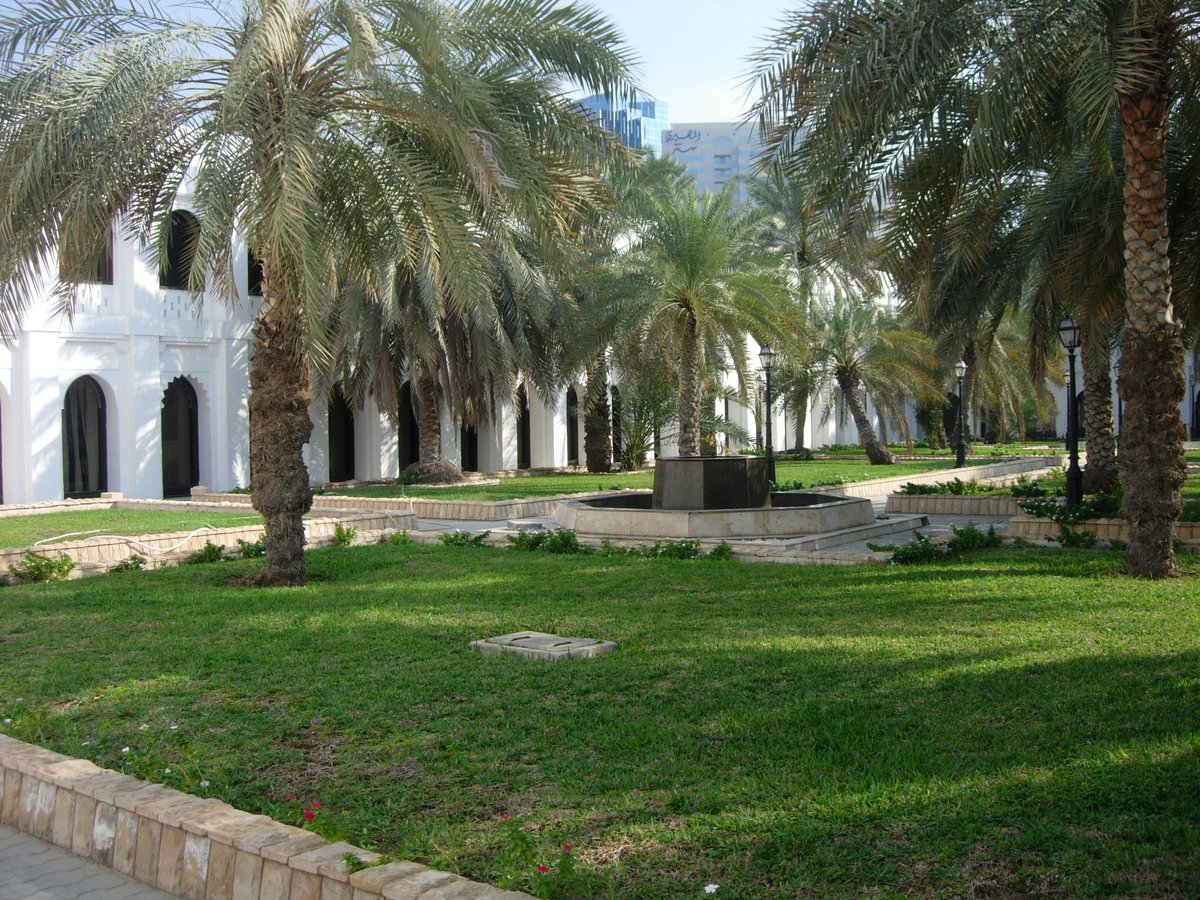
WWhy does a memorial to the UAE's founding president refuse the obvious language of power? At The Founder’s Memorial in Abu Dhabi, United Arab Emirates, you come to see Sheikh Zayed remembered without a bronze horse, a grand tomb, or the usual marble thunder, and that restraint is exactly why the place stays with you. Today the site opens across 3.3 hectares of clipped gardens, a narrow falaj-inspired water channel, and a lacework portrait called The Constellation that seems to vanish in the white glare and then return as the light shifts off the Corniche.
Most visitors expect a monument. What they get is a question in steel, water, and air. From some angles Sheikh Zayed's face looks solid enough to touch; from others it breaks into suspended geometry, as if memory itself were doing the work.
That makes this one of the smartest stops in Abu Dhabi. You are not just ticking off a national landmark; you are watching the city explain how it wants its founder remembered: as a ruler, yes, but also as a man tied to desert knowledge, falaj water, shade trees, and the moral story the UAE tells about itself.
Go near sunset if you can. The sea air comes in from Corniche Road, the gravel softens your footsteps, and the artwork catches the low light like a net full of stars. Wahat Al Karama speaks in the language of sacrifice; this place speaks in the quieter voice of legacy.
01 What to see.
The Constellation
Welcome Centre and the Gardens
Evening Walk from the Corniche to the Memorial
02 In pictures.

Plan and listen to The Founder'S Memorial with Audiala.
Audio guide in your pocket, itinerary in your browser. Built for the way you actually visit.
03 Visitor logistics.
The practical scaffolding for a good visit — kept short.
Getting There
The Founder’s Memorial sits on Corniche Road in Al Ras Al Akhdar, beside Emirates Palace and the Etihad Towers cluster. Drive in via 18th Street for the free but limited visitor parking, or take bus 10 or 34 to Corniche St / Emirates Palace Hotel, then walk about 7 minutes; buses 5, 7, 9, 11, and 32 also stop near St 18 / Corniche St with a similar walk. Abu Dhabi still has no metro, so the practical choices are bus, taxi, or a Corniche stroll.
Opening Hours
As of 2026, the memorial is open daily from 9:00 AM to 10:00 PM, with free entry. I found no current official notice of seasonal closures or a changed timetable, though older Ramadan schedules used split hours, so check ahead if you are visiting during Ramadan.
Time Needed
Give it 30 to 45 minutes for a quick pass through the Constellation and the gardens. An hour to 90 minutes feels right if you add the Welcome Centre and the elevated walkway, and about 2 hours works better if you book the free 30-minute cultural tour and stay through dusk when the portrait comes alive.
Accessibility
The site appears manageable for most visitors, with paved garden routes, a Welcome Centre, seating areas, and step-free access points from the Corniche and 18th Street. Current official pages do not clearly confirm elevators, accessible toilets, or other detailed access services, so anyone who needs specific facilities should contact the memorial before visiting.
Cost & Tours
As of 2026, admission is free and individual visitors do not need advance booking. Larger groups do need to book ahead, and complimentary 30-minute cultural tours in Arabic and English are available if you arrange them in advance.
04 Tips for visitors.
Small things that change the day.
Go At Dusk
Late afternoon into evening is the smart slot. The steel lines of The Constellation read like a sketch in daylight, then resolve into Sheikh Zayed’s face after sunset when the lighting clicks on and the Corniche air finally softens.
Move For Photos
The portrait is angle-dependent, so do not stop at the first viewing point and assume you have seen it. Walk around it slowly until the face snaps into focus; that shift is the whole trick, and it works best after dark.
Dress With Respect
This is a national memorial, not a mosque, but the tone is formal. Covering shoulders and knees is the safest choice, and loud posing or climbing around the artwork will look out of place fast.
Taxi Basics
The Corniche side of Abu Dhabi feels very safe even at night, but taxis can still play the usual game of a dead card machine or a wandering route. Ask for the meter if it is not running, keep the receipt, and compare the route on your phone if you booked by app.
Eat Nearby
Skip the idea of onsite dining and treat this as a short cultural stop. For something close, try Fresh Basil at Bab Al Qasr for a lighter budget-friendly break, West Bay Lounge for a mid-range seafront meal, or Lebanese Terrace at Emirates Palace if you want the full polished Abu Dhabi version of dinner.
Pair The Evening
This stop works better as part of a West Corniche circuit than as a destination on its own. Pair it with the Corniche promenade, the skyline view from Etihad Towers, or a reflective stop at Wahat Al Karama if you want Abu Dhabi’s civic memory told from two very different angles.
Where to Eat
Don't Leave Without Trying
Al Khayma Heritage Restaurant Abu Dhabi
local favoriteOrder: Order the lamb machboos, the cold appetiser platter, and save room for the date pudding, which one reviewer called the best dessert they had in the UAE.
This is the clearest pick if you want food that feels tied to the Emirates rather than imported from everywhere else. Reviews keep circling back to generous portions, warm service, and a menu that gives you a real shot at local flavors instead of a watered-down hotel version.
Cerutti Restaurant Cafe
local favoriteOrder: Go for the Arabic side of the menu: mutabal, laban, Arabic juices, and the traditional Arabic sweets if you are there in the evening.
Cerutti looks like the sort of big city restaurant locals actually use: long hours, broad menu, and enough range for families or groups with different appetites. The strongest reviews praise the Arabic options and the calm atmosphere, which matters more than design when you want a dependable meal near downtown.
Saddle House - Marsa Al Bateen
cafeOrder: Get the schnitzel with mashed potatoes if you want the dish reviewers keep returning for, then stay for coffee with the marina in front of you.
This one wins on setting and consistency. People mention the calm marina view, friendly service, and food that feels better than it needs to be for a waterfront spot, which is rarer than Abu Dhabi menus would have you believe.
The bench
cafeOrder: Order the matcha strawberry and the eggs Benedict, the two items that come up most vividly in reviews.
The bench is the sort of place you pick when you want a slower breakfast or a coffee stop instead of a formal meal. Reviews praise the atmosphere, careful drinks, and solid morning plates, even if service can occasionally lag when the room gets busy.
Dining Tips
- check Do not assume a weekly closing day. Many Abu Dhabi restaurants run seven days a week.
- check Breakfast commonly runs from about 6:30 AM to 10:30 AM, sometimes to 11:00 AM on weekends.
- check Lunch is often the main meal, especially on weekends, and many places serve it around 12:30 PM to 3:30 PM.
- check Dinner usually starts later than in many European cities, often from around 6:30 PM, and can stretch to 10:30 PM or 11:00 PM.
- check Friday and Saturday evenings are typically busier for social dining.
- check Late-night eating is normal in parts of Abu Dhabi, with some districts and venues serving until 1:00 AM, 2:00 AM, or later.
- check Tipping is not expected, but it is common. If service charge is not already included, 10 to 15 percent is a normal range.
- check In higher-end restaurants, a service charge of around 10 percent and a 6 percent tourism levy may already be on the bill, so extra tip is optional.
Restaurant data powered by Google
05 A Founder Remembered on a Rewritten Shore
Documented history begins with Sheikh Zayed bin Sultan Al Nahyan, born in 1918 and remembered across the UAE as the man who turned tribal alliances, oil wealth, and political nerve into a federation. Records show he became Ruler of Abu Dhabi in 1966, then the first president of the United Arab Emirates on 2 December 1971, a role he held until his death in 2004.
But this memorial is not an old site preserved from his lifetime. It opened in 2018 during the Year of Zayed on a stretch of Corniche shore that Abu Dhabi had already remade through reclamation, road-building, and civic staging, which means the place tells two stories at once: Sheikh Zayed's life, and the city's changing way of turning that life into public memory.
From Giant Portrait to Constellation
At first glance, the public story seems clean: Abu Dhabi built The Founder’s Memorial in 2018 to honor Sheikh Zayed's centenary, and the shimmering portrait at its center feels like the natural form that tribute was always meant to take. Most visitors accept that version because the site looks so complete, so composed, as if it rose fully formed from national consensus.
Then one detail starts to itch. Before this memorial, the same Corniche stretch was already associated with an enormous public image of Sheikh Zayed, painted and maintained by municipal artist Liaqat Ali Khan, the Pakistani-born portraitist whose giant roadside works helped fix the ruler's face in Abu Dhabi's daily life. For Khan, this was personal as well as professional: his job was to make the founding father visible to a fast-changing city, and records from 2005 show him restoring one vast Corniche portrait made from 284 plywood panels and 8,000 plastic mosaic pieces, a surface as large and laborious as a small stage set.
The revelation is that The Founder’s Memorial did not replace emptiness. It replaced an older visual language of remembrance. Attributed local accounts say the memorial rose where that giant portrait had stood for years, and while the exact footprint is not fully documented in official sources, the broader truth holds: Abu Dhabi moved from painted likeness to engineered constellation, from municipal iconography to a state-scale artwork inaugurated on 26 February 2018 before rulers, crown princes, music, projection, and Sheikh Zayed's own recorded voice.
Once you know that, the site changes. You stop seeing a futuristic portrait and start seeing a city editing its memory in public, keeping Sheikh Zayed at the center while changing the medium around him. The steel rods no longer look decorative; they look like the latest answer to an old question: how do you give permanent form to a man whose image was already everywhere?
Early Life & Vision
Legacy & Influence
Listen to the full story in the app
The whole The Founder'S Memorial,
told well.
Audio guides for 1,100+ cities across 96 countries. History, stories, and local insight — offline ready.
06 Frequently asked.
The questions travellers send us most about The Founder'S Memorial.
Is The Founder’s Memorial worth visiting?
Yes, especially if you want one place that explains how Abu Dhabi likes to tell its own story. The site is free, calm, and far more affecting than it first appears: Ralph Helmick’s 30-metre pavilion holds a portrait of Sheikh Zayed made from 1,327 suspended geometric pieces, and the face only comes together when you keep walking.
How long do you need at The Founder’s Memorial?
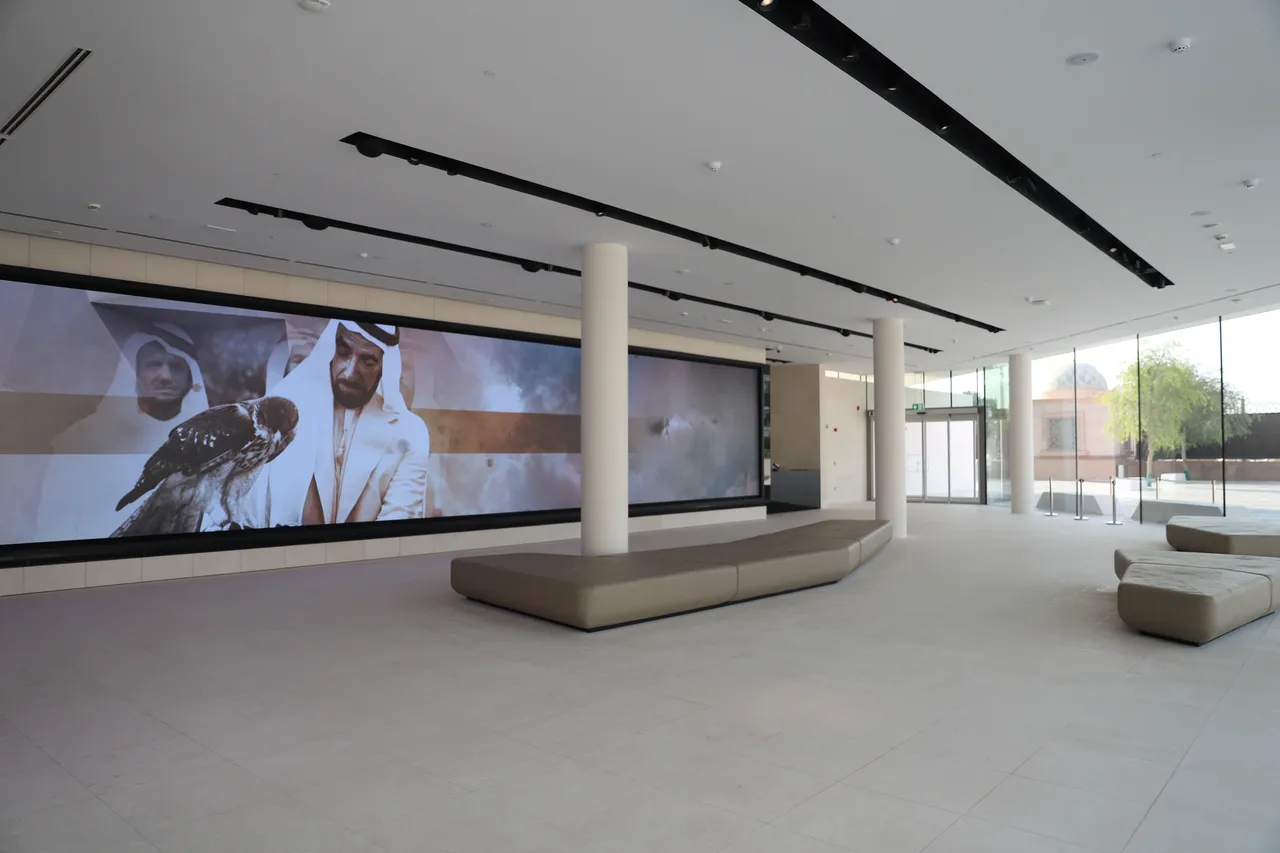
Most people need 45 to 90 minutes. Give it 30 minutes if you only want the Constellation and a quick loop, or closer to 90 if you want the Welcome Centre, the Sheikh Zayed Encounters screening that runs every 15 minutes, and time to see the artwork in daylight and after dusk.
How do I get to The Founder’s Memorial from Abu Dhabi?
The easiest way is by taxi or rideshare to Corniche Road in Al Ras Al Akhdar, beside the Emirates Palace and Etihad Towers cluster. If you prefer public transport, Moovit lists nearby stops at Corniche St / Emirates Palace Hotel and St 18 / Corniche St, both about a 7-minute walk, and the site also has limited free parking accessed from 18th Street.
What is the best time to visit The Founder’s Memorial?
Go at sunset and stay into the evening. By day you notice the pale Omani beige limestone, desert planting, and falaj-style water channel; after dark, nearly 2,000 lights turn the suspended sculpture into a field of stars and Sheikh Zayed’s face snaps into focus with much more force.
Can you visit The Founder’s Memorial for free?
Yes, entry is free. Official visitor information also says individual visitors do not need advance booking, while larger groups should book ahead, and complimentary 30-minute cultural tours in Arabic and English are available.
What should I not miss at The Founder’s Memorial?
Do not miss the moment when the Constellation finally resolves into Sheikh Zayed’s face from the right angle. Also spend a few minutes in the Welcome Centre for archival footage and recorded voices, then walk slowly through the Sanctuary Garden, where the running water and native plants do quiet historical work that many visitors miss.
Verified, and shown.
Researched and written by the Audiala editorial team from historical records, architectural archives, and local expertise.
Official visitor information for opening hours, free entry, tours, location, site layout, and overview of the Constellation.
Official cultural listing used for the Welcome Centre, Sheikh Zayed Encounters program, access details, and general site interpretation.
Used for practical visit framing, evening appeal, and the multimedia visitor experience.
Engineering and project details for the 30-metre pavilion, elevated walkway, and viewing design.
Artist source for the concept of the portrait shifting between abstraction and representation and for core artwork details.
Used for the memorial’s opening framing, the optical experience of the sculpture, and the broader official positioning of the site.
Project source for layout, design approach, and physical organization of the memorial grounds.
Lighting design source used for the nighttime experience and the count of luminaires shaping the illuminated portrait.
Material source for the use of Omani Beige limestone across the public areas and gardens.
Source for the Sanctuary Garden, falaj-inspired water channel, planting approach, and quotes along the walkway.
Used for nearby bus stops, walking times from stops, and current route references.
Used for practical visitor details including contact information and general trip-planning context.
Used for the approximate walking distance and time from Emirates Palace.
Traveler evidence for how long visits typically take, the need to move for the portrait to resolve, and the preference for evening visits.
Used for concise visitor-oriented details, dusk timing, and the practical on-site experience.
Official confirmation of the memorial’s inauguration in February 2018.
Used for verified background on Sheikh Zayed, including his role as founding president and national significance.
Researched from Wikidata, Wikipedia & official sources · fact-checked · How we make our guides →